Storia
Farming roots
Il Trave grew out of the agricultural heritage of three young founders whose grandparents came from families of farmers extending over several generations. Those grandparents regarded the transmission of their values to later generations as a lifelong responsibility.
The creation of Il Trave
The three founders conceived Il Trave as a way to make products that directly expressed their land. Their project followed the path of earlier local winegrowers and sought to recover the flavours with which they had grown up—flavours they believed were disappearing as more standardized products, shaped by market preferences rather than the land, took their place.
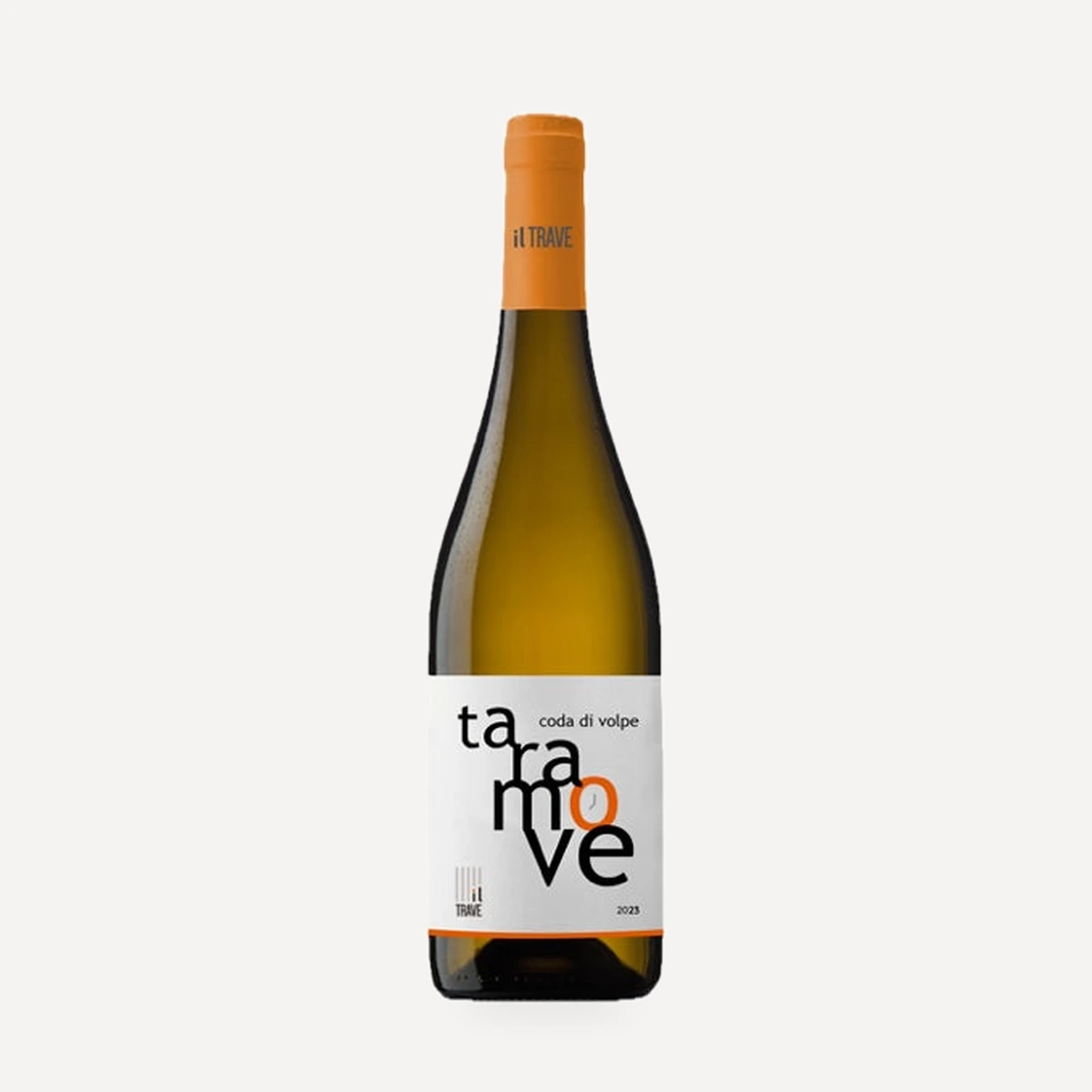
This aim developed into a commitment to make forthright natural wines from indigenous grapes without artificial additions. The project turned to old Aglianico and Coda di Volpe vineyards on the slopes of Paternopoli. These vineyards had been close to abandonment because of their low productivity and the difficulty of mechanizing their cultivation.
Recovery of the old vineyards
Il Trave made the restoration of these nearly century-old vines its central challenge. The objective was to return the plants to productive condition and demonstrate that, despite their age, low yields and difficult cultivation, they still had significant potential.
Terroir
Paternopoli vineyards
The vineyards lie on the gentle slopes of Paternopoli in Irpinia. The old vines grow in clay-limestone soils containing volcanic cinerite. These conditions are specifically associated with the nearly century-old Coda di Volpe vines, whose grapes mature at the end of September.
Irpinian setting
Irpinia is presented as a Campanian territory where vineyards are interspersed with wooded mountains, green hills and rivers. Its climate combines sunny summers, cold winters and good ventilation. Strong day-to-night temperature variations contribute to the aromatic development of the grapes, while the climatic pattern permits late harvests; Aglianico is harvested at the end of October in Il Trave’s range.
The area retains a substantial legacy of old vines. During the 1970s, local growers chose to preserve indigenous grapes—including Aglianico and Coda di Volpe—despite official encouragement to plant nationally established varieties offering greater quantitative reliability.
Vinificazione
Il Trave works with indigenous Aglianico and Coda di Volpe in old vineyards on the slopes of Paternopoli. Some vines are almost a century old. Their low productivity and resistance to mechanization had previously brought the sites close to abandonment; restoring those vines is a defining part of the project.
Cultivation is framed around environmental sustainability and respect for the territory. No certification body, formal organic status, biodynamic status or conversion date is identified. The natural-wine principles discussed by Il Trave favour freedom from pesticides and herbicides, but no estate-level certification or detailed plant-protection protocol is specified.
Il Trave’s cellar philosophy rejects artificial additions and filtration. The wines are bottled without filtration, accepting that they may be less stable in exchange for the quality and vitality the producers associate with an unstripped wine.
The filtration practices explicitly rejected include sterile passage through steel membranes or cardboard filters and clarification by decantation with agents such as bentonite or albumin. The approach also excludes pre-bottling additions such as metatartaric acid, mannoproteins and gum arabic.
Across the range, the cellar uses both stainless steel and oak, followed where appropriate by bottle maturation. Techniques represented include brief skin contact or short maceration, fermentation and extended maturation in stainless steel, malolactic fermentation, and maturation in oak barrels. No general information is supplied on yeast selection, fermentation temperatures, sulphur use, crushing, pressing, extraction, lees work, stabilization or bottling equipment.
Filosofia
Il Trave defines its purpose through continuity with the founders’ farming grandparents and the older winegrowers of Irpinia. The aim is to bring back flavours associated with their upbringing and to resist homogenized products whose taste and colour are dictated primarily by the market.
The founders pursue wines they characterize as forthright, natural and indigenous, made without artificial additions. Their central viticultural challenge is the recovery of difficult, low-yielding, nearly century-old vines that had been close to abandonment.
In the cellar, Il Trave explicitly sets its philosophy against industrial processing. Filtration is viewed as useful for large-scale production, visual uniformity and predictable conservation, but contrary to the estate’s own objectives. The producers recognize that unfiltered wine can be less stable, yet believe that avoiding filtration preserves greater quality and vitality. Respecting what nature provides is presented as a way to make products considerate of both producer and consumer.
The broader natural-wine ideal is associated with immediacy, a clear sense of origin and visible human authorship rather than machine-led or marketing-led production. Environmental sustainability and authentic territorial expression are treated as complementary goals.
Vini
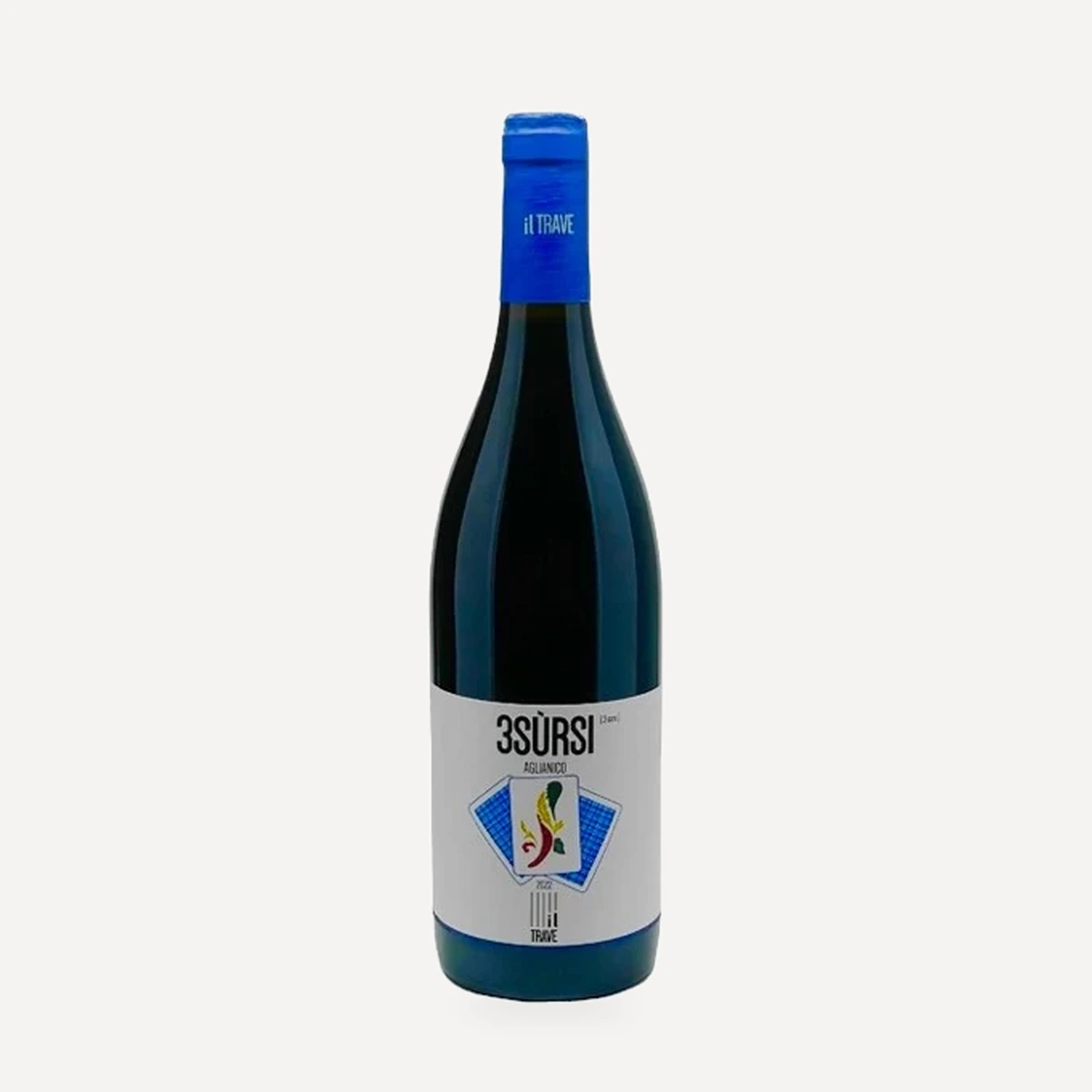
3Sursi
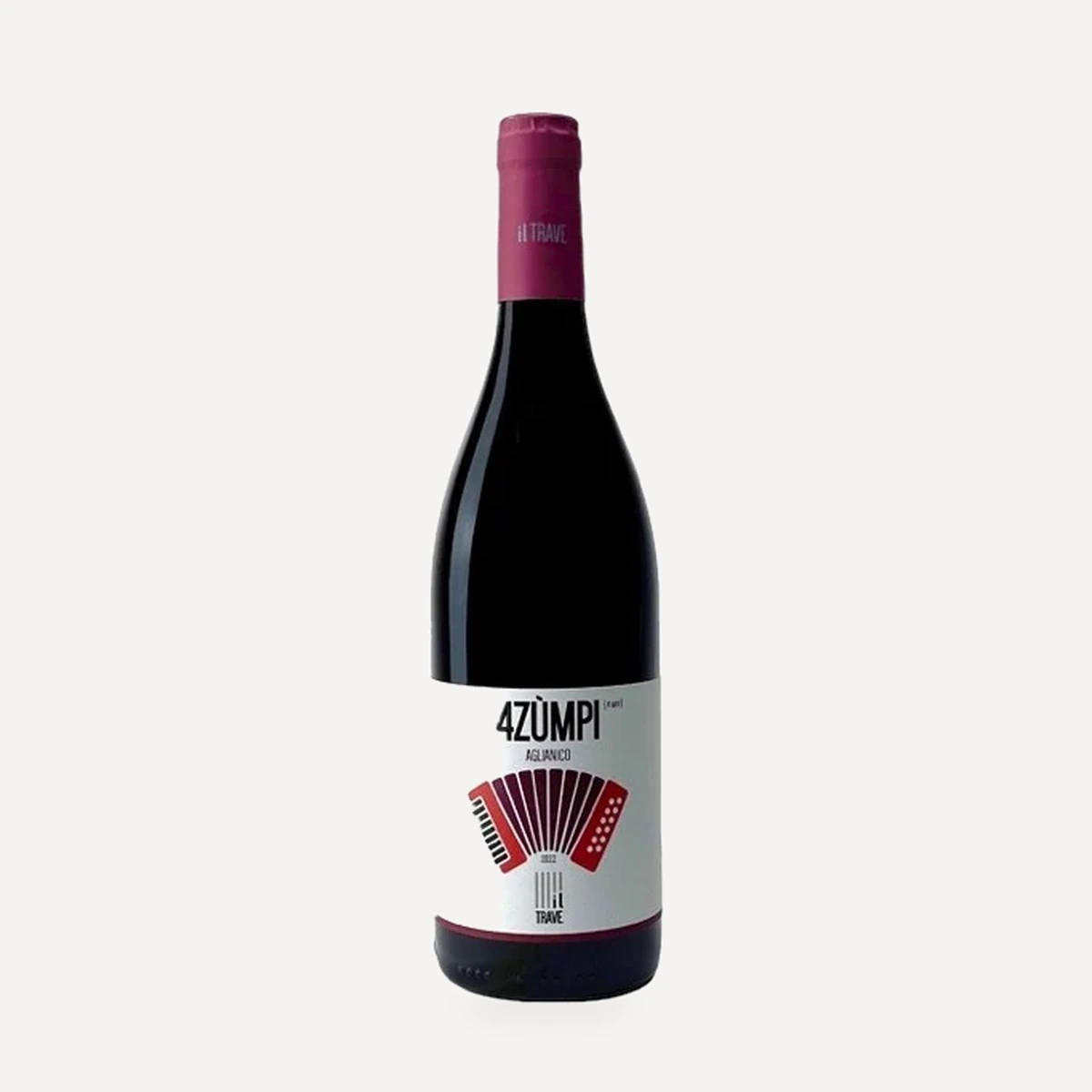
4Zumpi