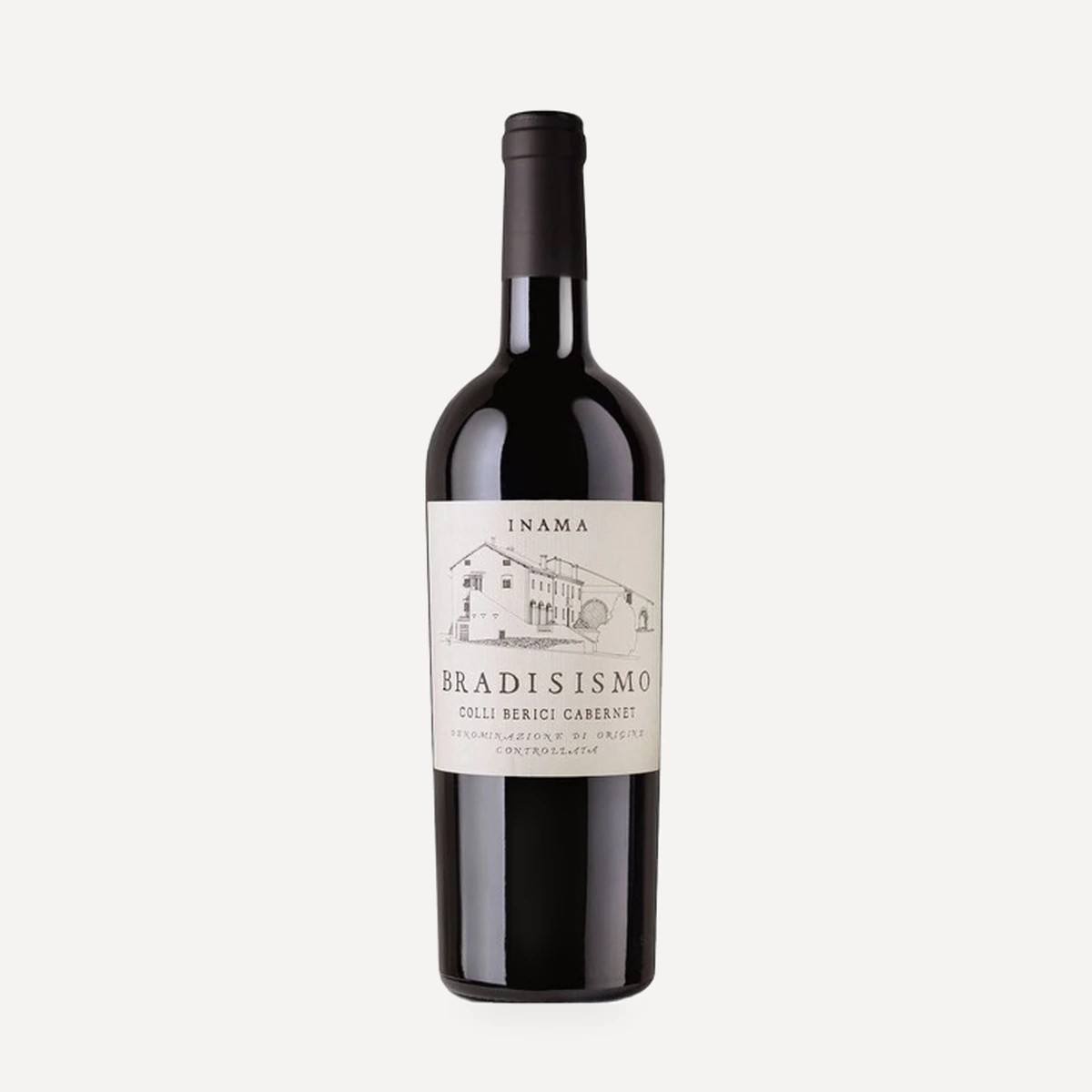
Questo vino
Vineyard and terroir
The vineyards occupy low, wooded hills south of Vicenza, at elevations of 50–150 m. The vines grow on south-facing slopes with red clay and marine limestone soils and have an average age of 25 years.
Grapes
Carmenere has contributed the wine’s distinctive character since its first release. Since 2019, the blend has also included a small proportion of Cabernet Franc.
Vinification
The grapes are harvested by hand into 15 kg crates and gently destemmed to preserve the skins. Pre-fermentation maceration lasts 24–48 hours. Alcoholic fermentation takes place in stainless steel tanks for 23–28 days at a controlled temperature not exceeding 28 °C, followed by malolactic fermentation.
Ageing
The wine ages for 12 months in French oak barrels, around 40% of which are new. The lots initially mature separately, then are blended before ageing continues. Before bottling, the wine rests for a further four months in stainless steel tanks. It then matures in bottle for at least 12 months in the winery’s cellars.
Tasting profile
Powerful and refined, with a distinctive character and an international style. The aroma combines ripe, concentrated Cabernet Sauvignon cherry notes with the brightness of Carmenere.
Label / history
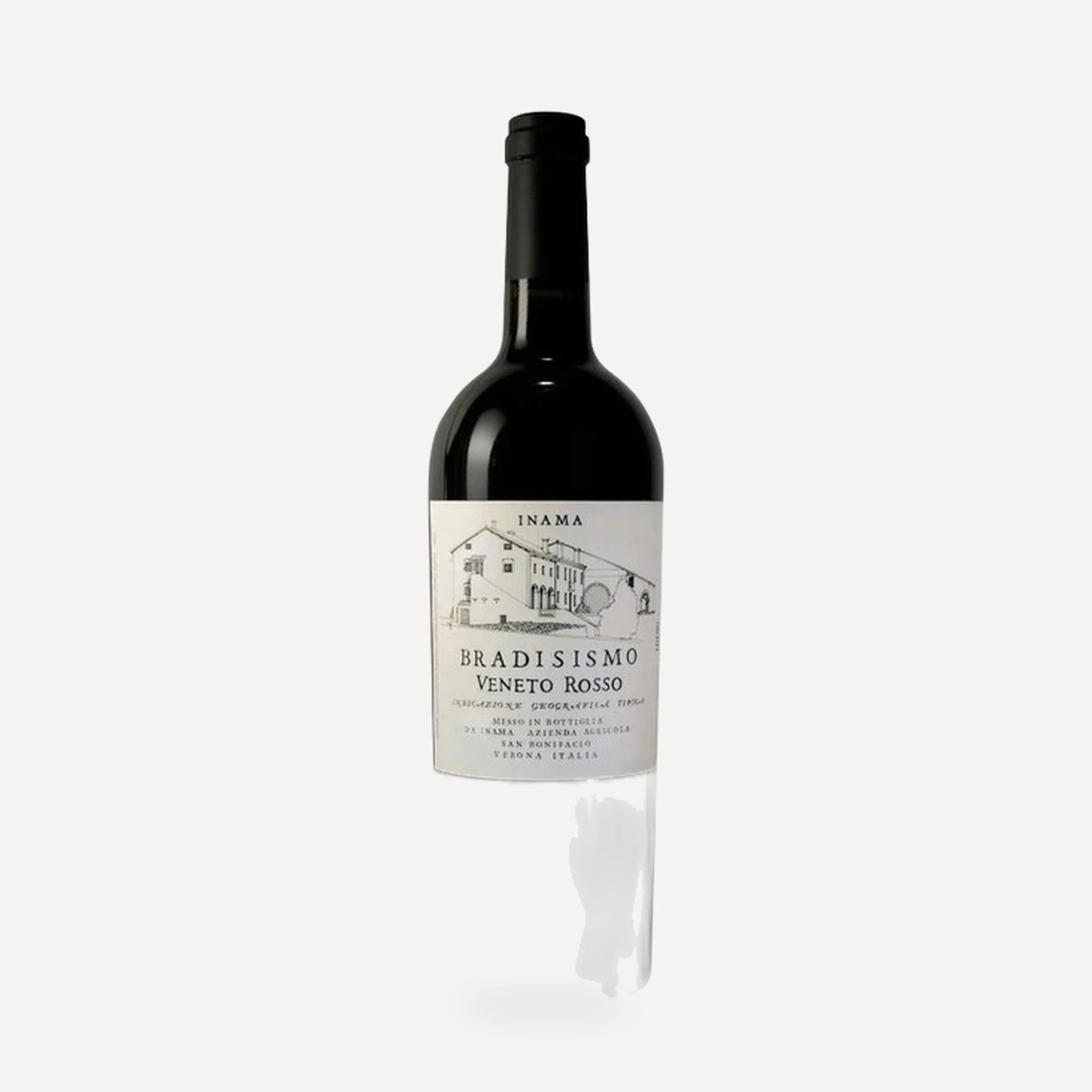
First released in 1997, Bradisismo takes its name from bradyseism, a geological phenomenon associated with the volcanic activity that shaped the Colli Berici DOC area.
The label was designed by Nicholas Wood, an English architect and artist and a friend of the estate’s owner, Stefano Inama. It evokes the 17th century, a flourishing period for winemaking, and depicts the house at the heart of the Lonigo estate. Built between 1600 and 1700 and renovated in the 19th century, the house and company originally belonged to the Venetian Venier family. The family grew tobacco on the estate’s flatter land during the 18th century, when the province of Vicenza formed part of the Most Serene Republic of Venice and many Venetian families owned properties around the Berici Hills.