Storia
The project and its first documented vintages
La Bajola is based at Via Pastino 36 in Forio d’Ischia. Its documented wine history begins with the 2013 vintage, which was already on the market by August 2015. The project’s identity grew from the family’s life in the vineyard and from an idea voiced by Alice when she was young: she wondered why a visibly yellow wine was conventionally called white. A younger sibling jokingly proposed the name “tristezza gialla” for the wine then being imagined.
In May 2014, distribution in Italy began through Les Caves de Pyrène. During the 2014 harvest, the project articulated its #vinoinvigna method: harvested grapes were protected from sun and rain beneath a temporary cover, destemmed above an underground concrete tank and vinified without leaving the vineyard. The 2014 wine remained in its buried tank through the following spring, where its temperature tracked that of the vine roots.
2015: rebuilding the vineyard and formalizing the cellar in the vines
In January 2015, trials were being used to evaluate the wine’s resistance to forceful oxidation and to follow its evolution month by month. The work combined natural-wine principles with active observation rather than a hands-off assumption that the wine would take care of itself.
The summer of 2015 brought major work on the terraced landscape. A new parracina, the local dry-stone retaining wall, was built while an older wall was identified for reconstruction. More than 80 m of wall were ultimately rebuilt from green-tuff stone to support the Vermentino and Viognier terraces. An old casello was also earmarked for restoration and future oenological use. Before harvest, the concrete tanks were disinfected without detergent, using hydrogen peroxide followed by a limited quantity of clean water.
Harvest began on 25 August with Sauvignon Blanc and Malvasia delle Lipari. The grapes were only destemmed and dropped directly into the concrete tank buried among the rows. Fermentation had begun by that evening. Incrocio Manzoni, Viognier and, finally, Vermentino followed the next morning. The first pump-over wetted a cap that had already exceeded 32°C. Natale and Gino assisted with the daily work.
2016: biodynamic and symbiotic vineyard practice
During spring 2016, winter-grown green manure was mown and incorporated into the soil. Preparation 500, mycorrhizae and microbial consortia were applied to accelerate decomposition, stimulate symbiosis, build humus and improve the vines’ resistance to disease, water stress and nutrient shortages. Disease control relied principally on bacteria and fungi, with very small copper doses and initially no sulfur.
By 26 June, after an unusually wet spring followed by sudden hot, humid weather, less than 700 g/ha of copper had been applied and no sulfur had yet been used. The soil remained soft two months after the green manure had been incorporated. The 2015 wine was meanwhile maturing underground at about 21°C and clarifying naturally.
On 13 July, the 2015 wine received its only transfer after approximately ten months. The bottom of the tank held a compact, aromatic layer of fine lees, while the wine had become clear without filtration. It then rested again in underground concrete at approximately 23°C before bottling.
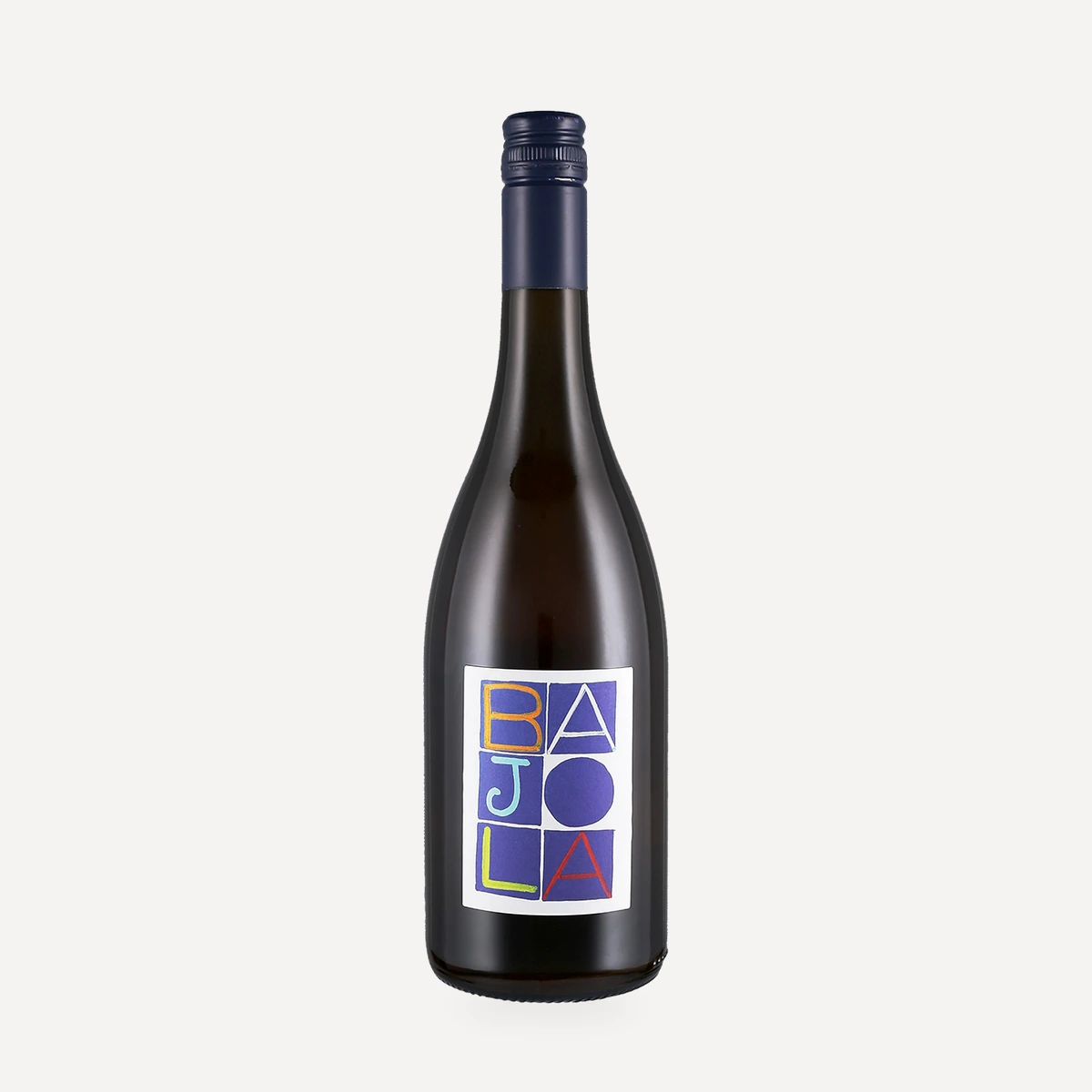
The 2016 crop was low but healthy. All four varieties used that year were harvested over two days and destemmed directly over the palmenti buried in the Vermentino terrace. The 2015 vintage was bottled as the 2016 fermentation began. The 2016 wine remained with its skins for approximately one month, extending maceration beyond previous practice. Local artist Manuel di Chiara was commissioned to reinterpret La Bajola’s visual identity, producing a double, mirrored artwork intended to connect the island’s past and future, sea and volcano.
2017: vineyard improvements and the first Tiano experiment
By March 2017, the wine had spent almost seven months maturing in the palmenti. Vineyard improvements continued with completion of a small office and bathroom for workers and guests. The possibility of a companion wine was also being considered.
The growing season was exceptionally hot and dry, with little rain and an early, small crop. The estate adapted by reducing the size of a palmento so that the smaller volume of grapes would leave less air between the fermenting mass and the tank ceiling. Harvest timing was decided through repeated tasting, sugar measurements with a refractometer and examination of seed maturity. For long maceration, the seeds were required to be deeply brown, lignified, crisp, nearly toasted in character and free from astringency.
Harvest ran from 22 to 23 August during the earthquake that struck Ischia. Potential alcohol exceeded 14%, the must was intensely colored, and dehydrated grapes made skin maceration difficult. Four months later the wine was still macerating in the palmenti. The vintage also initiated the Tiano experiment: a terracotta vessel named with the traditional Neapolitan term for an earthenware container rather than the word amphora.
2018–2019: refinement of vineyard equipment and the perpetual Tiano method
The wet winter and early 2018 growing season brought downy-mildew pressure, followed from June by sustained heat. Hot, humid conditions in late May and early June caused some powdery-mildew damage after sulfur doses had been reduced. Harvest was therefore brought forward to 17 August to avoid rot. A lightweight prototype quad equipped with an electric atomizer replaced backpack application for phytosanitary treatments. The 2017 vintage was bottled on 7 August, ten days before the new harvest.
On 28 December 2018, the perpetual Tiano wine was bottled. The method uses 200–210 L terracotta vessels made by Fornace Masini in Impruneta. The exterior is treated with beeswax, linseed oil and citrus essence, while a wine-derived encaustic treatment reduces internal porosity. The vessel is intentionally left partly unfilled to maintain contact between wine and air. At bottling, at least 10% of the wine and fine lees remain as a memory of earlier vintages. No processing aids, additives, commercial yeast or sulfur dioxide are added; the wine is neither fined nor filtered and is closed with a screwcap of predefined oxygen permeability.
In 2019, regular spring rain was followed by intense summer heat, relieved by rain in mid-July. Vineyard health was strong: downy mildew was absent and powdery mildew remained controlled. Total seasonal copper use was below 150 g of metallic copper per hectare, with powdered sulfur used from late May through late June. By mid-August, Viognier exceeded 23°Brix and Vermentino was around 22°Brix. Harvest ran from 22 to 25 August; the grapes were immediately destemmed into the palmenti and began fermenting there.
2020–2021: extended maceration, infrastructure and biological disease control
The 2019 wine remained in a concrete palmento with its pomace for approximately eight months, until April 2020. Its progress was checked and tasted monthly before each decision to prolong skin contact. A small equipment shelter was constructed for the vineyard tools and quad, the palmenti received a new roof, and a former above-ground rainwater cistern was restored as a small cellar for historic bottles. By then, the estate had completed seven conventional vintages and two Tiano bottlings.
No copper was used during the 2020 season, and only two treatments of powdered sulfur were required. The remainder of the protection program relied on microorganisms, including a consortium containing a probiotic able to enter vine tissues and support plant immunity. Downy mildew appeared on untreated control vines during the wet spring, while powdery mildew appeared after 20 June and was stopped with powdered mined sulfur.
The 2020 harvest took place on 17 and 18 August after another hot, dry summer. After five consecutive warm, drought-prone seasons, the grapes were more turgid at harvest than they had been in 2015, and the foliage remained greener. After twenty days of skin contact and the completion of alcoholic fermentation, a small quantity was bled off and added to the perpetual Tiano wine.
Green-manure sowing, mycorrhizal inoculation and Preparation 500 progressively changed the green-tuff soil from a loose, powdery material into a cohesive matrix. Roots were visible within this improved structure to a depth of 50 cm, supporting greater drought resistance. The spring cover was scheduled for mowing and incorporation at the end of April 2021. Alice and Lorenzo were taking increasingly active roles, learning to interpret vine behavior and follow the wine through repeated tasting.
Terroir
La Bajola lies in Forio d’Ischia at approximately 40.738878° N, 13.873055° E. The vineyard occupies terraces of differing size and solar exposure. These are retained by parracine, dry-stone walls constructed from the island’s green tuff.
Tuff forms the central soil matrix. It was formerly loose and powdery, but repeated green-manure sowing, mycorrhizal inoculation and Preparation 500 produced a more cohesive structure. By 2021, roots could be seen within this matrix to a depth of 50 cm, a change associated with improved drought resistance.
The documented growing seasons show pronounced variability. The 2015 season was extremely hot and dry, leaving some berries almost raisined. Spring 2016 was unusually wet before hot, humid weather arrived abruptly on 23 June. The 2017 season was hot, dry and exceptionally early, with a small crop and marked differences between sun-exposed and shaded bunches on the same vine. Winter and spring 2018 were wet, followed by sustained heat from June. In 2019, regular April–June rain was followed by a very hot July, briefly relieved by rain in mid-month. The 2020 vintage continued a sequence of warm, drought-prone summers, although the vines and berries showed greater resilience than they had five years earlier.
Vinification and maturation occur within this same landscape. The buried concrete palmenti lie among the rows and moderate temperature through direct contact with the ground: the 2014 wine measured 17.5°C when the shade temperature was 25°C, while the 2015 wine was about 21°C in late June 2016 and 23°C in mid-July.
Vinificazione
La Bajola combines biodynamic and symbiotic practices with certified-organic grapes and wine. The objective is to cultivate an active soil and a diverse microbial community so that the vines rely less on external nutrients and conventional crop-protection inputs.
Winter cover and green-manure crops grow between the rows. In spring they are mown, then incorporated with a spade or tillage operation so that the plant material becomes humus. In April 2016, mowing and incorporation were timed to the waning moon. Preparation 500, mycorrhizae and microbial consortia are applied to accelerate decomposition, activate symbiotic processes and improve vine resilience to disease, drought and nutrient stress. By 2021, these measures had changed the tuff from a powdery, incoherent material into a cohesive root matrix extending to 50 cm.
Disease control evolved toward progressively lower mineral inputs. In June 2016, after a wet spring, less than 700 g/ha of copper had been applied and no sulfur had been used; bacteria and fungi formed the principal defense. In 2019, total copper use was below 150 g of metallic copper per hectare, while powdered sulfur was applied from late May through late June. In 2020, no copper was used and only two treatments of powdered mined sulfur were required. Microbial consortia supplied the remainder of the defense program, including a probiotic capable of entering vine tissues and increasing plant immune capacity. Downy mildew appeared on untreated control vines during the wet 2020 spring, while a powdery-mildew outbreak after 20 June was stopped with sulfur and helped by the high temperatures of early July.
A lightweight quad equipped with an electric atomizer was introduced in 2018. It replaced backpack spraying, allowed more precise and timely treatments and was conceived as a prototype capable of accepting further small vineyard implements.
Harvest dates are determined through observation and tasting as well as measurement. Before the 2017 harvest, the team moved through the rows tasting berries, measuring sugars with a refractometer and chewing seeds. Long maceration required seeds that were fully lignified, deeply brown, crisp, nearly toasted in character and no longer astringent. Harvest is carried out with family and friends, and the fruit is moved immediately to the palmenti within the vineyard.
La Bajola’s production system is summarized by #vinoinvigna: harvesting, destemming, fermentation and extended maturation are conducted within the vineyard. A cover protects newly harvested grapes from sun and rain. A destemmer is positioned directly above underground concrete palmenti, allowing the berries to fall into the tank without a separate transport stage.
The grapes are destemmed but otherwise enter the palmenti intact. Fermentation takes place on the skins without added processing aids, additives, cultured yeast or sulfur dioxide. Pump-overs keep the cap moist; during the 2015 harvest, the first pump-over was made after the cap had already exceeded 32°C. Prolonged skin contact is central to the method. The 2016 vintage remained on its skins for approximately one month, the 2017 vintage was still macerating four months after harvest, and the 2019 vintage remained with its pomace for roughly eight months, until April 2020. The wines are monitored and tasted throughout rather than left unattended.
The buried concrete tanks create a naturally moderated environment. Recorded wine temperatures ranged from 17.5°C in spring to approximately 21–23°C in early and mid-summer. The 2015 wine received a single transfer after about ten months; compact, aromatic fine lees remained at the bottom, while the wine had clarified without filtration.
Tiano and the perpetual method
After fermentation on skins, a délestage is performed when the cap begins to submerge, and wine may be transferred into a Tiano. This is not described as an amphora but by the traditional Neapolitan term for a terracotta container. Each vessel holds approximately 200–210 L and has the shape and dimensions of a barrique. The vessels are made by Fornace Masini in Impruneta.
A mixture of beeswax, linseed oil and citrus essence protects the exterior. This treatment is designed to retain controlled contact with air rather than make the terracotta completely impermeable. Before first use, the interior receives an encaustic-like treatment made solely from wine-derived materials to reduce porosity. The Tiano is never filled completely, leaving a substantial wine-to-air interface.
The vessel is also never fully emptied. At bottling, at least 10% of the wine and its fine lees remain inside as a reserve from earlier vintages. New wine is added over successive harvests, creating La Bajola’s perpetual method. A small saignée taken after twenty days of 2020 maceration and the completion of alcoholic fermentation was added to this perpetual wine.
The finished wine receives no added sulfur dioxide, fining or filtration, including before bottling. A screwcap with predefined oxygen permeability is used to preserve the intended balance between protection and oxygen exchange. Concrete tanks are prepared for harvest without detergent, using hydrogen peroxide for disinfection followed by a restrained clean-water rinse.
Filosofia
La Bajola treats wine as a record of landscape and season rather than a product that should taste identical every year. Sun, rain, heat, crop size and ripening conditions are expected to remain perceptible in each vintage. The team describes this goal as creating an organoleptically faithful photograph of the year.
The approach joins low-input farming with active observation. “Natural” production does not mean leaving the wine to make itself: trials, repeated tasting and month-by-month decisions guide maturation. Oxidative tests, adjustments to tank volume, decisions about maceration length and close assessment of seed maturity are all used to understand the material rather than standardize it.
Skin contact is valued as both an expressive and protective technique. The moist cap is intended to protect the wine while gradually transferring savoriness, strength, softness and texture, with acidity remaining lively and tense. The buried palmenti connect maturation physically to the temperature of the soil and roots, extending the concept of vineyard origin into the cellar process.
Biodynamic and symbiotic practices serve the goal of a healthier working environment and a wine understood as a direct expression of Ischia’s grapes and tuff-based terrain. The desired disease-control system encourages coexistence with microorganisms, occupies ecological niches and stimulates the vines’ internal responses to biological stress. Family, friendship and shared harvest work are integral to the project, while the growing participation of Alice and Lorenzo represents continuity through learning rather than a formally declared generational transfer.
Vini