Storia
Ancient context
Viticulture on the Capo Milazzo peninsula reaches back to Roman antiquity. The Mamertini, participants in the First Punic War, gave their name to Mamertino. Traces of its production are dated to 289 BCE. Julius Caesar valued the wine and selected it for the banquet celebrating his third consulship, while Pliny ranked it fourth in a classification of 195 wines. In 260 BCE, the Romans under Gaio Duilio won their first naval victory over the Carthaginian fleet in the waters associated with the estate’s setting.
Recovery of La Baronia
Agricultural activity on the Fondazione Lucifero property had fallen close to abandonment by 2011. That year, Planeta entered into a lease and assumed agricultural management in collaboration with the Foundation. Eight hectares of vineyard were brought back into cultivation on an almost 30-hectare plateau between mountain and sea, surrounded by approximately 20 hectares of ancient olive groves. The olive groves also became the subject of substantial restoration work.
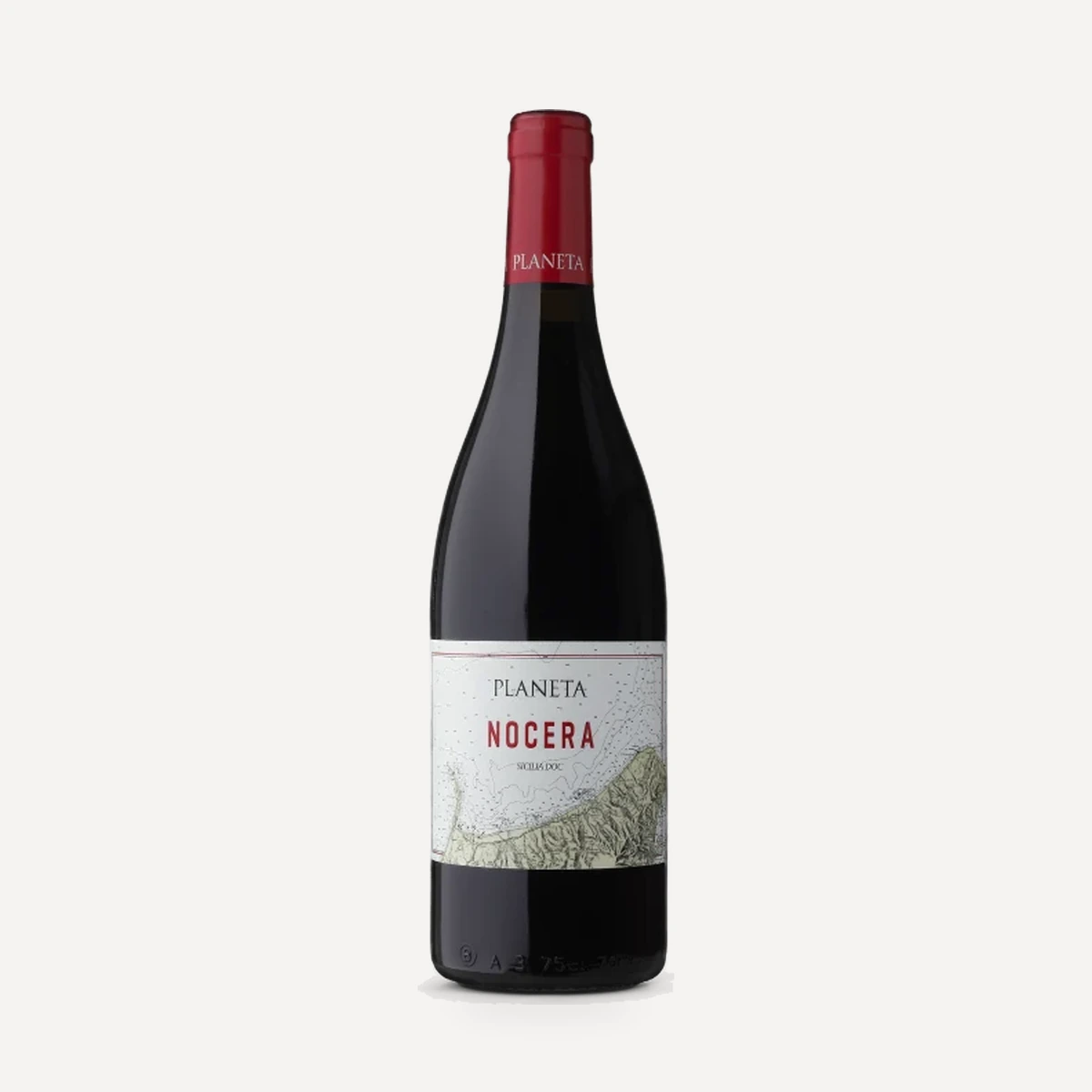
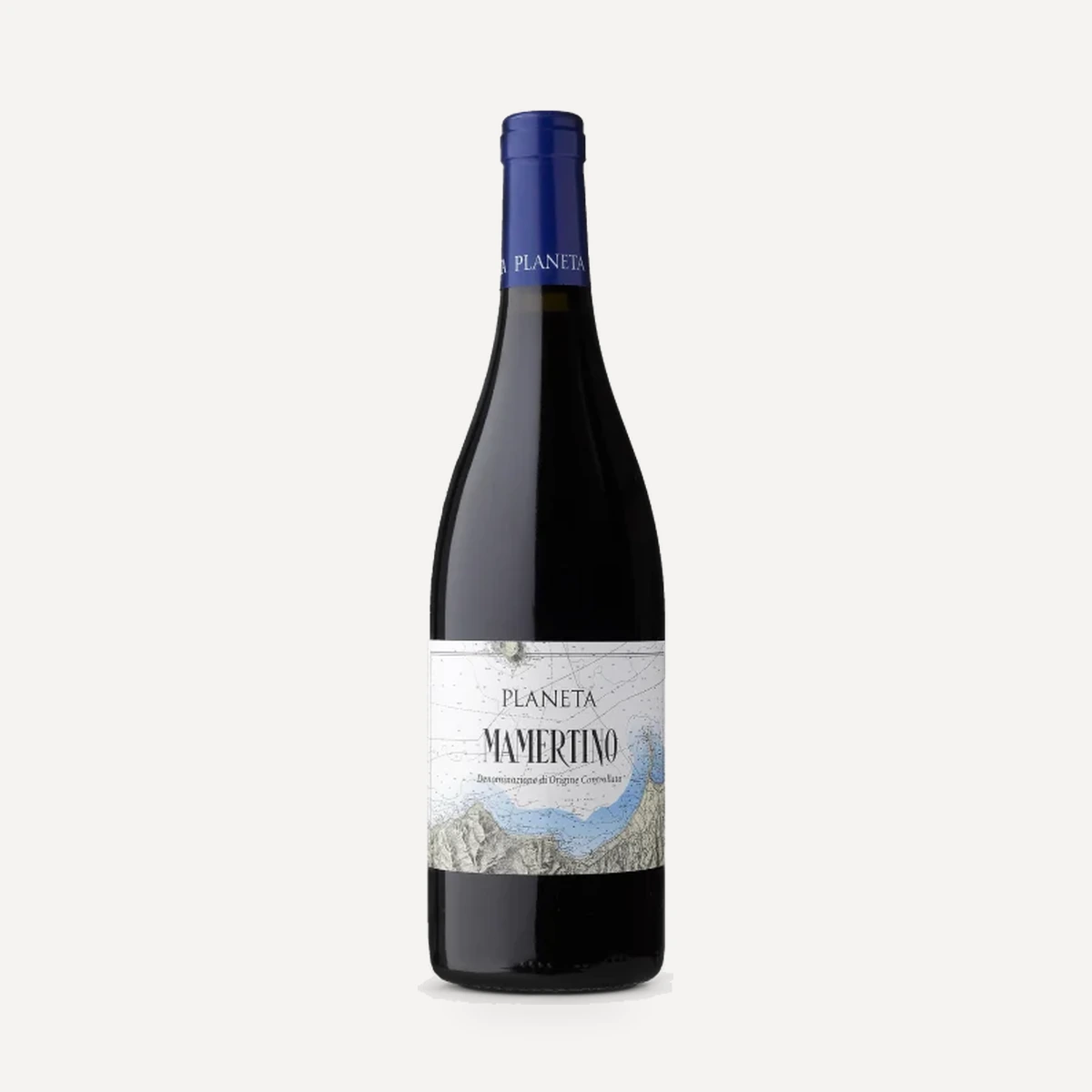
The project was conceived as Planeta’s move into northeastern Sicily and as a revival of the small Mamertino DOC, which then had very few producers and was considered close to disappearing. Vineyards were planted in 2011. The first bunches of Nero d’Avola and Nocera appeared in 2013. Four hectares were productive by 2015, planted in the DOC proportions of 60% Nero d’Avola and 40% Nocera. At that time, the estate expected its production to represent 35% of the denomination’s total output.
Alongside Nero d’Avola and Nocera, experimental work began with three local relic varieties—Vitraruolo, Lucignola and Catanese Nera—which had long been abandoned. The research was intended to explore their compatibility with the territory, preserve endangered biodiversity and potentially begin the process required for their formal recognition, with the longer-term possibility that they might enter the Mamertino blend.
Construction of the winery
Construction of the Capo Milazzo winery began in 2014. The project followed the principle that each territory should have its own winery, but with an intentionally discreet physical presence. Conceived as the “Dismountable Winery,” the building was made as a small, light iron-and-stone structure overlooking the sea. It was designed to be temporary, completely removable and transportable without damaging the land.
The winery became operational during the 2015 harvest and was identified as Planeta’s sixth winery. Within weeks of opening, it received Nero d’Avola and Nocera from the estate. The vineyard restoration was accompanied by the recovery of natural paths through land that had previously been dominated by scrub and abandoned vines.
Consolidation and organic conversion
The first Nocera vintage was 2015. The first bottle of Mamertino was formally presented at Vinitaly in 2017, completing the Capo Milazzo project and Planeta’s progression through its five Sicilian territories. The project combined environmental, social and economic sustainability: the land remained the property of Fondazione Barone Lucifero, while rent, royalties and part of the proceeds from wine sales supported local children’s social, cultural, educational and welfare activities.
The organic-conversion period at Capo Milazzo was completed in 2020. By 2022, all cultivated Planeta land—including vineyards, olive groves, almond groves and cereals—had organic certification. In 2025, new presentations of Nocera and Mamertino incorporated the logo of the Capo Milazzo Marine Protected Area, reinforcing the estate’s connection to its protected coastal environment.
Terroir
La Baronia lies at Capo Milazzo in northeastern Sicily, on a small peninsula formed as an extension of the mountains of northern Sicily through emergence from the sea and subsequent geological transformation. The cape is a generally level promontory bounded by steep escarpments that descend almost 60 metres to the sea.
The vineyards occupy a high plateau between mountain and sea. The site is surrounded by water, ancient olive trees and Mediterranean scrub, with five of the seven Aeolian Islands visible on the horizon. Beaches below the plateau are described as difficult to reach through the dense vegetation. The estate is located within a Site of Community Interest established for flora protection and is entirely encircled by a protected marine area.
The vineyard altitude is approximately 40 metres above sea level. Soils are alluvial, loose, dark and deep, generally rich in silt. The finer vineyard description identifies a moderate granitic skeleton and a 50–60 cm layer in which volcanic ash is mixed with the soil; winds carry this ash from Etna to Capo Milazzo.
The coastal climate can be more challenging in wet harvest years than in dry ones. In 2019, some vine stress during bunch growth was followed by nearly ideal weather, though yields were low. The 2023 season was dry; the results were positive despite some sun pressure on Nocera.
Vinificazione
La Baronia follows organic farming and the SOStain® sustainability protocol. Organic conversion at Capo Milazzo was completed in 2020, and the cultivated area subsequently entered the group-wide organic certification completed across all Planeta farmland.
Vineyard floors are covered with barley, vetch, oats and spontaneous flora. These covers are used to build soil organic matter and nitrogen and to support the vitality of soil microfauna. Plant-health treatments rely on minimal quantities of sulphur and copper. Pest management uses beneficial insects, mating disruption and natural strengthening materials including zeolite, kaolin and plant extracts.
Espalier with spurred-cordon pruning is used alongside supported alberello, a form associated with marine growing areas. The early estate model was explicitly non-irrigated. Grapes are harvested manually into 15–17 kg crates and selected on arrival at the winery.
Viticulture extends beyond the vines. Ancient olive groves surrounding the vineyard have undergone restoration, while natural paths through the property have been recovered. Farming takes place within a Site of Community Interest for flora protection and beside the Capo Milazzo protected marine area. Experimental cultivation of Vitraruolo, Lucignola and Catanese Nera is intended to preserve local genetic diversity and assess varieties that had disappeared from regular cultivation.
The winery is a compact, sea-facing iron-and-stone building among the vines. Its supporting structure was engineered to be temporary, fully dismantled and removed or transported without damaging the landscape.
Red grapes are harvested by hand into 15–17 kg crates, selected at the winery and crushed and destemmed. Fermentation takes place in stainless-steel tanks at approximately 25 °C. Estate protocols include 10 days on the skins for Nocera and 14–17 days for Mamertino, with repeated pump-overs; manual punch-downs are also used for Nocera. After maceration, the wine is drained and the skins are gently pressed. Malolactic fermentation takes place in stainless steel.
Nocera matures in stainless-steel tanks. Mamertino matures for 12 months in 25 hl casks. These two paths preserve a steel-aged expression of Nocera while giving the Nero d’Avola–Nocera blend measured maturation in large-format wood.
Filosofia
La Baronia was conceived around “integral sustainability,” joining environmental stewardship to social and economic responsibility. The project seeks coexistence between agriculture and its setting through low-intervention farming, protection of biodiversity, restoration of abandoned agricultural land and paths, and architecture with minimal and reversible impact.
The revival of Mamertino and the recovery of Nocera connect current production to the peninsula’s historic viticulture. Research into Vitraruolo, Lucignola and Catanese Nera extends this principle from cultural memory to the conservation of local plant diversity. The estate’s aim is not solely to produce wine but also to protect a vulnerable coastal landscape from incompatible development and to restore public interest in Capo Milazzo.
Its social model is inseparable from the land tenure. Fondazione Barone Lucifero retains ownership, while Planeta’s rent, royalties and a share of wine-sale proceeds support work for local children. Sustainability is therefore treated as an environmental, cultural, social and economic system rather than a single cultivation method.
Vini
Mamertino