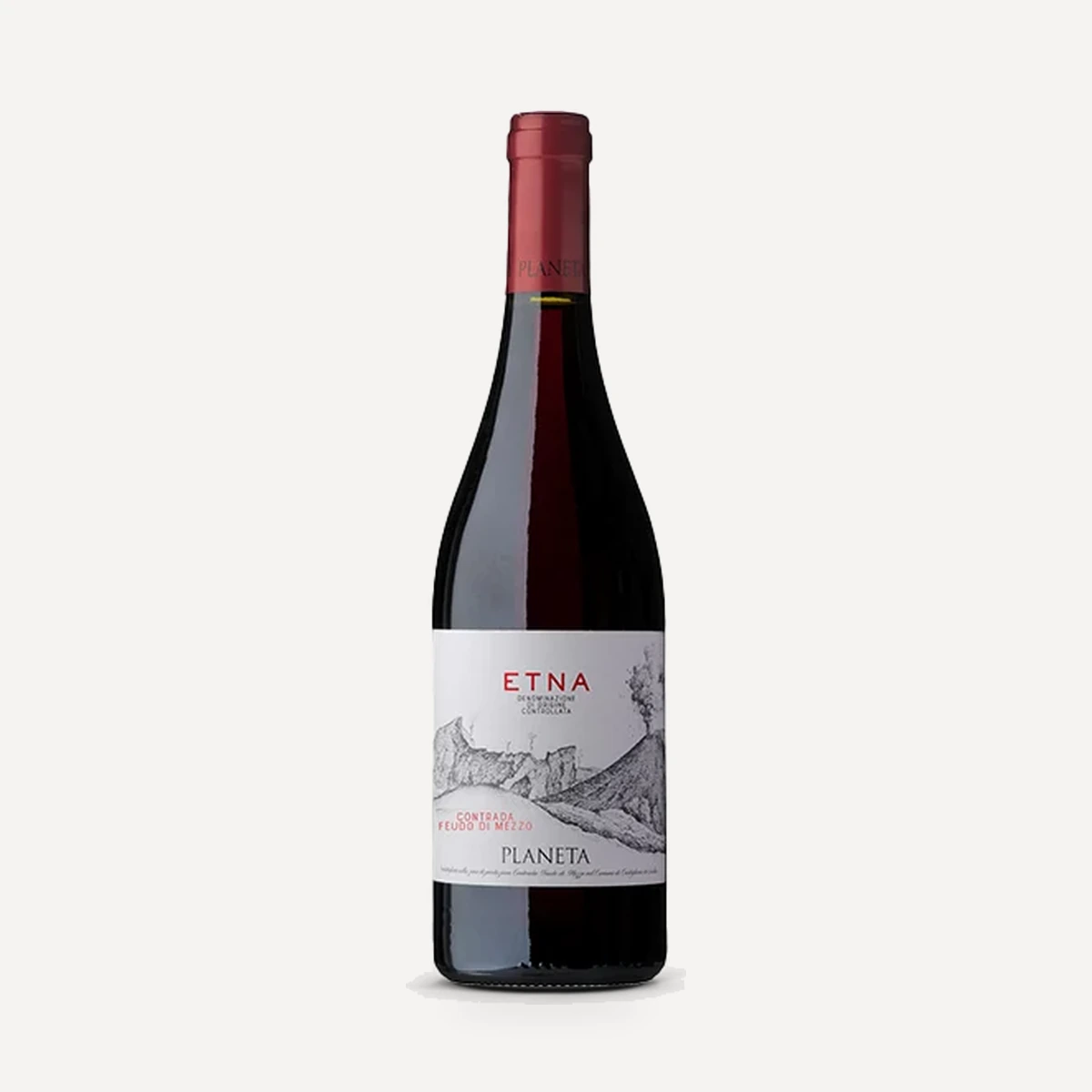
Storia
The landscape before the estate
The decisive geological event at Sciaranuova was the eruption that began in 1614. It continued for ten years—the longest eruption in recorded local history—and created the sciara beside the present vineyard. The flow stopped at the boundary of part of the Carricante vineyard, while the Nerello Mascalese vines used for Eruzione 1614 grow on the lava flow itself. These historic flows, subsequent lava deposits and the gradual degradation of volcanic rock formed the terraces and mineral-rich black sands that define the estate.
2006–2008: establishment and planting
The Planeta family acquired Sciaranuova in 2006. After an extended search for suitable vineyard land, its Etna project took concrete form in 2008 on the volcano’s northern slope, among the lava flows and woods around Passopisciaro. The Sciara Nuova vineyard was planted that year, initially focusing on Nerello and Carricante.
Research into white varieties was central from the beginning. During the first and following planting seasons, 4,500 Riesling Renano vines were established on terraces above 800 metres. A particularly small parcel on the edge of the 1614 sciara was planted with 3,000 Pinot Nero vines, continuing a variety with a long but historically intermittent presence in the area.
2009–2012: first wines and a dedicated Etna winery
The first Carricante vintage associated with Sciaranuova was produced in 2009. The first vintages of Nerello Mascalese and Brut Metodo Classico followed in 2010, and Pinot Nero in 2012.
In 2012 the Feudo di Mezzo winery was inaugurated and completed its first harvest on Etna. It was positioned south of Passopisciaro, between the Sciaranuova and Montelaguardia vineyards, so that fruit from Sciaranuova could be processed within the Etna territory. Built inside a lava flow dating to 1556, the structure employed lava stone and an architectural language intended to integrate the winery into its volcanic setting.
2013–2015: hospitality, certification and culture
In 2013 the historic palmento and old estate buildings at Sciaranuova were conservatively restored for hospitality. The first Riesling vintage followed in 2014. Planeta’s SOStain® certification dates from 2014.
A section of the old lava-stone terraces was converted into the Teatro in Vigna, a natural amphitheatre among the vines. The first Sciaranuova Festival was staged there in 2015, establishing an annual meeting between vineyard landscape and contemporary theatre.
2018–2021: art and organic conversion
In October 2018, the itinerant artist residency Viaggio in Sicilia brought Claire Fontaine to Etna during harvest. The experience inspired Ettore Majorana, a site-specific, 20-metre neon installation created for Sciaranuova and presented in 2019. The work commemorates the physicist who spent childhood summers near the estate and disappeared in 1938.
A second permanent work, Mario Merz’s Fibonacci Sequence of 2002, was illuminated at Sciaranuova on 27 July 2019 during the festival’s fifth edition. The installation remains visible at the estate.
The organic-conversion period for the Etna vineyards was completed in 2020. The 2021 vintage was the first described as organically certified after more than ten years of sustainable farming and several years of conversion.
2022–2026: certified farming and the festival’s first decade
Sciaranuova’s current vineyard material is identified as organic wine and SOStain® certified. The estate’s farming combines permanent spontaneous vegetation, low quantities of sulphur and copper, beneficial insects, sexual confusion and natural products including zeolite, kaolin and plant extracts.
Sciaranuova Festival reached its ninth edition in 2025 and its tenth in 2026. The anniversary edition, titled Dieci, continued the original format of evening theatre performed within the Etna vineyards.
Terroir
Sciaranuova lies in Contrada Sciaranuova on the northern slope of Mount Etna, close to Passopisciaro in the municipality of Castiglione di Sicilia. The estate occupies land both north and south of the village. Its hospitality buildings and principal vineyard setting stand above 800 metres, with the visitor area described at approximately 850 metres.
The vineyards are arranged on historic terraces among sciaras, woods and later lava flows. Recorded elevations vary by planting: Riesling Renano at 815 metres, Pinot Nero at 820 metres, Carricante at approximately 815–860 metres and Nerello Mascalese at 840–865 metres. The higher parts of Sciaranuova include the estate’s highest vineyard.
The volcanic soils developed through the slow degradation of lava rock, deposits of crater ash and organic matter. They are black with lava sand, rich in minerals and marked by an abundant coarse skeleton of large fragments. Both the quantity and size of this rocky material, and the depth of the soil, vary from terrace to terrace. Fertility and geological complexity unite these otherwise variable soils.
The vineyard is enclosed by oak and chestnut woods, olive groves and lava deposits of different ages. The 1614 flow borders part of the vineyard and underlies the Nerello Mascalese planting. From the terraces, the landscape opens toward the Alcantara valley and the Nebrodi mountains. The wooded setting, high elevation and wind-exposed terraces distinguish Sciaranuova within the broader Etna project.
Vinificazione
Sciaranuova is cultivated under organic-agriculture criteria and the SOStain® protocol. The organic-conversion period for the Etna vineyards was completed in 2020, and 2021 was identified as the first organically certified vintage following more than ten years of sustainable agriculture and several years of conversion. Planeta has held SOStain® certification since 2014.
Spontaneous flowers and other wild plants are retained as ground cover. This vegetation is intended to add organic matter and support the vitality and abundance of soil microfauna. Vine health is protected with sulphur and copper in small quantities. Pest management uses beneficial insects, sexual confusion and natural strengthening or protective materials including zeolite, kaolin and plant extracts.
Training varies with variety and parcel. Carricante combines spurred-cordon and Guyot pruning; Riesling and Pinot Nero use Guyot; Nerello Mascalese uses spurred cordon and double spurred cordon. The documented density across these plantings is 5,050 vines/ha.
Harvest dates vary sharply with altitude and variety. A recent Pinot Nero harvest began on 6 September, Riesling was picked on 20 September, Carricante between 2 and 7 October, and Nerello Mascalese between 17 and 19 October. Fruit is collected in crates—specified as approximately 13–15 kg for Riesling, 14 kg for Pinot Nero and 16–17 kg for Nerello Mascalese—then rapidly cooled and selected by hand.
The 2021 season required thinning on Etna after higher summer temperatures reduced the amount of fruit. Summer rainfall nevertheless supported healthy grapes, and overall production was 15–20% lower. In 2022, 105 mm of August rain interrupted a hot summer and was followed by dry September and October weather. In 2023, rain during flowering and fruit set contributed to below-average quantities, but the remaining bunches were healthy and ripened evenly through a long summer and dry autumn. In 2025, regular rainfall, a mild summer without heat waves and good winter and spring water reserves produced healthy, abundant fruit; the last bunch of the harvest was cut in Sciaranuova’s highest vineyard on 18 October.
Fruit from Sciaranuova is vinified at Feudo di Mezzo, the Etna winery inaugurated in 2012 between the Sciaranuova and Montelaguardia vineyards. The winery occupies a lava flow dating to 1556. Lava stone was used in the building and cellar, whose design evokes an old stone quarry while reducing its visual separation from the surrounding landscape.
Harvested grapes arrive in crates and are cooled immediately—white grapes to approximately 8 °C and red grapes to approximately 10 °C—before manual selection.
For the still white material, fruit is destemmed and gently pressed. Carricante receives light crushing-destemming before pressing; the settled must is racked and fermented in stainless steel at approximately 10–18 °C. It remains on fine lees until August, with stirring. Riesling receives about six hours of skin contact before soft pressing; after settling and racking, the must ferments in stainless steel at 15–17 °C. It remains on fine lees for ten months, with bâtonnage every two weeks during the first six months. Both mature in stainless steel.
Pinot Nero is destemmed without crushing and fermented in concrete, with the temperature gradually raised to 26 °C. Light manual punch-downs accompany 13 days on the skins. The wine is then pressed in a basket press and matured in stainless steel with 25% in clay vessels.
Nerello Mascalese is destemmed and fermented at 25–26 °C in concrete and stainless-steel tanks with manual punch-downs. Concrete tanks are filled after alcoholic fermentation and held under a submerged cap for as long as 40 days to obtain a finer extraction. The wine is drained and pressed vertically, completes malolactic fermentation in stainless steel, and matures for 13 months in 25- and 36-hectolitre oak casks.
The estate also supplies Carricante for a Metodo Classico wine. Its grapes are harvested earlier than the still-wine fruit and the production is described as involving manual work throughout; the vineyard material comes from Sciaranuova together with Rampante.
Filosofia
Sciaranuova combines the Planeta family’s interest in native Sicilian varieties with continued agronomic experimentation. Carricante, Nerello Mascalese and Nerello Cappuccio anchor the estate in the Etna landscape, while the small Pinot Nero and Riesling plantings represent its search for international varieties able to respond meaningfully to high elevation and lava-derived soils.
The broader family approach treats Sicily as a collection of distinct wine territories rather than a uniform origin. Each territory is developed through research into varieties and local conditions, followed by a network of wine, hospitality, nature and cultural experiences. At Sciaranuova this principle joins terraced viticulture, a nearby dedicated winery, restored historic buildings, contemporary art and theatre in the vineyard.
Sustainability is framed as an ongoing direction rather than a completed destination. The stated model combines economic durability, ecological attention and social equity. In practical terms, Sciaranuova applies organic farming and SOStain® protocols, conservative restoration and architecture intended to remain visually and materially connected to the volcanic landscape.
Culture is treated as part of agricultural stewardship. The family’s aim is to create dialogue between creativity, environment and places already charged with history, natural beauty and local culture. The Teatro in Vigna and permanent installations extend that idea beyond wine production, turning the estate into a setting for theatre and contemporary art without separating those activities from the working vineyard.
Vini
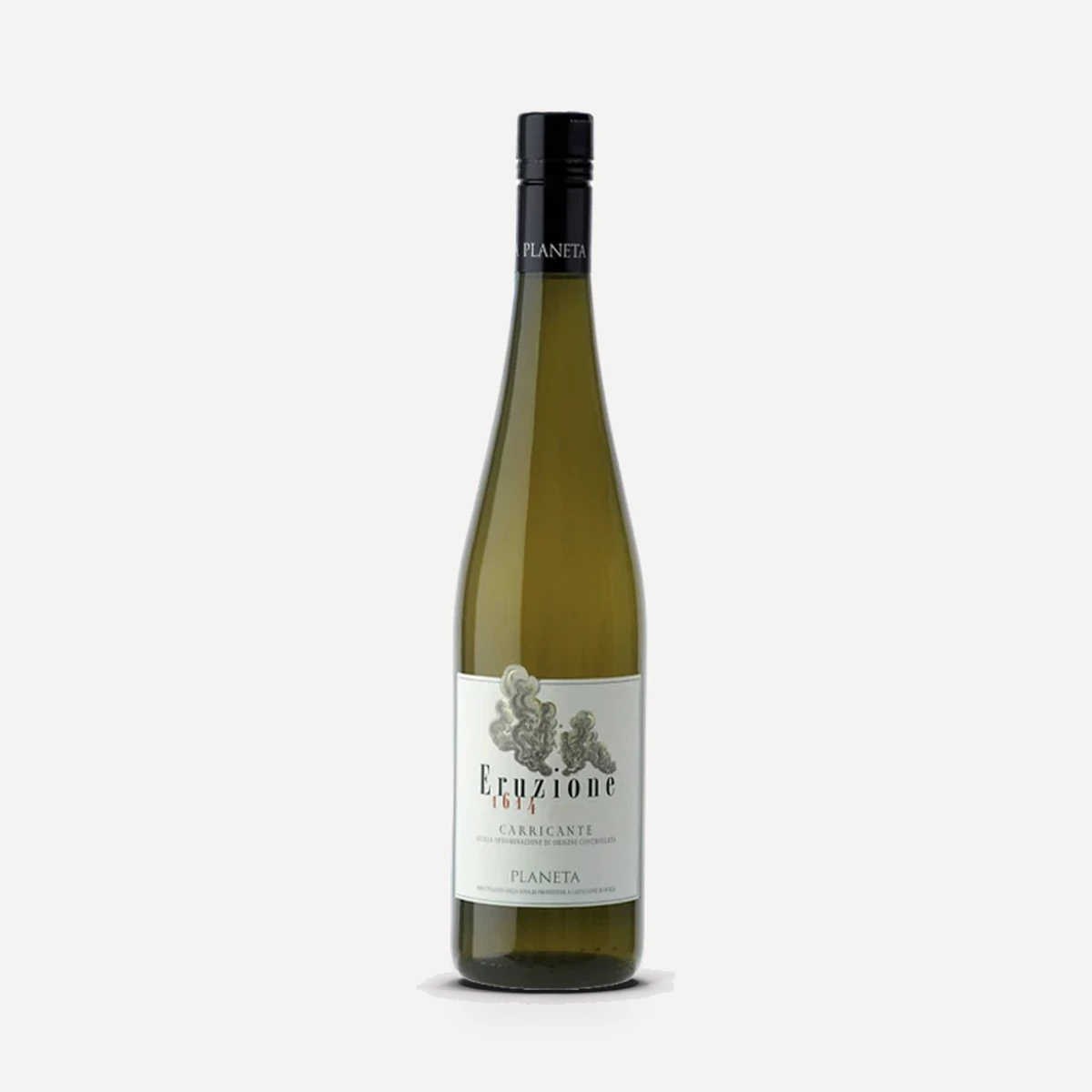
Eruzione 1614 Carricante
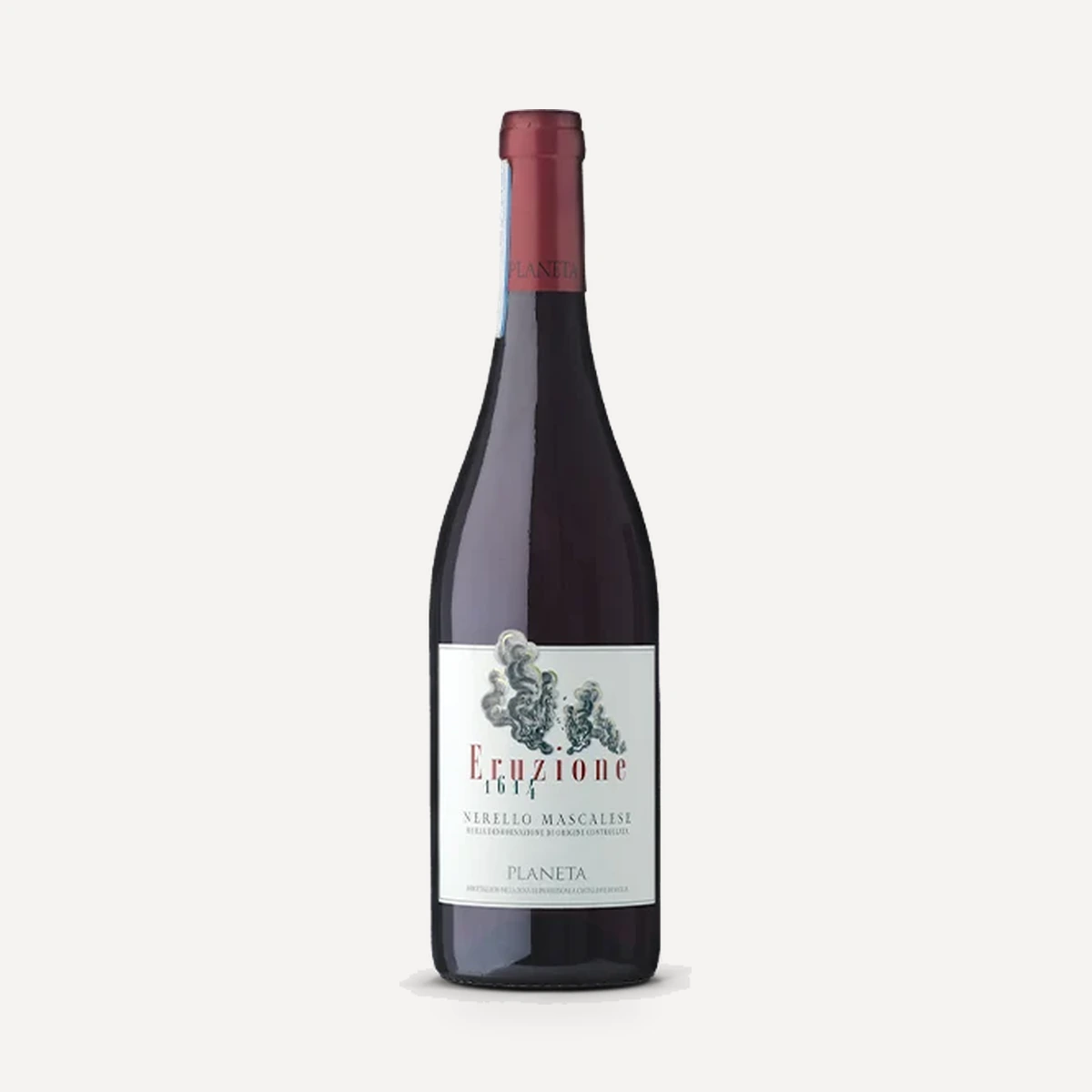
Eruzione 1614 Nerello Mascalese
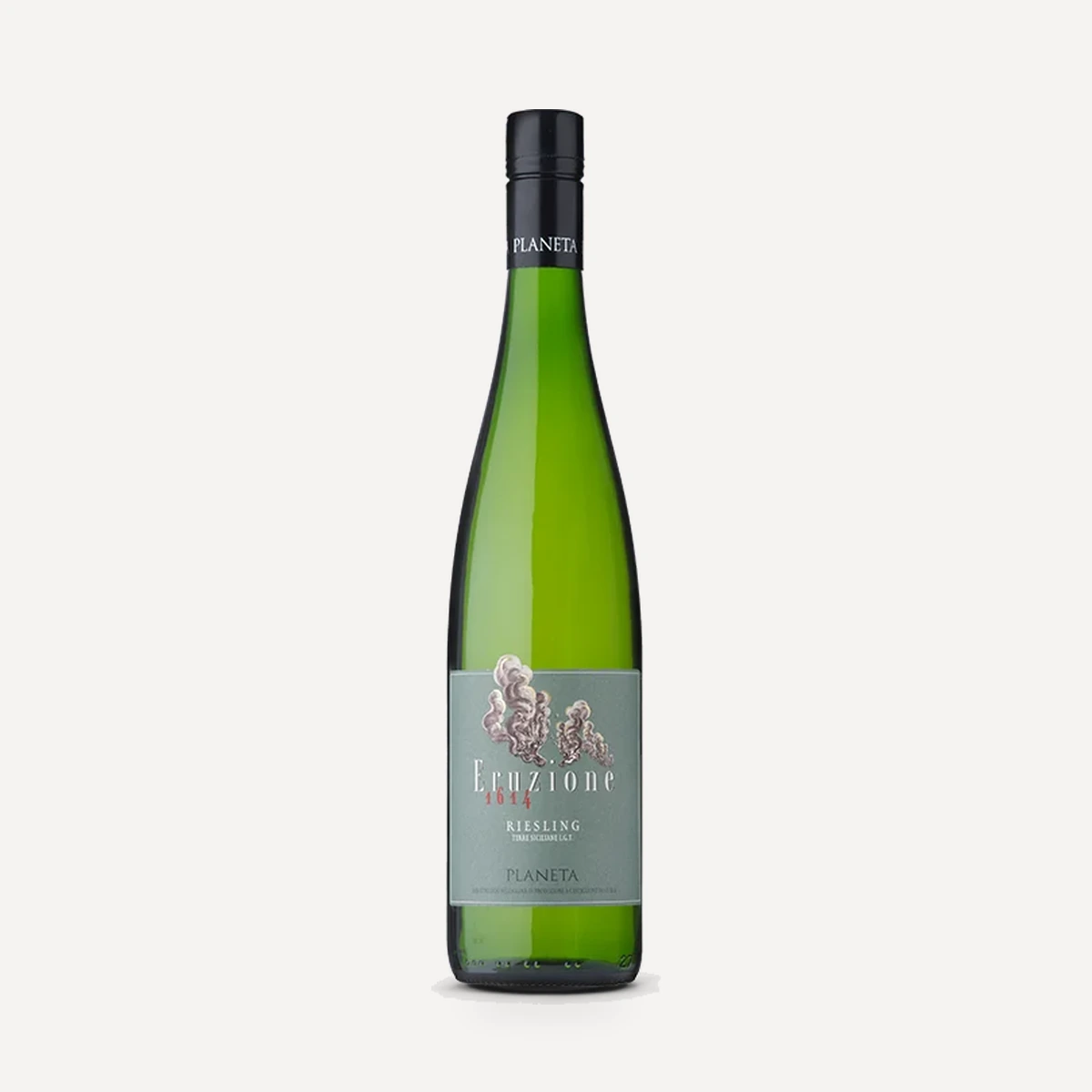
Eruzione 1614 Riesling
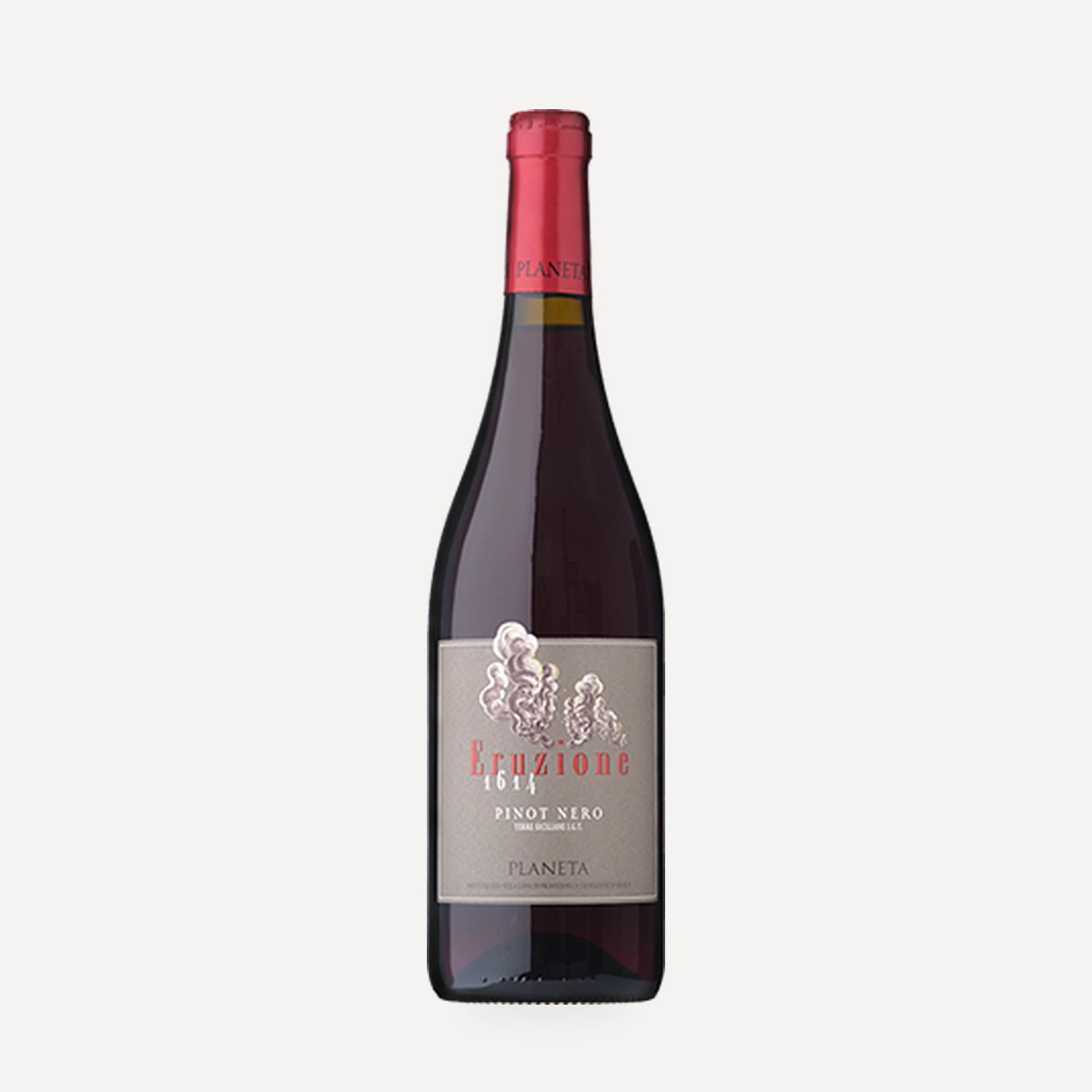
Eruzione 1614 Pinot Nero
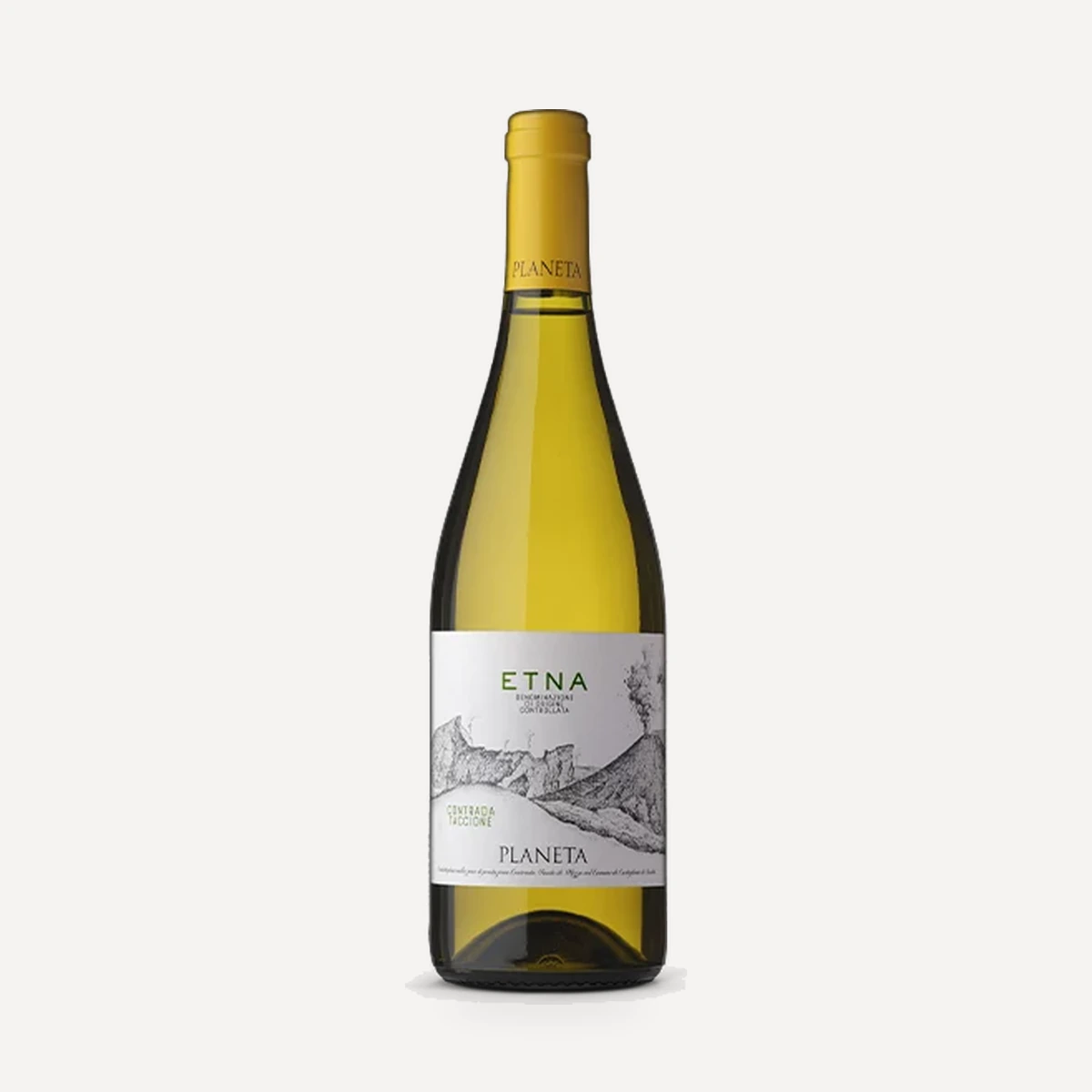
Etna Bianco Contrada Taccione
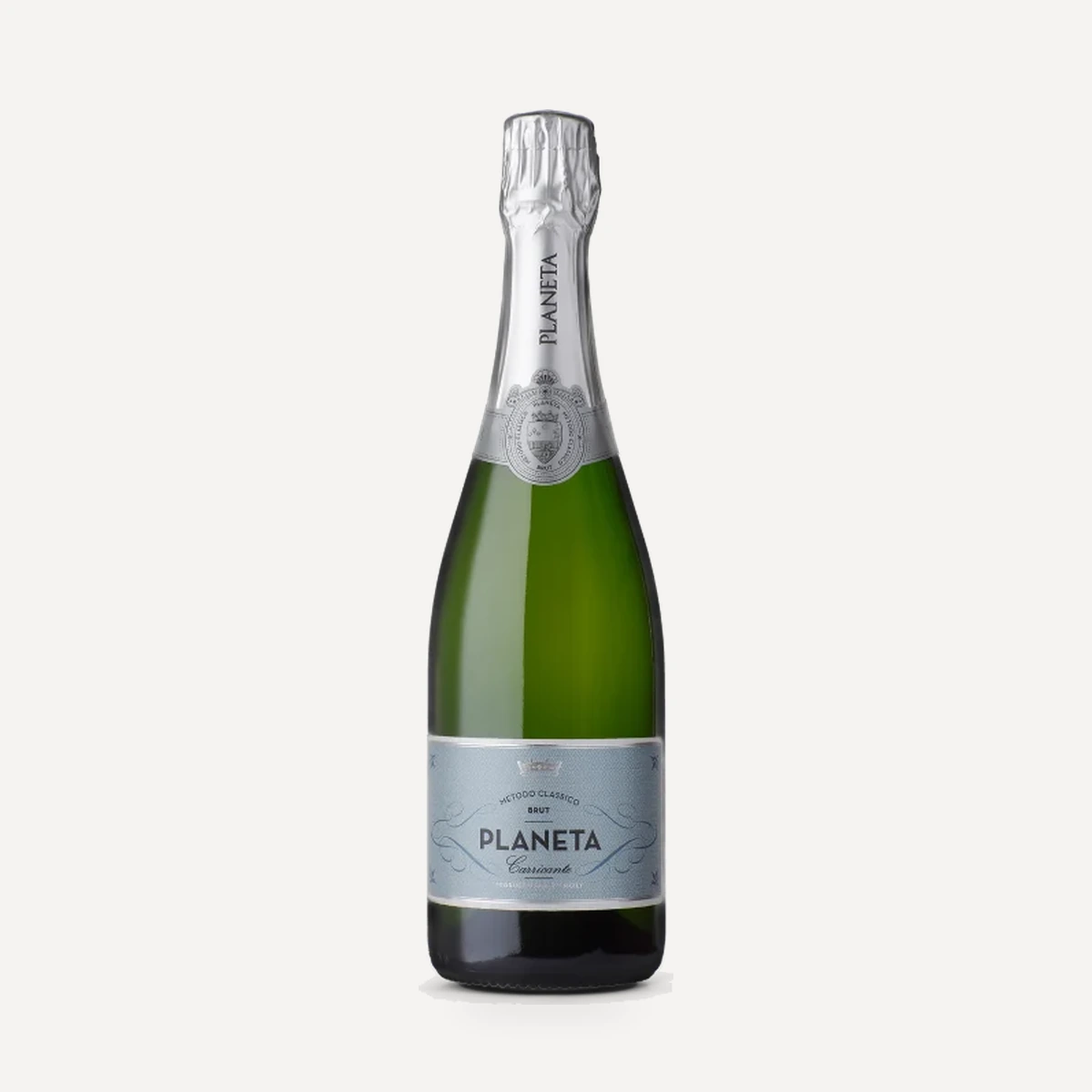
Brut Metodo Classico