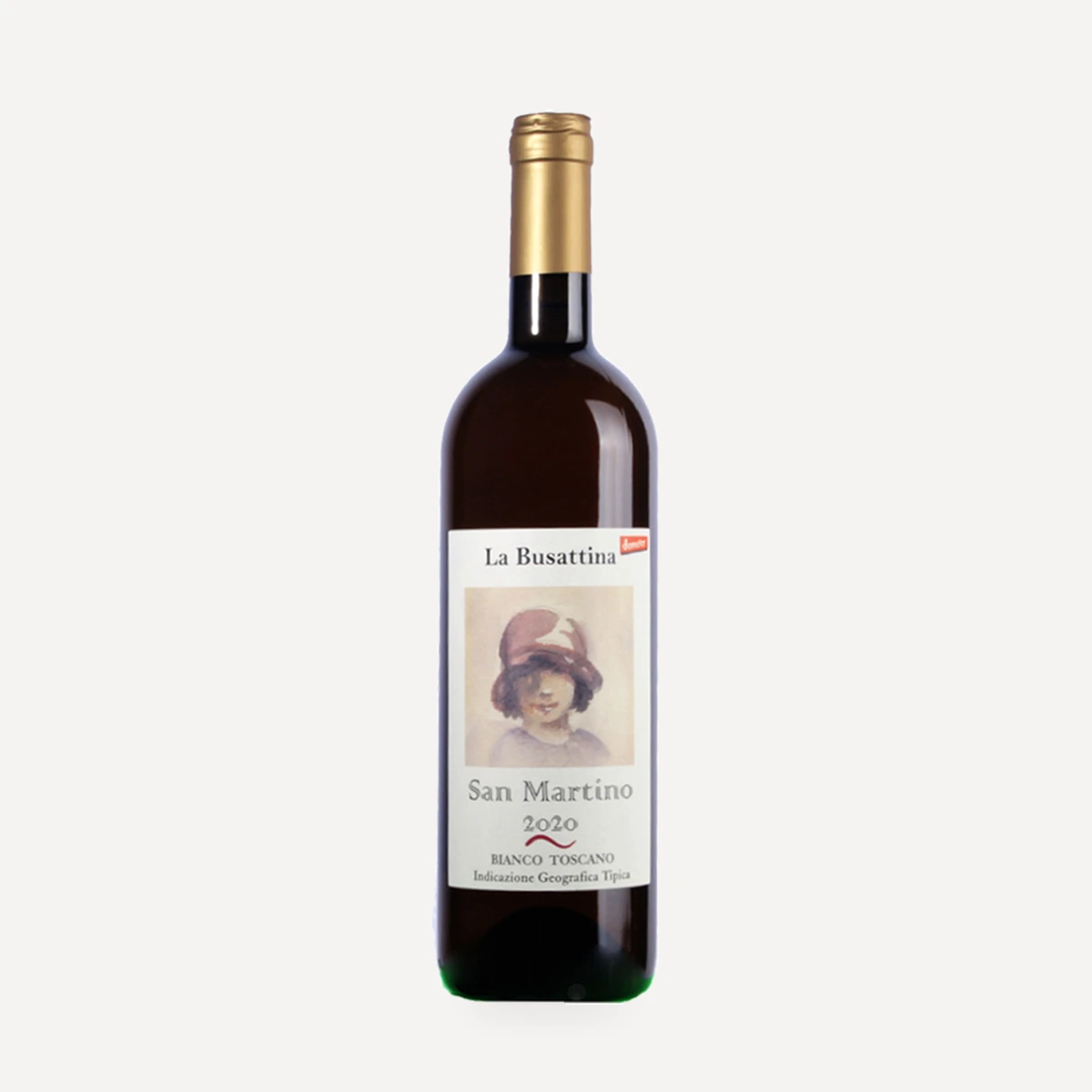
Storia
The old vineyard
Part of La Busattina's viticultural heritage consists of old vines dating from 1975. The estate also has a more recently planted Sangiovese vineyard.
1990: recovery of the estate
In 1990, work began to recover a farm that had been abandoned for many years. Organic farming was adopted from the outset, and La Busattina identifies its activity as natural winegrowing from this date.
1998: biodynamic conversion
In 1998, the estate moved from organic to biodynamic farming and obtained the Demeter mark. Vineyard management came to rely on green manure and biodynamic preparations rather than fertilizers, with pure sulfur and small quantities of copper used against fungal diseases.
Production and planned growth
Wine production stands at about 9,000 bottles. The estate envisages increasing this to approximately 20,000–30,000 bottles over a three-year period.
Terroir
La Busattina lies at the southernmost end of Toscana, between Monte Amiata and the sea, at an elevation of 500 metres above sea level. Its position brings climatic influences from both the mountain and the sea.
The vineyards face southeast and grow on arenaceous soils. Elevation produces a pronounced difference between daytime and nighttime temperatures. This combination of exposure, soil, altitude and thermal variation is associated with the aromatic and mineral character sought in the wines.
Vinificazione
Organic farming has been practiced since the recovery of the estate began in 1990. In 1998, La Busattina adopted biodynamic agriculture and obtained the Demeter mark.
No fertilizers are used in the vineyards. Soil fertility and vine vitality are managed through green manure and the application of biodynamic preparations. Protection against fungal diseases is limited to pure sulfur and small quantities of copper. Harvesting is carried out manually, with the grapes collected in crates.
Vinification takes place in an old stone cellar beneath the historic farmhouse. The process is intended to bring forward the qualities of the grapes and their soils.
Selected yeasts are excluded. Fermentation proceeds without temperature control or refrigeration, and the grapes undergo long macerations. The production statement gives a current output of about 9,000 bottles, with an envisaged increase to approximately 20,000–30,000 bottles within three years.
Filosofia
La Busattina presents itself as a natural-wine estate whose work begins with organic and biodynamic farming. Its approach is intended to emphasize the qualities of the grapes and the land rather than impose a standardized cellar profile.
This principle connects vineyard and cellar practice: fertilizers are excluded; soil management is based on green manure and biodynamic preparations; fungal protection is restricted to pure sulfur and small amounts of copper; and vinification avoids selected yeasts, refrigeration and temperature control while allowing long macerations. The estate's mixed landscape of vineyards, woodland, olive grove, pasture and arable land forms the broader agricultural setting for this approach.
Vini
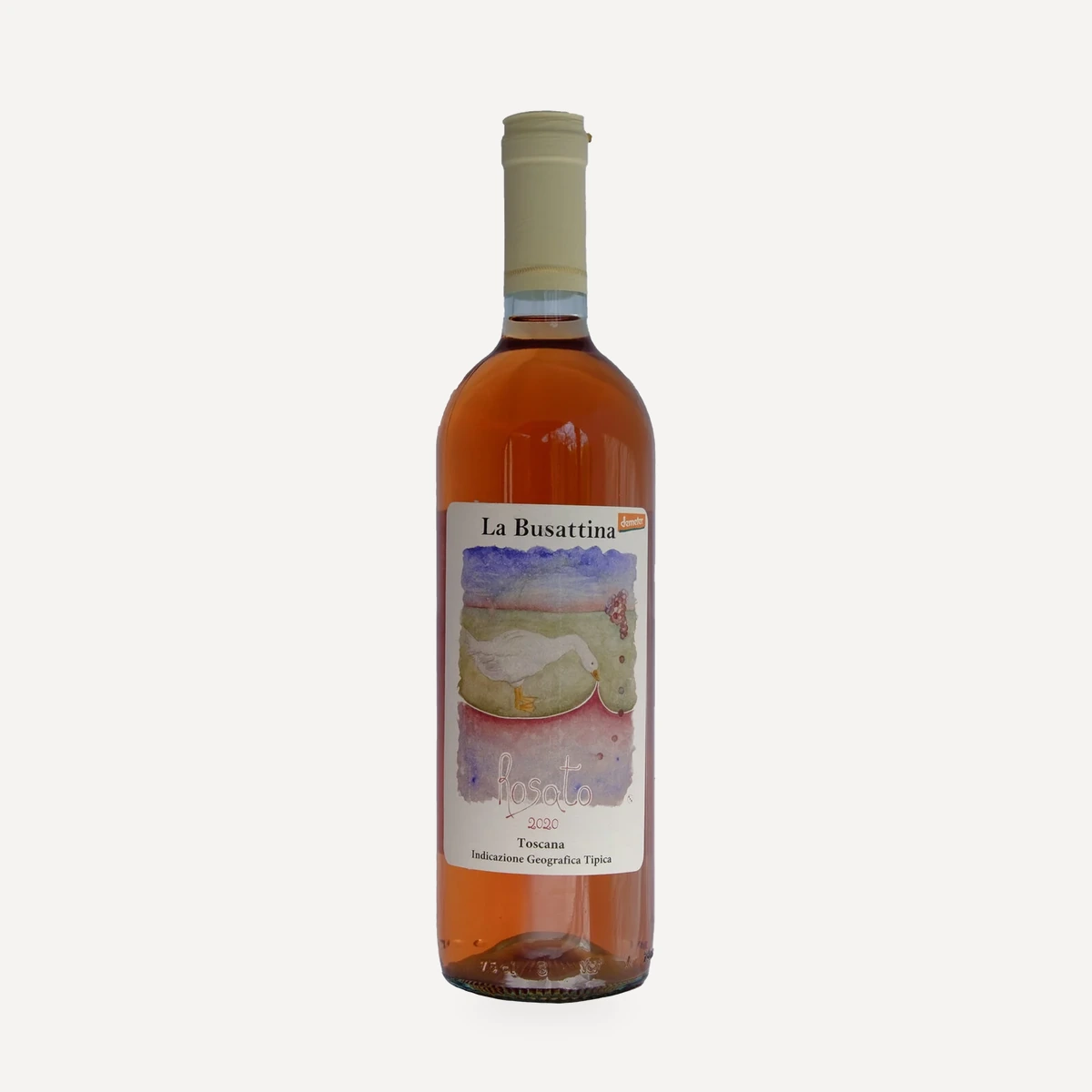
rosato da uve Sangiovese