Storia
Development of the estate
La Màgia’s historic vineyard is a contiguous 15-hectare block of Sangiovese on the central southeastern side of Montalcino. The original cellar was constructed in 1979.
Art and early environmental measures
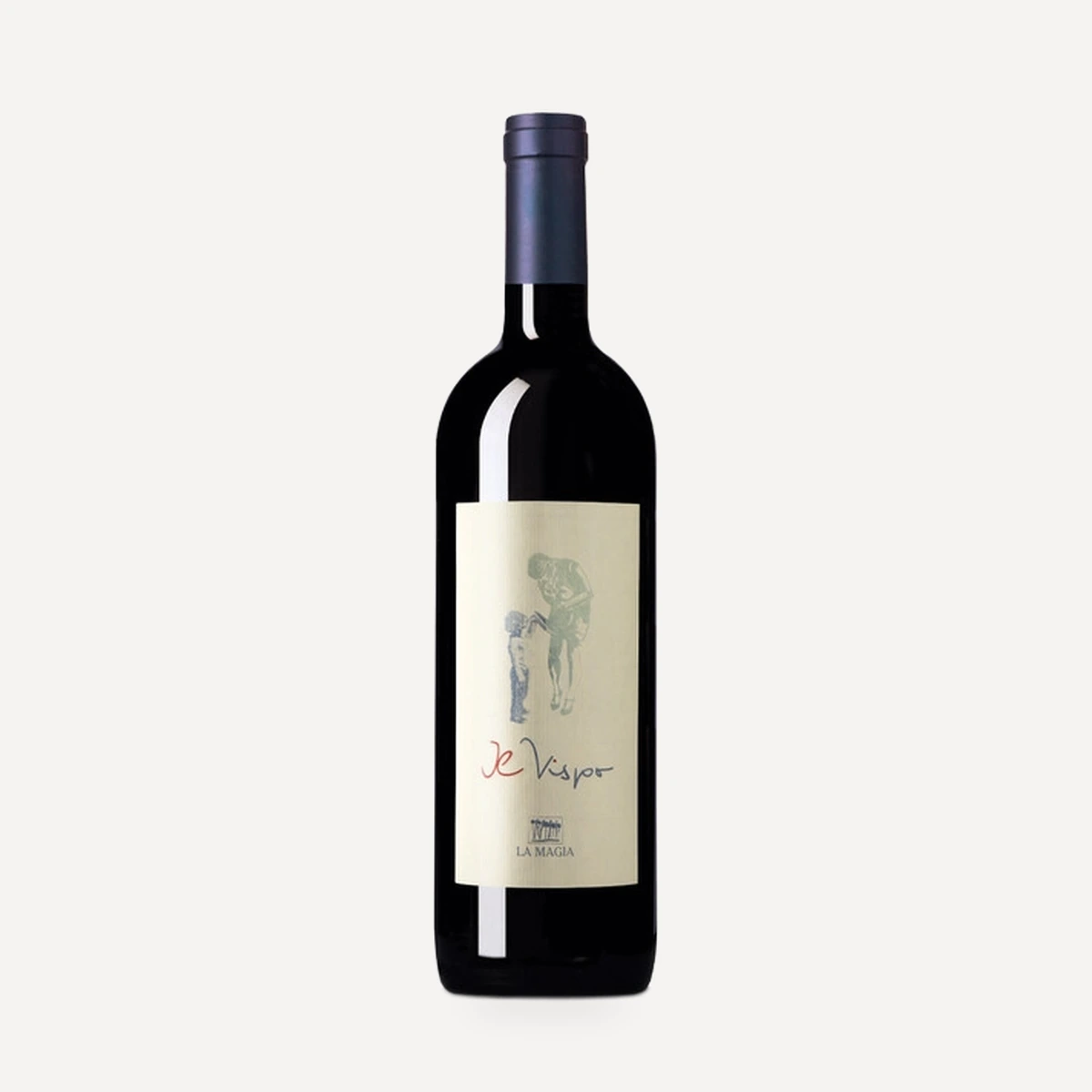
In 1982 the family began producing limited quantities of bottles with labels designed by contemporary artists whose work it admired, establishing an ongoing connection between wine and visual art.
By the end of the 1980s, the cellar had begun using renewable energy. The first installation consisted of solar panels that supplied hot water.
Cellar renovation
A major renovation began in 1998. The project created larger, more welcoming spaces for both initial fermentation and maturation. Its architectural design was intended to let cellar work proceed as naturally as possible while accommodating modern technology.
Energy self-sufficiency
In 2008 a photovoltaic system was installed, making the cellar self-sufficient in energy.
Transfer to the next generation
In 2011 Harald Schwarz handed responsibility for the estate to his son, Fabian Schwarz. Fabian had studied contemporary viticulture and winemaking at the Istituto Agrario San Michele all’Adige, an agricultural school and research centre, before gaining professional experience abroad.
He subsequently worked through the estate’s agronomic, oenological, sales and marketing activities and assumed overall management. His relationships with former teachers, fellow students and producers developed into a professional network for exchanging experience and discussing production. La Màgia also began collaborating with universities and European programmes and receiving interns and Erasmus students from abroad.
Terroir
La Màgia lies on the central southeastern side of Montalcino. Its principal vineyard occupies a single, contiguous 15-hectare block at 400–450 metres above sea level, with southeast exposure.
The ground is predominantly stony. Its upper layer consists of stony sand approximately 20 centimetres deep, above a subsoil containing silt and clay. The finer materials retain water below the surface and continue supplying the vines during dry periods.
The historic Sangiovese vines form the core of the estate. The entire 15-hectare block is registered for Brunello di Montalcino, while a naturally low-vigour portion containing the oldest vines is identified separately as Ciliegio.
Vinificazione
The estate’s 15-hectare Sangiovese vineyard is farmed under organic certification. This approach is presented as the continuation of decades spent working to preserve the Montalcino terroir.
The vineyard is maintained as one contiguous block, entirely eligible for Brunello di Montalcino. Its southeast exposure and elevation of 400–450 metres define the site, while the stony surface and water-retentive silt and clay beneath help sustain the vines during dry conditions.
Fabian Schwarz directs the agronomic side of the estate as part of his overall management. His training at San Michele all’Adige and continuing exchange with professors, former students and other producers support the development of vineyard practices. International interns and Erasmus students are also welcomed through collaborations with universities and European programmes, particularly during the harvest period.
The original cellar dates to 1979. Its major 1998 renovation expanded and reorganised both the preliminary fermentation and maturation areas. The architectural plan was conceived to give cellar workers sufficient space and allow vinification to proceed naturally while still making advanced technology available.
The production philosophy combines modern equipment with minimal interference in natural vinification. Cellar energy measures began in the late 1980s with solar panels for hot water. A photovoltaic system installed in 2008 subsequently made the facility energy self-sufficient.
Filosofia
La Màgia’s approach is centred on protecting the Montalcino terroir through organic farming and allowing the estate’s site to retain its identity in the finished wines. In the cellar, this means combining advanced technology with limited intervention in natural vinification rather than treating technology as an end in itself.
Continuity between generations is paired with formal agricultural education, international experience and regular technical exchange. Fabian Schwarz’s professional network, university collaborations and work with interns and Erasmus students reflect a philosophy in which shared experience provides new ideas and supports continual improvement.
Environmental responsibility extends to cellar infrastructure: solar hot-water production was followed by photovoltaic generation sufficient to make the winery energy self-sufficient. The family also maintains a longstanding dialogue between wine and contemporary art through limited artists’ labels.
Vini
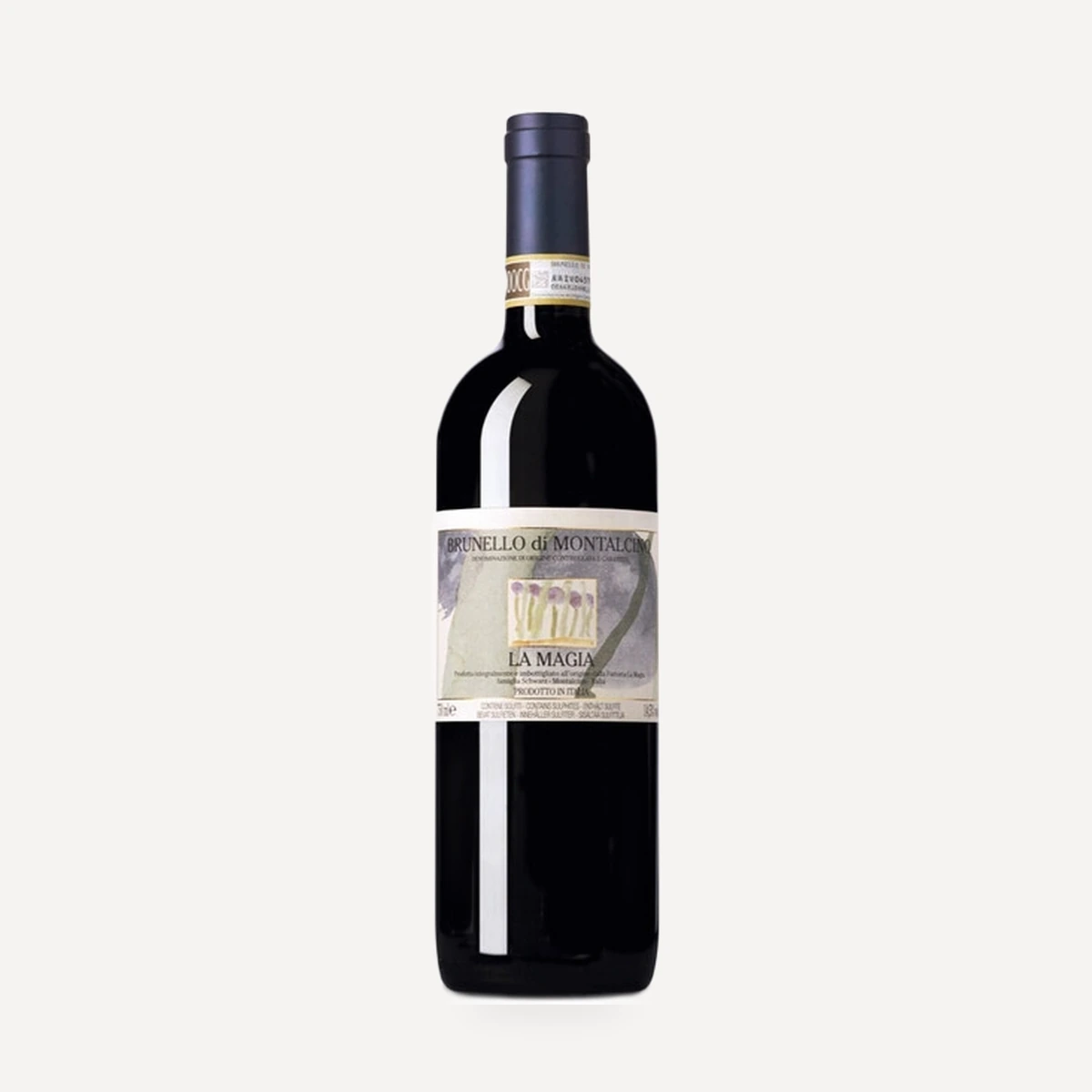
Brunello di Montalcino DOCG
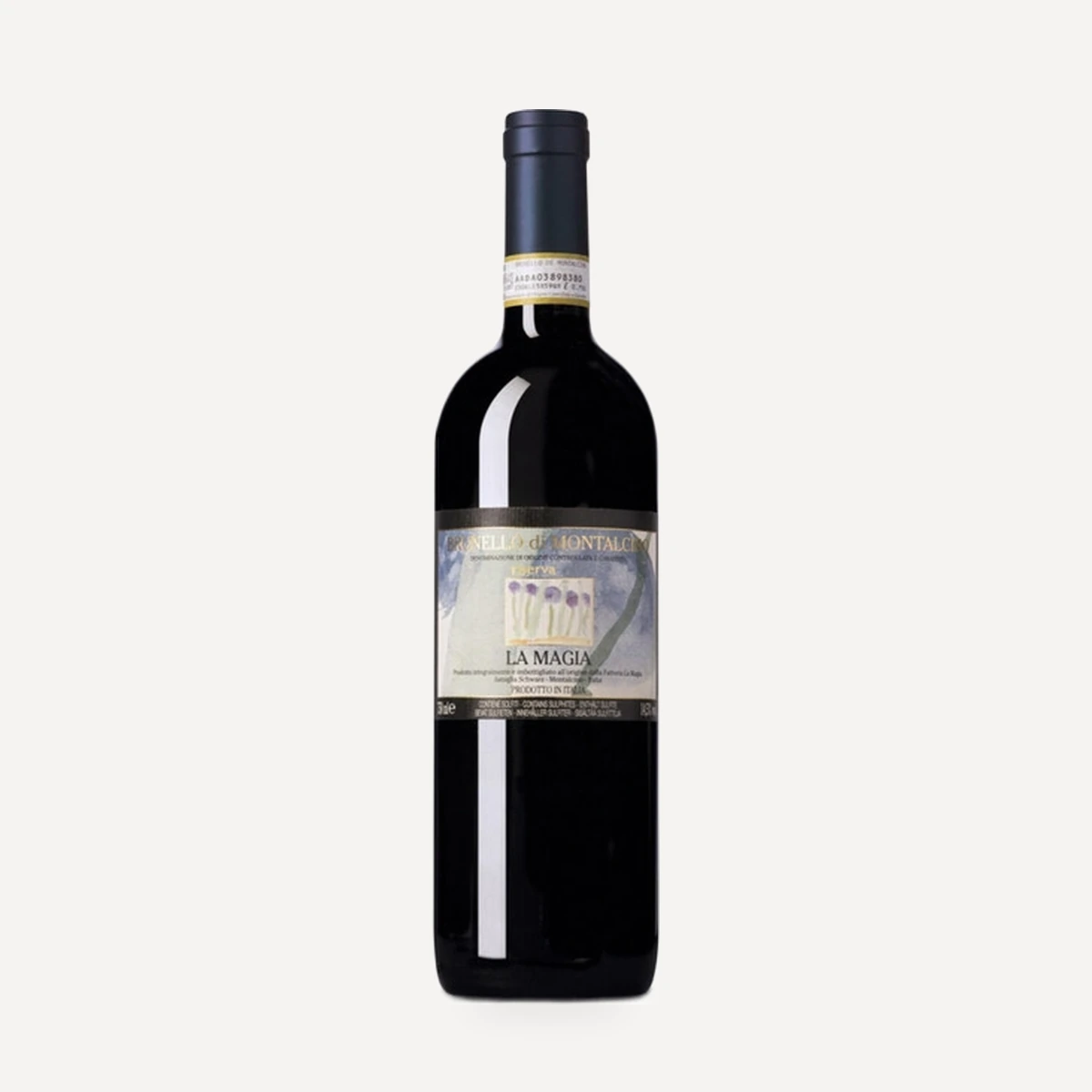
Brunello di Montalcino Riserva DOCG