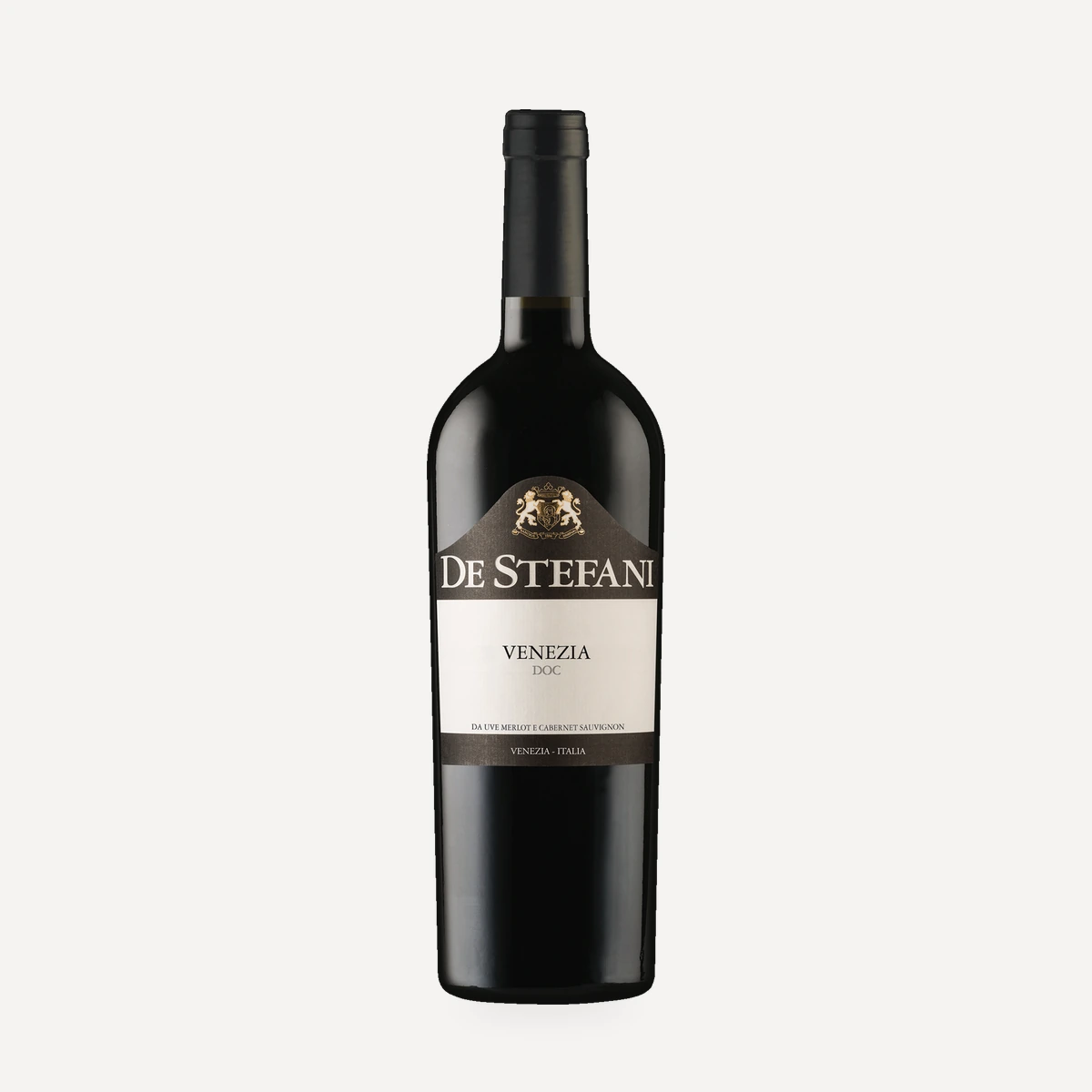
Storia
The site during the First World War
During the night of 8–9 July 1918, the seriously wounded Ernest Hemingway was carried to an already bomb-damaged house occupying the site of the present Fossalta di Piave winery. He received early treatment there before being transferred through several hospitals. A commemorative plaque records the episode.
Establishment in the Piave Valley
Tiziano De Stefani, the family's third generation, graduated from the Oenological and Viticulture School of Conegliano in 1958 and assumed management of the family business. He subsequently extended its activity from the hills of Refrontolo into the Piave Valley.
After several years spent identifying land suited to distinctive white and red wines, the family acquired its first vineyards in the Piave area in 1963 and began vinifying grapes in Fossalta di Piave. The resulting property became Le Ronche Estate. Traditional varieties were planted on its clay-rich alluvial terrain.
Technical development
Temperature control for fermentation and wine refinement was installed in 1969. Small barrels for maturation followed in 1972. In 1984, vineyards were planted at 4,200 vines/ha, an unusually high density in the area at that time and a means of reducing the crop carried by each vine.
Fourth-generation management
Alessandro De Stefani graduated in Oenology and Viticulture at Conegliano in 1992 and joined his father Tiziano in managing the business. He continued his education with business studies at the universities of Venice and Warwick. A new vinification cellar was built at Fossalta di Piave in 1993.
Natural production and denser planting
A Raboso Piave vineyard intended for Malanotte was planted in 2007. That year also marked the formal adoption of a more natural production policy: vineyard work ceased to use chemical herbicides and fertilizers, while cellar practice moved toward vinification without added preservatives or sulphites.
In 2009, relevant vineyard blocks were brought to 8,400 vines/ha while retaining vines planted in 1985 and 1986.
Cellar expansion and certification
The Fossalta di Piave winery was enlarged in 2013. The project created modern areas for maturation in barriques and bottles, a controlled room for drying grapes, and dedicated tasting and presentation spaces.
A structured sustainability system was subsequently applied to vineyard, cellar and bottling operations. Equalitas Sustainable Organization certification was first issued on 3 April 2024 for cultivation, vinification, production and bottling at the Fossalta di Piave and Refrontolo operating units. The certificate issued on 29 April 2025 remains valid through 31 July 2026.
Terroir
Le Ronche lies at Fossalta di Piave in Veneto, east of Treviso and northeast of Venice. The estate is a few hundred metres from the Piave, approximately 10 km from the Adriatic Sea and about 50 km from the Dolomites.
Over millennia, the Piave deposited sediments across this part of eastern Veneto. The estate's alluvial soil is known as caranto, a combination of white clay and mineral or rock material transported from the Dolomites. Clay is a prominent component and releases water and nutrients gradually, supporting a balanced relationship between vine growth and crop production.
The position between river, sea and mountains promotes regular air movement and marked differences between daytime and nighttime temperatures. The climate is mild and ventilated, with relatively few rain showers and warm summers. The diurnal range helps retain acidity and aromatic character, while summer warmth supports full ripening. Clay-rich, mineral soils contribute to the structure and natural balance of the fruit.
Vinificazione
Vineyard management follows environmental and worker-safety criteria and the rules of Italy's SQNPI integrated-production system. Chemical herbicides are not used; vegetation beneath the vines is controlled mechanically. Permanent cover is maintained between rows without routine cultivation, apart from mowing and green manure sown in alternating rows.
Emergency irrigation is used only when strictly necessary. Decisions draw on the estate weather station, local meteorological bulletins, soil characteristics and direct vineyard observations. Blocks with a history of requiring supplementary water have buried drip systems designed to reduce consumption.
Disease and pest pressure is monitored continuously. Plant-protection materials are assessed with preference for those carrying lower risks for the environment, operators and nearby communities. More than 10% of the land managed by the business consists of natural, non-agricultural or semi-natural areas, including woodland, hedges, headlands and vineyard margins. These areas receive no plant-protection treatments. Medium-to-tall vegetation connects cultivated blocks with natural habitats, while vegetated buffer strips at least 3 m wide protect water bodies, woodland and semi-natural areas from fertilizers and plant-protection treatments. Permanent vineyard cover also supports pollinating insects. The vineyards hold Biodiversity Friend certification.
Canopy work is adapted to individual sites and varieties. It includes summer shoot trimming, careful leaf thinning and green harvesting. Older estate blocks commonly reach 8,400 vines/ha and are managed for deliberately low yields per vine. Training systems include Guyot and spurred cordon.
Harvest dates are determined through berry tasting, fruit-health assessments and analysis of chemical maturity. Hand harvesting is used for naturally vinified lots and for the Raboso destined for Blanc de Noirs. Grapes reach the cellar within six hours, where they are weighed and assigned lot numbers for traceability.
Le Ronche in Fossalta di Piave is the centre for vinification, maturation and commercial operations. A dedicated vinification cellar was built in 1993. Its 2013 expansion added modern areas for maturation in barriques and bottles, a controlled grape-drying room, and spaces for tastings and presentations. The maturation facilities include oak barrels and a dedicated barrique room.
Production methods vary by grape and intended style. White-wine processes include whole-bunch or whole-berry pressing, gentle pressing, cold static clarification and temperature-controlled fermentation in concrete vats or barriques. Wines may mature for several months on fine lees in concrete, oak or stainless-steel vessels, with frequent lees stirring to increase texture and suppleness.
Red-wine methods include destemming and crushing, skin maceration and temperature-controlled fermentation in concrete or specialized vessels, accompanied by frequent pumping over. Depending on the lot, alcoholic fermentation may finish in stainless steel. Maturation ranges from approximately 12 months on fine lees in barriques to longer élevage in French oak followed by bottle refinement. Kreda ferments and macerates in concrete before spending 12 months in new 225-litre French-oak barriques and a further 12 months in bottle.
The Naturalmente approach uses estate-grown fruit harvested by hand, indigenous yeasts, skin-contact fermentation, minimal cellar manipulation and no filtration. One red protocol ferments with indigenous yeasts in concrete, remains for approximately 12 months on fine lees in barrique and is bottled unfiltered with a low sulphite level. The natural-production policy adopted in 2007 also pursued vinification without added preservatives or sulphites.
Traditional-method Blanc de Noirs is made from estate-grown Raboso. The grapes undergo gentle pressing, cold static clarification and temperature-controlled primary fermentation. The cuvée is assembled in spring and bottled for a second fermentation at 12°C, followed by 24 months of maturation at the same temperature on indigenous yeasts.
Analytical and sensory parameters are monitored throughout production, and cellar operations are recorded digitally for control and traceability. A thermally insulated warehouse reduces cooling requirements. Photovoltaic power supports daytime cooling, while cooler nighttime air provides natural cooling. Lees and pomace are sent for distillation; stems and vine prunings return to the vineyards as natural fertilizer; winery wastewater is recovered for fertigation.
Filosofia
The family's declared objective is quality without compromise, pursued through old vines, very high planting densities, low yields and an emphasis on varieties native to the territory. Vineyard and cellar decisions are intended to express the production area and preserve the wines' capacity for long development.
Alessandro De Stefani's natural approach combines organic and biodynamic principles in the vineyard with indigenous yeasts and restrained cellar manipulation. Designated wines are bottled without filtration and with low or no additions of sulphites. Tradition and technical development are treated as complementary: controlled fermentation, specialized drying facilities and analytical monitoring support the expression of site and vintage.
Sustainability encompasses environmental, social and economic responsibilities. Equalitas provides the organizing standard for a process of continuous improvement. Priorities include conserving soil and water, protecting biodiversity, reducing cellar energy and water consumption, recovering production by-products, expanding renewable-energy generation and selecting lighter, recyclable packaging from qualified suppliers.
Vini
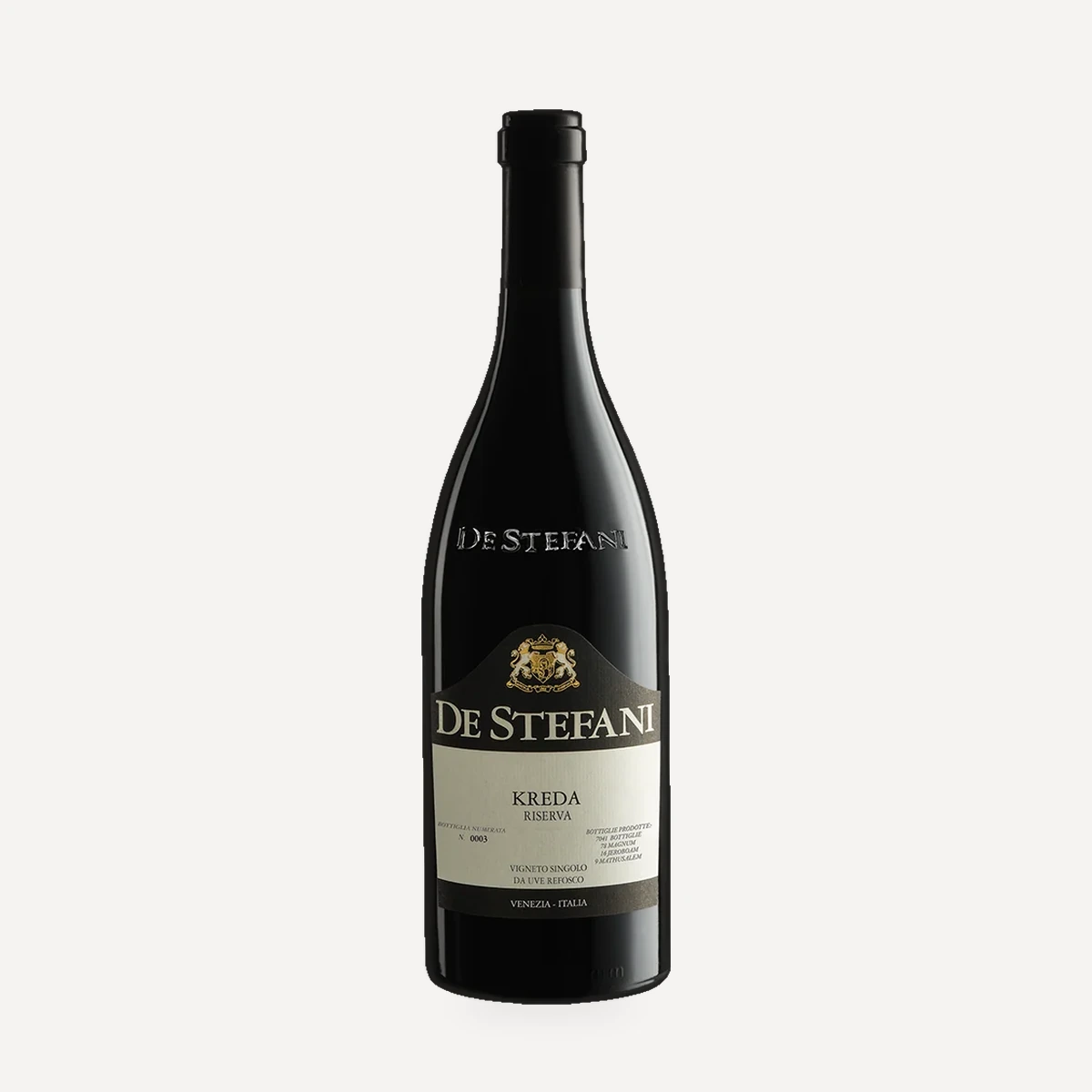
Kreda Refosco Single Vineyard
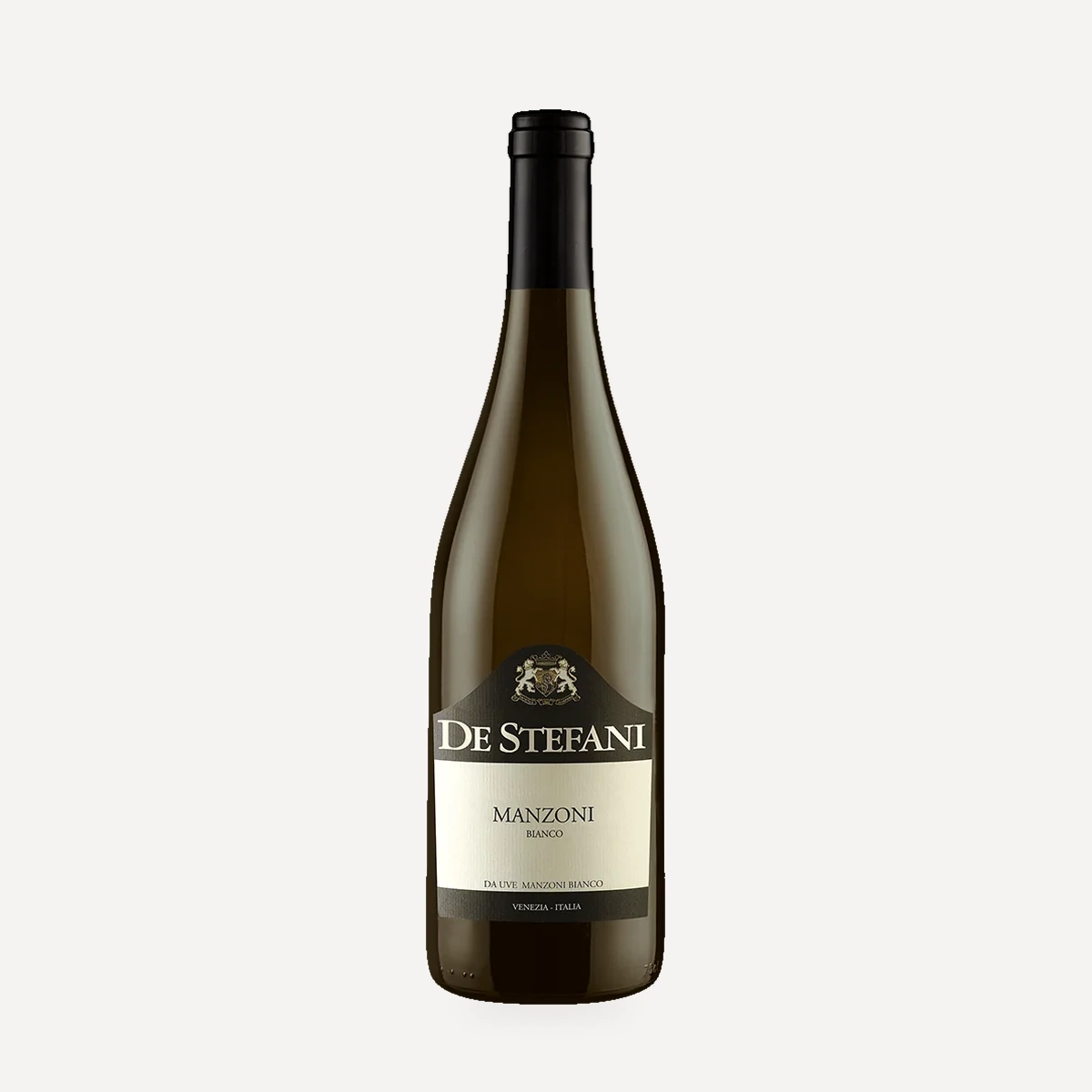
Manzoni Bianco