Storia
The Leopardo family’s farming roots
Federigo Leopardo’s parents were farmers in the mid-20th century. Their first fields in the Valdarno were difficult terraced plots on the mountain. Federigo’s mother tended the sheep, while his father worked the land before becoming a miner. He travelled the 23 km between Loro Ciuffenna and the mine at Castelnuovo dei Sabbioni by bicycle each day.
Settlement at Campo Lacconi
At the beginning of the 1960s, the Leopardo family settled at Campo Lacconi, a small locality on the slopes of Pratomagno. The family acquired 4 ha and used the land to produce wine and olive oil and to grow wheat and barley.
Federigo grew up closely connected to the farm. He first drove a tractor at the age of seven and remembered meeting the village priest during that first drive. He later trained as an electrician and electrotechnician.
1980: construction work and continued farming
In 1980, Federigo left full-time work on the land for the construction trade. His successive jobs included labourer, bricklayer, bulldozer operator and excavator operator. Despite spending his days on construction sites, he continued working in the fields during the remaining daylight hours.
Return to the family land
Federigo subsequently restored the family fields and house at Campo Lacconi. He selected and planted aromatic and medicinal herbs, studying both the plants themselves and the local traditions surrounding their use. He also renovated the former stable where his father had kept calves and horses, converting it into facilities for drying, processing and packing the herbs.
The renewed family farm combined the earlier production of wine and olive oil with organically cultivated herbs, saffron and handcrafted herbal teas. Federigo developed this activity with his wife, Valentina, placing organic cultivation, limited mechanical intervention, natural drying, manual processing and recyclable packaging at the centre of the project.
Terroir
The Leopardo family’s land is at Campo Lacconi, on the slopes of Pratomagno in the Valdarno. The medicinal and aromatic crops are cultivated in this setting.
The Balze del Valdarno
During the Pliocene and Pleistocene, the Valdarno was occupied by a large lake. As its waters retreated, the remaining sediments were exposed to weathering and prolonged erosion, creating the formations known as the Balze del Valdarno.
The Balze consist of clay, sand and gravel and can reach approximately 100 metres in height. Rain continues to cut into their walls and bases, maintaining a slow process of erosion. Their exposed material has an ochre-yellow colour that changes with the light from sunrise to sunset, while some clay layers are blue.
At the end of the 20th century, part of the formations within Castelfranco-Piandiscò, Loro Ciuffenna and Terranuova Bracciolini was declared an Area Naturale Protetta di Interesse Locale. Leonardo da Vinci was fascinated by the landscape and represented the Balze as backgrounds in several paintings.
Vinificazione
Leopardo operates as a CCPB-certified organic farm. The medicinal herbs and saffron are specifically identified as CCPB-certified organic crops. Federigo and Valentina chose to keep mechanical intervention in their organic cultivation as limited as possible. The plants are processed by hand, dried naturally and packed individually.
These practices are explicitly associated with the farm’s medicinal and aromatic plants; the organic certification and field methods are not separately defined for the vines or wine production.
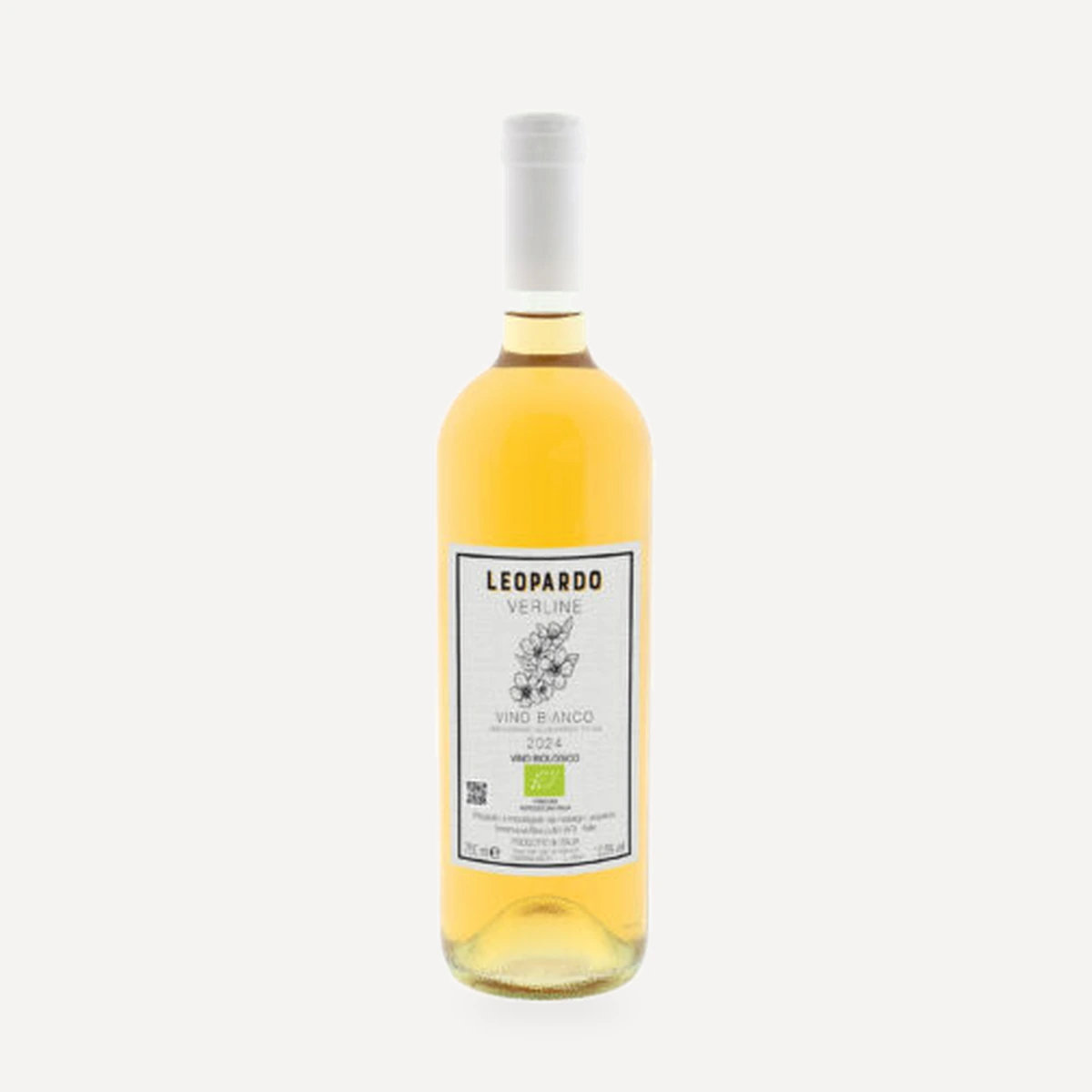
The farm produces wine described as IGT and associated with the Chianti Colli Aretini denomination. The family’s wine production dates at least to the early 1960s, when its newly acquired 4 ha at Campo Lacconi were used for wine and olive oil as well as wheat and barley.
Filosofia
Federigo Leopardo’s project is grounded in continuity with his parents’ agricultural life and in his return to the land where he grew up. Restoring the family fields and house allowed him to develop a form of farming that his parents had not previously pursued: the cultivation and handcrafted transformation of aromatic and medicinal plants.
Personal attachment to the land is paired with professional preparation. Federigo studied the cultivated species and the area’s traditions of herbal use, regarding technical knowledge and consumer protection as necessary complements to affection for the farm.
Together with Valentina, he adopted organic cultivation, sought to limit mechanical work, and favoured natural drying and manual processing. Packaging is intended to be as natural and recyclable as possible while also shielding the contents from air and light until use.
Vini
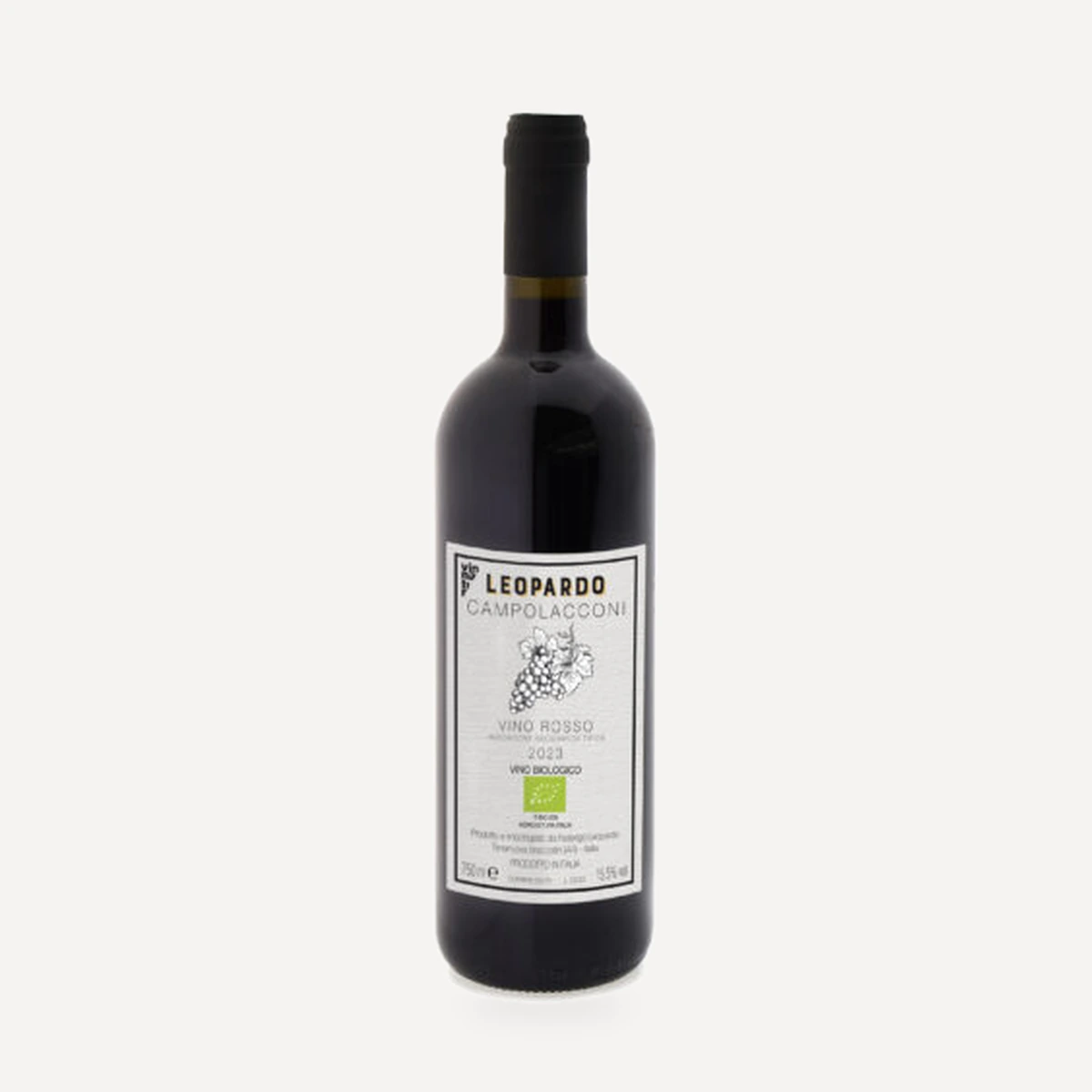
Campolacconi 2023