Storia
The antecedent: Merlot in Montalcino
During the 1970s, the Frescobaldi family introduced Merlot to Montalcino. This early experience with the variety later became an important foundation for a project conceived outside the conventional boundaries of the area’s wine tradition.
A meeting and a new project
In the early 1990s, Vittorio Frescobaldi met Robert Mondavi. Drawing on the experience of two long-established wine families, they set out to create a Montalcino wine that would acknowledge the area’s traditions while moving beyond their established limits. The resulting project was named Tenuta Luce.
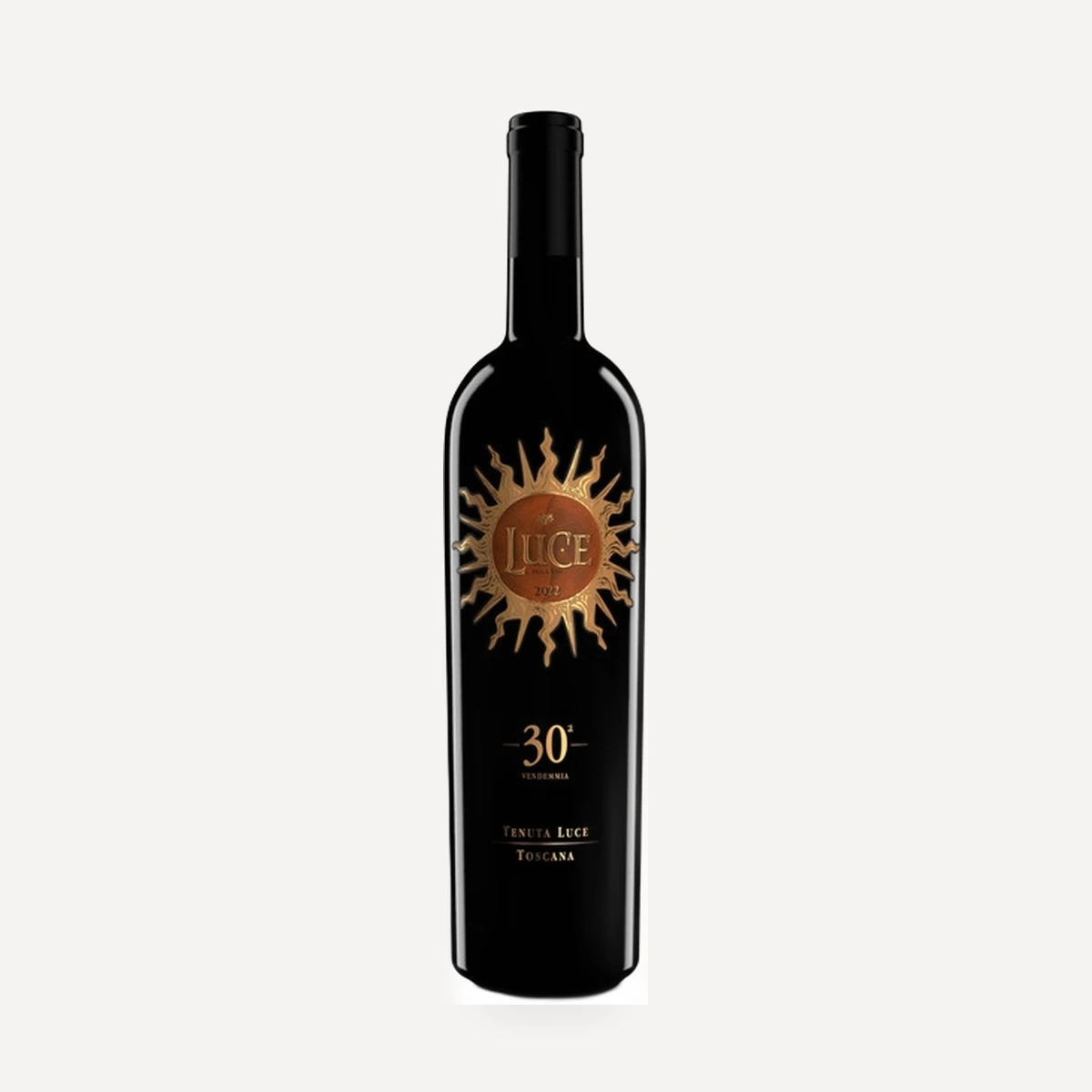
The name refers to Montalcino’s sunlight: the source of warmth, energy and life, as well as the force that marks the seasons and regulates agricultural work. Luce became the estate’s emblematic wine and the first Montalcino wine based on a combination of Sangiovese and Merlot. The inaugural vintage was 1993.
Frescobaldi stewardship
The partnership with the Mondavi family ended in 2004, after which responsibility for the estate passed entirely to Lamberto Frescobaldi. In 2005, Lamberto, Vittorio’s son, formally inherited the direction of the Tenuta Luce project. He assumed responsibility for production decisions from the vineyard through the creation of each vintage’s blends.
Under Frescobaldi ownership, Tenuta Luce retained its identity as an autonomous estate. This approach reflects the family’s broader commitment—developed over approximately 700 years—to combining tradition and experience with innovation, creativity and the distinct identities of Tuscany’s different terroirs.
New vineyards, wines and winery
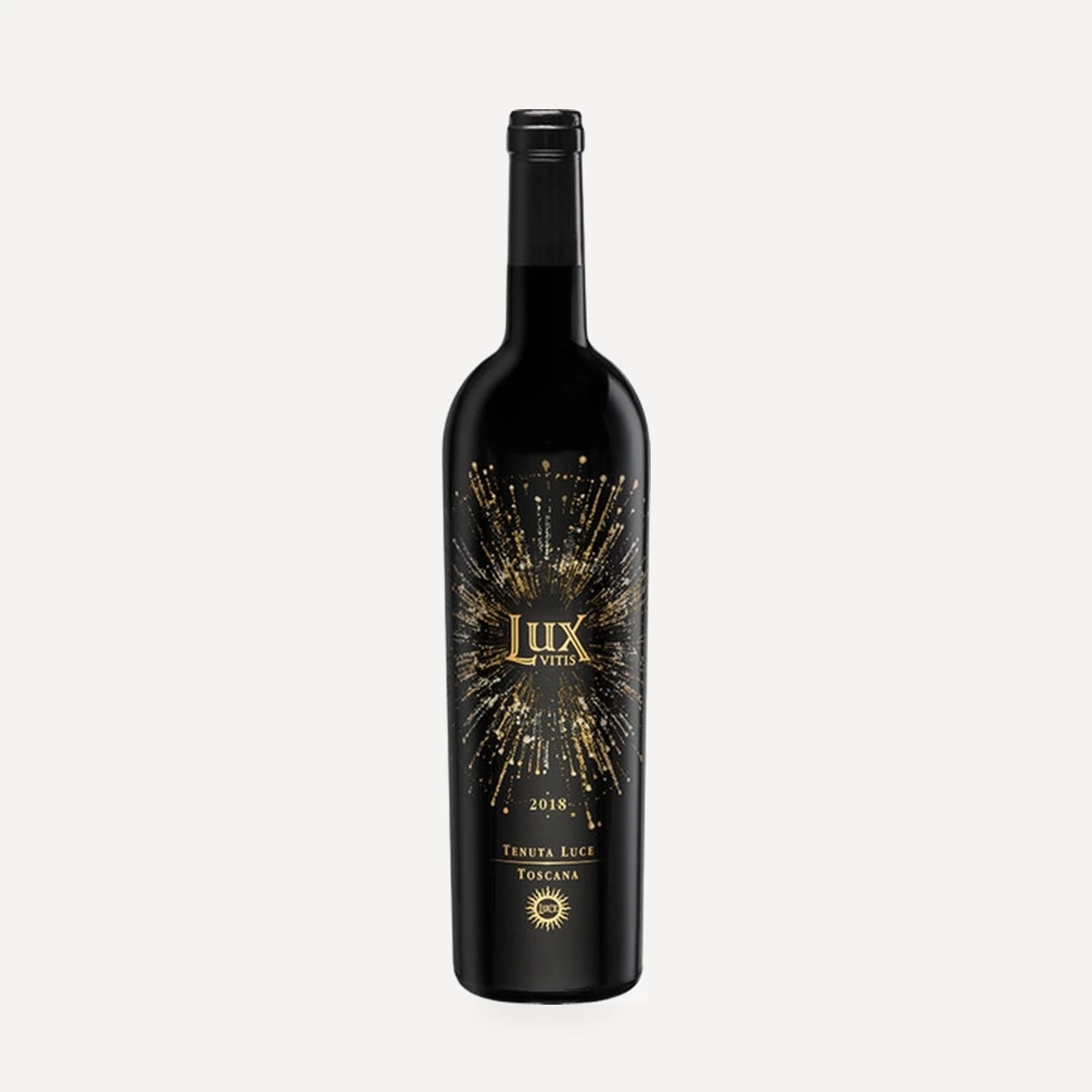
A 3-hectare Cabernet Sauvignon vineyard was planted in 2004 on mixed sandy soil. Years of observing the vines and the quality of their grapes led to the creation of Lux Vitis. The wine was introduced in 2015, combining Cabernet Sauvignon with a small proportion of Sangiovese.
In 2016, following the estate’s latest acquisition, Tenuta Luce established a new winery. The underground building was integrated beneath a hill occupied by two pre-existing farmhouses and designed to accommodate the complete path from grape reception to bottle storage.
The new complex also became home to Collezione Luce, the estate’s historical cellar. Conceived as an archive of vintages and constructed according to the golden ratio, it preserves the estate’s history year by year.
Thirty vintages
On 17 September 2024, Lamberto Frescobaldi and Tim Triptree conducted a complete vertical assessment of the first 30 vintages of Luce, from 1993 through 2022. The project produced an anthology of 30 individual vintage evaluations and marked three decades of the estate’s founding vision.
Terroir
Tenuta Luce occupies 249 hectares southwest of the hilltop village of Montalcino. Its setting combines vineyards with extensive woodland and olive groves in a sparsely populated environment rich in biodiversity. The surrounding Montalcino landscape forms part of the Natural and Cultural Artistic Park of Val d’Orcia.
The estate’s vineyards extend over gentle, predominantly south-facing slopes at elevations ranging from 280 to 418 metres above sea level. Differences in altitude, exposure and soil create heterogeneous growing conditions across the property.
Three broad soil zones are distinguished by elevation. The higher vineyards have schistose soils. Lower ground is characterised by mixed clay, while the central belt contains abundant yellow sands and sandstone.
Altitude and southern exposure encourage slow, complete ripening. Bright light, fresh moving air and cool, breezy nights contribute to grape concentration while helping preserve aromatic complexity. The variety of elevations, soils and exposures creates multiple parcel-specific growing environments within the estate.
Vinificazione
Viticulture is organised parcel by parcel. Vineyards are planted strictly according to the aptitude of each site rather than through a uniform estate-wide prescription. Differences in soil, elevation and exposure are treated as distinct growing conditions.
Winter pruning, year-round attention to the vines and careful bunch-by-bunch harvesting are presented as skilled manual work. At harvest, ripe grapes are selected by hand from each individual parcel before transport to the winery’s external reception courtyard. A further selection takes place before processing.
The estate’s environmental approach centres on maintaining the balance among vineyards, woodland, olive groves and the surrounding uncultivated landscape. Vineyard and cellar decisions are intended to safeguard biodiversity and to leave the land in better condition for future generations. No organic, biodynamic or other farming certification is identified.
The winery was established in 2016 as an underground, single-level structure beneath the hill on which two pre-existing farmhouses stand. Its discreet position integrates production into the landscape, while its interior is arranged for functionality and the complete progression of winemaking.
A central corridor organises the building room by room in the same order followed by the wine, from grape reception to bottling and storage. During harvest, hand-selected ripe grapes arrive from each parcel at the reception area in the external courtyard. They undergo another selection before gentle pressing and fermentation with indigenous yeasts.
After vinification, the wines move to the barrel cellar to rest and evolve. Ageing is treated as an essential stage rather than a process to be accelerated: the wines remain in the cellar for the time required to develop their character.
The final stage of the winery route is Collezione Luce, an intimate historical cellar holding the estate’s vintages. Its space follows the proportions of the golden ratio and functions as a chronological archive of the estate’s production.
Filosofia
Tenuta Luce treats wine as a natural expression of its place and of the grapes from which it is made. Work begins among the vines, where the goal is to preserve the balance achieved in each parcel, and continues through detailed, attentive vinification.
Respect
Respect is presented as the value encompassing all others: respect for the land, the vineyards and the people who work there. Human skill is understood as a dialogue with nature rather than an attempt to dominate it. This principle appears in daily vineyard work, careful harvesting, control of fermentation and maturation, and the preparation of finished bottles.
Intelligence and continuous improvement
Curiosity and intelligence are expected to prevent complacency. Reaching one objective should lead directly to the next, creating a continuing process of refinement. The estate combines established Tuscan wine culture with a willingness to innovate while retaining each vintage’s and parcel’s identity.
Beauty
Natural beauty is treated as something to protect, nurture and use as inspiration for better work. The same idea extends to the human-made environment: the underground winery and the geometrically proportioned Collezione Luce were designed to complement, rather than compete with, the surrounding landscape.
People
Quality depends on the experience, commitment and talent of the people who prune during winter, harvest bunch by bunch, supervise fermentation and slow maturation, and prepare the bottles. Their abilities are to be recognised, developed and motivated over time.
Stewardship of the land
The estate defines people as grateful guests rather than owners of the natural world. Its stated objective is to pass the property onward in better condition. Planting is therefore matched to the aptitude of each parcel, and decisions in both vineyard and cellar are directed toward protecting biodiversity.
Time, interpretation and balance
Nature’s timing governs both vineyard and cellar work. Each vintage is interpreted through accumulated experience without forcing it into a predetermined mould. The desired result is a balance between the character supplied by nature and a distinct human interpretation of Montalcino.
Vini
Luce
Luce Brunello
Lucente