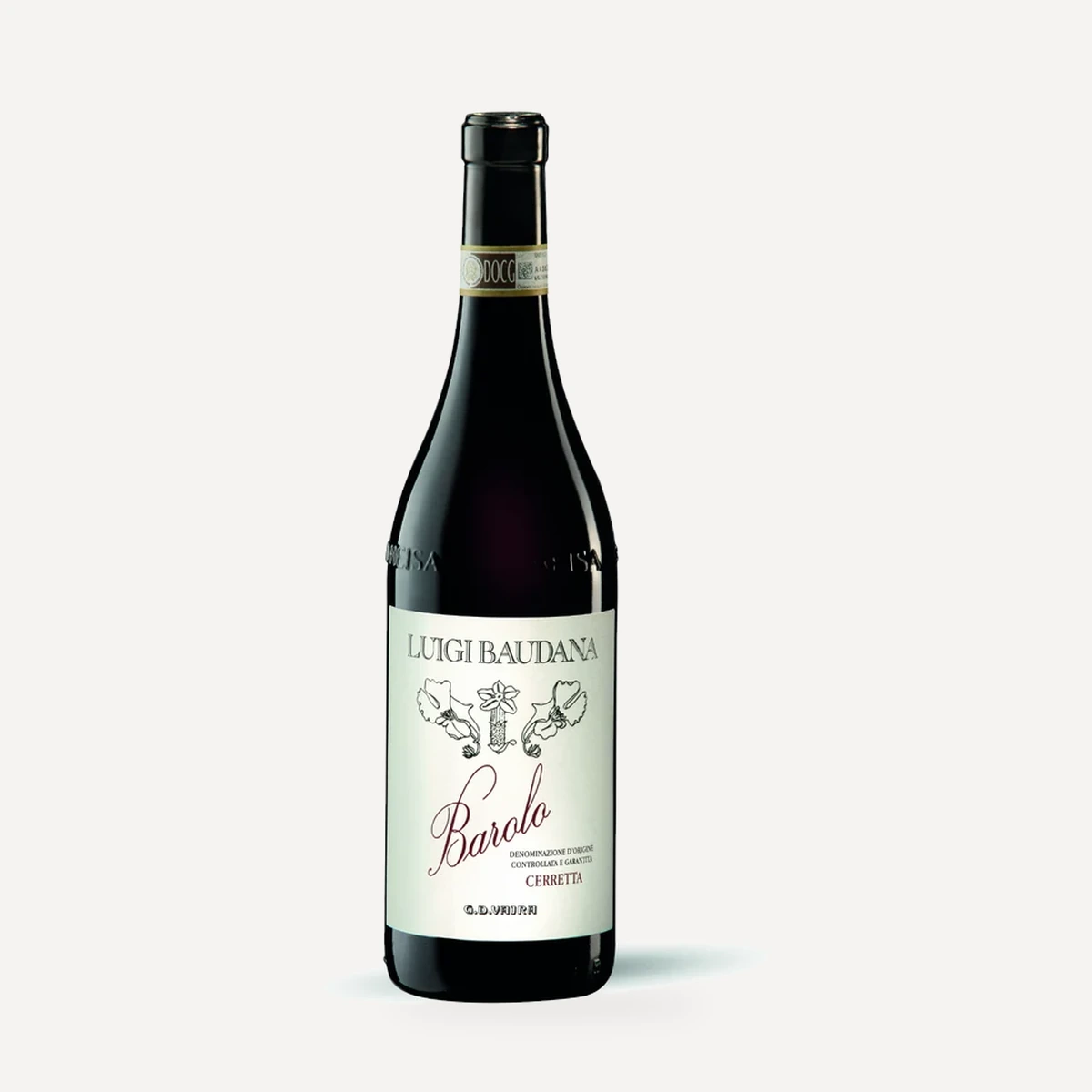
Questo vino
Vineyard and terroir
Cerretta comes from the eponymous MGA in Serralunga d’Alba. The vineyards preserve several Nebbiolo biotypes and are rooted in pure Formazione di Lequio, formed roughly 12 million years ago during the Serravallian epoch. Calcareous limestone dominates the formation. The resulting style is broad and austere, with complex aromatics, spice and a long finish; balsamic mint tones are characteristic of both the cru and the village.
The vines have followed the Vajra organic protocol since 2009. Biodiversity is monitored and encouraged across the vineyards, fields and woodland, and the estate is certified organic and sustainable.
Grapes
100% Nebbiolo.
Vinification
The 2021 fruit was picked on 14 October. Fermentation progressed particularly slowly and was followed by submerged-cap maceration, lasting 54 days in total. Only punch-downs and gentle pump-overs were employed during maceration. Spontaneous malolactic fermentation took place the following spring.
Ageing
The wine spent 23 months in custom-made large Slavonian oak casks of 15, 17 and 25 hL. Bottling took place on 28 June 2024.
Technical data
The wine is packaged in 750 ml bottles under cork.
Tasting profile
The 2021 combines elegance and power. Aromas encompass ruby grapefruit, ripe citrus, cherry, blackberry, dried rose, Tasmanian pepper and mint. The palate is mineral, with Earl Grey tea, lychee, elderflower and orange peel. Its tannins are highly structured yet elegant.
Vintage notes
The 2021 season was moderately dry and ended with a late harvest. Spring frost risk and several violent summer hailstorms interrupted otherwise positive conditions. The grapes combined abundant acidity with good phenolic development, while low nitrogen in the fruit enabled some of the longest and gentlest fermentations of recent years.