Storia
The original estate
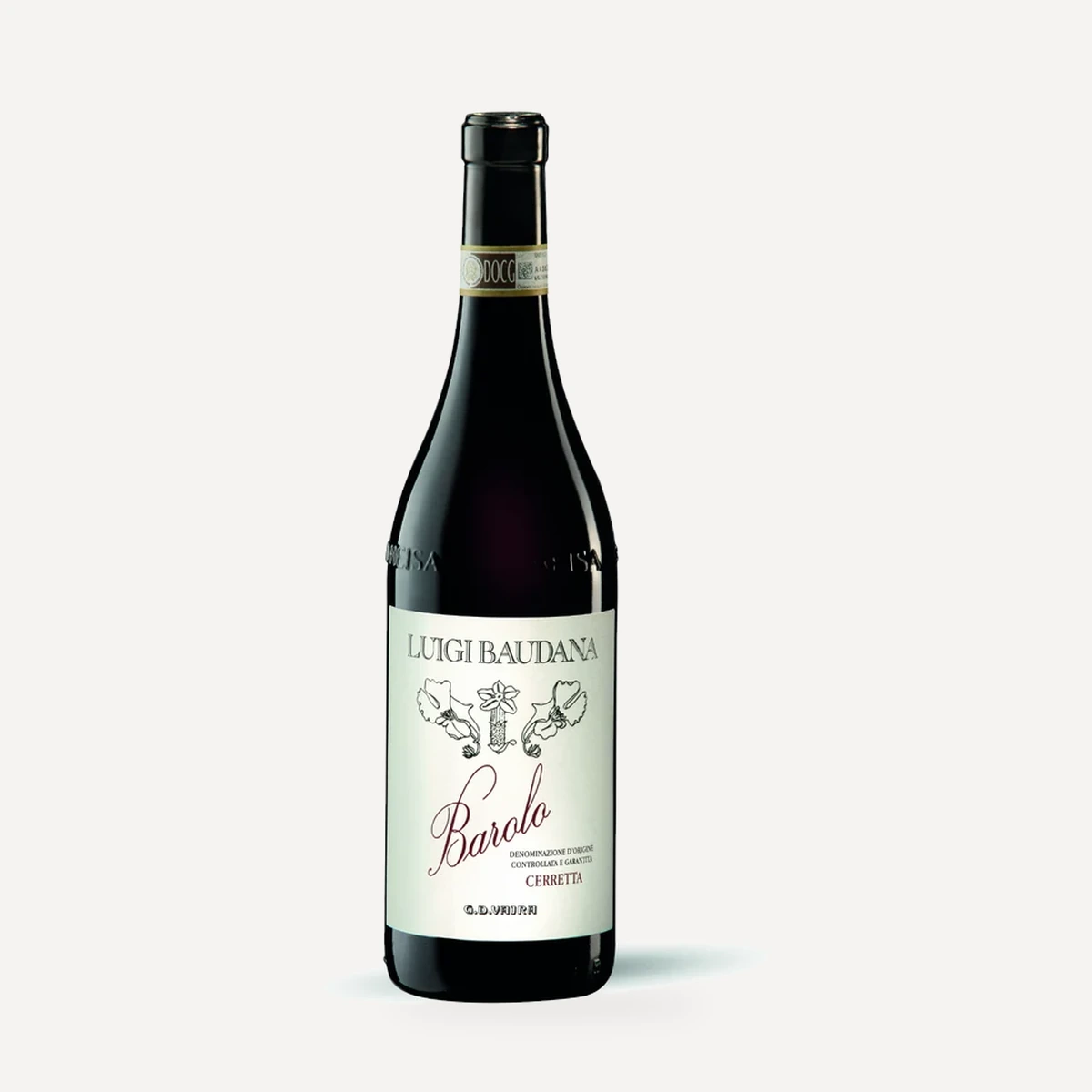
Luigi Baudana is based in the small hamlet of Baudana in Serralunga d’Alba. Its historic vineyard nucleus comprises the Baudana and Cerretta crus, together covering less than 2.63 hectares. The property inherited by the Vaira family was an old estate in need of extensive rehabilitation. Its Barolo identity was already rooted in two distinct Serralunga sites and in a traditional cellar style.
2009: transfer to the Vaira family
The Vaira family became owners and managers of Luigi Baudana in 2009. Aldo and Milena Vaira undertook the estate’s revival with their children Giuseppe, Isidoro and Francesca, while retaining Luigi Baudana as a separate Serralunga estate rather than folding its wines into the family’s historic G.D. Vajra label.
Giuseppe Vaira directed a lighter approach in the cellar. New French-oak barriques were eliminated in favor of large Slavonian-oak casks, and the use of salasso—bleeding juice from a fermenting vat to increase concentration—was reduced. The latter change was particularly important for Cerretta, whose natural concentration was brought into a less forced balance.
2010: the rehabilitated estate emerges
The three Barolos from the 2010 vintage—Baudana, Cerretta and the village-level Serralunga d’Alba bottling—marked an early, visible stage in the estate’s recovery under the Vaira family. The wines preserved the richer, more powerful structure associated with their Serralunga origins while beginning to express the family’s combination of classical form and greater accessibility.
2014–2020: a distinct Serralunga identity
The 2014 vintage reinforced the separation between Luigi Baudana and the Barolos bottled under the Vaira family’s historic label: all three Baudana Barolos displayed a recognizable Serralunga structure. By the 2016 vintage, the family’s cellar direction had developed into a personal style balancing classicism with approachability.
The 2019 vintage further demonstrated the effect of the post-2009 changes. Cerretta’s inherent power and concentration were handled without new French barriques and with less salasso, allowing freshness, fruit depth and firm structure to remain in balance.
2023 onward
In 2023, Luigi Baudana was named a Wine & Spirits Top 100 Winery. The estate continues to present three separate expressions of Barolo—Baudana, Cerretta and Barolo del Comune di Serralunga d’Alba—alongside the Langhe Bianco Dragon. The 2021 Barolo Baudana was produced from organically farmed fruit, documenting the estate’s organic vineyard practice in the current era.
Terroir
Luigi Baudana lies in the small hamlet of Baudana within Serralunga d’Alba. Its compact vineyard nucleus consists of less than 2.63 hectares divided between the Baudana and Cerretta crus. Although geographically close, the two sites yield recognizably different expressions.
Cerretta fruit comes from the cooler Cerretta Piani section of the cru. Its soil has white marl at the surface with red clay beneath. The site is associated with a vertical profile, substantial depth, firm structure and long aging potential.
Baudana is likewise capable of long development but is characterized by greater density and muscularity. Across the range, the vineyards impart the richer, more powerful structural character associated with the estate’s Serralunga location.
Costa Bella is also part of the estate’s vineyard picture: together with Baudana and Cerretta, it supplied the 2021 Barolo del Comune di Serralunga d’Alba.
Vinificazione
Organic farming is documented for the Nebbiolo grown in the Baudana MGA for the 2021 cru bottling. The estate separates fruit according to vineyard position and vine age: selected fruit from Baudana and Cerretta is bottled under the individual cru names, while younger Nebbiolo vines from the two sites contribute to Barolo del Comune di Serralunga d’Alba. The 2021 village blend also incorporated fruit from Costa Bella.
The post-2009 cellar program is defined by a lighter treatment of naturally concentrated Serralunga fruit. Giuseppe Vaira eliminated new French-oak barriques and shifted maturation toward large Slavonian-oak casks. He also reduced salasso, particularly for Cerretta, to avoid artificially increasing concentration and to bring the site’s inherent power into a more natural balance.
Oak fermentation is documented for the 2018 Barolo Baudana, followed by maturation in large Slavonian-oak casks. The resulting direction remains traditional in vessel choice while pursuing greater freshness, balance and accessibility within the firm structure of the estate’s Serralunga fruit.
Filosofia
The estate’s modern direction seeks to preserve an unmistakable Serralunga identity while moderating excess weight or concentration. The practical expression of this philosophy is a lighter cellar touch: no new French-oak barriques, less salasso and a preference for large Slavonian casks.
Tradition is treated as a living framework rather than a fixed recipe. The wines retain classical structure and the individual profiles of Baudana and Cerretta, but the cellar work aims for natural balance and earlier approachability. Maintaining Luigi Baudana as a separate estate also protects the distinction between its Serralunga vineyards and the Vaira family’s historic Barolo holdings.
Vini