Storia
Before the independent estate
The Mascarello family’s viticultural activity extends back more than a century and a half. Before establishing an independent business, members of the family worked as tenant farmers for Marchesa Giulia Colbert Faletti di Barolo and managed Cascina Manescotto in La Morra. Giuseppe Mascarello’s ability as a vineyard manager developed during this period.
Giuseppe Mascarello and the foundation in 1881
Giuseppe Mascarello (1830–1902) established the family’s independent activity in 1881. He purchased land at Pian della Polvere in the commune of Monforte d’Alba and began working there as a grower-producer. The family’s first generation of independent production therefore began in Monforte d’Alba.
Maurizio “Morissio” Mascarello: Monprivato and Monchiero
Giuseppe’s son Maurizio Mascarello (1861–1922), known as Morissio, purchased a farm in the Monprivato area of Castiglione Falletto in 1904 and moved the business there. The agricultural estate produced Barolo from its own Monprivato vineyard. Because its estate-grown fruit was insufficient for the complete production, Maurizio supplemented it with Dolcetto and Barbera grapes selected from well-positioned vineyards and purchased from trusted local growers.
The labels used between 1906 and 1919 belong to the period when the cellar was still in Castiglione Falletto. In 1919 Maurizio purchased an eighteenth-century building in Monchiero, midway between Barolo, Monforte d’Alba and Dogliani. The building had originally been designed for storing and selling natural ice. After renovation, he transferred the winery to it. Its massive construction and stable year-round temperature made it particularly suitable for storing and ageing wine. Labels used from 1920 to 1922 reflect the subsequent Monchiero period.
Maurizio also operated a building-materials business alongside the agricultural estate. In 1921 he planted part of Monprivato with Nebbiolo grafted from a particular Michét selection, initiating a line of vine selection that later generations continued.
Giuseppe II, Natale and the division of the estate
After Maurizio’s death, his son Giuseppe Mascarello II (1897–1983), known as Gepin, assumed management in 1923. He was assisted by his brother Natale and his sisters Giuseppina and Adelaide. Differences between Giuseppe and Natale over the estate’s philosophy and management system soon led the brothers to separate their activities. The property and the respective sales territories for their wines were divided between them.
During the first half of the 1930s, Giuseppe abandoned the more profitable building-materials trade so that he could devote all his energy to wine production. Labels used from 1924 through 1966 belong to his long period of leadership.
In the second half of the 1950s, Giuseppe replaced the old cellar casks with Slavonian oak vessels made in Italy to special, then-unusual specifications. He and master cooper Severino Comola personally selected the wood in a particular part of the Slavonian forests. Giuseppe substantially increased Barolo production while maintaining its quality through his knowledge of Alba’s vineyards and command of vinification.
Giuseppe grubbed up and replanted Nebbiolo at different moments in his career. In 1959 he selected a Michét clone descending from material planted by Maurizio and replanted it in 1963. His Barolo found admirers in the contemporary art world, including painters Eso Peluzzi, Felice Carena and Luigi Delleani, art critic Orio Vergarni, printer-publisher Alberto Tallone and several prominent Italian embassies abroad.
Mauro Mascarello and the development of vineyard-specific production
Mauro Mascarello worked alongside his father in the cellar for many years. In 1967 he assumed responsibility for the Monchiero winery and carried out his first vinification. From the 1968 through 1977 harvests, he tested fermentations of different lengths and varied the intensity of cap-breaking and pump-overs. The results were not always satisfactory. At the end of this experimental cycle, he returned to traditional long vinification, but shortened maceration from approximately 60 to 40 days and then to approximately 30 days in the early 1980s.
In 1970 Mauro began vinifying each vineyard separately, starting with Nebbiolo from Monprivato and subsequently applying the practice to the other sites. This established the estate’s vineyard-by-vineyard production system.
When his uncle Natale died in 1979, Mauro purchased Natale’s business and reunited it with Azienda Agricola Giuseppe Mascarello e Figlio. In 1980 he took direct responsibility for the family’s Monprivato vineyard, continuing its established emphasis on complete ripeness, perfectly healthy bunches and concentrated grapes.
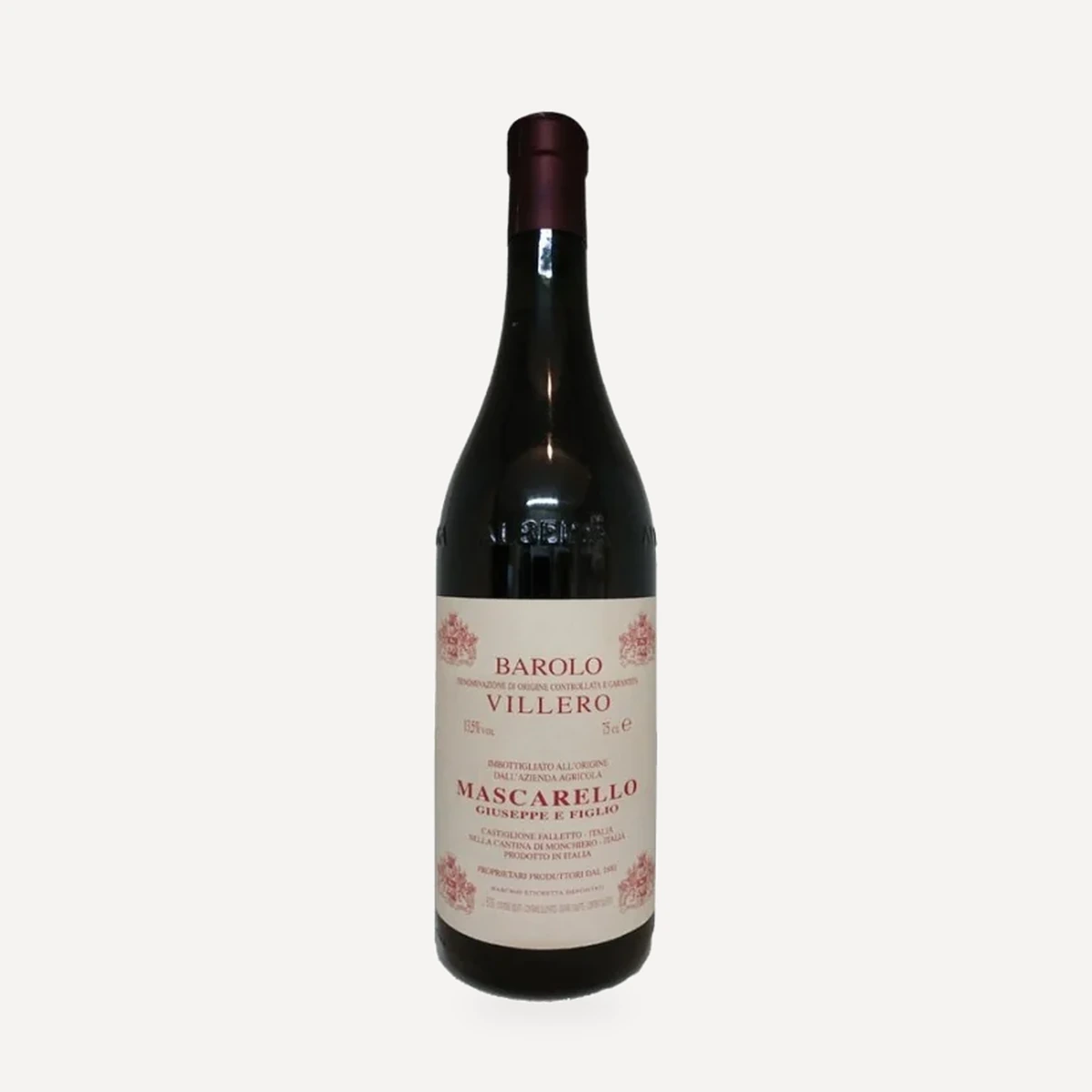
Mauro enlarged the Monprivato holding through successive acquisitions in 1982, 1985, 1987 and 1990. Completion of these purchases made the family the sole producer of Barolo from Monprivato. The wider vineyard portfolio also expanded: Villero was acquired in 1985; Bricco and Toetto in 1987; S. Stefano di Perno in 1989; and Codana and Scudetto del S. Stefano di Perno in 1991.
Michét selection, geological discovery and cellar innovation
In 1983 Mauro began a project to select a Michét clone within Monprivato for Nebbiolo intended for a special riserva. The work continued the material planted by Maurizio, selected by Giuseppe II in 1959 and replanted in 1963.
In 1985 Monprivato 1978 finished first in a London Forum Vinorum tasting and was the only wine to receive 20/20. The tasting included 27 Italian DOC and DOCG reds and 56 classified châteaux. This was an achievement of an individual wine rather than an estate-wide award, but it became an important episode in the family’s account of Monprivato.
In 1986, earthmoving at the site identified as “1 N” exposed sandstone tuff blocks and stones at a depth of four metres. Impressions resembling algae and marine shells provided tangible evidence of the hills’ marine geological origin.
In 1994 Mauro began a technical collaboration with oenologist Dr Donato Lanati. Their objective was to design a vinifier specifically for Barolo Nebbiolo that could maximize extraction while retaining gentleness. The collaboration produced an original prototype that reproduces traditional long vinification while allowing automatic control. The design received an Industrial Invention Patent from the relevant Italian ministry, and four functioning examples were constructed.
The next generation
Mauro’s wife, Maria Teresa, joined the business on the accounting and administrative side. Their son Giuseppe qualified as a wine technician at the Agricultural and Enological Institute of Alba in 1994. He subsequently pursued administrative and legal specialization at the University of Turin’s Faculty of Law while also collaborating with the family estate. This brought a fifth generation into the business alongside Mauro.
Terroir
The family’s approximately 15 ha of vineyards all lie in the Barolo growing area, distributed between the Barolo and Serralunga valleys. The individual holdings are concentrated in Castiglione Falletto and the Perno sector of Monforte d’Alba.
The profiled sites stand between 270 and 300 m above sea level. Exposures range from southwest and west-southwest to west-northwest. Monprivato is an unobstructed, mid-slope sorì with full-day sunlight and a southwest exposure. The other sites occupy distinct combinations of aspect and soil that the estate treats as separate vinification units.
Marine-origin formations recur throughout the holdings. Monprivato and Codana contain silty, calcareous soils rich in active limestone and grey-blue marine marl. Bricco and Toetto combine calcareous clay with grey marl and brown clay of marine origin. Villero and S. Stefano di Perno have calcareous clay-sand profiles with grey marl or sand and brown clay. Scudetto del S. Stefano di Perno is clay-sandy, with brown clays, grey marine sands, pebbles and small skeletal particles.
Monprivato is assigned to a Miocene, Helvetian-type formation of the Tertiary era. Its silty-clay marl has good structure, abundant active limestone and proportionate microelements. During earthmoving in 1986, sandstone tuff and stones bearing impressions resembling algae and marine shells emerged from a depth of four metres, visibly confirming the marine origin of the local formation.
Vinificazione
The vineyard regime is built around self-imposed yield and quality restrictions maintained over several decades. Winter pruning is very short, leaving six to nine buds according to the vigour of each vine. Imperfect bunches are removed in spring. Further thinning in summer eliminates fruit beyond the individual vine’s capacity to ripen completely.
The estate sets an upper target of 60–65 quintals of grapes per hectare. Actual annual production varies by vintage around 50–60 quintals per hectare, corresponding at racking to 35–42 hl/ha. With a planting density of 4,000 vines per hectare, this represents approximately 1,200–1,500 g per vine. These figures are set against an 80-q/ha maximum cited for Barolo DOCG.
Harvesting is manual. Selection and rigorous cleaning take place in the vineyard, with imperfect berries removed one by one. The aim is fully ripe fruit, completely healthy bunches and a high concentration of the grape’s constituent elements.
Plant-protection treatments are kept to an extreme minimum and follow an integrated approach, with intervention only when considered indispensable. Herbicides and desiccants are excluded even though limited-impact products were permitted under EEC Regulation No. 2078/92. Weeds are managed mechanically and supplemented by hand hoeing.
Fertilizer use is reduced to the minimum needed to replace nutrients already absorbed by the vines. Fertilization is applied only when the plant requires it, with preference given to natural organic inputs such as manure from known, trusted cattle farms and humus.
The estate adopted EEC Regulation No. 2078/92 concerning reduced use of plant-protection products, fertilizers and pesticides, while imposing stricter internal limits on herbicide and desiccant use. No organic or biodynamic certification is claimed.
Vinification is organized by vineyard. Since 1970, fruit from each site has been processed separately, beginning with Monprivato Nebbiolo. This preserves the distinctions among the individual holdings, and the vineyard and commune of origin are identified on the labels.
Mauro Mascarello tested vinifications of different lengths between the 1968 and 1977 harvests, together with varying intensities of cap-breaking and pump-overs. After the trials, he returned to traditional long vinification. Maceration was shortened from roughly 60 to 40 days and then to approximately 30 days in the early 1980s.
The estate’s red-wine method is based on traditional fermentation with an emerged or floating cap. Individual bottlings employ different fermentation and maceration periods, but the broader cellar philosophy favours extended extraction adapted to grape and vineyard rather than a uniform recipe.
In 1994 Mauro Mascarello and Dr Donato Lanati began developing a vinifier specifically for Barolo Nebbiolo. Its purpose was to obtain the greatest possible extraction with maximum gentleness. The resulting prototype recreates traditional long vinification while permitting automatic control. It received an Industrial Invention Patent from the Italian authorities, and four functioning examples were built.
Ageing continues the family’s established use of large or medium-capacity oak vessels, particularly Slavonian oak for Barolo. The cellar’s historic cask programme dates to the second half of the 1950s, when Giuseppe II commissioned new vessels made in Italy from Slavonian timber personally selected with master cooper Severino Comola. Depending on the wine, inert vessels and cement may also be used for stabilization or maturation.
The winery and ageing cellar have occupied the converted eighteenth-century ice-storage building in Monchiero since 1919. Its heavy construction and naturally stable temperature were important reasons for transferring production there.
Filosofia
The family’s guiding principle is continuity between vineyard, cellar and successive generations. Its own formulation—“Only the memory of the past can open the way to the future”—frames tradition as a working foundation rather than a refusal to refine technique.
Quality begins with deliberately restricted yields, short pruning, repeated bunch selection, manual harvest and stringent cleaning in the vineyard. The objective is not maximum quantity but grapes combining ideal ripeness, complete health and concentration.
Environmental restraint forms part of the same system. Treatments are limited to indispensable interventions, herbicides and desiccants are rejected, and soil management relies on mechanical work and hand hoeing. Fertilization is corrective rather than productive, with preference for natural organic materials.
In the cellar, tradition is paired with technical control. Mauro’s fermentation trials ultimately confirmed his preference for long, traditional emerged-cap vinification, although maceration was made shorter and more precise. The patented Nebbiolo vinifier follows the same logic: it automates control of a traditional process rather than replacing that process with a different stylistic model.
Separate vinification by vineyard is intended to preserve the identity of each site. Large Slavonian oak casks serve the same objective by maintaining continuity with the methods of earlier generations while allowing the grape and vineyard to remain central. Monprivato is bottled under its dedicated identity only when the vintage meets the estate’s quality threshold; fruit from lesser selections is redirected to broader Barolo or Langhe Nebbiolo production.
Vini
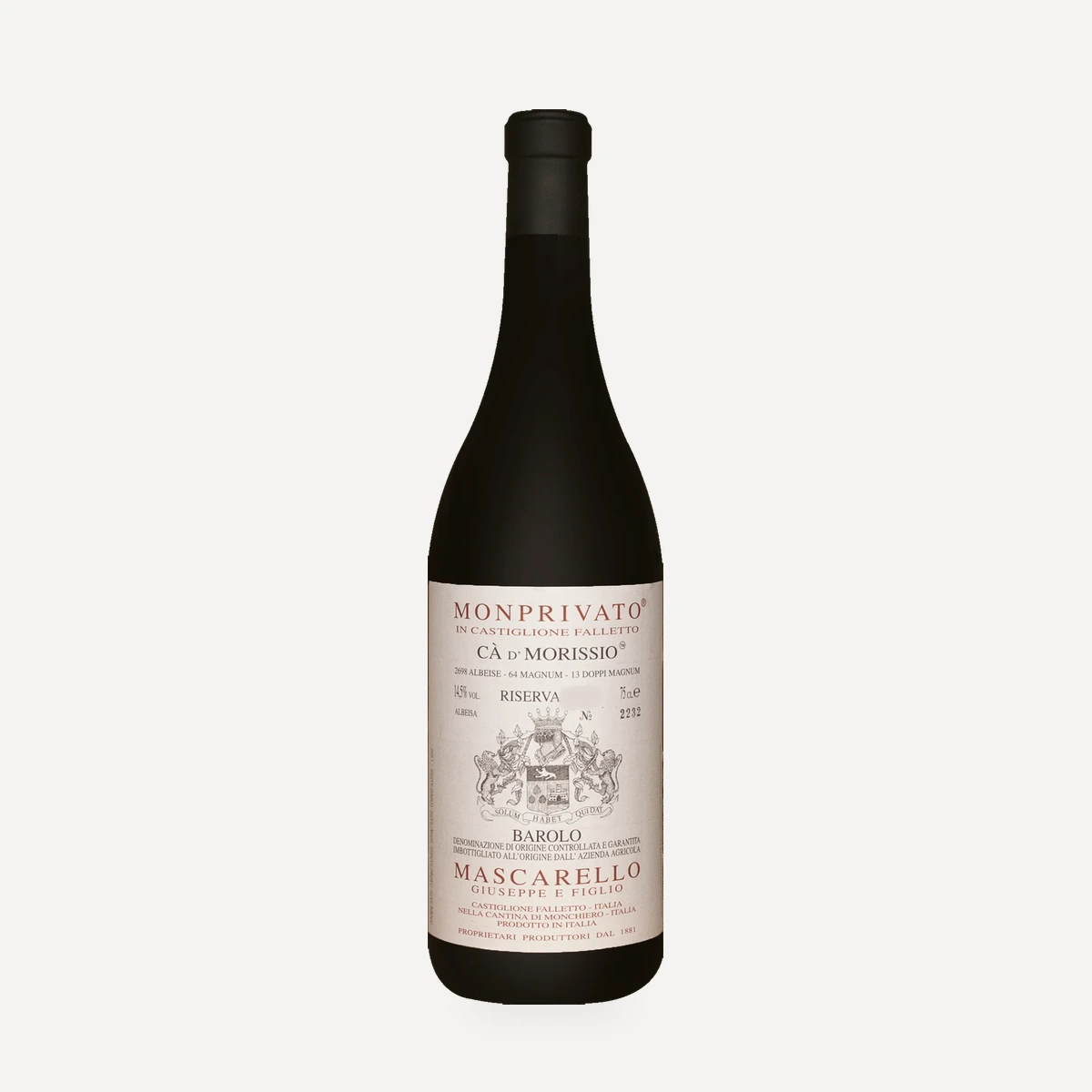
Barolo DOCG Riserva Monprivato® Ca’ d’Morissio®
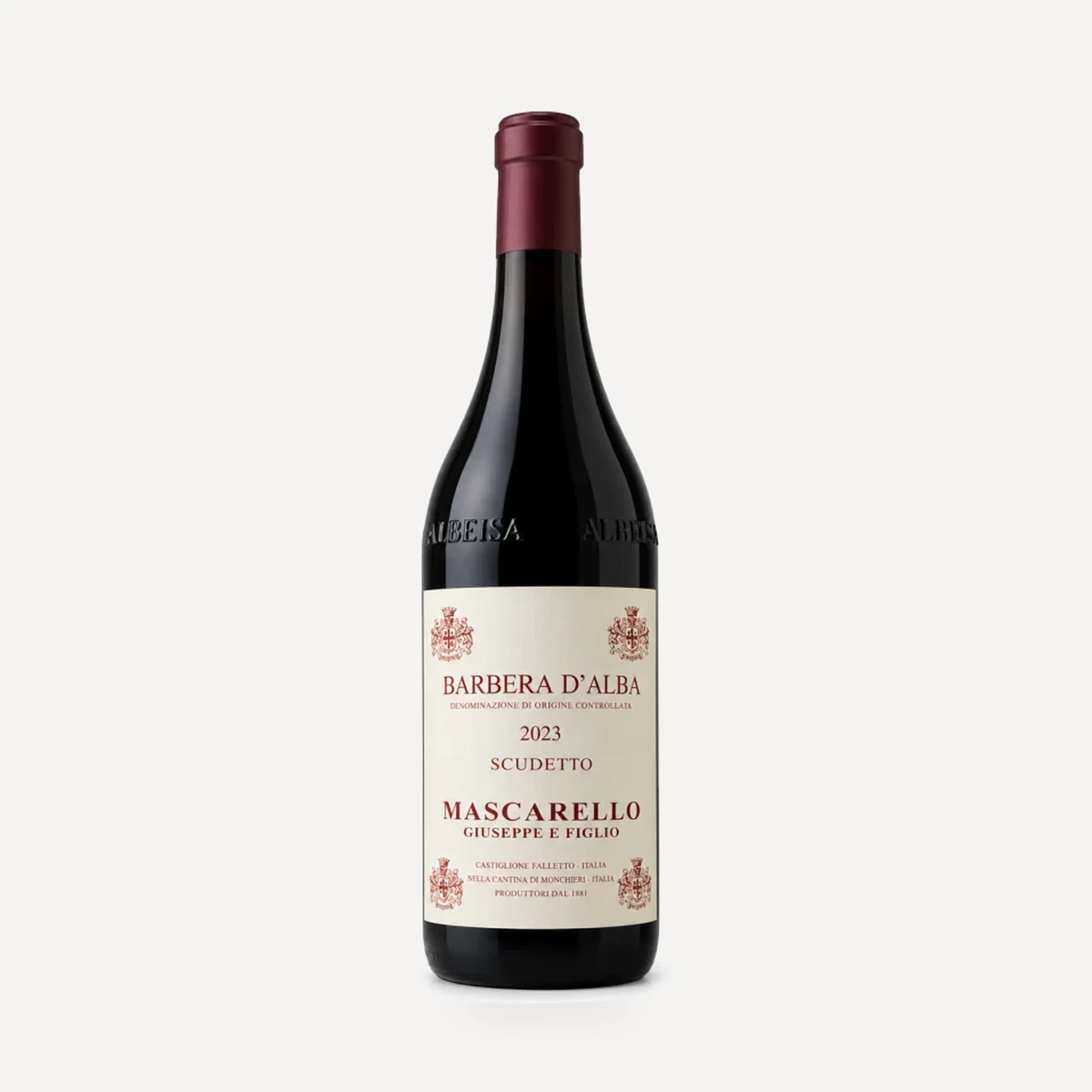
Barbera d’Alba DOC Scudetto®
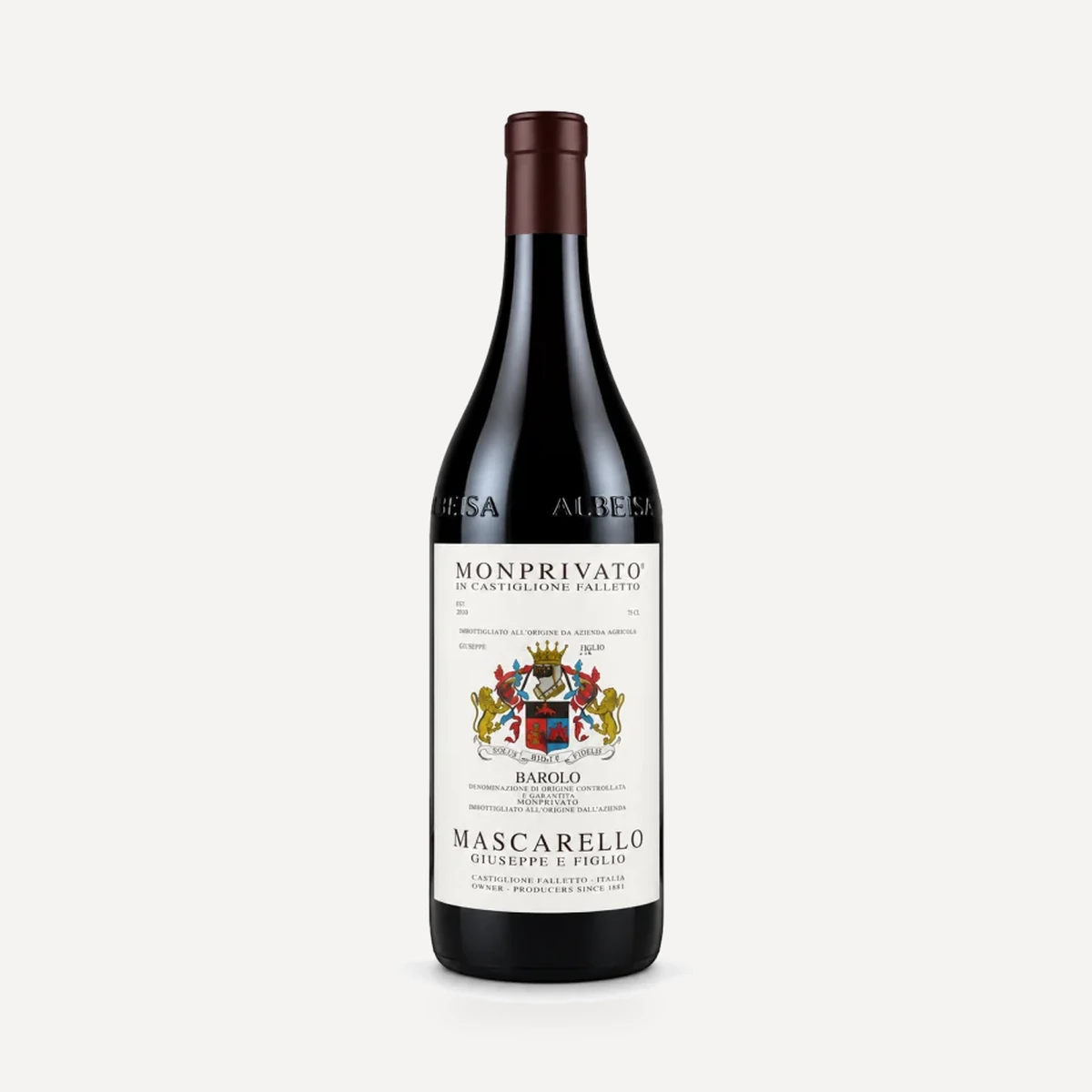
Barolo DOCG Monprivato®