Storia
Historical landscape
The estate occupies an elevated position above the old Roman road linking Siena and Florence. A tower stood here in the 14th century and was subsequently associated with a hunting lodge. Montemaggio appears on a 1560 map of the Captains of the Guelph Party preserved in the Podesteria di Radda. Its name derives from Monte Maggiore, or “Big Mountain,” reflecting this high position.
The estate also contains a 17th-century farmhouse. Its exterior has been preserved while the interior was comprehensively renovated for hospitality.
The beginnings of wine production
Wine has been made at Montemaggio since the 1970s. Indigenous-yeast fermentation was already customary before the present management: Ilaria Anichini believes it was practiced by the previous owners before she joined the estate.
Andrea Paoletti began working with Montemaggio as an external wine consultant in 1996. Ilaria Anichini arrived in 2005 after studying agronomy, viticulture and oenology in Florence and gaining experience in Australia and Bordeaux. She went on to direct the estate, overseeing viticulture, winemaking and elements of commercial management.
The 2006 vintage combined a hot growing season with timely rain. Montemaggio harvested less fruit than usual but obtained strong concentration and balance through strict grape selection; the wines required many years of maturation. The 2007 vintage produced a somewhat larger crop and was easier to manage in the vineyard while retaining very good fruit concentration.
New family ownership and organic certification
Valeria Zavadnikova and her family acquired Montemaggio in 2008 after a long search for an Italian property where they could fulfil their ambition of making wine. The transition was intended to preserve continuity with the estate’s past while strengthening quality and the connection between wine and local terroir. Valeria assumed responsibility for development, marketing and digital communication, working closely with Ilaria Anichini.
Montemaggio achieved organic certification in 2009. Organic management became central to the estate’s approach to soil health, biodiversity, vineyard work and cellar protocols.
Development of vineyards, wines and the team
Valeria initiated an experimental planting of Pugnitello after becoming interested in the rare Tuscan variety. She asked Ilaria to undertake the demanding project despite the grape’s susceptibility to disease. Pugnitello was established at high density on three small terraces and became the basis of Ilaia di Montemaggio.
Marashi Sokol first joined the harvest team and became a permanent agricultural worker in 2013. Edoardo Luvisi later took responsibility for the cellar after gaining sparkling-wine experience in Australia and completing the 2015 harvest near Châteauneuf-du-Pape. The wider team expanded across vineyard, olive-growing, hospitality, administration and communications.
In the rainy 2014 season, early shoot selection and thinning reduced the prospective crop and supported grape quality. The 2015 vintage brought balanced ripening despite high temperatures and was considered by Ilaria one of the estate’s outstanding recent years. She regarded 2016 as similarly exceptional, while the wines remained in the cellar for extended maturation before release.
Recent adaptation
Andrea Paoletti’s period as external wine consultant concluded in 2020. That year, Montemaggio and the wider Chianti Classico sector reduced yields in response to the pandemic’s effects on hospitality and wine sales. The growing season itself was balanced, but powdery mildew increased. The estate began experimenting with citrus essential oils to dry the fungus when cooler spring conditions reduced sulfur’s effectiveness. During the lockdown, the business also accelerated digital sales and introduced a natural skincare range made with ingredients including red-grape stem cells.
The 2021 season avoided the damaging spring frosts experienced elsewhere. Good diurnal temperature variation and favourable weather through 20 October allowed excellent Sangiovese ripening; both crop volume and quality were considered optimal at Montemaggio.
The 2022 season brought extreme heat and drought followed by timely rain and cooler conditions. Sangiovese for rosé was picked early to control potential alcohol, while the main Sangiovese harvest began on 5 October. Unusually, the best fruit was found lower on the slope, where the soil retained more moisture. Ilaria described 2022 as a difficult rather than poor vintage: the grapes remained healthy and of good quality.
In 2023, downy mildew reduced production. Early Sangiovese flowering and rapid fruit set limited the damage, and an additional cluster was retained on each vine to mitigate expected losses. Merlot was more severely affected. The estate nevertheless expected the sound harvested fruit to be of high quality. The same year, Montemaggio adopted an electric Volkswagen ID. Buzz Cargo as part of its operational sustainability programme and appeared in the documentary Charge Your Brand.
Terroir
Fattoria di Montemaggio lies in the commune of Radda in Chianti, near Panzano, at one of the higher positions in Chianti Classico. The estate ranges from approximately 450 to 600 metres above sea level, while individual vineyards are described around 550–600 metres.
The 70-hectare property combines vineyards, olive groves and woodland. Most vines occupy a central, sloping part of the estate, predominantly facing south to southwest. The surrounding woods help define a secluded microclimate and contribute the wild, forest-associated character that the estate seeks to preserve in its wines. A separate Sangiovese parcel trained as alberello faces north but receives substantial sunlight.
The soils are loose and sandstone-derived, with galestro, alberese and sand. Galestro is the principal component in some descriptions, accompanied by smaller proportions of alberese and sandstone. Altitude lengthens ripening and supports freshness, while marked day–night temperature differences can help Sangiovese complete a long maturation into October.
Seasonal conditions reveal meaningful differences within the slopes. During the hot, dry 2022 season, the best Sangiovese came from the lower part of the hill rather than its usual upper section because the lower soils retained more moisture. Late-August and September rainfall moderated sugar accumulation and helped maintain balance before harvest.
Vinificazione
Montemaggio has been certified organic since 2009. Management excludes synthetic pesticides, herbicides and fertilisers and is directed toward living soils, biodiversity and long-term fertility. Certification involves documented production, regular vineyard inspection, monitoring of the cellar, soils and wine samples, and compliance with organic vinification rules.
Cover crops are grown between rows to enrich the soil, while beneficial insects and natural predators help balance pests. Ladybirds were introduced as part of efforts to protect the estate’s cypress trees. Weeds are controlled manually or with light mechanical equipment rather than herbicides. Copper and sulfur are used only in limited quantities permitted under organic rules.
The estate favours shoot selection, short pruning and careful foliage management rather than routine green harvesting. Vines are not topped. Different plants are sown between the rows, and trials have included vegetables and green-manure crops. High planting densities—up to 6,250 vines/ha in some vineyards—are combined with pruning and selection to limit yields to roughly 35–60 q/ha, depending on the season.
Harvest is manual and timed for full ripeness. Bunches are selected first in the vineyard and again upon arrival at the winery. The late Pugnitello harvest may extend to around 20 October.
Climate and disease pressure are addressed experimentally. When powdery mildew increased in cooler springs and sulfur became less effective, the team trialled citrus essential oils intended to dry the fungus. In 2023, early Sangiovese flowering and rapid fruit set helped reduce downy-mildew damage; an additional cluster was retained on each vine to compensate for prospective losses. Merlot suffered greater pressure that year.
Biodiversity extends beyond the vines. The estate includes woodland, olive groves, gardens and an organic vegetable plot. A permaculture garden designed by Francesca Benza uses raised sections for vegetables, flowers and fruit trees, with plum, apple and pear trees forming part of the boundary. Bees, wildflowers, native plants and useful insects are treated as components of the vineyard ecosystem.
Grapes are hand-picked at full ripeness and selected in the vineyard before undergoing a second selection in the winery. Production remains deliberately small-scale so that individual plants, lots and bottles can receive close attention.
Fermentations traditionally begin with indigenous yeasts. Ilaria Anichini has used spontaneous fermentation throughout her tenure and believes the practice predates her 2005 arrival. Over time, vineyard and cellar yeast populations have developed into a stable local community associated with the estate’s expression of Radda and Chianti Classico. Cultured yeast is not normally used to initiate fermentation. In exceptionally hot, dry seasons, however, high must sugar can exhaust native populations and cause a stuck finish; on rare occasions a vat has been inoculated late solely to complete fermentation.
Cellar work follows organic protocols, with monitored ingredients and processes, limited sulfites and approved yeasts when intervention is required. Artisanal handling and minimal intervention are intended to preserve fruit, vintage and terroir rather than impose a standardised profile.
Oak is deliberately restrained. Barriques are used as sparingly as possible so that vanilla, wood flavour and assertive oak tannin do not obscure the wine. This choice places greater emphasis on patient maturation. Wines, particularly Sangiovese-based Chianti Classico, remain in the cellar and bottle for extended periods and are released when the team considers them ready to drink. The objective is to give Sangiovese sufficient time to soften and reach aromatic elegance and balance.
Filosofia
Montemaggio’s philosophy centres on expressing the beauty and authenticity of its Chianti Classico setting through small-batch organic wine. The estate treats wine as the result of an ecosystem rather than an isolated product: soil, vines, woodland, climate, people and cellar practices are expected to remain in balance.
Organic farming is presented as a permanent responsibility rather than a marketing category. Its stated purposes are to protect soil and groundwater, sustain biodiversity, preserve fertility for future generations and respect both the team and the people who drink the wines.
The estate seeks a close and recognisable relationship between each wine and Radda’s high-altitude terroir. Indigenous yeast, spontaneous fermentation, limited manipulation and restrained oak are preferred because they allow the vintage, soil, microclimate and grape variety to remain legible. Patient maturation is equally important: Sangiovese is held until its tannins have softened and the wine is considered ready to enjoy.
Tradition is combined with selective experimentation. Historic training systems and manual work coexist with high-density planting, organic monitoring, disease-control trials, permaculture and contemporary communications. Female leadership is an explicit part of the identity created by Valeria Zavadnikova and Ilaria Anichini, symbolised by the young Etruscan woman carrying grapes in the estate emblem.
Vini
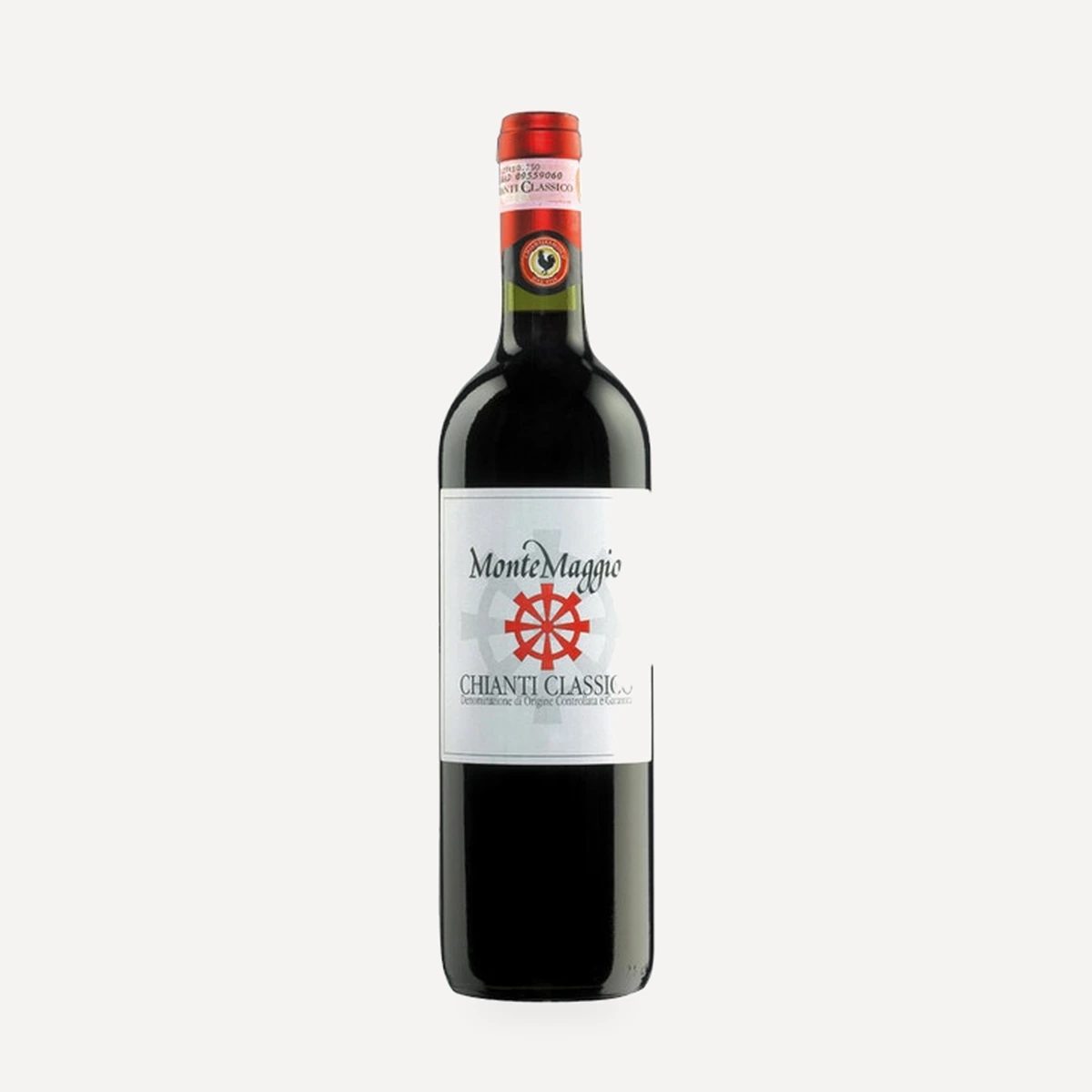
Chianti Classico di Montemaggio
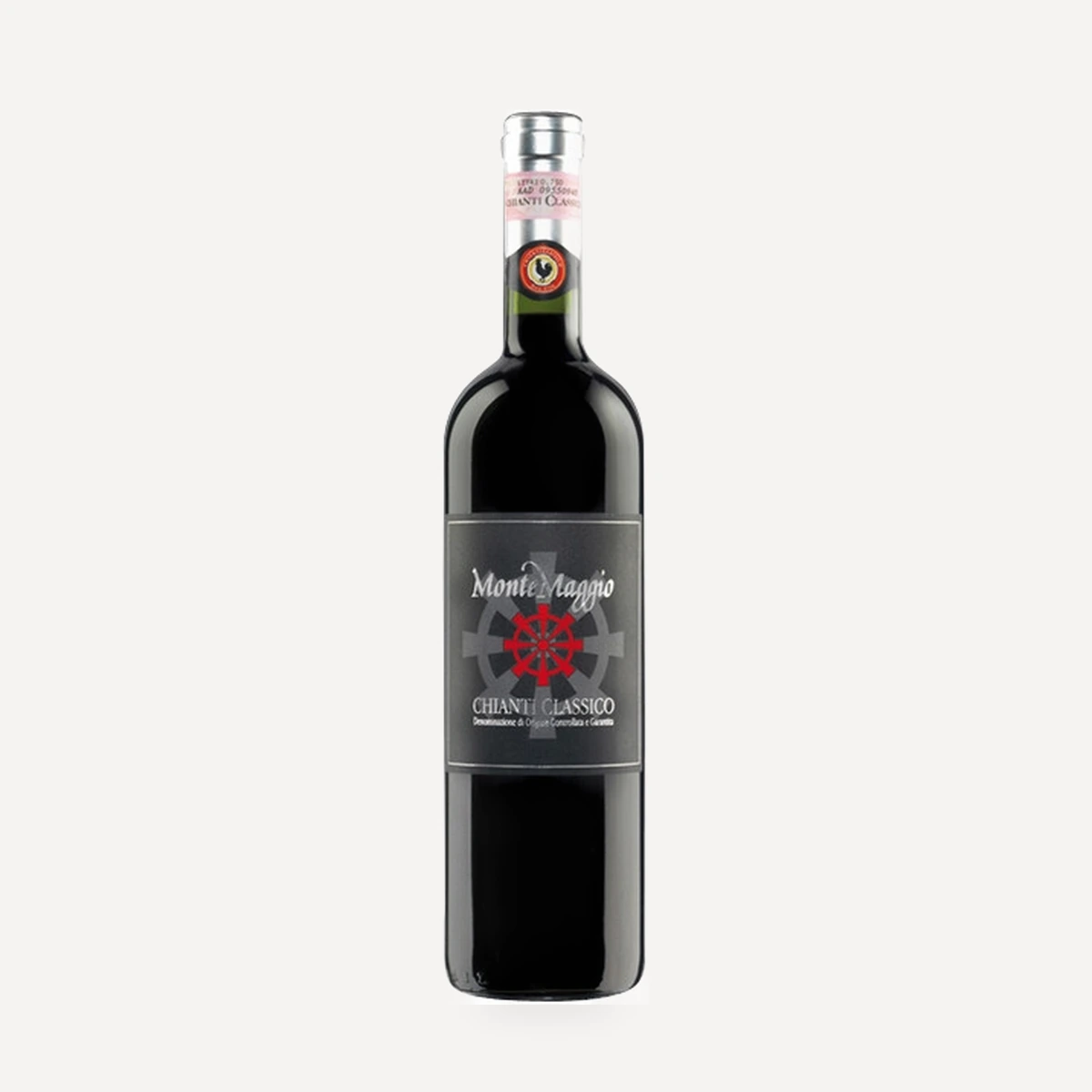
Chianti Classico Riserva di Montemaggio
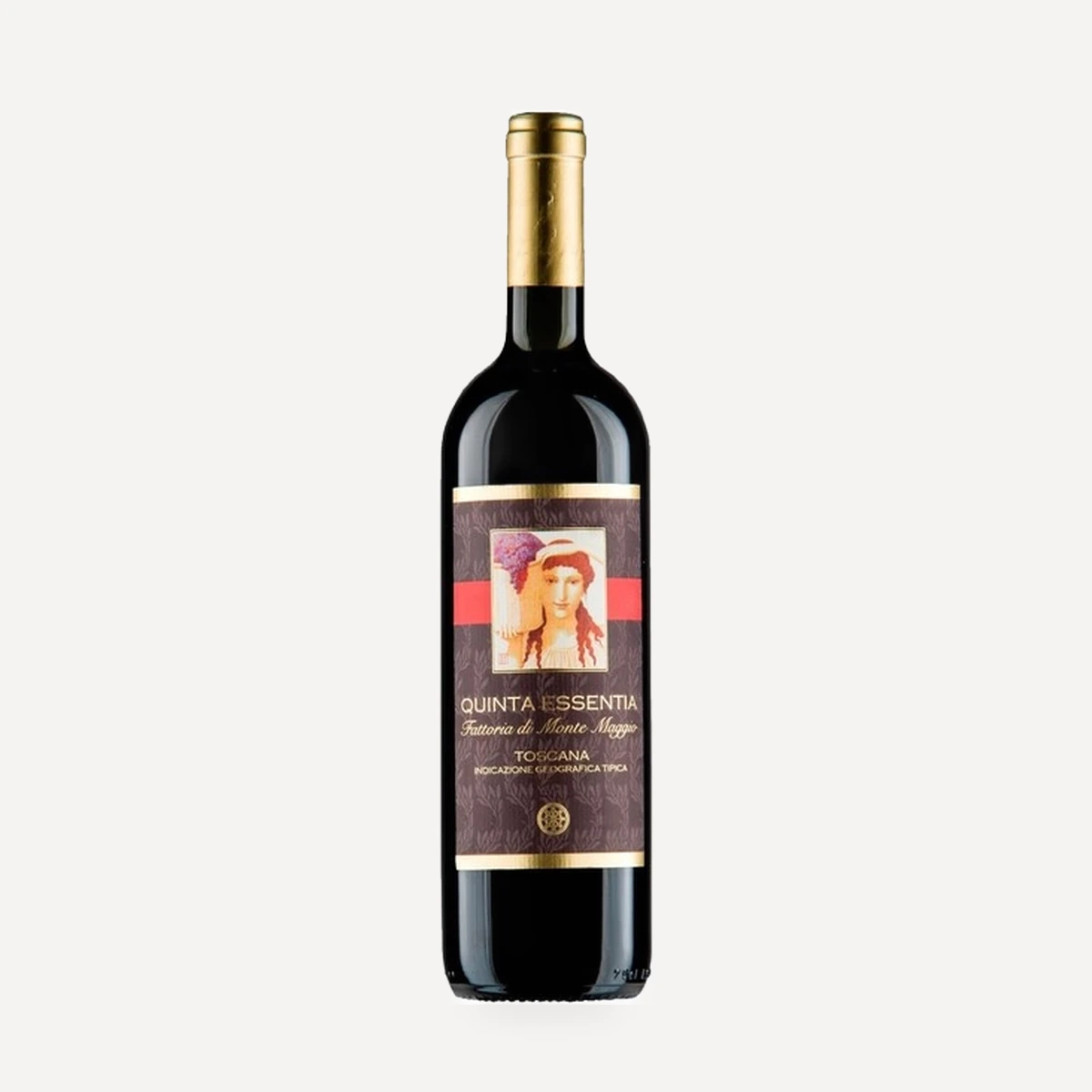
Quinta Essentia di Montemaggio IGT
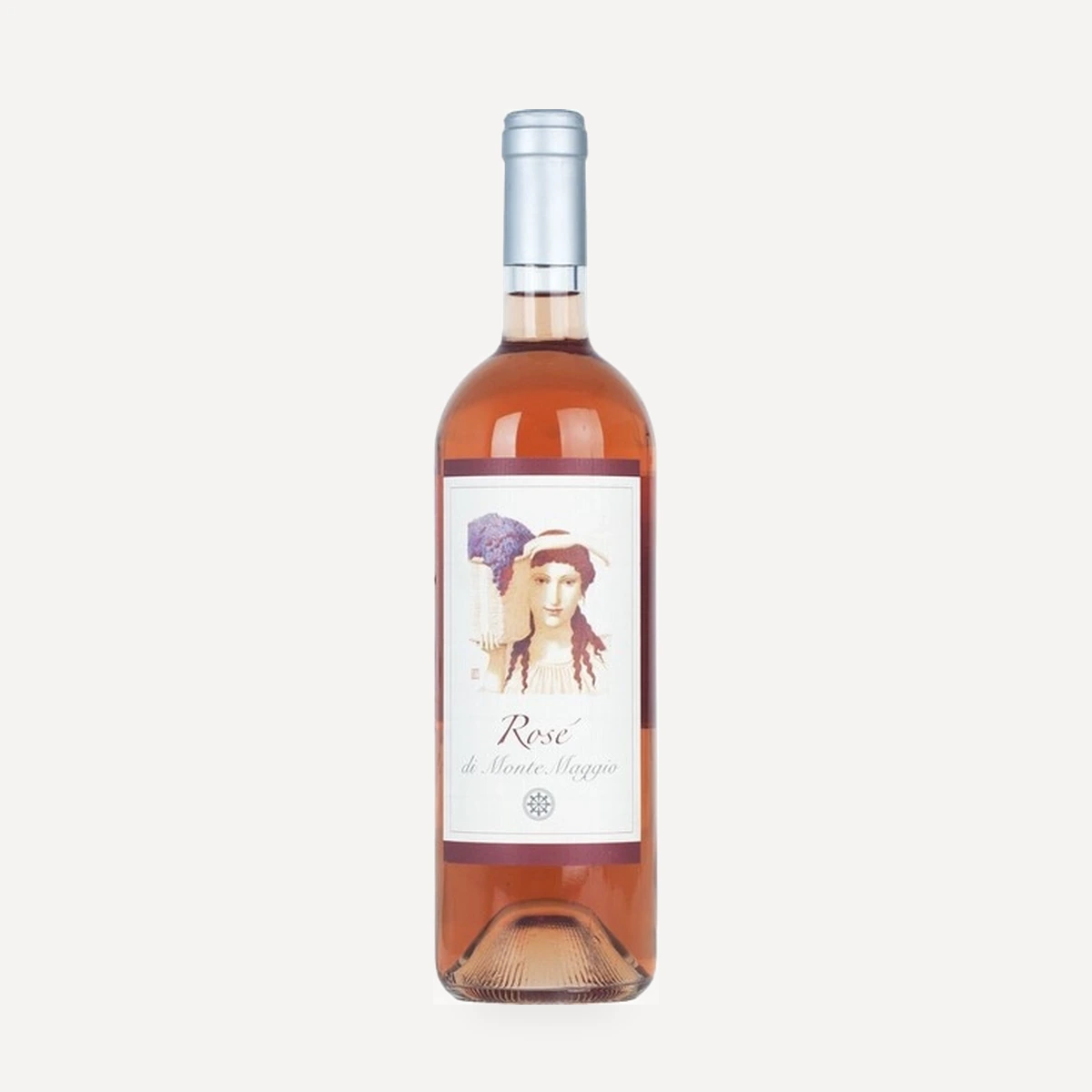
Rosé di Montemaggio