Storia
Before Tenuta Monteti
The project grew from Gemma and Paolo Baratta’s longstanding attachment to land and landscape. Paolo’s formative experiences included childhood work in his grandparents’ countryside during the war years and later experiments among the vines at the family home in Oltrepò Pavese. In adulthood, Gemma and Paolo developed a shared desire to return to the land, combining their interest in nature with an appetite for a new agricultural venture.
1998: discovery of the valley
After years spent searching in Tuscany, Gemma and Paolo found the future estate in 1998: a small valley in the first hills of Southern Maremma, a few kilometres from the sea and sheltered by the prehistoric volcanic Monteti hill. The protected yet ventilated position, Mediterranean woodland, exposures, slopes and manageable scale provided the setting for an ambitious but personal project.
Starting with no established vineyard or inherited local production model gave the Barattas freedom to base their decisions on the property’s soil and climate. With Carlo Ferrini as consulting oenologist from the beginning, they selected Petit Verdot, Cabernet Sauvignon, Merlot, Cabernet Franc and Alicante Bouschet.
Over the following years, neglected and uneven former pasture was prepared and transformed into a parcel-based vineyard. Land preparation uncovered enormous boulders. Rather than removing them from sight, the family extracted them carefully and positioned them beside roads and vineyards. They became the estate’s emblem, representing respect for the land, the strength of the original intuition and the determination required to realise it.
2004: winery completion and first vintage
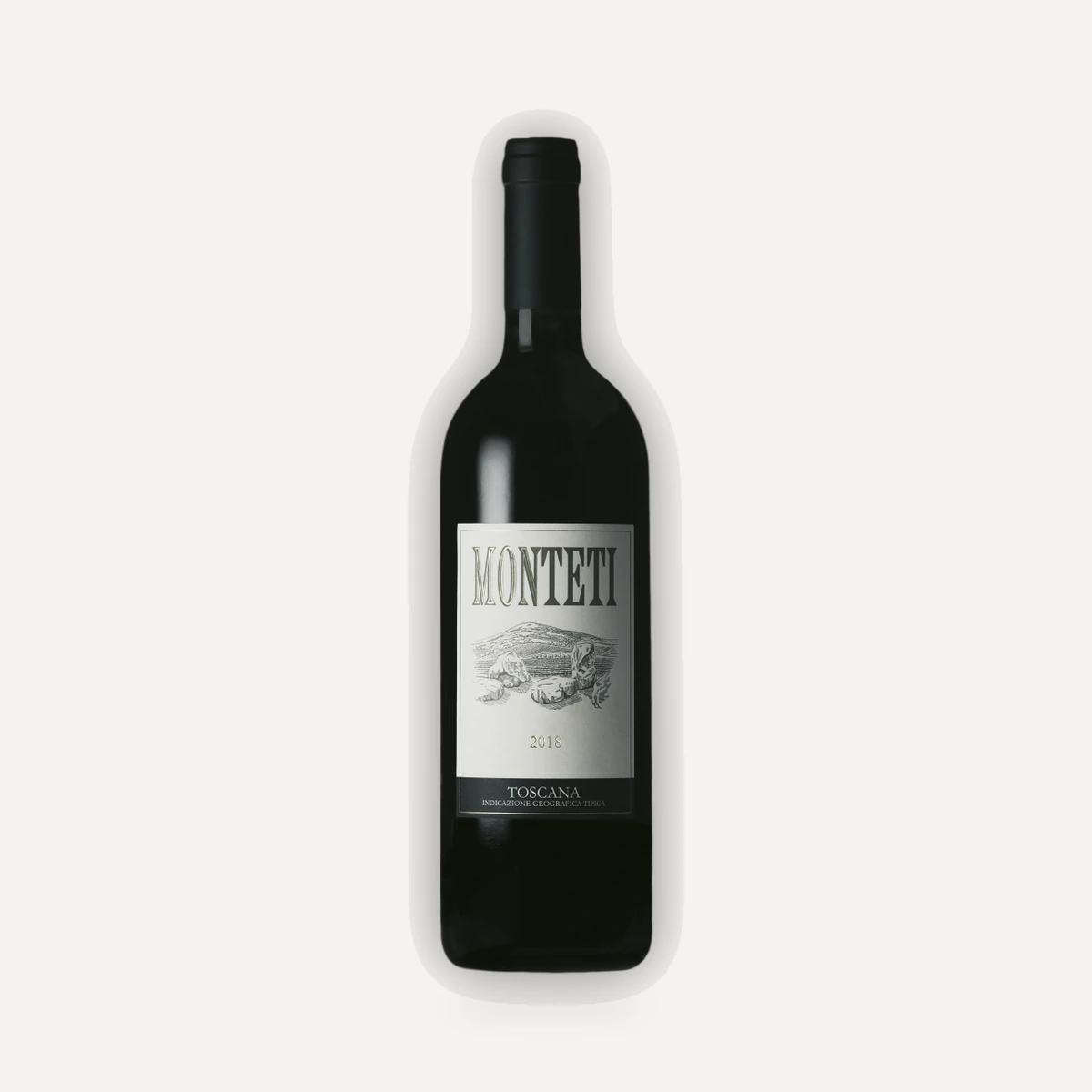
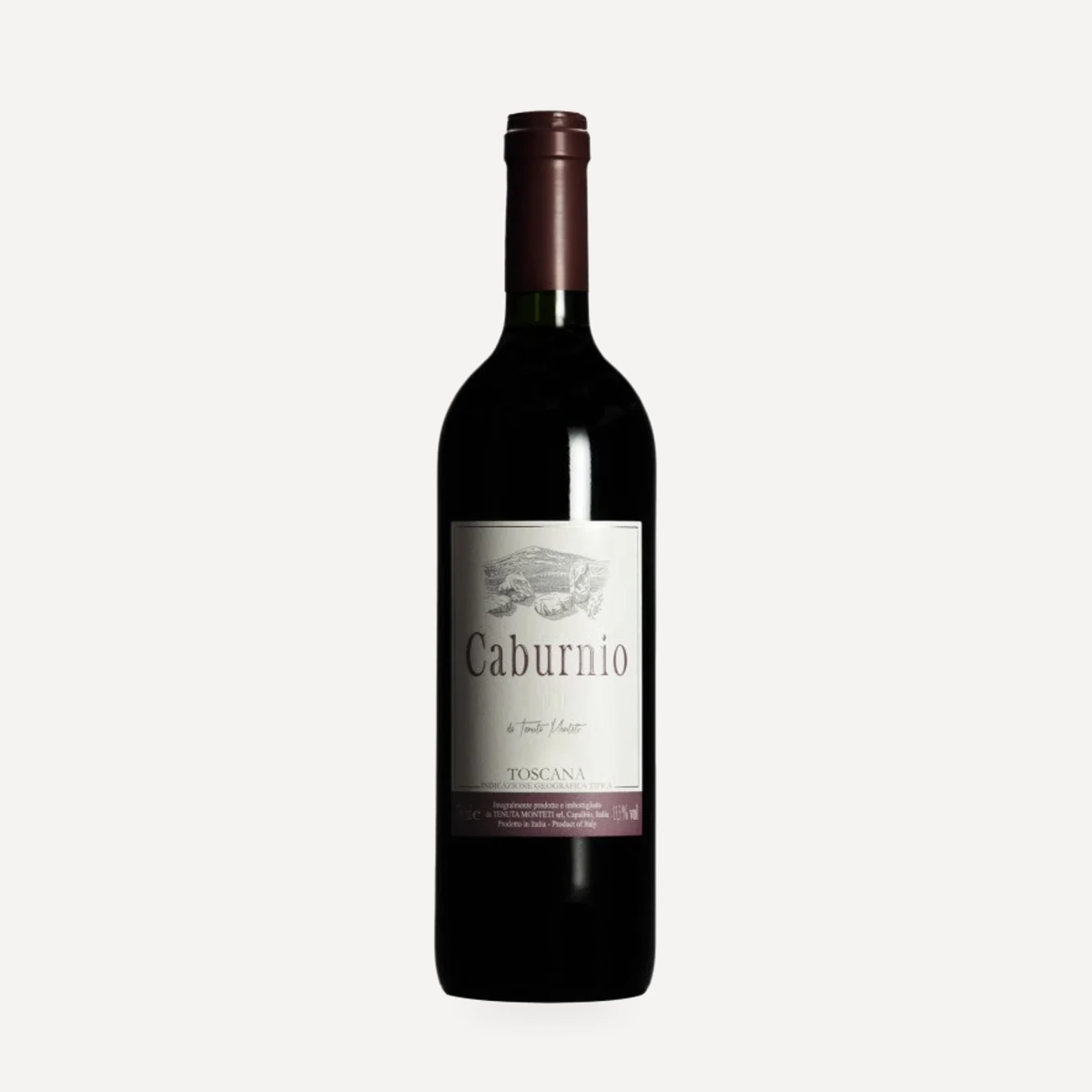
The winery was built to fit into the landscape, with two-thirds of the structure underground. Its design supported gravity-fed movement and separate handling of individual vineyard parcels. Construction was completed in 2004, which was also the estate’s first vintage. Tenuta Monteti began with the two red wines Monteti and Caburnio, conceived as distinct expressions united by the same stylistic search for territorial elegance.
2010: Eva Baratta and Javier Pedrazzini join the estate
Eva Baratta and Javier Pedrazzini met in 1999 and subsequently lived in several countries. In 2010 they left their respective careers—Eva as a documentary filmmaker and Javier as an Argentine diplomat—to take part in running Tenuta Monteti. Eva became general manager and production supervisor, while Javier assumed responsibility for sales.
2014: the range expands
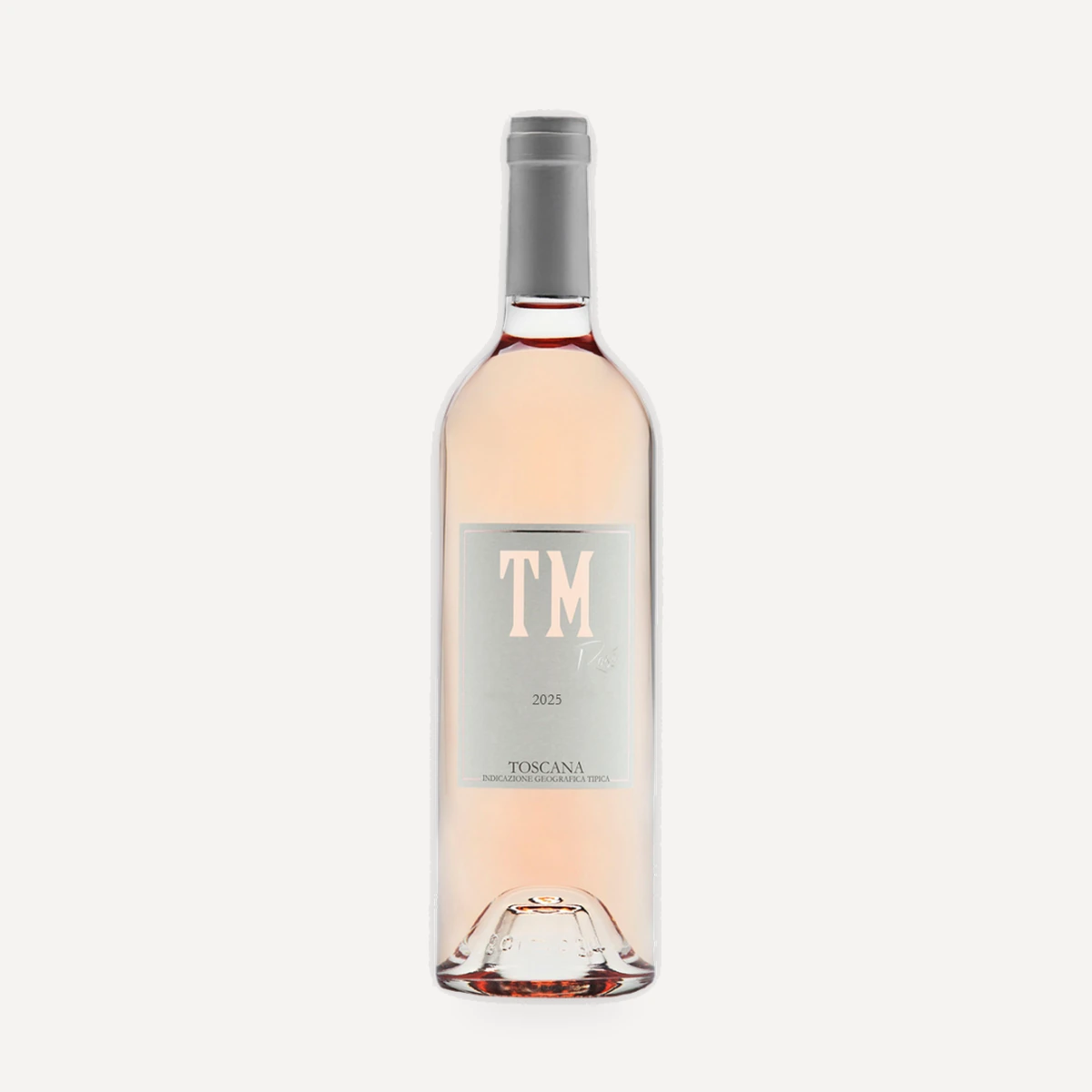
TM Rosé was introduced in 2014. The rosé was conceived as the missing third element in the estate’s dialogue with its surroundings and as a tribute to the beaches and marine light of the nearby coast.
2016–2017: formal sustainability programme
Tenuta Monteti entered the Italian Ministry of the Environment’s V.I.V.A. wine-sustainability programme in 2016. A year of data collection covered the whole operation, from irrigation-water consumption to packaging materials. In January 2017, the estate received calculations of its overall water and carbon footprints and obtained Sustainable Winery certification. The assessment has subsequently been repeated every two years and is intended to guide continual reductions in the measured environmental footprints.
2018: expansion of the property
In 2018 the estate acquired the neighbouring property across the road, on the wooded slopes of Monteti hill. The acquisition incorporated approximately 5,000 organically managed olive trees, additional woodland and 6 hectares of open fields intended for new vineyards. Mourvèdre was introduced to the estate’s varietal palette. The enlarged property now covers 142 hectares: 30 hectares of vineyard, 20 hectares of olive groves, with the remainder divided between open fields and woods. Gardens and rose plantings surround the buildings.
2022–2023: team and certification development
Michela Bussu joined Tenuta Monteti in 2022 as the oenologist responsible for the winery. In 2023 the estate added SQNPI Sustainable Quality certification under Italy’s National Integrated Production Quality System to its existing V.I.V.A. certification.
Terroir
Location and landscape
Tenuta Monteti lies near the medieval village of Capalbio in the southern Tuscan Maremma. The estate occupies a small valley among the first hills, approximately 15 km from the sea, at an average elevation of 145 m above sea level. The sea is visible to the south from the vineyard’s highest point, while the landscape extends north across hills toward Mount Amiata.
The 142-hectare property combines 30 hectares of vines, 20 hectares of olive groves, open fields, woods, gardens and rose plantings. Its immediate environment is defined by Mediterranean scrub, woodland and sunlit fields. The wider Maremma landscape is heavily wooded: 198,000 hectares, representing 44% of the land, are woods or wooded ground, while vineyards occupy 2%.
Relief, exposures and maritime influence
The vineyards occupy five contiguous fields with south-eastern and south-western exposures. Parcels associated with the estate’s wines are also described at approximately 140 m, facing south to south-west. Monteti hill—identified as a prehistoric volcano—stands between the estate and Capalbio. It moderates the strong direct winds from the Mediterranean while allowing a steady, gentler sea breeze to circulate through the valley in both directions. This combination gives the vines protection without depriving them of ventilation.
Soils
The vineyard soil has a complex, stony structure over a clay substrate. The stones support drainage, while the deeper clay retains coolness and moisture. Very large boulders encountered during the original land preparation were carefully removed and repositioned along vineyard roads and among the vines, where they became a visual symbol of the estate.
Vinificazione
Parcel-by-parcel management
The vineyard has been managed by parcels since the beginning of the project. Varieties alternate in a chessboard-like arrangement, and every parcel receives its own treatment rather than a standard estate-wide prescription. This system has allowed the team to develop and continually refine an agronomic approach tailored to the property’s soil, climate and the actual needs of the vines. Technological monitoring is combined with lower-impact agricultural practices, with unnecessary interventions removed and each growing season handled on its own terms.
Monitoring, soil and biological control
An estate weather station tracks vine health and plant water requirements throughout the year. Each autumn, different mowable plant species are sown between the rows to add organic matter to the soil. When vine growth resumes in spring, beneficial insects are released as a biological-control measure against harmful pests.
Crop selection and harvest
Green harvesting begins the selection process in mid-summer, when the team identifies the best bunches to leave on the vines. Before picking, rows ready for harvest are marked with red poles; parcels requiring more time are reserved for a second pass so that they can reach optimal maturity.
Harvesting is entirely manual. Selection starts while the bunches are being picked and continues on the winery roof. Whole bunches pass over an initial sorting table, followed by another selection after destemming to eliminate imperfect berries. The selected berries are gently crushed before moving by gravity into the fermentation vats.
Sustainability certification
Tenuta Monteti entered the V.I.V.A. programme in 2016 and obtained Sustainable Winery certification in January 2017 after calculating its overall water and carbon footprints. Reassessment takes place every two years. The V.I.V.A. framework is used not only to measure current performance but to direct continual improvement and reduce the calculated footprints. Its carbon-footprint calculation complies with UNI EN ISO 14064:2019. The estate also holds SQNPI Sustainable Quality certification under Italy’s National Integrated Production Quality System.
Certification references are V.I.V.A. CC_VV_2021_006 and SQNPI-SQ03-119931-CC20241.
Cellar design and gravity flow
Completed in 2004, the winery is integrated into the landscape and built two-thirds underground. It was designed to use gravity throughout production. Grapes selected on the roof descend through steel conduits into fermentation vats below; finished wines subsequently move down to the underground level for barrel maturation. The subterranean rooms maintain a naturally constant temperature throughout the year.
Reception and selection
Manual selection begins in the vineyard. On arrival at the roof, bunches are selected again on a sorting table. After destemming, a further inspection removes imperfect berries. The selected fruit is gently crushed and conveyed by gravity into the cellar.
Parcel vinification
Parcels and micro-parcels of each variety are vinified separately in dedicated stainless-steel vats. Fermentation temperature and maceration duration are chosen individually for every lot. The cellar therefore finishes harvest with several separate wines for each variety—one for each parcel picked. Current red-wine protocols include temperature-controlled fermentation in open, tapered stainless-steel vats, extended contact with the lees to reduce sulphite requirements, and maceration adjusted to the variety and parcel.
Maturation and blending
Each separate lot remains identifiable through maturation. The team chooses the maturation vessel and regime according to the character of the individual wine. Medium-toast French oak barriques and tonneaux are selected from different forests and cooperages, with yearly trials and reassessment of which woods best suit each variety and parcel. Oak is intended to support the primary fruit rather than mask it.
Only after the separate lots have completed refinement are the blends assembled. The available components are selected to express the fruit, territory and specific history of the vintage, rather than to reproduce a fixed formula. Estate red-wine protocols include combinations of stainless steel, French-oak barriques and tonneaux, followed where appropriate by cement settling and bottle maturation; the reds are bottled without fining or filtration.
TM Rosé follows a distinct process: fruit is picked early by hand from dawn until midday, sorted, softly and briefly pressed, and fermented in stainless steel at low temperature to preserve aroma and freshness. After blending, the wine undergoes cold tartaric stabilisation before bottling and receives four months of bottle refinement before release.
Filosofia
Tenuta Monteti approaches wine as a living account of a place and a growing season rather than as a standardised product. Its three wines form parts of one project: each has a different personality, but all are intended to reflect the estate’s combination of woodland, Mediterranean scrub, sunlit hills and maritime influence.
The estate’s parcel method is central to this outlook. Vineyard work, fermentation, maturation and blending are decided case by case rather than through fixed recipes. Interventions are kept to what each parcel and season genuinely require, with the fullest possible expression of the fruit as the objective. Different lots remain separate long enough to preserve a broad palette for blending.
Vintage variation is treated as part of the wine’s identity. Blend percentages are not fixed; components are reassessed each year so that the finished wines preserve their stylistic direction while reflecting the season. French oak is selected to enhance the primary character of the fruit and never to cover it.
The initial decision to work under IGT Toscana provided the freedom to choose varieties and pursue combinations outside a more prescriptive formula. Petit Verdot, Cabernet Sauvignon, Merlot, Alicante Bouschet, Cabernet Franc and Mourvèdre were selected for their ability to adapt locally and convey the estate’s landscape.
Environmental sustainability and social responsibility are presented as inseparable from the pursuit of quality. V.I.V.A. footprint measurement and biennial reassessment, SQNPI certification, parcel-specific treatments, soil-building cover vegetation and biological pest control are all components of a continuing improvement process intended to protect the property for the future.
Vini
Monteti
Caburnio