Storia
Roots in the early seventeenth century
Moretti traces its winegrowing roots to 1630. Its history joins two longstanding families of Monteu Roero—the Moretti and Occhetti families—both of which had cultivated the land since the beginning of the seventeenth century. Agricultural experience and knowledge were handed from one generation to the next, and the union of the two families formed the basis of the present estate.
A family estate across generations
The two family names remain embedded in the property. Production occupies two farmsteads historically owned by the family, Cascina Occhetti and Cascina Moretti, both in the Occhetti district of Monteu Roero. Cascina Occhetti contains the vinification rooms, the main barrel cellar and the barrique cellar. Cascina Moretti houses the offices, tasting room, a second barrique cellar and the pupitres room used for traditional-method sparkling wine.
Present management
Francesco Moretti now manages the 40-hectare farm with his children, Alessandra and Riccardo. Together they oversee the property with an emphasis on respect for the surrounding natural environment. The family works vineyards on several hills in Langa and Roero, with its largest holdings in the San Michele, Occhetti and Trinità crus, alongside smaller vineyards elsewhere in the area.
Historical-enterprise recognition
Moretti has been recognized as an Impresa Storica d’Italia and entered in the National Register of Historical Companies. Unioncamere established this register in 2011, during the 150th anniversary of Italian unification, to recognize businesses that have passed their accumulated experience and values to successive generations.
Terroir
Langa and Roero hills
The vineyards occupy different hills across Langa and Roero. Variations in soils and exposure distinguish the sites and contribute different aromas and flavors to their wines. The largest holdings lie in three crus: San Michele at Santo Stefano Roero, Occhetti at Monteu Roero and Trinità at Govone. Smaller vineyards are distributed across other hills in the area.
Roero lies on the hydrographic left bank of the Tanaro and was formerly known as Bassa Langa or Langa Roerina. Its landscape combines gentle, fertile hills with vineyards, orchards and wooded areas. Castles, towers, old hamlets and small churches occupy prominent positions on the hills.
Rocche del Roero
Deep ravines known as the Rocche del Roero cut into the slopes. They originated through erosion by the Tanaro before the river changed course following seismic activity and landslides approximately 200,000 years ago. The resulting terrain creates the alternation between ordered cultivation and more rugged, wooded landscape that characterizes the area.
Vinificazione
Moretti cultivates only native varieties associated with its area: Nebbiolo, Arneis, Barbera and Dolcetto. Vineyard management is based on the principle that high-quality wine depends both on strong individual terroirs and careful stewardship of the vines.
The family favors agricultural techniques intended to be ecologically sustainable and seeks to use products that are as natural as possible in the vineyard. Francesco, Alessandra and Riccardo manage the 40-hectare property with an expressed commitment to respecting nature and the surrounding environment. The cultivated landscape remains interwoven with orchards and wooded areas.
Two historic farmsteads
Production and vinification are divided between two family farmsteads in the Occhetti district of Monteu Roero. Cascina Occhetti contains the vinification rooms, the principal barrel cellar and a dedicated barrique cellar. Cascina Moretti contains a second barrique cellar as well as the pupitres room for traditional-method sparkling wine. The latter building also houses the offices and tasting room.
Maturation and approach
The production approach is traditionalist while incorporating selected modern enological techniques intended to enhance quality without abandoning the area’s wine traditions. Every wine receives a period of maturation, with duration adjusted to the wine. The estate uses either steel with maturation sur lies or oak barrels. Products of the most natural possible kind are preferred in the cellar as well as in the vineyard. Time, respect for tradition and attention to detail are central to the production philosophy.
Filosofia
Moretti describes itself as traditionalist while accepting selected modern enological techniques when they can improve quality without compromising the wine culture of its area. Its guiding idea, expressed by Francesco Moretti, is that wine needs time to realize its full potential. Consequently, every wine matures for a shorter or longer period in steel sur lies or in oak.
Respect for tradition and attention to detail form the stated basis of quality. In the vineyards, high-quality wine is understood to begin with distinguished terroirs and attentive management. Environmental responsibility extends through both agriculture and cellar work: the family favors ecologically sustainable farming techniques and products that are as natural as possible.
The estate also treats wine labels as bearers of family memory. Certain labels are dedicated to places and people whose contribution helped shape the business over time.
Vini
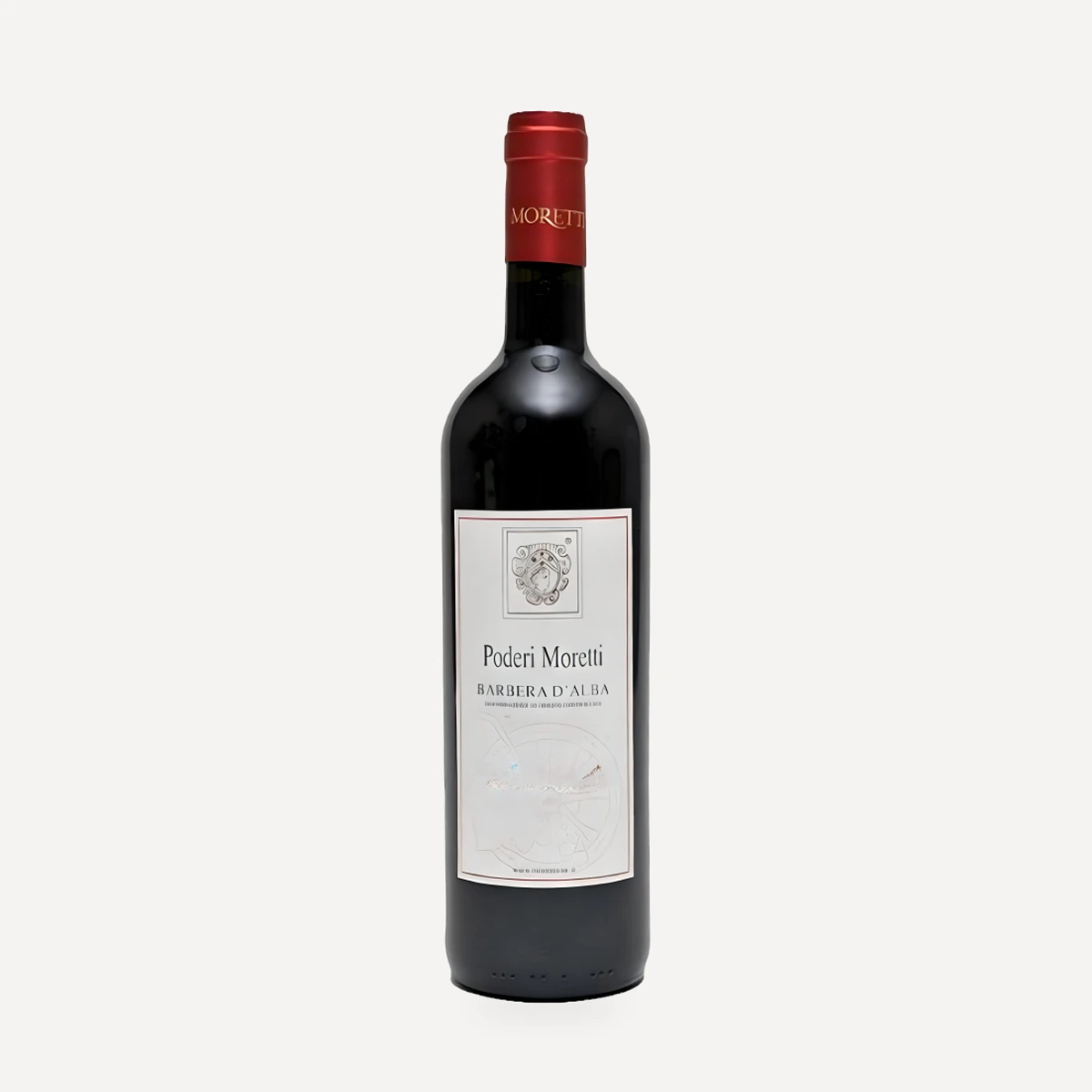
Barbera d’Alba D.O.C. Superiore
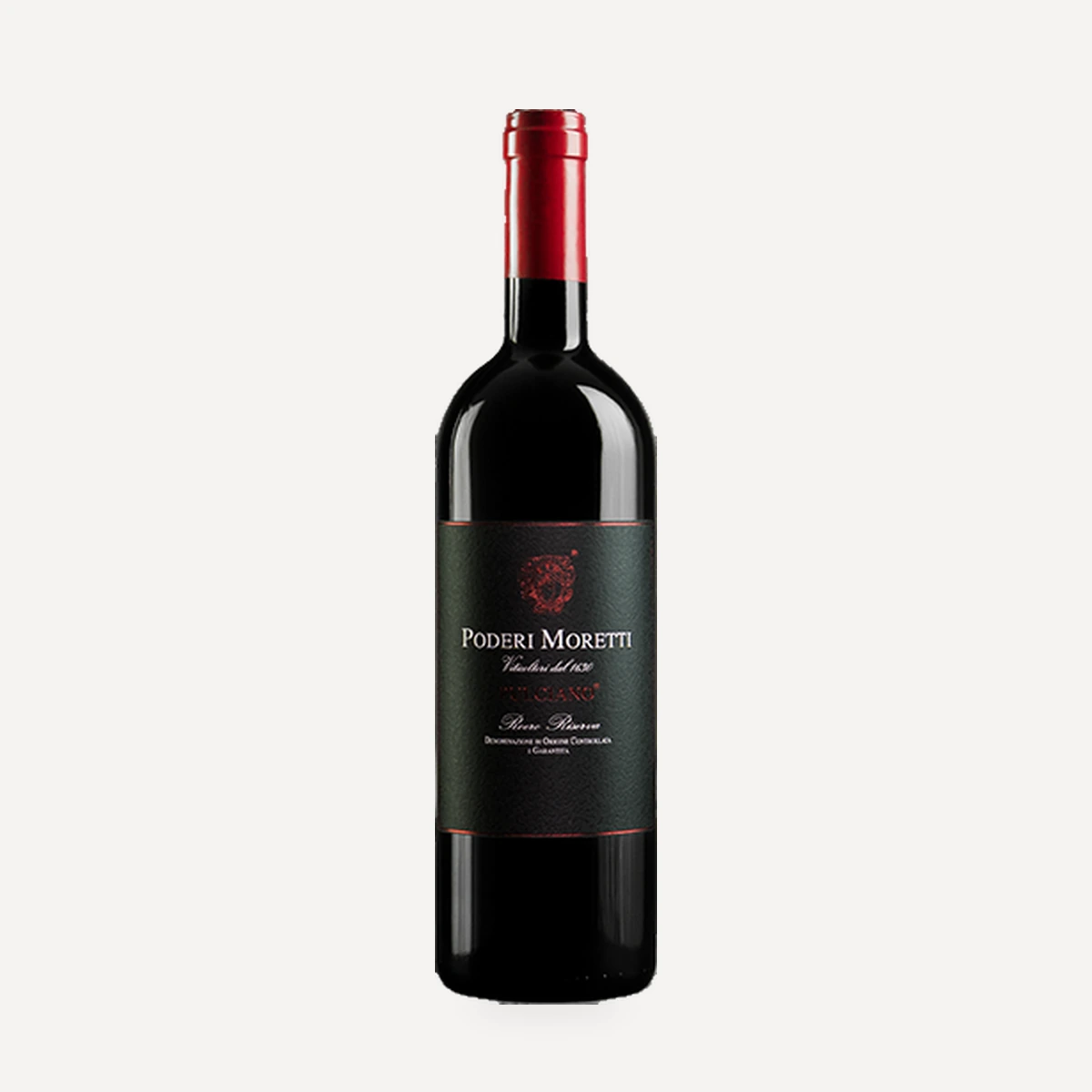
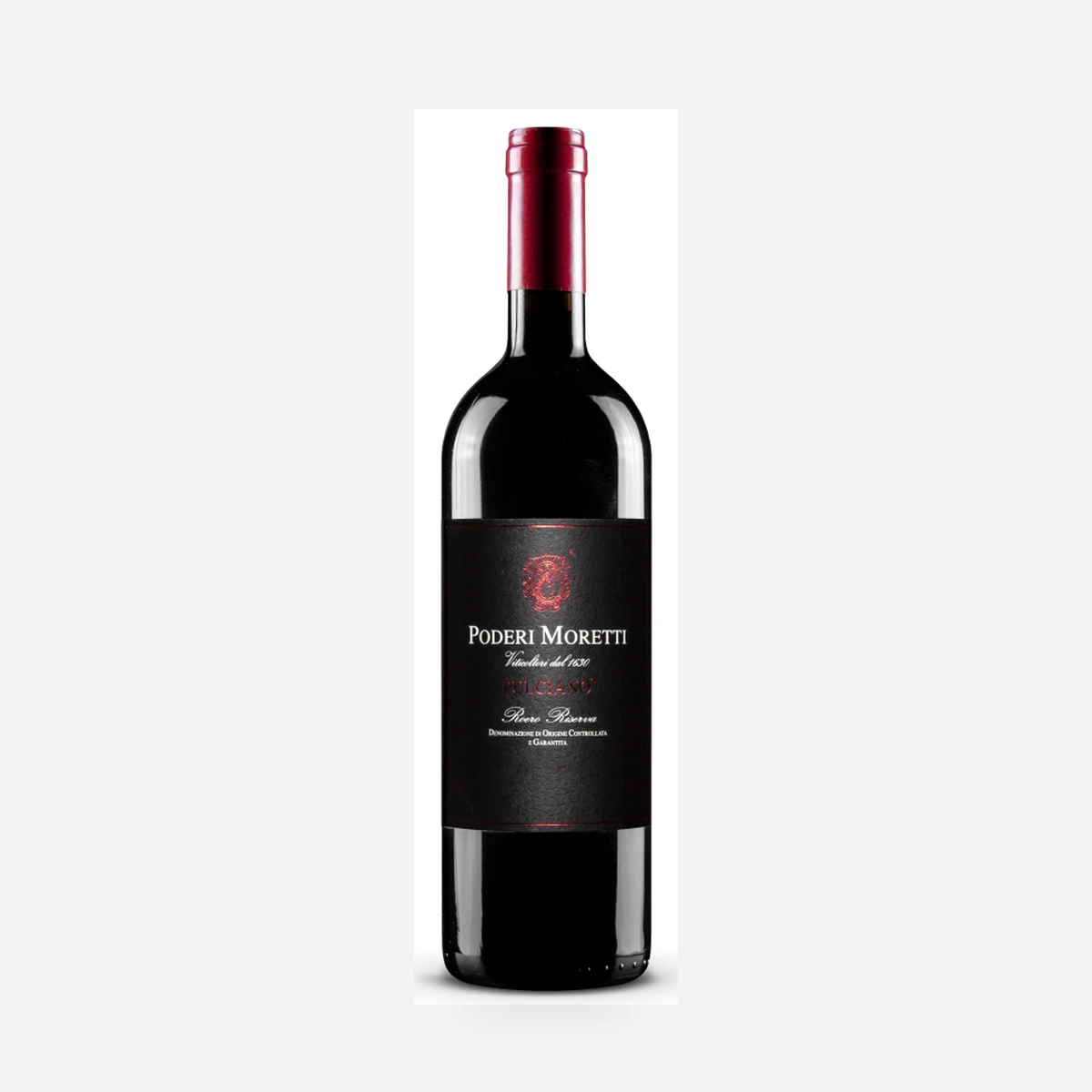
Occhetti Pulciano – Roero Riserva D.O.C.G.