Storia
The land before the Mossio family
The documentary history of the property reaches back well before the present family enterprise. Rodello’s oldest surviving land register, dated to the first half of the 16th century, divides the land now occupied by the estate among several owners. Although an unspecified number of pages is missing, the register preserves the names of Baldassarre Negro, the brothers Giovanni Petrino and Antonio Magalli. It also records an unidentified owner’s “piece of land with vines,” establishing that vines were already cultivated on the property in that period.
No houses were registered on this rural land. At the time, landowners lived for security inside Rodello’s fortified enclosure, while the countryside held barns, stores and threshing floors rather than the integrated residential and agricultural cascina familiar today.
Much of the remaining land may have belonged to the Niella family, lords of Rodello from 1393. Their precise holdings cannot be reconstructed, although Galeotto and Simone Niella frequently appear as adjoining proprietors. A later register, tentatively dated 1649, gives firmer evidence: Countess Clemenza Francesca Niella, widow Falletti and universal heir to the Niella estate after the male line died out, appears as sole owner.
The Caramelli inheritance and the cascina
In her testament of 1676, Countess Clemenza transferred everything she owned at Rodello to the Caramelli family, Marquises of Clavesana. She was the grandmother of Count Annibale II Caramelli. The testament contains the first documentary mention of the cascina and describes the Piano delli Perdoni holding as comprising a farmstead, meadow, alteno and land, with a recorded extent of 31 giornate, four stara, seven tavole and eight piedi.
The same document identifies an alteno, a mixed system in which vines and arable crops shared the same ground and cereals were grown between vine rows. This form of cultivation survived among local farmers into the 1950s and 1960s.
The family enterprise
The Mossio enterprise began with grandparents Francesco and Francesca. Their work passed to Luigi and Ennio Mossio, each supported by a wife named Margherita, and then to their children. Family members assumed different responsibilities while sharing the objective of improving wine quality.
Archived material marking the estate’s 40th year of activity in 2009 also commemorated Mauro Mossio, who had died approximately two growing seasons earlier. Valerio and Remo, with important contributions over the years from Mauro, Guido and Claudio, maintained the family activity. Valerio and Remo represent the third generation: Remo has been responsible for the vineyards and cellar, while Valerio has overseen administration, commercial work, visitors and clients. Michele, Guido’s son, entered the estate as the fourth generation and works alongside them.
Development of the vineyards and range
By 2003 the family cultivated 8 ha of its own vines. The estate subsequently reached 10 ha, equivalent to 28 Piedmontese giornate, with annual output stated at approximately 50,000 bottles. The vineyards are all in Rodello and are planted to Dolcetto, Barbera and Nebbiolo. Dolcetto remains the principal variety and occupies the preferred exposures.
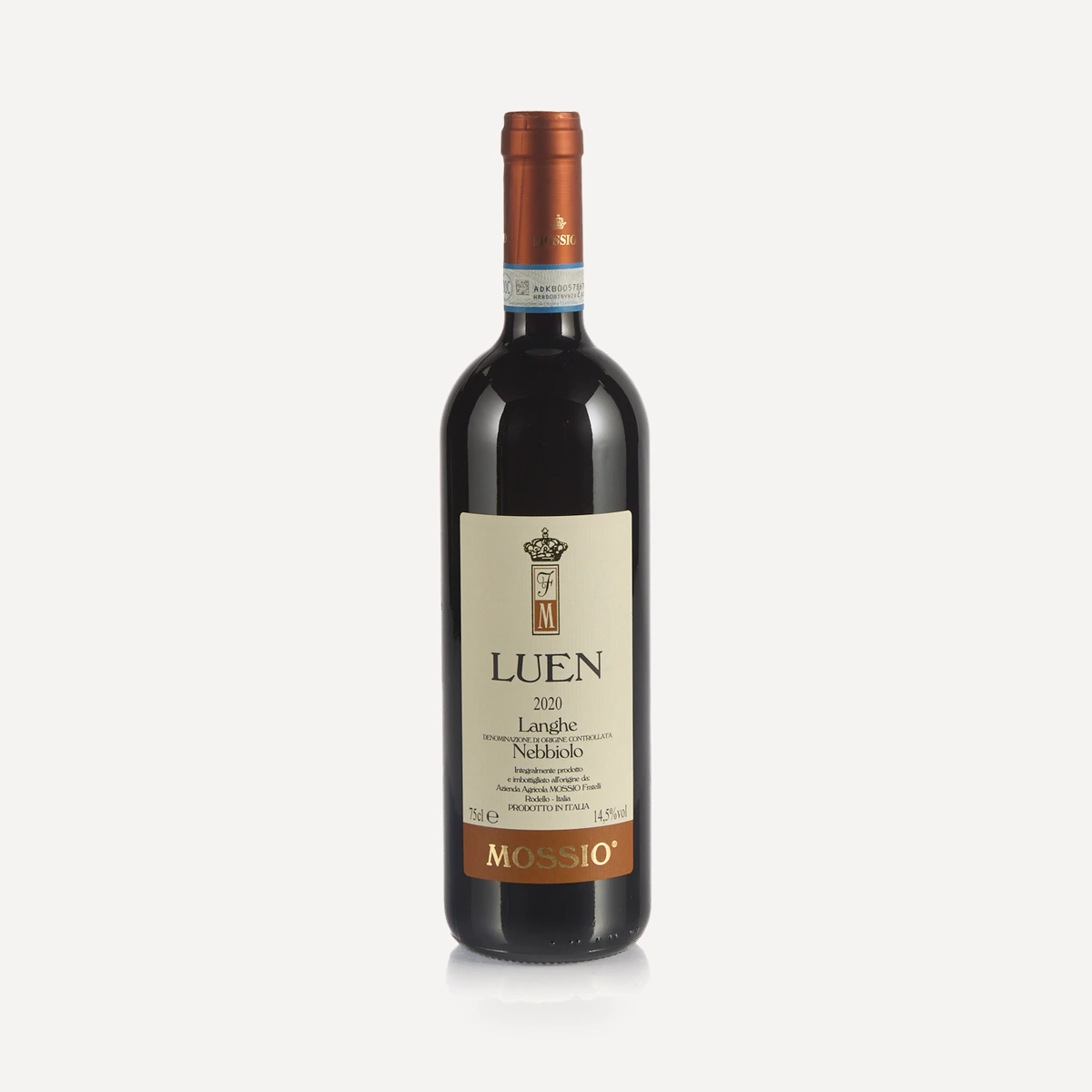
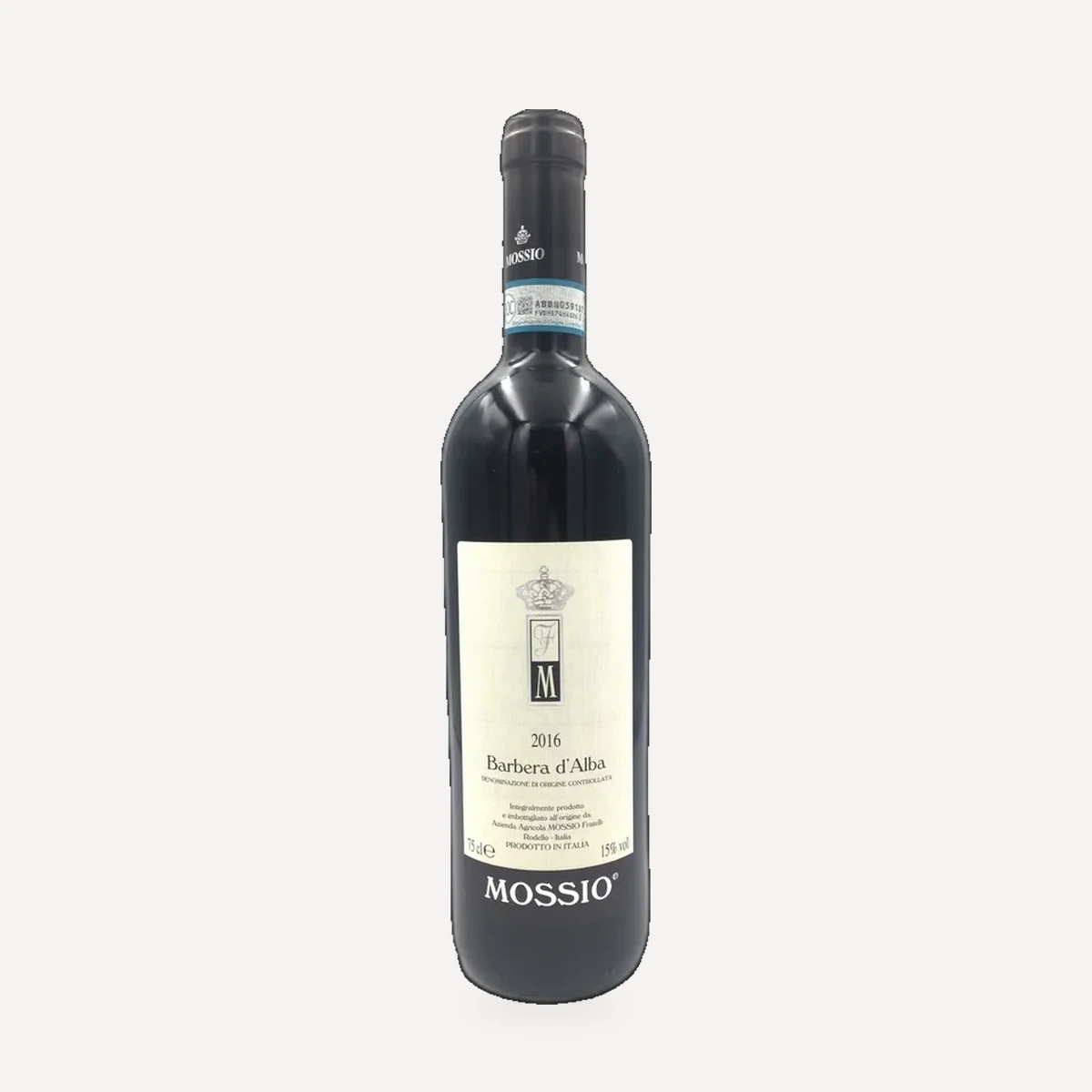
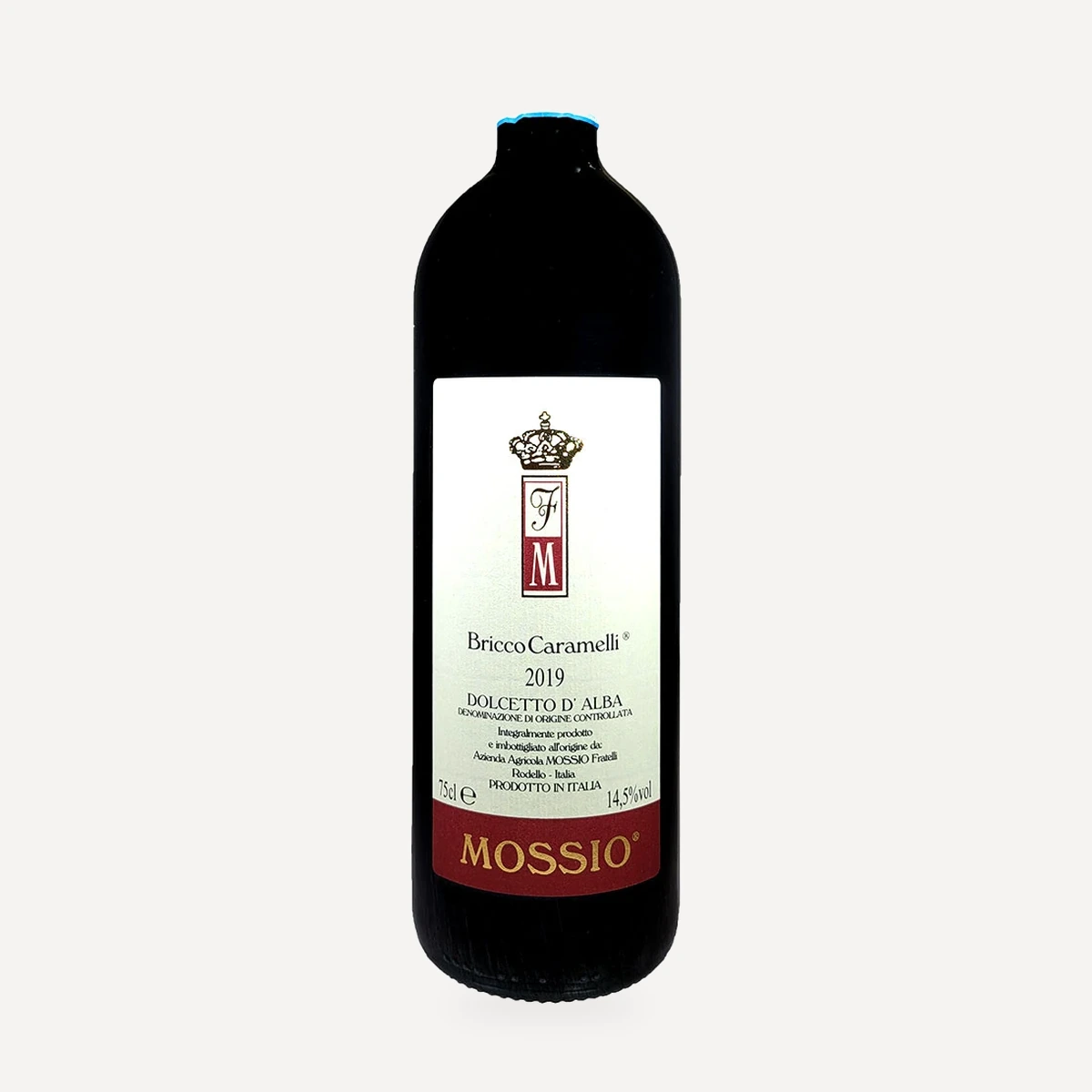
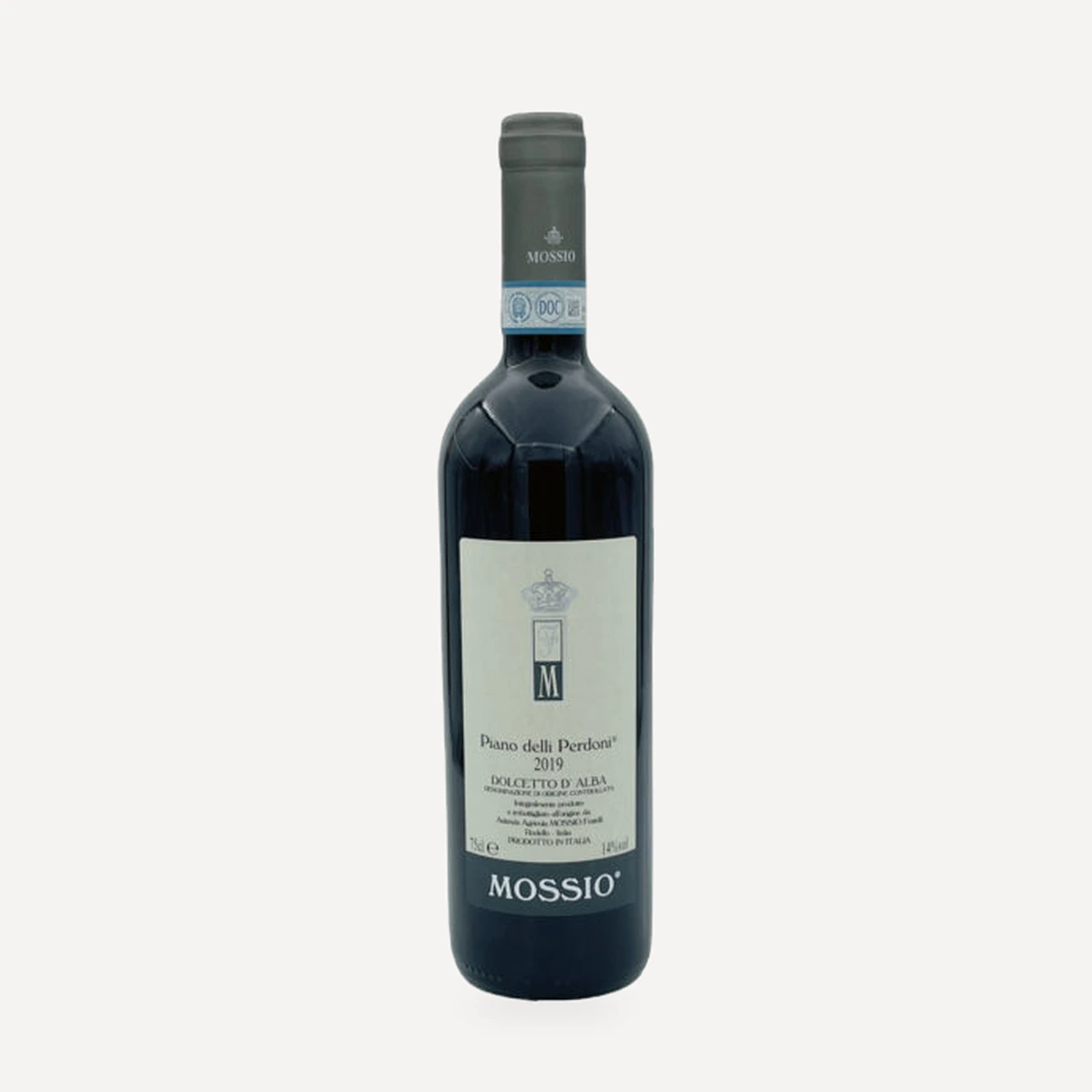
The basic Dolcetto was discontinued by 2004 so that work could concentrate on the Bricco Caramelli and Piano delli Perdoni selections. Barbera d’Alba’s first vintage was 2004, and a varietal Langhe Nebbiolo also joined the range. In 2007 the family temporarily chose not to make Langhe Rosso, although that wine later returned to production.
Michele’s arrival was identified in the 2005 guide archive as the entry of the fourth family generation. In 2009 the family celebrated both 40 years of activity and the tenth harvest of Bricco Caramelli.
Later experimentation
Around 2009, cellar fermentations began using indigenous yeasts. By 2012 the family was experimenting with a passito made from Dolcetto, initially resting in small wooden vessels. The project became Le Margherite, made from dried Dolcetto grapes. Gamvs added a Dolcetto d’Alba Superiore interpretation; a 2014 archive entry describes the 2011 Gamvs as its debut. The contemporary range also includes the two established Dolcetto d’Alba selections, Barbera d’Alba, Langhe Nebbiolo, Langhe Rosso and a Dolcetto-pomace grappa.
Terroir
The estate’s vineyards are all within Rodello and occupy a ventilated plateau exposed to sunlight throughout the day. Approximately 10 ha of vines surround the cascina in a nearly contiguous holding. The landscape visible from the property includes vineyards, woods, orchards and small watercourses.
Elevations documented for individual vineyards range from 420 to 480 m. The altitude and air currents arriving from Alta Langa are associated particularly with freshness in Bricco Caramelli. That vineyard has a full southern exposure, while Piano delli Perdoni is a well-ventilated plateau beside the cellar that receives sun throughout the day.
The recurring soil analysis is 27% sand, 51% silt and 22% clay. An archived profile additionally characterizes the vineyards as lying on marl and tuff at approximately 450 m. Dolcetto receives the estate’s preferred exposures, while Nebbiolo and Barbera occupy the remainder of the planted area.
Vinificazione
The vineyards are conventionally farmed but managed with an emphasis on restrained intervention, low yields and close observation. Integrated pest management is used, with treatments timed only when necessary; a weather station in the vineyard supports those decisions. The 2015 farming profile records no systemic products and no certification.
Fertility inputs documented over successive profiles include natural manure, pelletized manure and humus. Copper and sulfur are the principal crop-protection materials identified in the latest profile. Weed control was recorded as mechanical in 2015. Earlier profiles also mentioned chemical weed control, but the more recent account records only the mechanical approach.
The vines are Guyot-trained. Winter work includes balanced dry pruning. During the period of strongest vegetative growth, the canopy is tended carefully, followed by severe manual crop thinning both before and after véraison. The aim is to regulate yields and retain only selected, healthy clusters. Grass-cover control and vineyard treatments constitute the mechanized portion of the work described for the individual vineyard sites; the principal quality operations are manual.
Harvesting is by hand into boxes, with timing adapted to variety and intended style. Dolcetto for the principal dry wines is picked from mid- to late September; Barbera is collected in the first days of October; Nebbiolo follows after 20 October. Grapes intended for Le Margherite are hand-picked into small boxes around 20 September before drying. All grapes used by the estate are grown on its own land.
Cellar work is designed to preserve the character of the fruit and the differences among the estate’s sites. Technology is kept to a minimum. Fermentations use indigenous yeasts, a practice adopted around 2009 with encouragement from consulting oenologist Beppe Caviola. Soft crushing is used to avoid extracting excessive tannin.
The recurring red-wine protocol places the fruit in stainless-steel tanks for approximately ten days of skin maceration. The Dolcetto d’Alba selections are associated primarily with steel, while Barbera, Nebbiolo, Langhe Rosso and Gamvs receive wood maturation in the documented production accounts. Large casks are preferred: Gamvs matures for 12 months in large Slavonian-oak casks, followed by two months in bottle; other wood-aged reds are generally described as receiving 12 months in wood and two months in bottle.
The wines are bottled without filtration. They are also described as neither fined nor stabilized through an intensive technological process. Natural winter cold—introduced by opening the cellar—and settling are used for stabilization. Sulfur additions are kept to the minimum considered necessary.
Le Margherite follows a separate passito process. Hand-picked Dolcetto is placed in a drying room for five months at 7°C and 45% humidity, then crushed in February. After fermentation and ten days of skin maceration in stainless steel, it matures for 24 months in wood and a further two months in bottle.
Filosofia
MoS presents winegrowing as the shared work of a family whose members hold different roles but pursue the same objective: wine quality. The family’s approach gives priority to close, continuous work in the vineyard, deliberately limited yields and the selection of sound clusters.
Environmental responsibility is framed as careful, ecologically compatible farming rather than certification. The practical expression includes integrated pest management, observation supported by a vineyard weather station, organic fertility inputs, copper and sulfur, mechanical weed control in the latest profile and the avoidance of systemic products.
In the cellar, the aim is not to reshape the grapes’ identity. Indigenous yeasts, limited technology, gentle extraction, little reliance on wood for the principal Dolcetto wines, natural stabilization, no filtration and minimal necessary sulfur are intended to retain the character of the land, the vintage and the varieties. Tradition is treated as something to preserve and pass between generations, while experiments such as Gamvs and the Dolcetto passito extend the family’s work with its principal grape.
Vini
Barbera d’Alba
Dolcetto d’Alba Bricco Caramelli
Dolcetto d’Alba Piano delli Perdoni
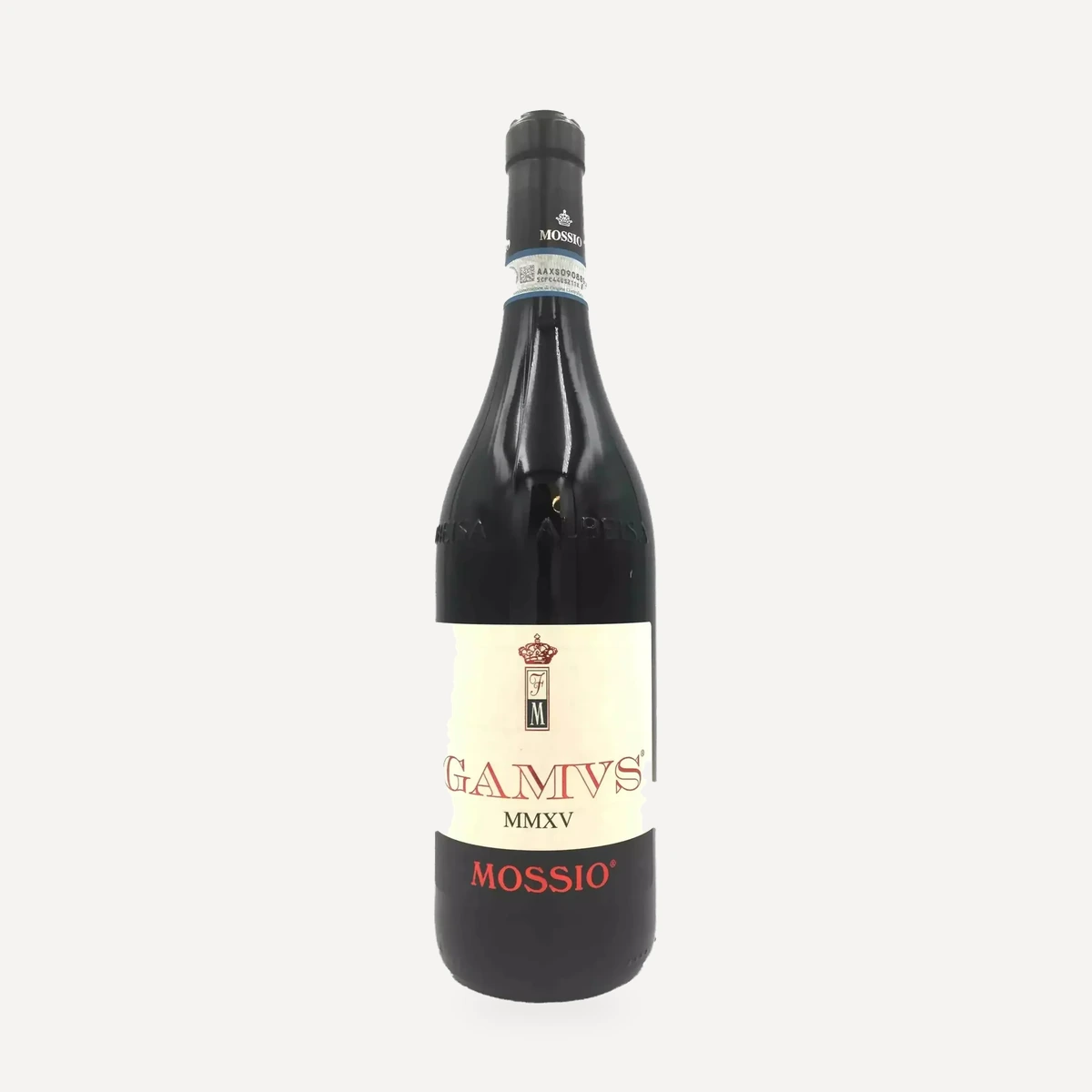
Gamvs Dolcetto d’Alba Superiore