Storia
A shared project begins in 2010
Oltretorrente began in 2010 as the shared life project of Chiara Penati and Michele Conoscente. Both had studied agricultural science in Milan and entered winegrowing without family connections to wine or farming. After working in other wineries and at university, they decided to build an enterprise that would allow them to work together in the field they had studied and come to love.
They looked for a modest but complete starting point that they could afford without substantial capital. The initial holding provided approximately 1.5 hectares of small vineyards and a compact cellar in which to make wine. Although they did not yet have a home in Paderna and had to commute in the reverse direction, the first season yielded approximately 5,000 bottles.
Building the estate vineyard by vineyard
In 2011, Chiara and Michele acquired Vigna Gatti, a vineyard of just over 1.5 hectares surrounding the Paderna cemetery. The same year, they began leasing Vigna del Tasso from Pierluigi, known locally by the nickname Tasso.
Additional land was assembled gradually rather than as a single consolidated estate. Three more hectares were bought from several elderly residents of Paderna, while other small vineyards were taken on lease. The resulting vineyards occupy separate parcels on different slopes around the village. They range from relatively young plantings to vines around a century old.
Restoring the inherited vineyards required substantial structural work. Many old posts were deteriorating and had to be replaced; almost all were renewed within roughly three years. Pruning also had to be reconsidered to correct inherited training systems and favour vine longevity instead of maximum production.
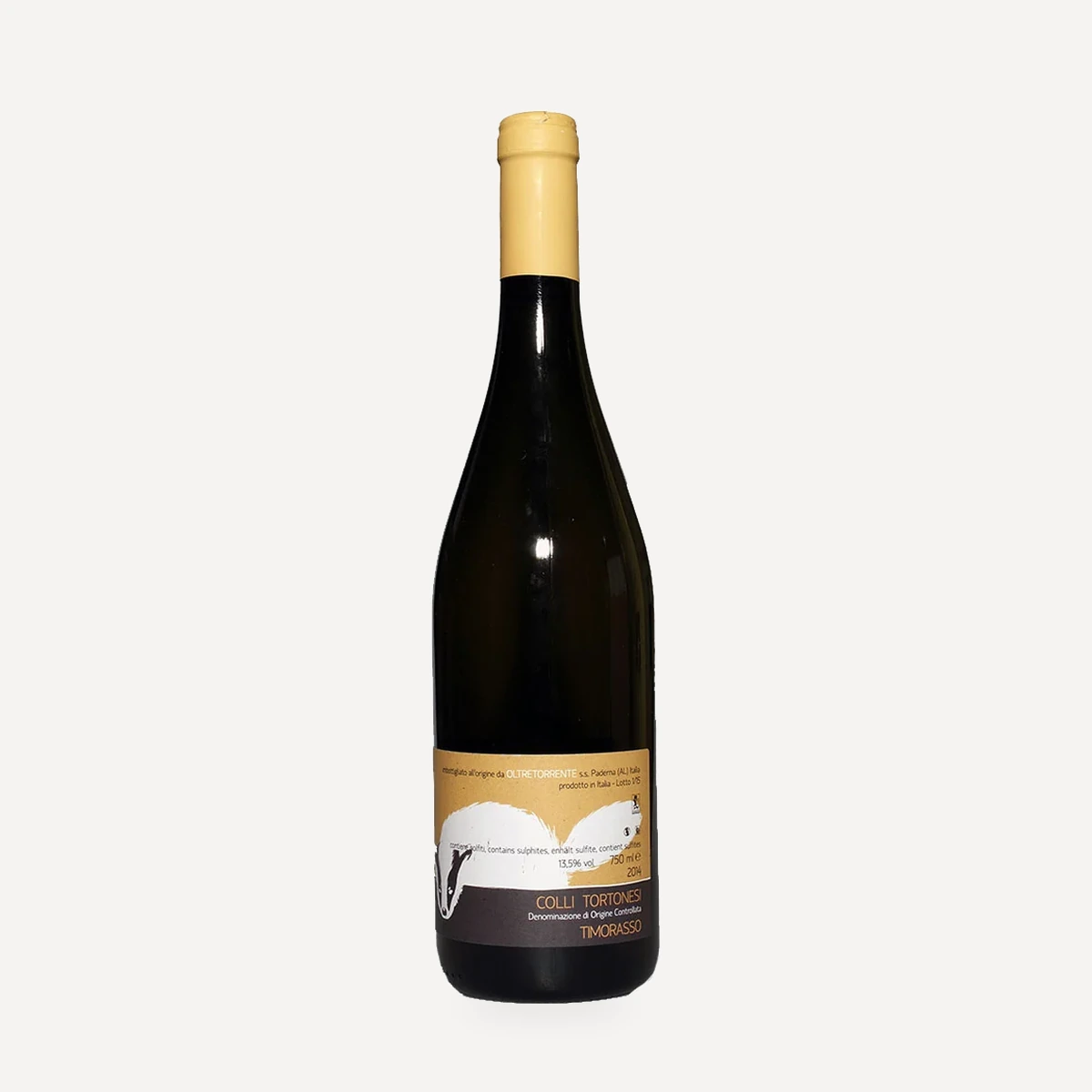
In 2012, the approximately 0.5-hectare Rampone Alto vineyard, originally planted in 2002, was entirely top-grafted to Timorasso.
The first new plantings
In 2015, Oltretorrente began establishing its first vineyard planted from the ground up. Vigna di Simonelli occupies approximately two hectares of sloping, northwest-facing land with white Tortonian marl. The planting was completed in stages in 2015, 2016 and 2019 and is devoted entirely to Timorasso. The land had once been cultivated by the father of Piero Simonelli but had become dense scrub. Piero wanted to see vines return and assisted Chiara and Michele with the purchase; clearing and replanting the site demanded a major investment of manual work and energy.
Rampone Basso, planted in 2007, joined the holding in 2016. Its earlier layout and maintenance were sufficiently problematic that it was expected to be among the first acquired vineyards requiring eventual removal. Oltretorrente also began managing Casoni in 2016. Its wealth of old genotypes and interplanted varieties had already been mapped, and an ampelographer from nearby Spineto urged that it be preserved rather than uprooted.
Expansion and restoration in 2020
In 2020, Oltretorrente bought the alfalfa field separating Vigna Gatti from Battorella, with the intention of establishing vines there. During the same year, overgrown banks and trees shading Rampone Alto were cleared.
A new section of La Serra was also planted in 2020. Known as Serra Nuova, it is planted entirely with Timorasso and forms part of a south-facing vineyard of approximately 1.5 hectares. Its warm position brings even late-ripening varieties to maturity in early September, making La Serra the first vineyard harvested each season.
The estate today
The holding now comprises seven hectares of vineyards divided among seven parcels and 20 distinct environments. The vineyards include north-, south-, southeast- and northwest-facing slopes at approximately 300 metres above sea level. Their ages generally range from 15 to 100 years, in addition to the new vineyards planted by Oltretorrente.
A southwest-facing Timorasso vineyard entered production with the 2024 vintage. The estate continues to combine the preservation of old, mixed vineyards with new Timorasso plantings, organic farming and the restoration of natural soil fertility. Its wines are now distributed in Italy and exported to markets including the United States, Quebec, Australia, Japan and several European countries.
Terroir
Oltretorrente’s cellar and vineyards are located at Paderna in the hills around Tortona, Piedmont. The vineyards occupy separate slopes around the village at approximately 300 metres above sea level. Exposures include north, south, southeast, northwest and southwest, creating markedly different environments within the seven-hectare holding.
The slopes are sufficiently steep that work may require a crawler tractor. Some sites become inaccessible to machinery after rainfall and must be reached on foot. Several vineyards are planted across the contours in the traditional giropoggio layout, while Vigna di Matteo follows the fall line in a rittochino arrangement. The latter can simplify vineyard work but increases erosion risk on steep ground.
Two principal soil families recur across the estate. Gatti and Battorella have red, clay-rich soils containing abundant calcareous stones. Numerous fossilised seashells have been found among the limestone material removed at Gatti. Rampone Alto and Vigna di Simonelli instead occupy pale Tortonian soils formed from white, predominantly silty marl. At Simonelli this material is identified as marna di Sant’Agata.
Woodland creates another important element of the individual sites. Bulilia and Vigna del Tasso lie amid woods and wildlife habitat, while La Serra occupies a separate hill between Paderna and Spineto that is accessible only by dirt tracks and country roads. The latter’s south-facing position is particularly warm: even late-ripening grapes mature there in the opening days of September, so it is consistently the first site harvested.
The estate’s environmental diversity is reinforced by vine age and genetics. Old vineyards preserve vines selected locally in the same conditions where they continue to grow, rather than uniform nursery clones. Many blocks contain multiple varieties together, creating a mosaic of local genotypes, grapes, ages and exposures.
Vinificazione
Oltretorrente follows a certified organic approach designed to preserve biodiversity and extend the life of its inherited vineyards. Many vines are between 15 and 100 years old, excluding the newer sites planted by the estate. Their lower yields are accepted as part of working with balanced old plants whose grapes bring greater concentration, structure and complexity.
The oldest blocks require additional pruning work to correct earlier training systems. The objective is longevity rather than maximum productivity. Deteriorating posts have also been replaced extensively; during the estate’s first years, almost all the inherited vineyard posts were renewed.
Work since 2010 has focused on rebuilding natural soil fertility after years in which the ground had been cultivated and left bare. Green manures currently include fava bean, vetch and lupin. Vegetation beneath the rows is cut manually. Copper use is kept below the amount permitted by the organic certification and is reduced whenever conditions allow.
Old vineyards are valued for their original local genotypes. These vines were historically selected within the same environment in which they still grow, maintaining a direct relationship between plant and place. Mixed planting is also preserved: many blocks contain several traditional varieties together, while Casoni functions as a mapped collection of genotypes and grapes.
Steep gradients shape daily work. A crawler tractor is used where possible, but some vineyards must be approached on foot after rain. Woodland sites also contend with wild boar and roe deer, and deer can cause significant crop losses in dry periods.
Harvesting is carried out manually into small boxes. Selection takes place during picking so that only healthy grapes enter the cellar and whole bunches remain intact during transport.
Cellar work is conceived as accompaniment rather than transformation: the aim is to retain the identity of the vineyard, territory and individual growing season. The natural complexity arising from old vines and historically mixed plantings is preserved rather than simplified.
Red grapes undergo extended skin contact. Depending on the material and intended expression, documented macerations range from approximately one month to two months, with concrete tanks playing a central role. The cellar retains traditional concrete vessels because of the character they give the wines.
White grapes are pressed as intact bunches without destemming to safeguard freshness and mineral character. Malolactic fermentation in the white wines is neither blocked nor actively encouraged. The naturally high acidity of the principal Barbera and Timorasso grapes is not concealed.
Alcoholic fermentations are spontaneous in most cases. Sulphur dioxide is the only additive and is used in small, measured quantities. Wines mature on their full lees to build complexity and improve stability through natural means. The cellar employs concrete tanks, stainless-steel tanks and well-used barrels; the barrels documented in production have already been used for at least three cycles, avoiding a dominant new-oak imprint.
Filosofia
Oltretorrente’s guiding principle is to balance the agricultural legacy of Paderna’s older growers with the production of precise wines from old vineyards. Preservation extends to century-old vines, locally selected genotypes, mixed plantings, inherited concrete tanks and vineyard layouts that would be easier to replace than maintain.
The organic approach is understood as the most coherent way to express the area’s history, soils and identity. This involves rebuilding soil fertility, respecting biodiversity, limiting copper and accepting the additional work and lower yields associated with old plants.
In the cellar, Chiara Penati and Michele Conoscente seek wines that retain the distinctions of place, vineyard and vintage. Long red-wine macerations, spontaneous fermentations, full-lees ageing and the restrained use of sulphur are intended to preserve complexity without sacrificing spontaneity. Acidity is treated as an intrinsic feature rather than something to disguise, and vintage variation is allowed to remain visible.
The project also reflects the founders’ personal history. Neither came from a winegrowing family; the estate was built gradually from small vineyards and a modest cellar. Their shared authorship is described as a four-handed process in which the wines carry both the imprint of their territory and that of their producers.
Vini
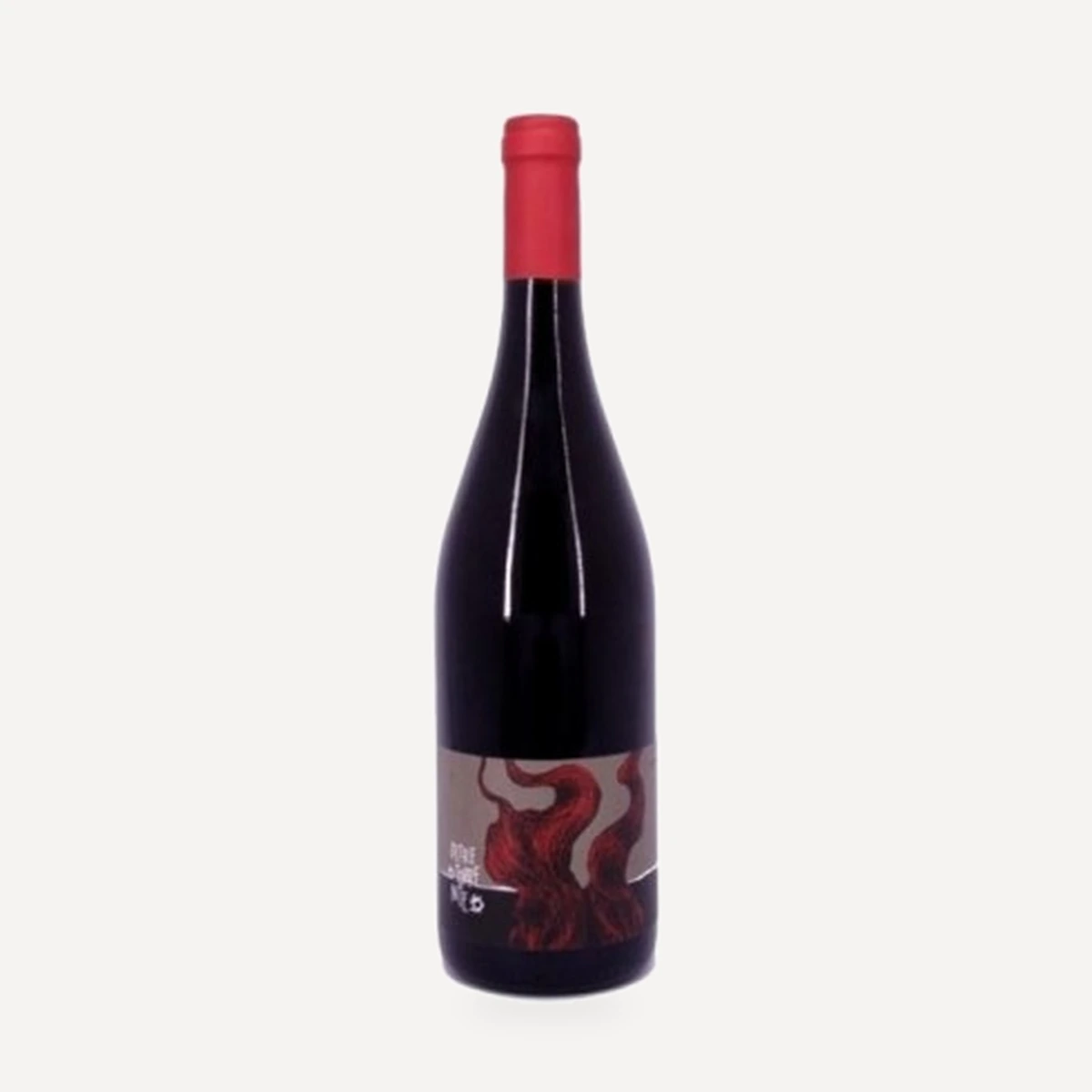
Barbera Superiore Colli Tortonesi
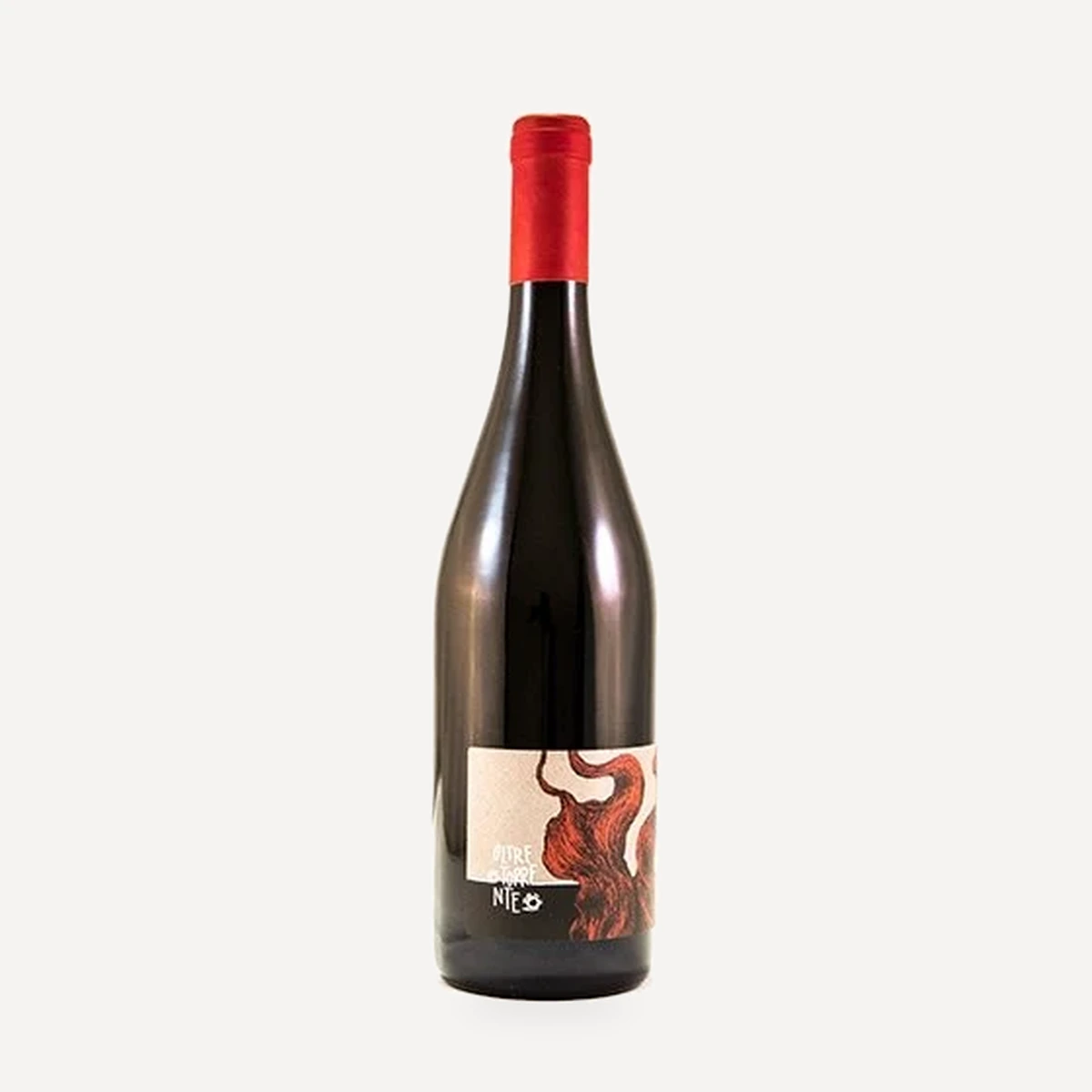
Rosso Colli Tortonesi