Storia
Origins: 2012–2014
The idea behind L’Orto del Vicino began taking shape in 2012, after Anna and Leonardo had both accumulated extensive experience with collective purchasing groups. Their objective was to assemble a locally produced range of food that combined proximity to the consumer with healthfulness and respect for soil and the wider environment. They also wanted to recreate the convivial relationship associated with receiving produce from a relative’s or friend’s garden.
After a long and difficult search for suitable land, the agricultural business was founded in January 2014 at Borgo San Lorenzo. Its first holding comprised 2 ha of previously abandoned land just outside the town. The founders established vegetable production and a 1,000 m² enclosure for laying hens, designed partly to use vegetable-production waste. Sales were organized exclusively through direct channels.
The recovery of the original land also revealed neglected plum, apple and pear trees of uncertain varieties. These were cared for and pruned back into production.
Diversification: 2014–2015
Management of a 1.6 ha chestnut wood above Ronta, in the municipality of Borgo San Lorenzo, began in November 2014. It contained about 70 marroni trees and had been abandoned for more than nine years. Much of the orchard was recovered during 2015 despite the combined effects of neglect and the chestnut gall wasp. It became the source of marroni and flour dried by a traditional method.
In spring 2015, the farm planted old and forgotten fruit varieties, principally apples, pears and peaches. The broader farm record gives the planting as 60 trees, selected with staggered ripening periods to extend the availability of fresh seasonal fruit from July through December.
Entry into winegrowing: 2016
In February 2016, Anna and Leonardo took over a 0.3 ha vineyard in the municipality of Scarperia e San Piero. The approximately 40-year-old vineyard, planted in the mid-1970s, was at risk of abandonment and occupies the summit of a hill in the Mugello valley.
Two further small old vineyards were leased in subsequent years. Together, the old vineyards brought the cultivated area to almost 1 ha, with plantings dating from the mid-1960s through 1978. Their mixed populations include familiar red and white grapes alongside local varieties such as Rossone, Rapone and Sanforte.
The farm also expanded in 2016 by leasing an 8,000 m² plot near its original base. This increased the range of crops and allowed a more effective rotation system.
Biodynamic transition and further expansion: 2017–2018
Organic techniques guided the farm from its beginning. In 2017, Anna and Leonardo adopted biodynamic methods and practices. Their soil-management program combined mechanical and manual weed control, composted manure, rotating green manures, cultivation without ploughing and reinterpreted principles drawn from fallowing and the Norfolk rotation system.
In 2018, the diversified holding expanded again with the lease of approximately 2 ha of olive grove at Trespiano, in the municipality of Firenze. The farm remained deliberately distributed among separate sites rather than consolidated into one continuous property.
A dedicated winery: 2022–2023
In 2022, production moved to a winery at San Giovanni Maggiore, a small locality outside Borgo San Lorenzo. The building had originally been conceived and constructed in the early 1970s as a genuine winegrowing and winemaking project for Mugello.
In 2023, approximately one-third of a hectare was planted with white grapes on land in front of the new winery. This new vineyard complements the almost 1 ha of much older leased vineyards that formed the original wine project.
Terroir
The original 0.3 ha vineyard lies in the municipality of Scarperia e San Piero, on the summit of a hill characteristic of the Mugello valley. It is one of several small, old and geographically separate vineyards now managed by the farm.
The winery and the 2023 white-grape planting are at San Giovanni Maggiore, a small locality just outside Borgo San Lorenzo. The farm’s broader agricultural base is also at Borgo San Lorenzo, while its other holdings extend to Ronta and Trespiano.
Vinificazione
The old vineyards are cultivated according to biodynamic criteria. Vineyard protection is based on copper and sulfur.
Across the agricultural holding, organic techniques were followed from the outset and biodynamic methods were adopted in 2017. Herbicide use is replaced by manual and mechanical weed control. Fertility management relies on manure and rotating green manures. The manure comes from a local organic farm and is composted on site for approximately 12 months.
The soil is cultivated without ploughing. A cultivator is used instead, together with locally adapted interpretations of fallowing and the Norfolk rotation system. Copper, sulfur and, only in cases of extreme necessity, natural insect-control products based on spinosad or Bacillus are used across the farm. The central soil objective is to maintain or increase humus rather than deplete it, while seeking an equilibrium between human agricultural activity and other living organisms.
The wines undergo spontaneous fermentation and are filtered by gravity. No sulfites are used during vinification. Sulfites are introduced only at racking and bottling to guard against unwanted oxidation.
The approach avoids corrective or novelty-driven enological additions and accepts the color, aroma and flavor produced by each individual growing season and by the work in the vineyards and cellar. The objective is not to standardize different vintages into a uniform sensory profile.
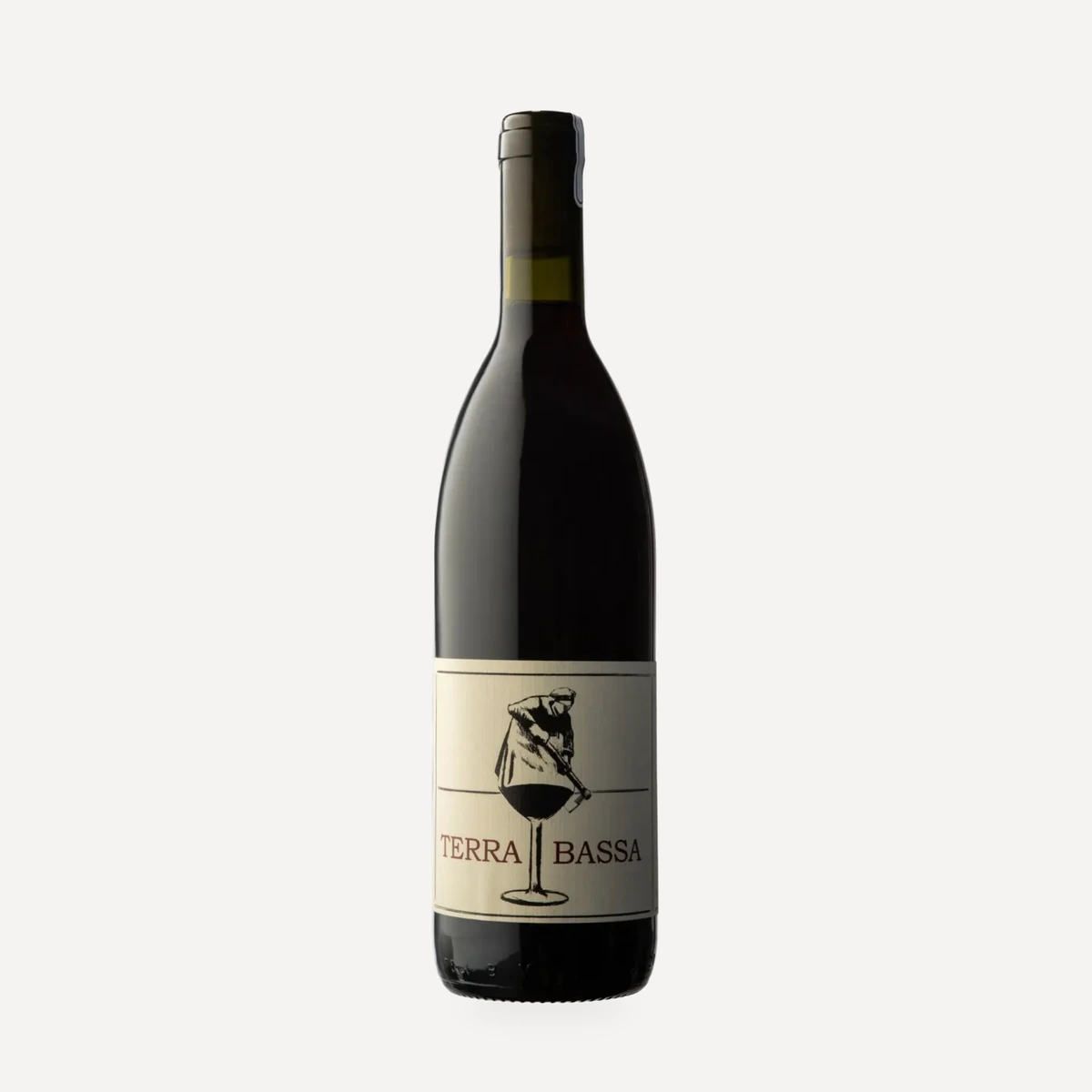
The Terra Bassa range encompasses red, white, rosé and sparkling expressions. Fermentation and maturation are conducted in stainless-steel vats across the range, while the precise maceration, maturation and bottling schedules vary by expression and vintage.
Filosofia
Anna and Leonardo’s agricultural philosophy begins with the conviction that land should remain cultivated and the environmental landscape protected from uncontrolled building, abandonment and waste. Agriculture is treated as a relationship between human activity, soil and the other organisms inhabiting the farm.
Their original aim was to offer food grown close to its consumers while also safeguarding health, soil and environment. Direct and short supply chains are important within this model, but proximity alone is not treated as proof of healthfulness or environmental responsibility. Soil fertility, humus conservation and the consequences of present farming choices for future generations form the deeper standard.
Diversification is both an ecological and practical principle. Vegetables, fruit, chestnuts, eggs, olives and wine spread agricultural risk when rapidly changing weather compromises individual crops. The resulting farm is geographically fragmented, a difficulty accepted in exchange for a wider and more resilient range of produce.
In the cellar, the same philosophy favors spontaneous processes and visible vintage differences. Unconventional colors, aromas or flavors are accepted as consequences of the particular year and of the work undertaken in vineyard and cellar. The wines are intentionally not made to conform to a standardized profile.
The name Terra Bassa draws on the popular saying that the earth is low to the ground—a reminder of the physical effort required to work it. It expresses gratitude to farmers who cultivate the soil with dedication and continuity while trying to respect and improve it over time.
Vini
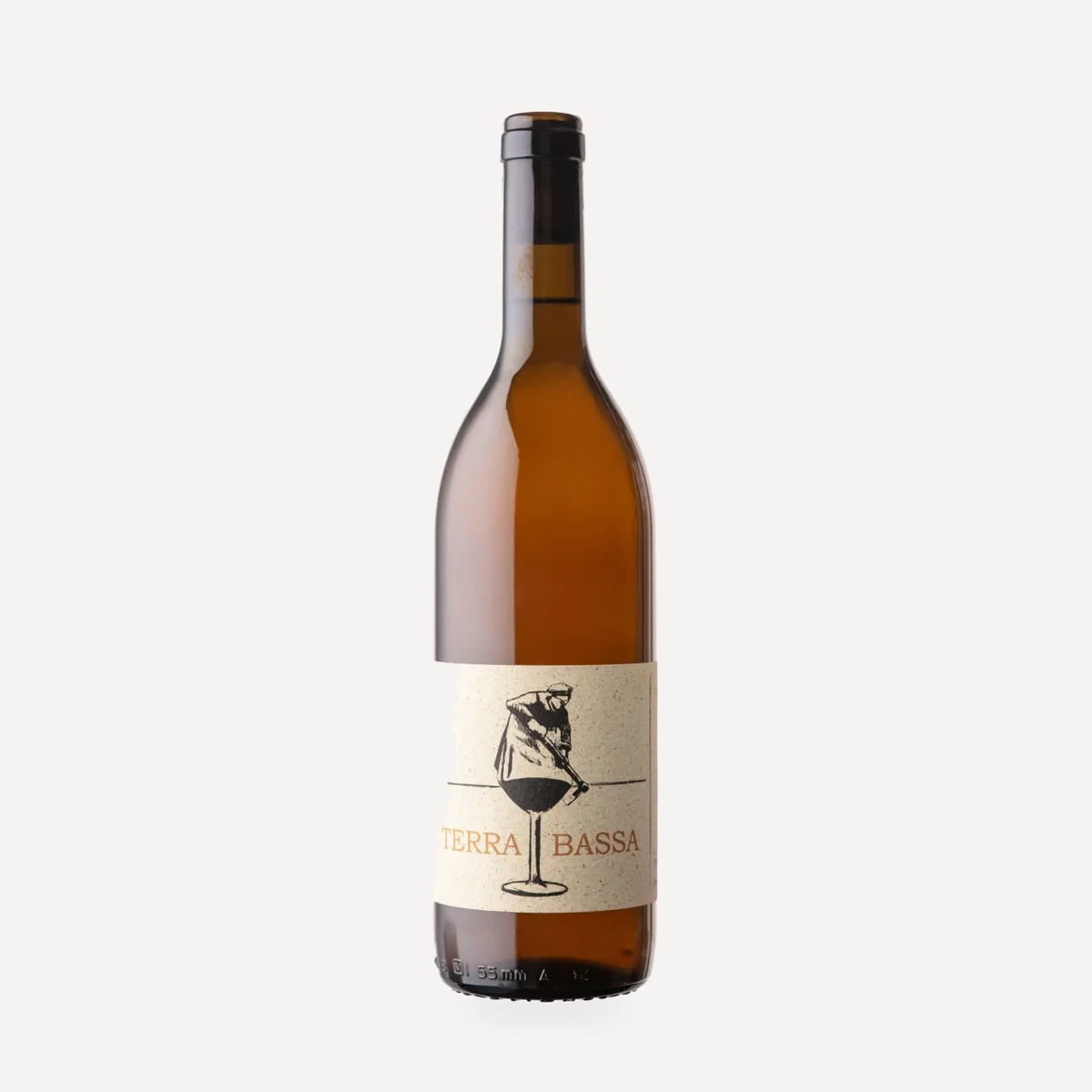
Terra Bassa Bianco
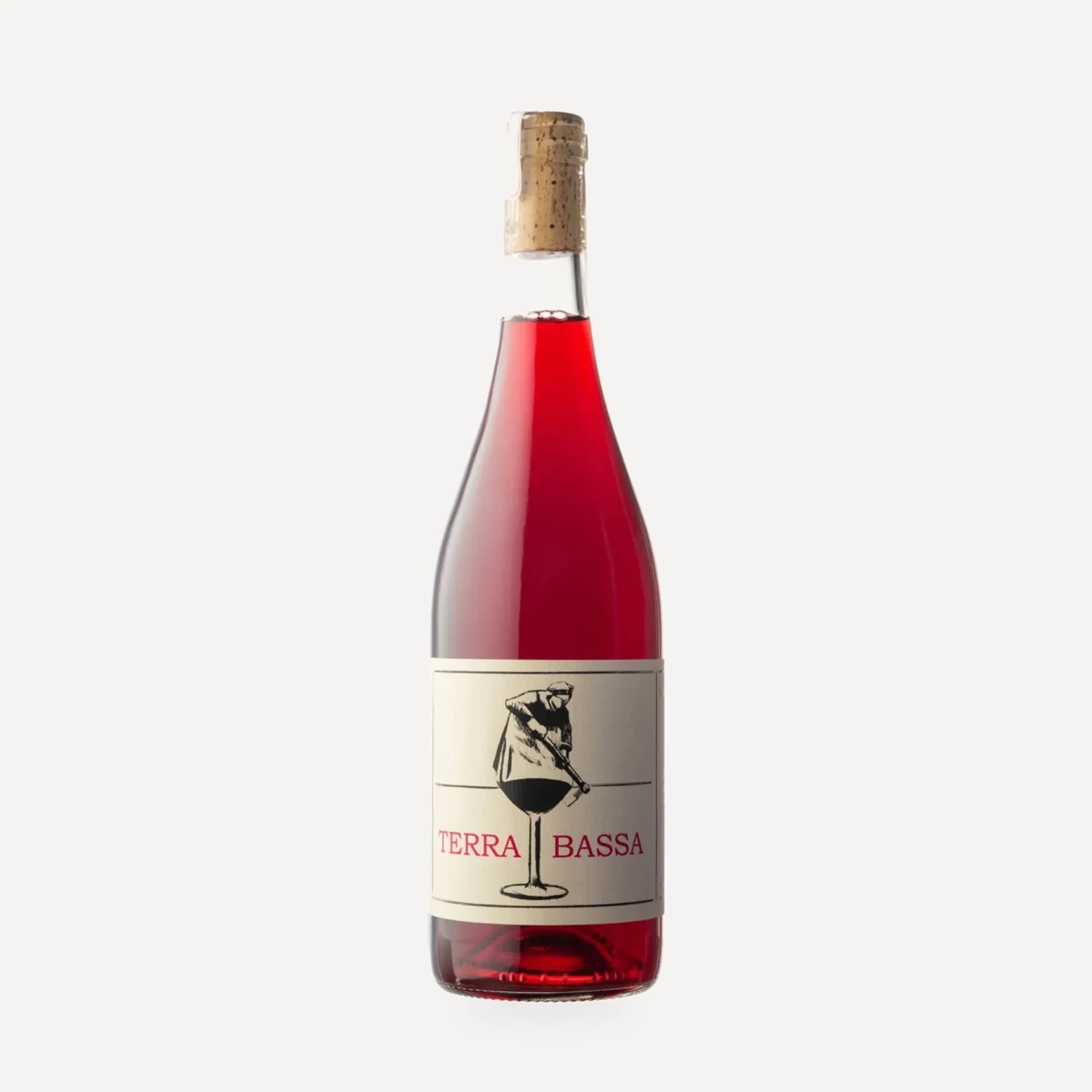
Terra Bassa Rosato