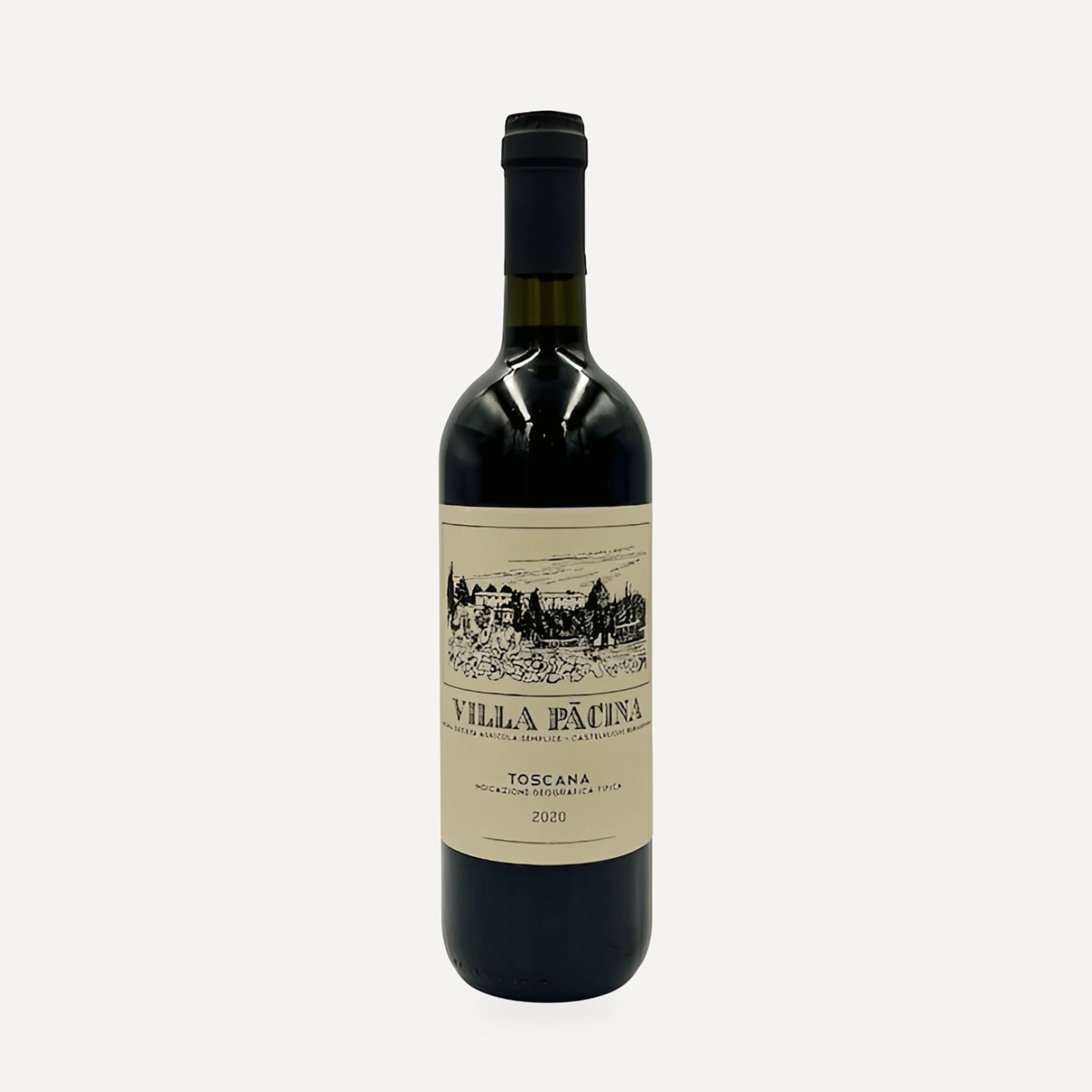
Storia
Ancient roots and the monastery
Pacina’s origins are traced to the Etruscan period. Its name is an old place-name probably derived from Pacha or Pachna, the Etruscan god of wine. The property includes an ancient monastery dating from the 10th century, set among vineyards, olive groves, fields and woods.
The family purchase and direct management
The family acquired Pacina in the 1930s. For several decades it remained the country home of a family living in Siena. The family’s connection to Pacina now extends across five generations.
In the 1960s, after the definitive end of mezzadria sharecropping and management by the fattore, the family began running the agricultural estate directly. The first bottles under the then-new Chianti Colli Senesi DOC were produced in 1967. At first only part of the wine was bottled; the rest was sold in bulk and used to add structure to wines from northern Chianti.
1972: Pacina becomes the family home
In 1972, Enzo Tiezzi and Lucia Carli moved to Pacina so that the family could preserve ownership of the property. Both worked at the university and were pioneers of Italy’s environmental movement. Enzo was a professor of physical chemistry and wrote books regarded within the family history as foundational to ideas of sustainability. He promoted and co-founded Legambiente, whose first meetings were held in Pacina’s garden. Lucia was a biologist, writer and ceramicist. Together they translated their ecological convictions into the daily management of the farm.
1980s–1987: a new approach to bottling
During the 1980s, the family developed the idea of bottling wine with cellar intervention reduced to a minimum, placing ecosystem protection, the integrity of the terroir and the wholesomeness of the wine at the centre of the project. Family economics and Enzo and Lucia’s ecological vision both shaped the transition from the first DOC bottlings to the modern Pacina red.
In 1987, Lucia led the production of the first bottle of Pācina in its modern form. Grapes were selected from the oldest vineyards, followed a natural cellar process and were bottled without added sulphur dioxide. The wine was still classified as Chianti Colli Senesi at the time. Giovanna regards this 1987 bottling as the precursor of the wine she and Stefano make today.
From 1992: Giovanna and Stefano
From 1992 onward, Giovanna Tiezzi Borsa and Stefano pursued the goal of bringing all Pacina-grown grapes to bottle through spontaneous fermentation and maturation. Their work extended the low-intervention principles established by Lucia from a selected bottling to the whole estate crop. Giovanna’s agricultural outlook was shaped by Lucia’s instinctive attention to natural rhythms and by growing up with Enzo among intellectuals, scientists and farmers.
The next generation
Giovanna and Stefano remained the principal figures in the project from the early 1990s. More recently, their children Maria and Carlo and their respective partners Roberto and Elisabeth have joined in carrying forward Pacina’s natural approach to vinifying the estate’s grapes. The farm today combines winegrowing with olive trees, cereals, pulses, woods, uncultivated land, hospitality and craft activity.
Terroir
Pacina lies at Castelnuovo Berardenga, a few kilometres east of Siena, on the southern slopes of the Chianti mountains. The mountains shelter the estate to the north, while the other three quadrants are open to sunlight, light and winds.
The underlying material is the characteristic Tufo di Siena, formed by deposits from Pliocene seas around five million years ago. The soil is predominantly sandy, with silt, clay and rounded pebbles shaped by marine wave action and by rivers descending from the mountains. This setting is associated at Pacina with Sangiovese that combines characteristic tannins and freshness with body, warmth and colour.
The estate is a mosaic rather than a vineyard monoculture: vines, olive groves and arable fields are interspersed with woods, fallow ground and deliberately uncultivated areas. Differing exposures were deliberately sought when choosing sites for newer vineyards, while the varied habitats and alternation between cultivation and rest are maintained to sustain plant and animal relationships.
Vinificazione
Pacina has been certified organic for more than 20 years. Synthetic herbicides, fungicides and fertilizers are excluded from the estate’s land. The farm works with old, non-hybrid cultivars and excludes chemical pesticides and preservatives.
Spontaneous ground cover is maintained across the fields. Vineyard and farm management prioritizes agronomic intervention, seeking an equilibrium between each plant’s natural aptitude and the farm’s production aims. Plant material for new vineyards is selected from established old vineyards already adapted to the local habitat; new sites are chosen with attention to terrain and, especially, differences in exposure.
Biodiversity is treated at whole-farm scale. The 65 ha holding contains almost 11 ha of vines, 8 ha of olives and 15 ha of arable crops, while the balance is woodland, land resting from production and plots deliberately left uncultivated. The coexistence of woodland and multiple crops, together with rotations and periods of rest, is intended to preserve the richness and interrelationships of plant and animal ecosystems. The arable rotation includes farro monococco and dicocco, cece piccino, variegated lentils and black lentils. A small vegetable garden and farmyard animals add another element to the mixed-farm system.
Pacina’s cellar approach is based on slow fermentation, stabilization and maturation in old cellars excavated into tuff, whose environment supports the gradual completion of these processes.
Spontaneous fermentation and maturation became the guiding objective for all estate grapes from 1992 onward. Modern scientific knowledge is used to understand and accompany natural processes, while direct intervention is kept to targeted actions: racking, selecting the most appropriate vessels, blending and determining maturation times. The aim is not to impose a uniform style, but to allow grape variety, place and vintage to remain legible.
The decisive precedent was the 1987 Pācina bottling: grapes were selected from the oldest vineyards, passed through a natural cellar process and were bottled without added sulphur dioxide. That experiment became the model for the broader estate programme pursued by Giovanna and Stefano.
Filosofia
Pacina’s philosophy developed from the ecological work of Lucia Carli and Enzo Tiezzi and from five generations of agricultural experience. Agriculture and winemaking are understood first as forms of respect for the surrounding environment. The farm therefore seeks balance between the natural vocation of plants and production goals, protects the differences among its habitats, and treats cultivated fields, resting land, woodland, flora and fauna as an interconnected system.
In the cellar, Pacina presents modernity as the ability to accompany natural processes with the support of scientific understanding. Intervention is minimized and made specific rather than routine. The estate’s conception of natural wine is not a rigid definition: it is a wine whose limited external intervention allows variety, origin and vintage to appear without compromise.
Family continuity is central to this outlook. Lucia’s belief in the strength of the land and her instinctive response to natural rhythms passed to Giovanna; Enzo’s environmental activism connected farm practice with a broader culture of sustainability. Giovanna and Stefano translated those ideas into the objective of vinifying all estate grapes naturally, while Maria, Carlo, Roberto and Elisabeth now participate in carrying the project forward.
Vini
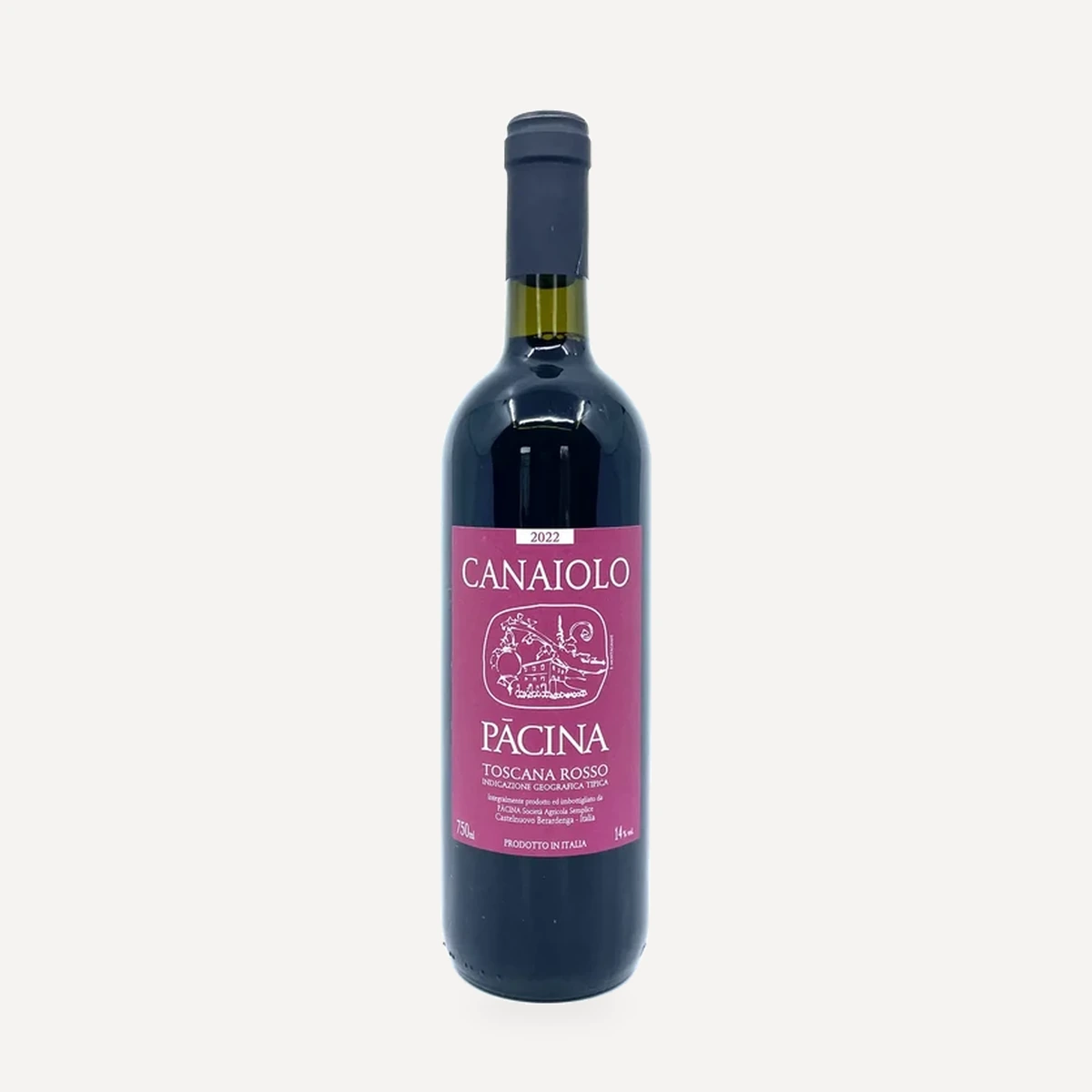
Canaiolo
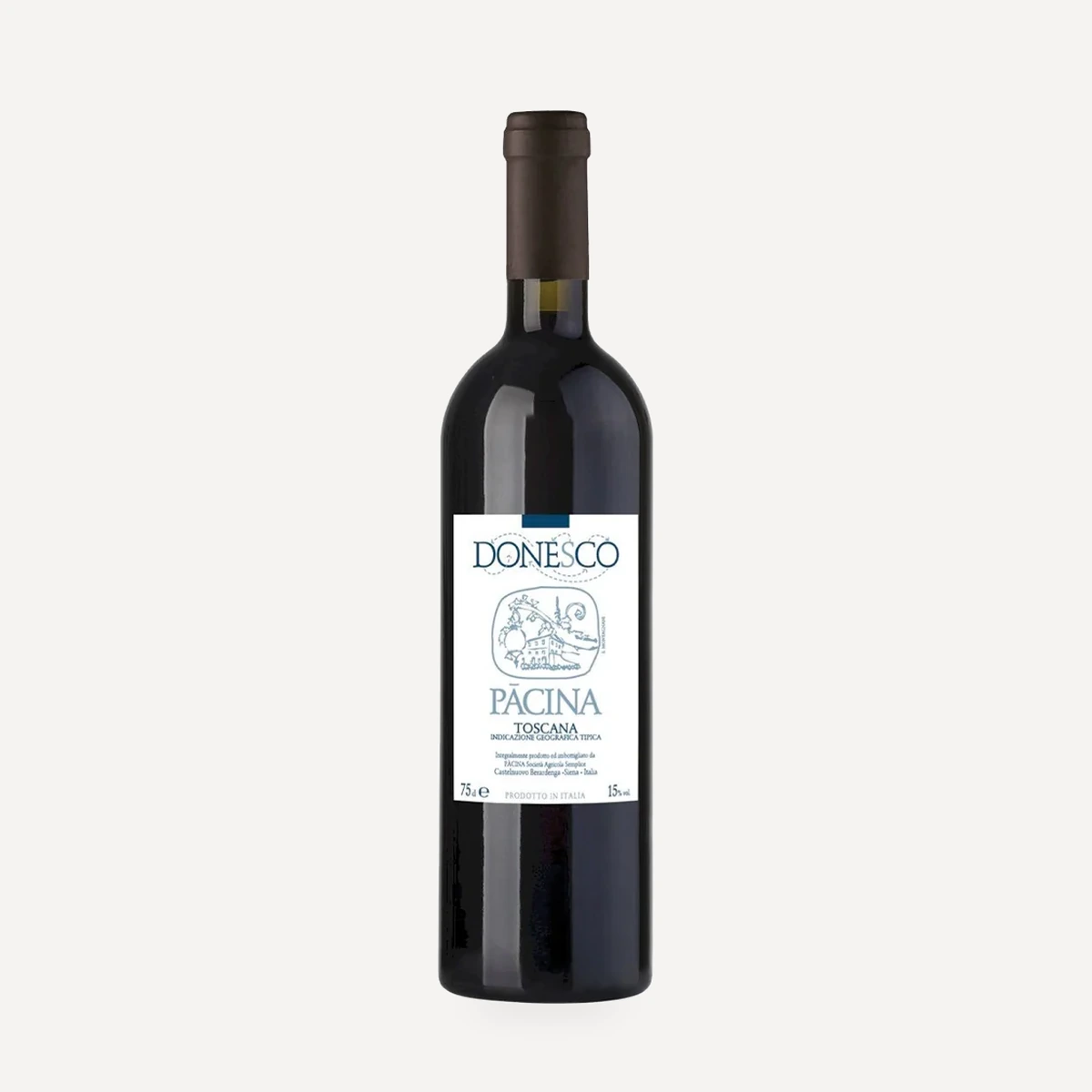
Donesco