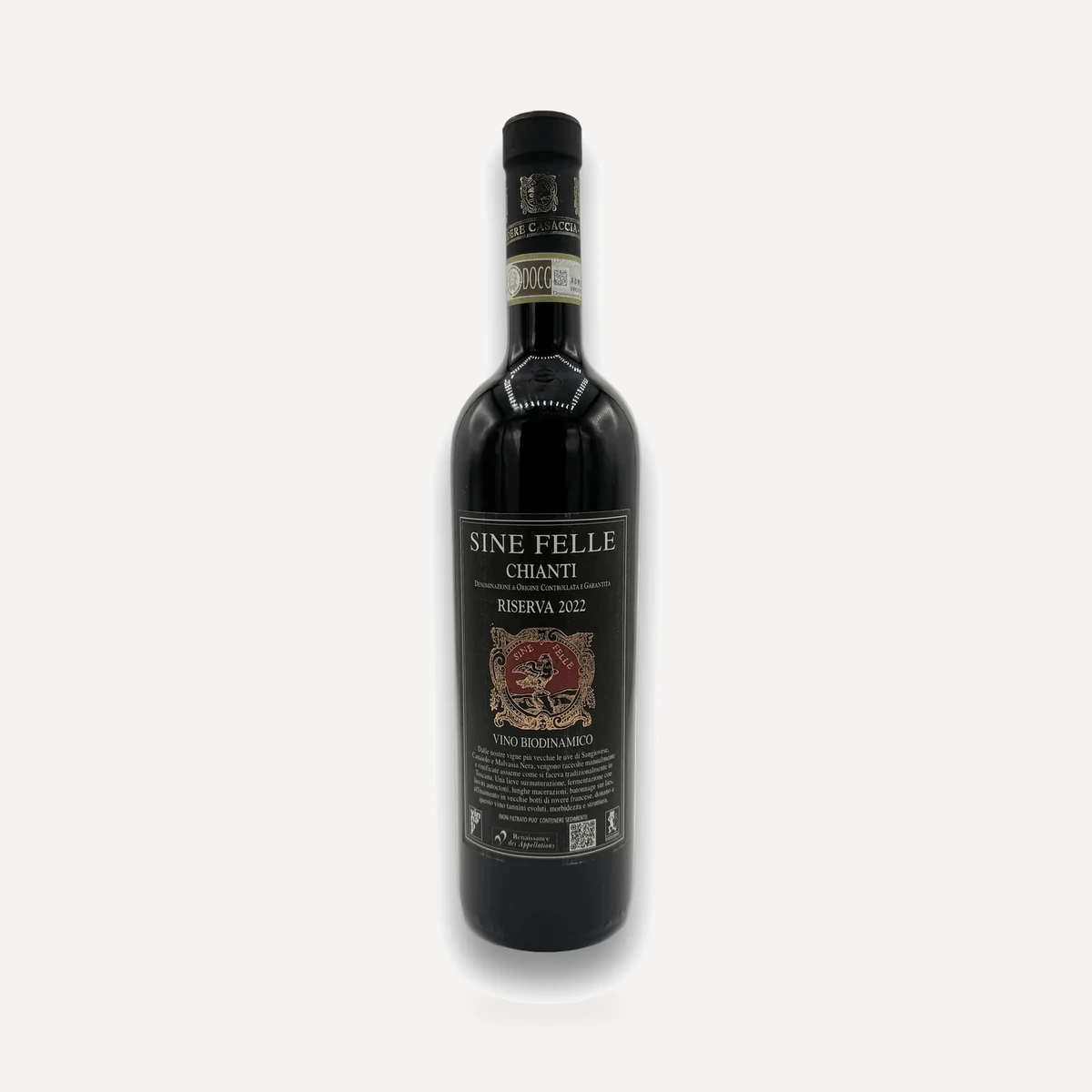
Storia
A family rooted in the same territory
The agricultural background behind Podere Casaccia extends through a family succession documented in the same territory from before 1500. The recorded sequence begins with Lorenzo in 1539 and continues through Domenico in 1580, Francesco in 1604, Mattia in 1644, Francesco in 1668, Giuseppe in 1697, Isidoro in 1724, Innocenzio in 1768 and Isidoro in 1813.
Lorenzo and Isidoro
Lorenzo, recorded in 1852 alongside Annunziata Bellini, was Roberto Moretti’s great-grandfather. He enlarged the family holding by buying cultivable land and planting viti maritate, vines trained together with supporting trees in the customary manner of the period. The investment marked a turning point for the family and was undertaken while three of his sons were at war.
Isidoro, recorded in 1894 with Fosca Ferri, continued his father’s work. He built a new house and cellar, establishing the physical basis for further growth, and taught his children a lasting attachment to agriculture and work.
Aldo’s return to agriculture
Aldo, recorded in 1924 with Liliana Bertelli, was Roberto’s father. After the war he left the family farm and pursued other occupations. In the early 1960s he returned to agriculture by purchasing a 55-hectare holding at Montespertoli. He resumed wine and olive-oil production alongside his other activities, and farming progressively became his principal occupation.
Roberto Moretti and the creation of Podere Casaccia
Roberto Moretti, born in 1952, worked with his father on the farm until he was 19. He subsequently graduated in medicine and, while practising his profession, remained intermittently involved in his father’s agricultural activity.
In 1999 Roberto purchased Podere Casaccia. He gradually restored and expanded crops that previous owners had abandoned, making natural agriculture a priority from the beginning. Although he had not initially planned to become a full-time winegrower, his attachment to manual work in the vineyard and cellar developed into the aim of producing his own biodynamic wine.
Roberto’s study of wine, soil and nature led him to biodynamic viticulture. The approach provided a framework for combining local tradition with agronomic practices intended to respect the environment, rebuild soil structure and obtain distinctive fruit from the old vines already under his care.
Roberto and Lucia
Roberto met Lucia Mori in 2005. Their partnership brought further growth, and responsibility for the estate’s course has since been shared. They personally undertake work from manual pruning and biodynamic treatments to harvest, cellar operations and bottling. All stages from picking to bottling are carried out within the estate.
Terroir
Podere Casaccia occupies approximately 12 hectares on the hills of Scandicci, a few kilometres from Firenze. The property combines woodland, olive groves and vineyards.
The vines face southeast, receiving abundant light that supports full phenolic ripening. The vineyard land has a long viticultural history, and the oldest vines reach approximately 60 years of age. The most distant vineyard lies only 600 metres from the cellar, allowing harvested fruit to be transferred quickly.
The estate’s viticultural identity is tied to old Tuscan plant material and historically mixed vineyards. Several traditional Chianti varieties grow together in the old plantings, reflecting the former practice of harvesting and vinifying them as a field blend.
Vinificazione
Soil and cover-crop management
After harvest, alternating rows are worked in October with deep rippers. These lift the soil without compacting it, improving aeration. A diverse seed mixture is then sown; after sufficient growth, the vegetation is cut and incorporated as green manure to loosen the earth further, contribute organic nourishment and increase biodiversity.
Biodynamic preparations include horn manure, horn silica, nettle, dandelion and oak preparations. Horn manure, or preparation 500, is made by filling cow horns with manure, burying them in autumn and lifting them in spring. The transformed material is diluted and dynamized in water, then sprayed manually over the cultivated and sown ground in autumn and over the green manure in spring, with humus formation as a central objective. Work is also coordinated with ascending and descending lunar cycles and the broader biodynamic attention to cosmic rhythms.
Pruning and canopy management
The vines are pruned and tied by hand during winter. Each plant is handled individually. Shoots are neither topped nor leaves removed, as the objective is to preserve the vine’s vegetative and productive balance.
Plant protection
Treatments are preventive and limited to small doses of surface-applied copper and mined sulfur. Because rain washes them away, this regime requires close and continuous observation. Pesticides, herbicides and chemical fertilizers are not used.
Harvest decisions and picking
Harvest timing is established through repeated tasting of the grapes. Ripeness is assessed in the pulp, skins and especially the seeds, with the aim of preventing herbaceous flavours and excessively astringent tannins. Grapes are picked strictly by hand into dedicated crates and taken immediately to the cellar; the farthest vineyard is 600 metres away.
Estate production
Roberto Moretti and Lucia Mori personally oversee the production cycle, and every stage from manual harvest to bottling takes place at Podere Casaccia. The approach to natural wine begins with healthy grapes grown without pesticides, herbicides or chemical fertilizers and continues without fermentation aids, selected yeasts or corrective chemical products.
Reception, maceration and fermentation
Hand-picked grapes arrive promptly in crates, are immediately destemmed and placed in vats. Fermentation begins after two or three days of maceration and relies on indigenous yeasts. The cellar team regards the following 20 days as the most demanding period of production.
Fermenting must is managed with pump-overs three or four times daily and with punch-downs by day and night until the sugars have been completely transformed. During pump-over, the fermenting liquid is run into a vessel in contact with air and returned over the cap to provide oxygen to the microorganisms driving fermentation. Punch-downs break the cap and submerge it beneath the liquid.
Lees work and maturation
After fermentation, the wine is separated from the pomace. Fine lees remain and are kept in suspension by bâtonnage, initially every day and then at progressively longer intervals. Following adequate settling, the wine matures in either larger barrels or barriques. Lees stirring is intended to transfer aromas and flavours and increase complexity.
The wines are not filtered. Instead, repeated rackings progressively remove sediment before bottling. Chemical and physical means intended to modify or control spontaneous vinification are avoided. Only a small amount of sulfur dioxide may be used, and some lots receive none.
White native varieties—Malvasia, Vermentino and Trebbiano—are vinified together with substantial skin maceration. Within that blend, Malvasia is valued for aroma, Vermentino for minerality and Trebbiano for acidity.
Clean cellar conditions, careful fruit selection, considered harvest timing, contemporary vessels and accumulated technical knowledge distinguish the estate’s concept of natural wine from rudimentary historical winemaking.
Filosofia
Podere Casaccia presents farming as a responsibility to return the land to the future healthy and alive. Direct physical contact with the vineyard is considered the basis of knowledge and of a respectful relationship with nature. Roberto Moretti and Lucia Mori therefore carry out the work personally, from pruning and biodynamic applications to cellar operations and bottling.
The estate’s biodynamic objective is to improve soil structure and humus so that vines can obtain nutrition and resilience from a living environment. Local tradition is combined with agronomic study rather than treated as a fixed historical model.
Native grapes are central to this outlook. The estate seeks to preserve old or threatened Tuscan plant material, maintain links between varieties and place, safeguard germplasm and resist the standardization of flavour associated with international varieties and selected yeasts. Its Sangiovese and Canaiolo selections came from approximately 60-year-old vineyards, while Pugnitello and Foglia Tonda were adopted as rediscovered native cultivars.
The natural-wine philosophy calls for grapes grown without pesticides, herbicides or chemical fertilizers, followed by vinification without chemical additions, physical manipulation or filtration. Natural wine is nevertheless understood as the result of clean cellar conditions, careful grape selection, precise harvest decisions, appropriate vessels, dedication and technical knowledge—not simply a reproduction of old domestic wine.
The intended result is a pure, living and energetic wine capable of expressing its territory. The Sine Felle name reinforces this aim: interpreted as “without bitterness,” it evokes softness, roundness and an absence of aggression.
Vini
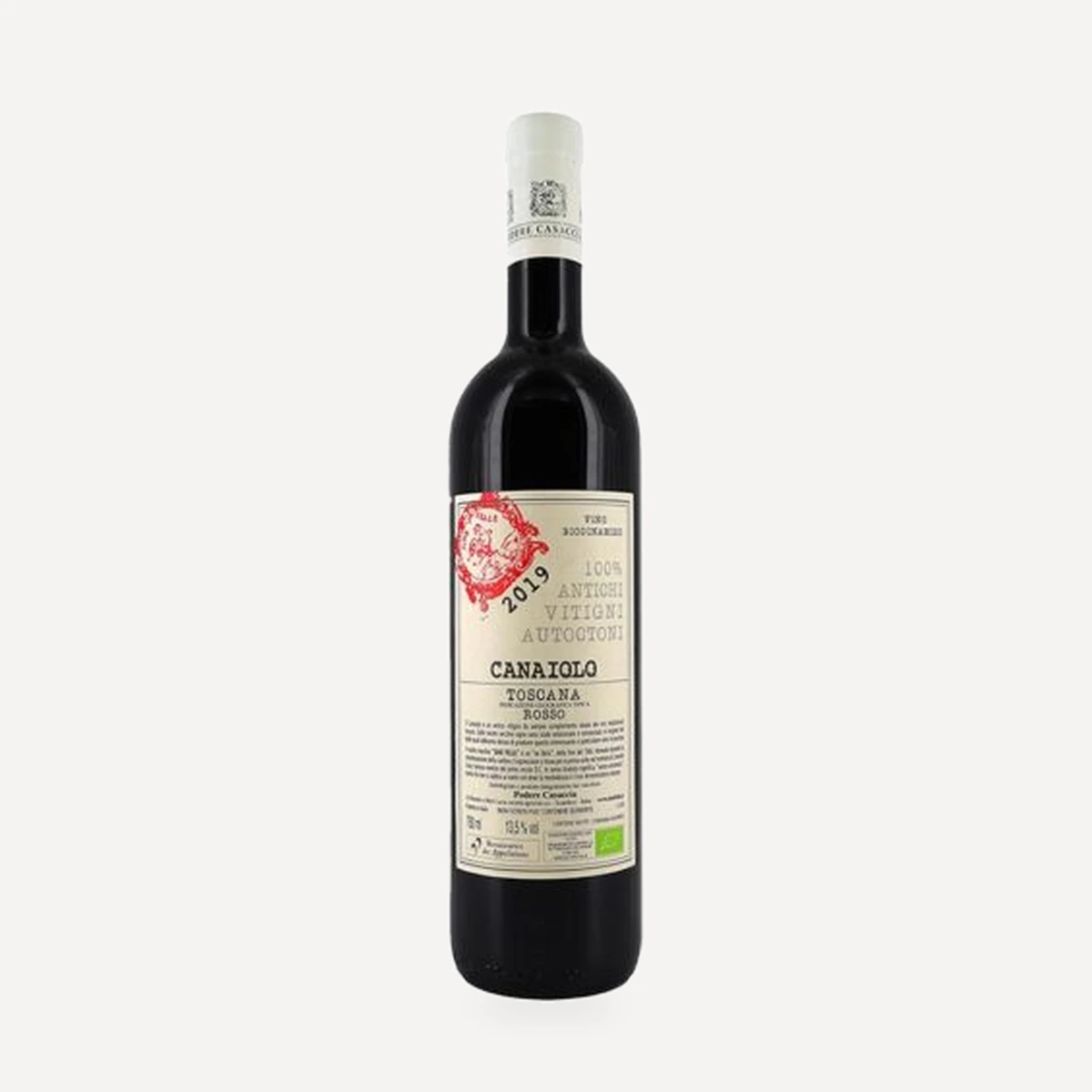
Canaiolo 100%
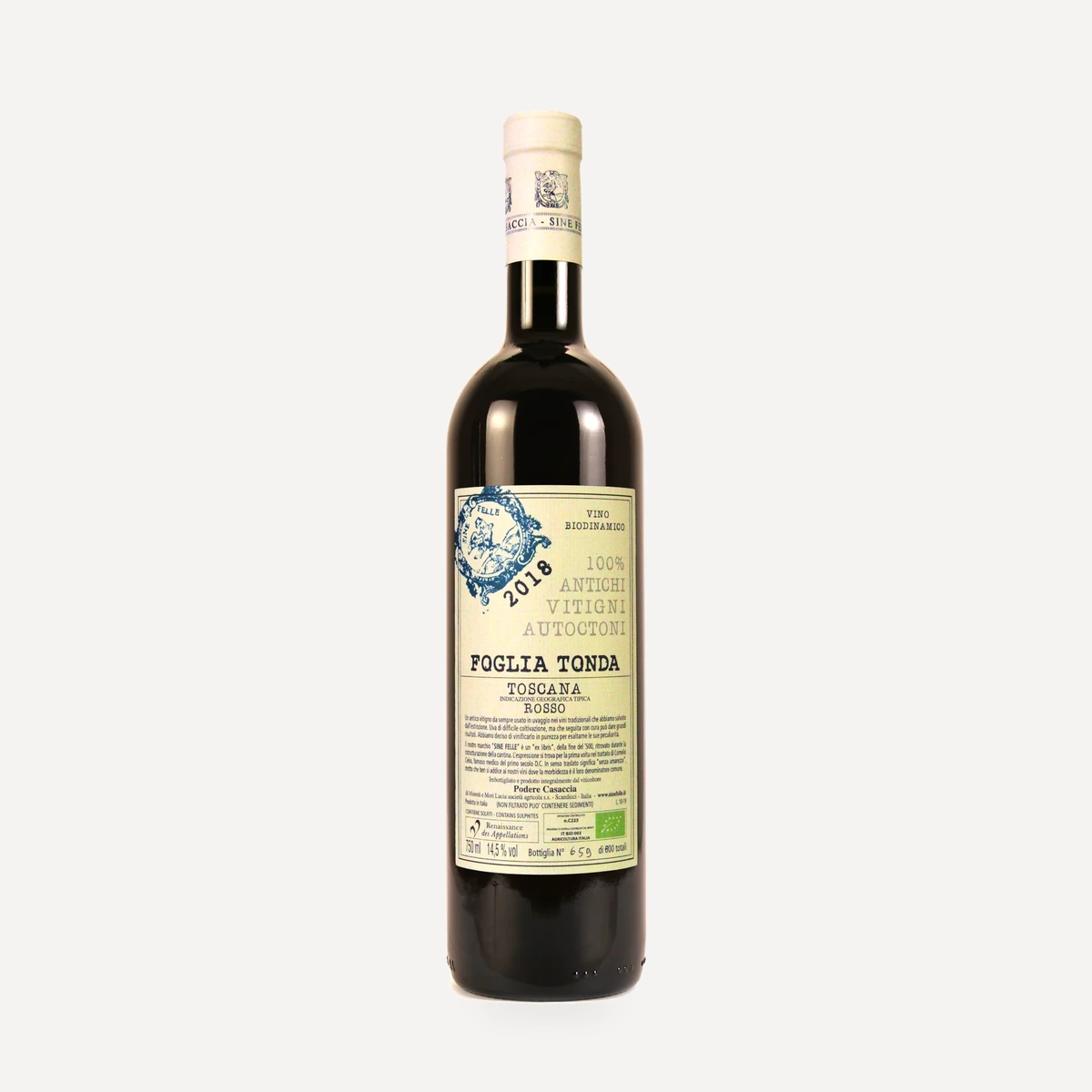
Foglia Tonda 100%
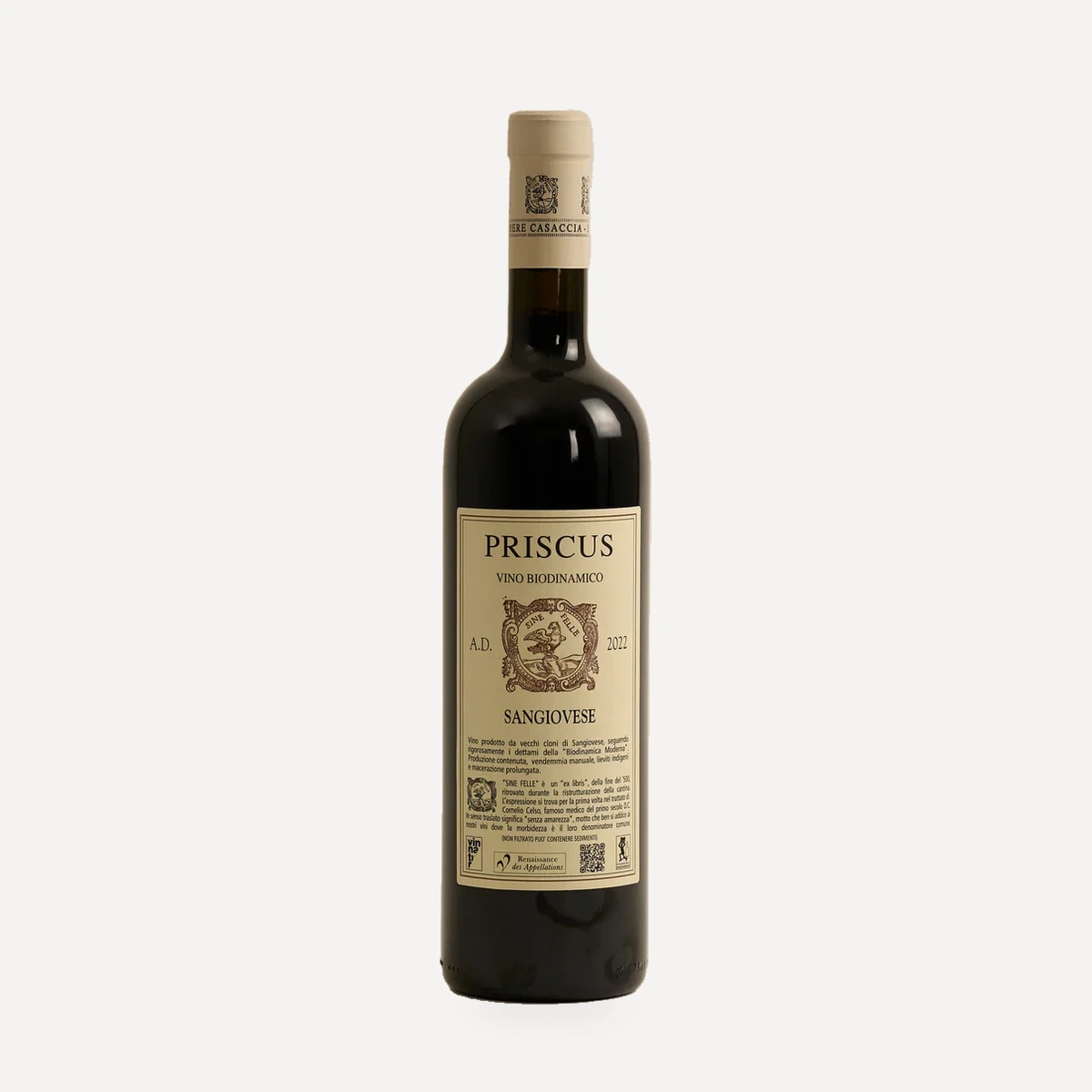
Priscus
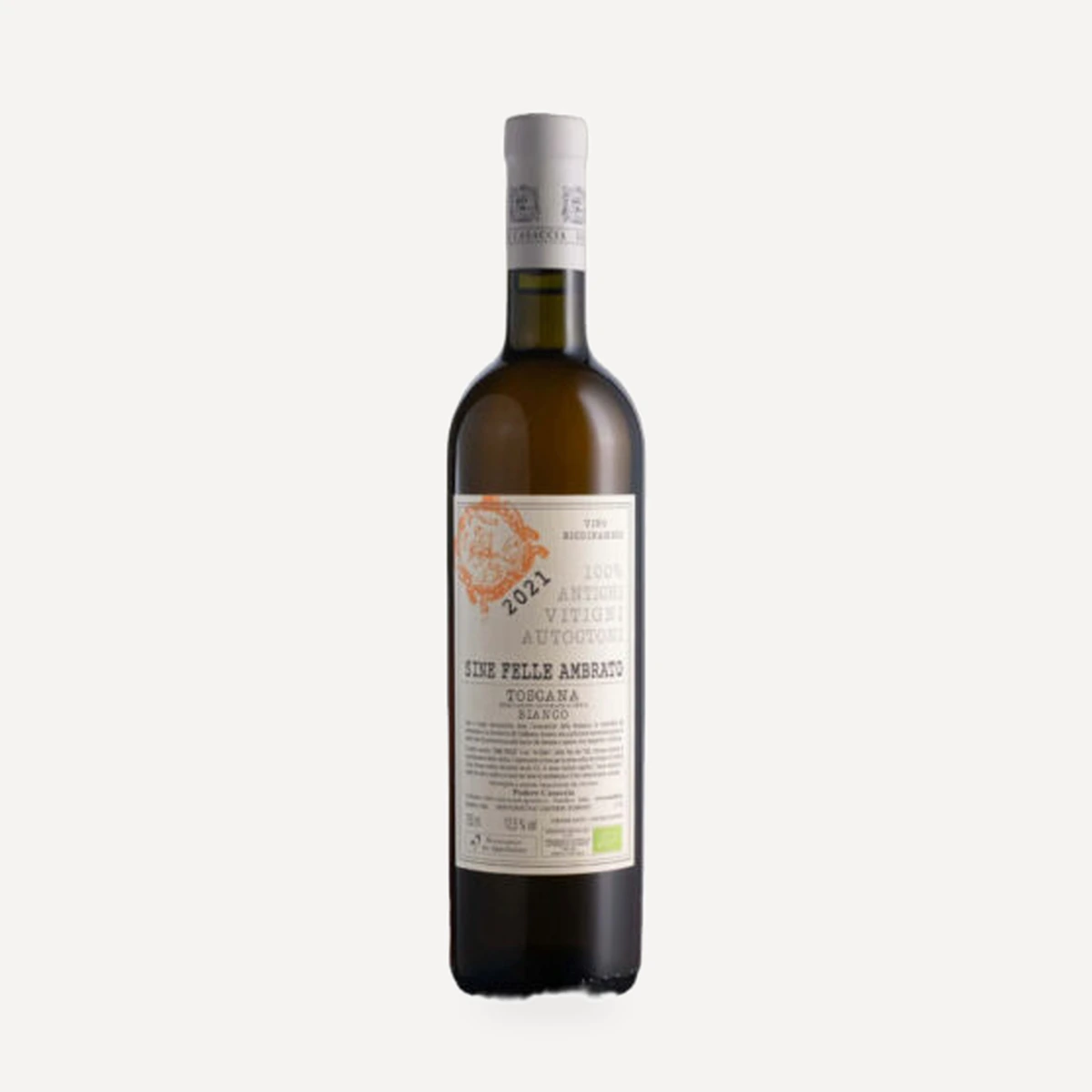
Sine Felle Ambrato
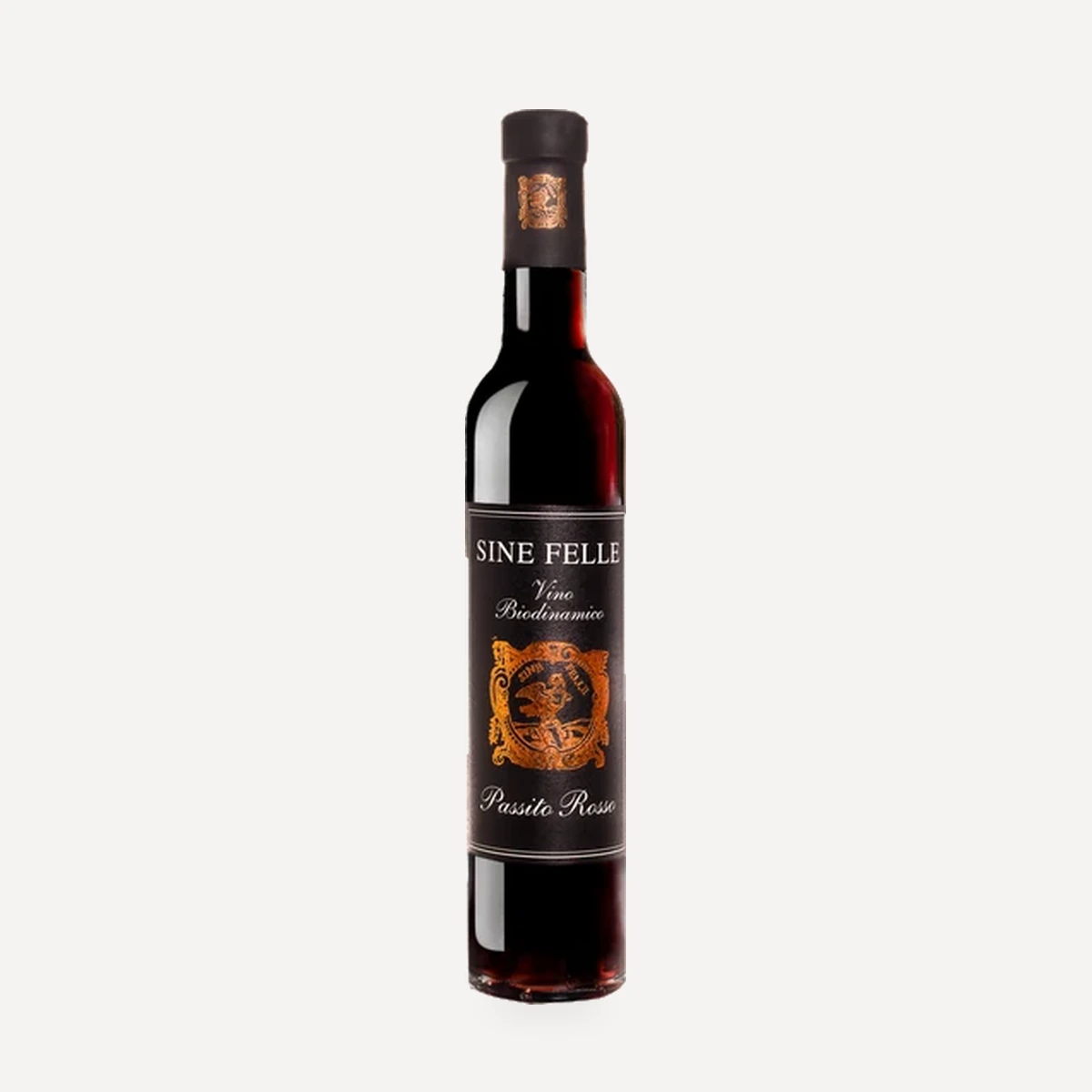
Sine Felle Passito Rosso