Storia
Agricultural roots
Poggio Lucina belongs to the Di Donato family, whose background is described as a long-established farming tradition extending across several generations. The estate remains a family enterprise owned by the Di Donato brothers. Its identity combines this agricultural inheritance and the established traditions of Brunello with the approach introduced by a younger generation.
2002 — The Poggio Lucina project
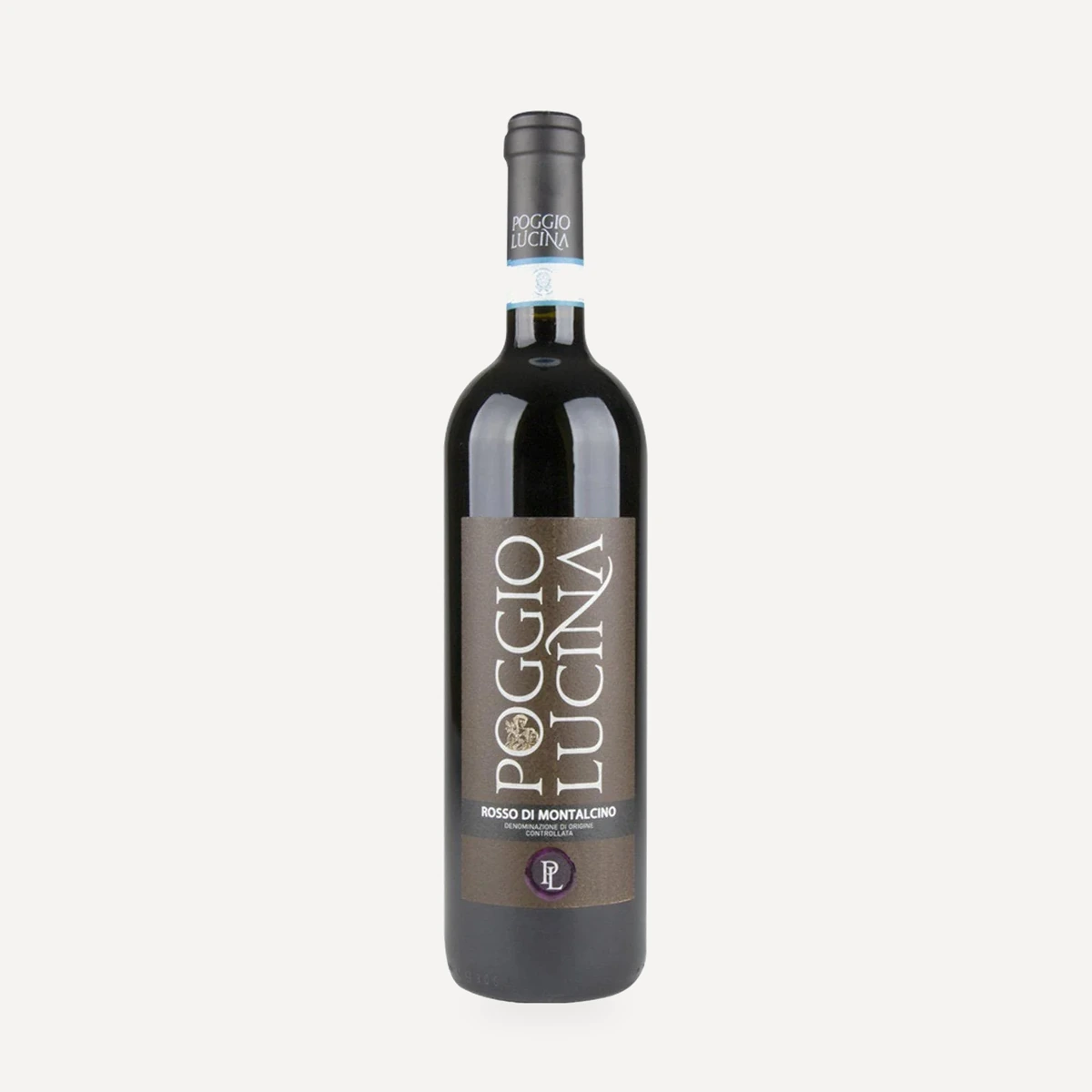
In 2002, the brothers enlarged the family's existing properties by adding 7 hectares of vineyards in Montalcino. This expansion marked the creation of the Poggio Lucina project and provided the vineyards from which its Brunello di Montalcino and Rosso di Montalcino are produced.
The new generation
Evelise Di Donato, identified as the brothers' daughter and the continuation of the family enterprise, represents a new generation of Montalcino producers. She also receives visitors for tastings and cellar visits at the winery near Montalcino's historic centre.
The estate now comprises 10 hectares of vineyards divided between 7 hectares in Montalcino and 3 hectares in Valdorcia.
Terroir
Poggio Lucina is based at Località La Pescaia in Montalcino, in the province of Siena, Tuscany. The winery stands on the Strada Provinciale del Brunello, close to Montalcino's historic centre.
Its 10 hectares of vineyards are divided between two distinct areas: 7 hectares in Montalcino and 3 hectares in Valdorcia. The two locations give the grapes and resulting wines different characteristics.
Vinificazione
Harvesting is performed by hand. Grapes are selected first in the vineyard and then undergo a second selection in the cellar. The approach to vineyard work is presented as an extension of the Di Donato family's multigenerational agricultural tradition, with respect for the land and the character of its place of origin among the estate's central values.
Grapes receive an initial selection in the vineyard and a further selection after arrival at the cellar. The family vinifies the individual vineyards separately. The resulting lots are followed through their development before the proportions of the final blend are decided.
Large traditional oak casks remain the principal maturation vessels, supplemented by tonneaux and barriques. The family determines blends collectively by tasting the separate lots together and choosing the precise contribution of each component.
For Brunello di Montalcino, maturation lasts four years in traditional Slavonian-oak casks of 2,000 or 4,000 litres, followed by a minimum of six months in bottle. Rosso di Montalcino matures for one year in traditional large Slavonian-oak casks and French-oak tonneaux or barriques, followed by at least four months in bottle.
Filosofia
Poggio Lucina frames its work around respect, honesty, family values and simplicity, together with attachment to the family's origins and land. Its stated hospitality philosophy adds coherence and authenticity to these principles.
The estate's approach combines the Di Donato family's long agricultural inheritance and Montalcino's Brunello tradition with the contribution of a new generation. Tradition remains visible in hand harvesting, repeated grape selection and the leading role of large casks, while tonneaux and barriques provide additional maturation options. The family also treats wine as something living, with its own voice and personality; separate vineyard lots are therefore followed individually and blended only after their development has been assessed.
Vini