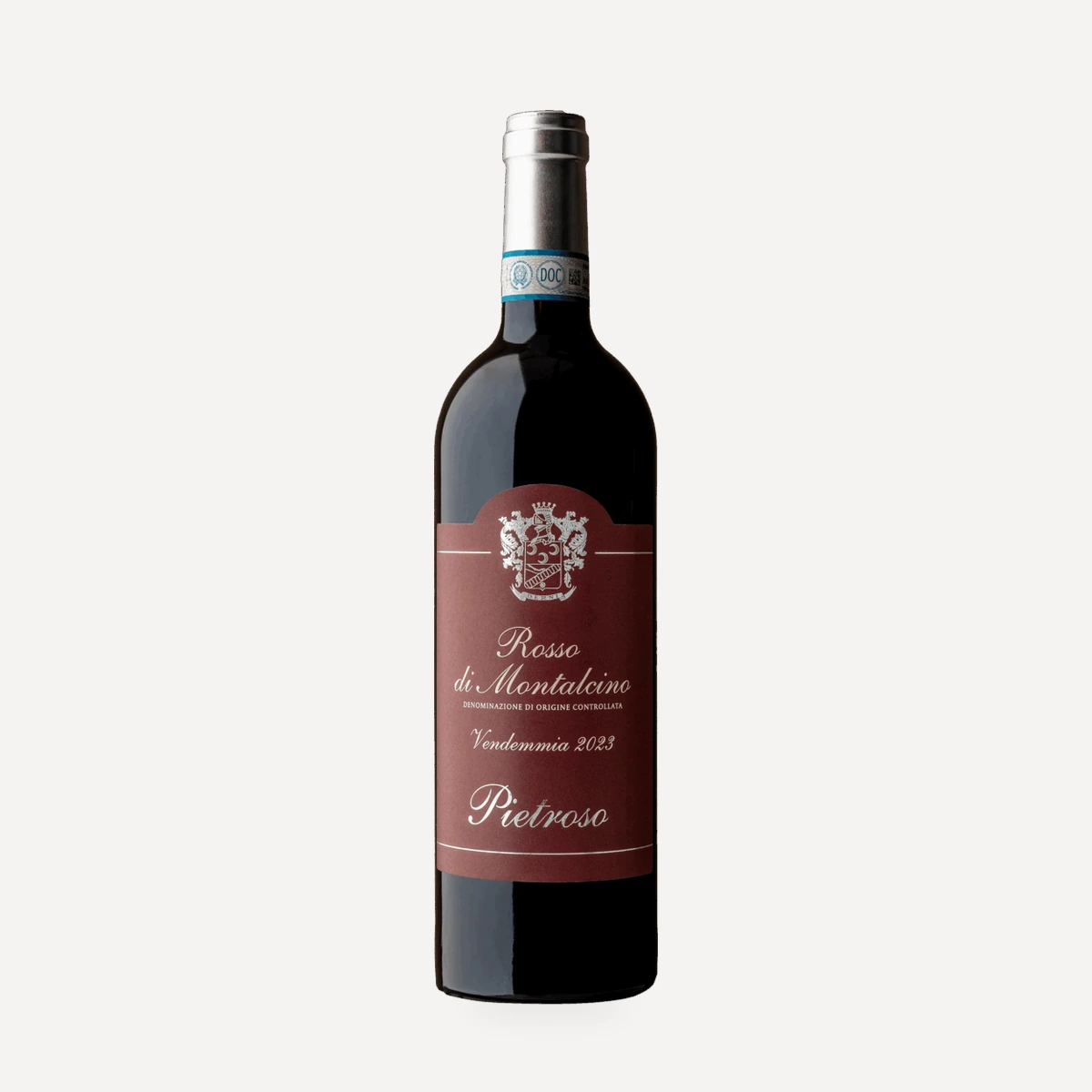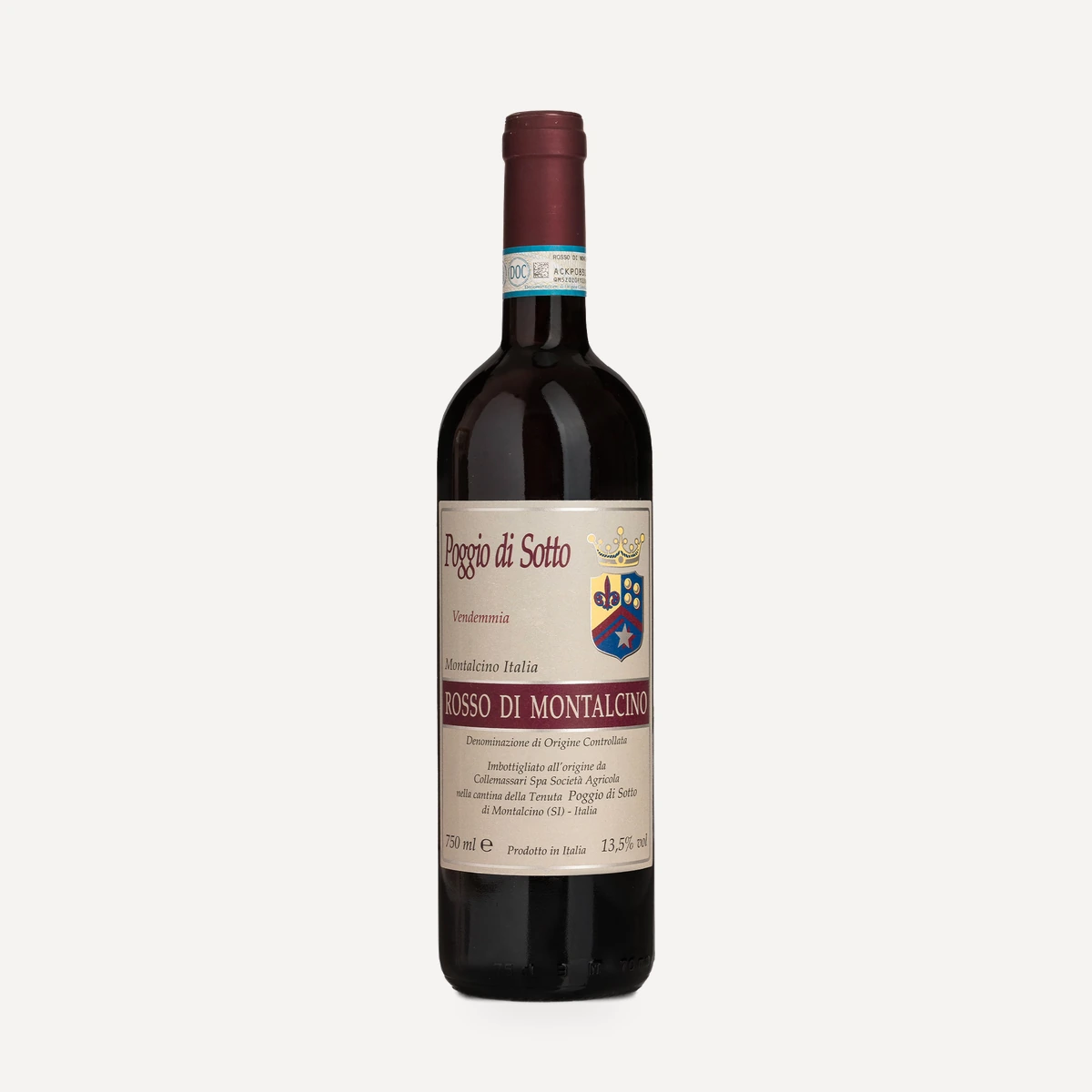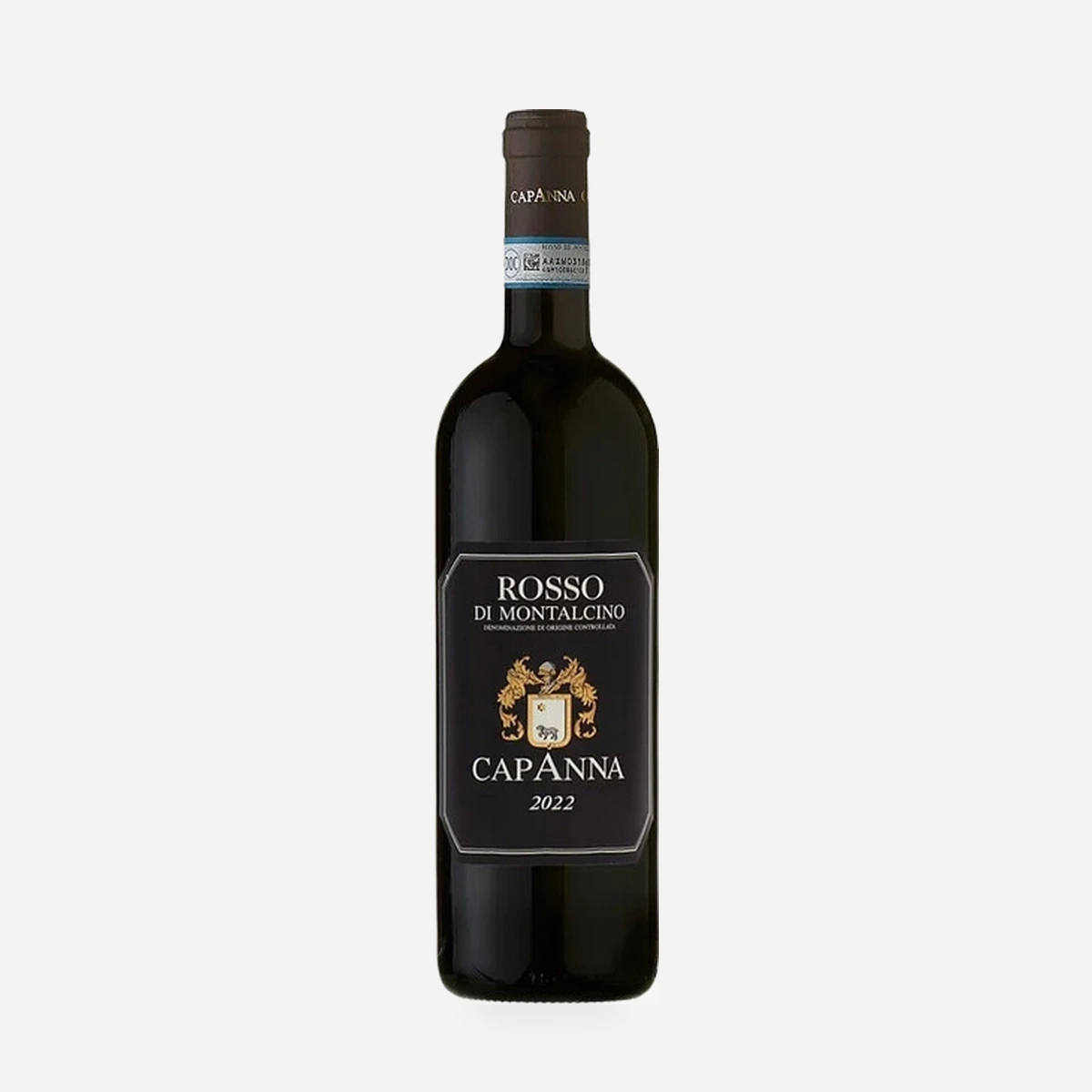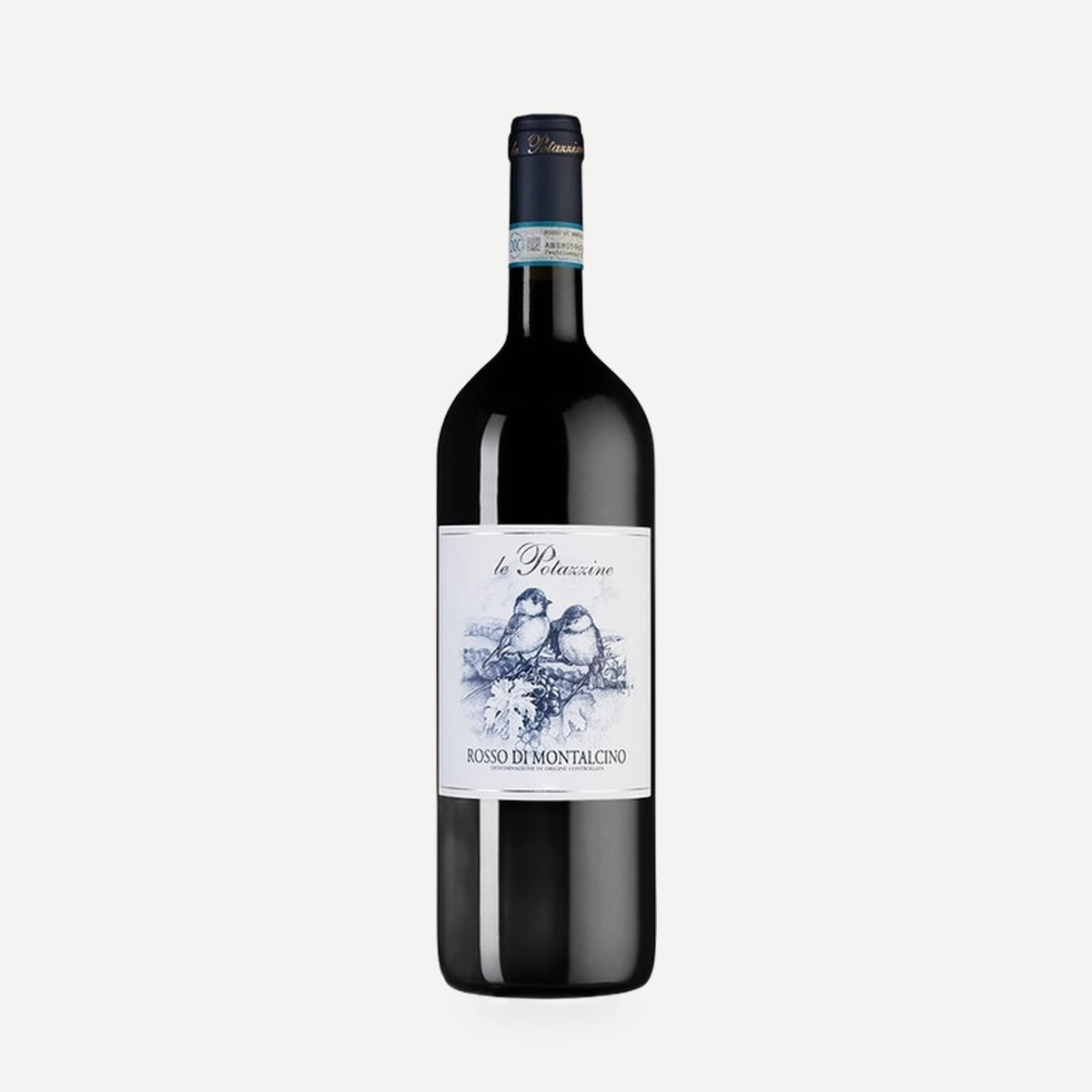
Questo vino
Vineyard and terroir
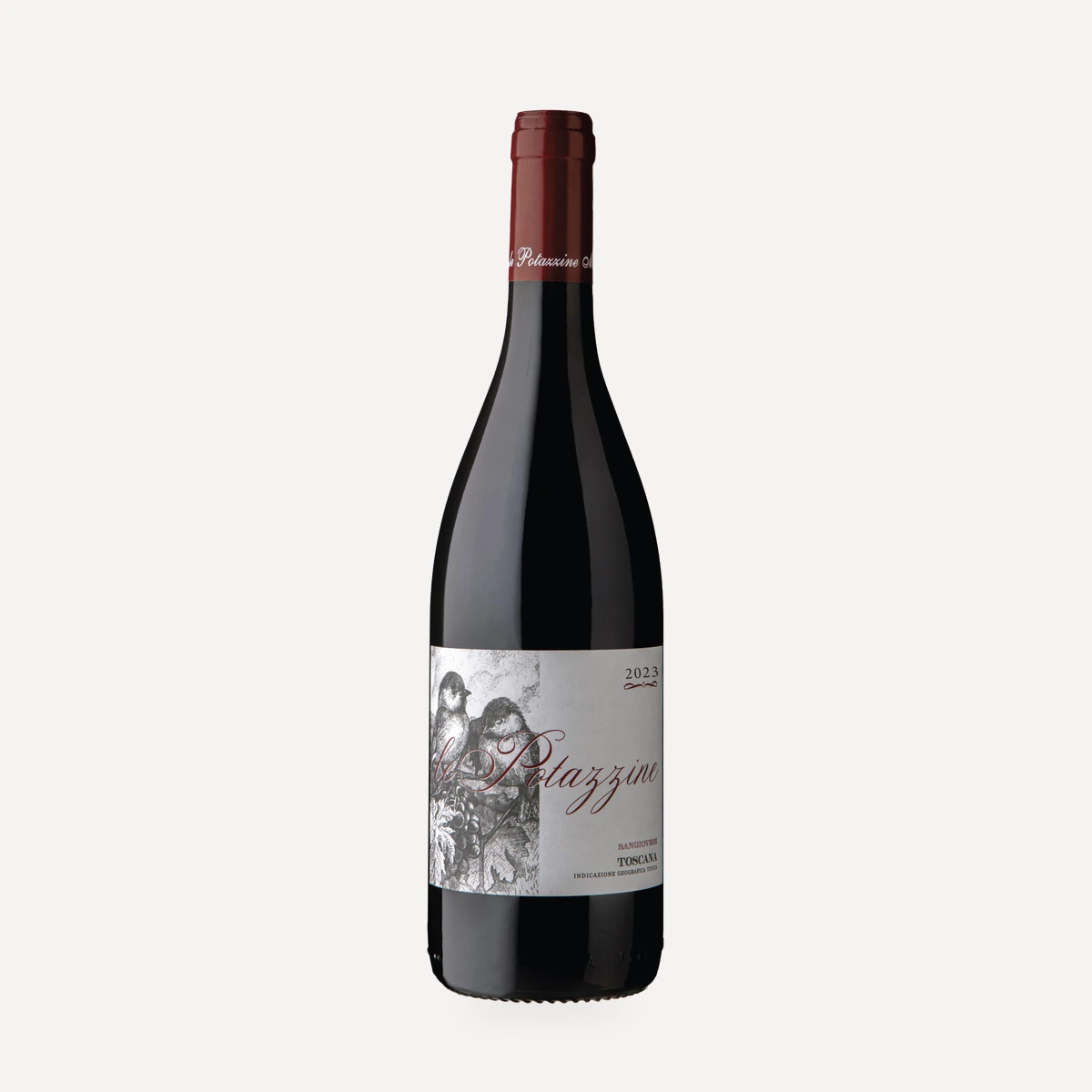
The fruit comes from two estate-owned plots. Le Prata lies at 507 metres above sea level with a south-western exposure, while La Torre is situated at 420 metres and faces south-east. The vineyards are planted at 5,952 vines per hectare, trained to Guyot and cropped at 55–60 quintals per hectare. The two parcels are fermented and aged independently before being combined for bottling.
Grapes
100% certified-organic Sangiovese. The wine is made from the same vineyards used for Brunello di Montalcino, with almost half of their production declassified for Rosso.
Vinification
Long natural fermentation is carried out exclusively with indigenous yeasts. The English text gives a fermentation period of 40 days, while the parallel Italian text refers to the 2021 fermentations lasting more than 50 days. The wine is bottled without filtration.
Ageing
The wine matures for 12 months in large 30 and 50 hl Slavonian oak barrels. Although ageing is not presented as a requirement for this wine, the estate deliberately gives its Rosso a year in wood.
Technical data
- Alcohol: 14.00%
- Planting density: 5,952 vines/ha
- Yield: 55–60 q/ha (5.5–6 t/ha)
- Training system: Guyot
- Available formats: 0.75 l, 1.5 l and 3 l
- Bottled without filtration
Tasting profile
Bright ruby red. Red-berry aromas introduce a broad, enveloping and supple palate, shaped by fine tannins and good acidity. The acidity brings freshness, while the aromatic finish is long and persistent. The wine is already approachable, with further Brunello-like development anticipated after one or two years in bottle.
Vintage notes
The 2023 growing season had a prolonged, rainy spring that encouraged downy mildew. Targeted and timely organic treatments were used to contain it. Vineyard altitude and highly draining soils helped mitigate the pressure, although the harvest finished approximately 15% below the usual annual production. Phenolic ripeness reached an optimal level, and intensive work at the sorting table allowed only sound grapes to enter the vinification.