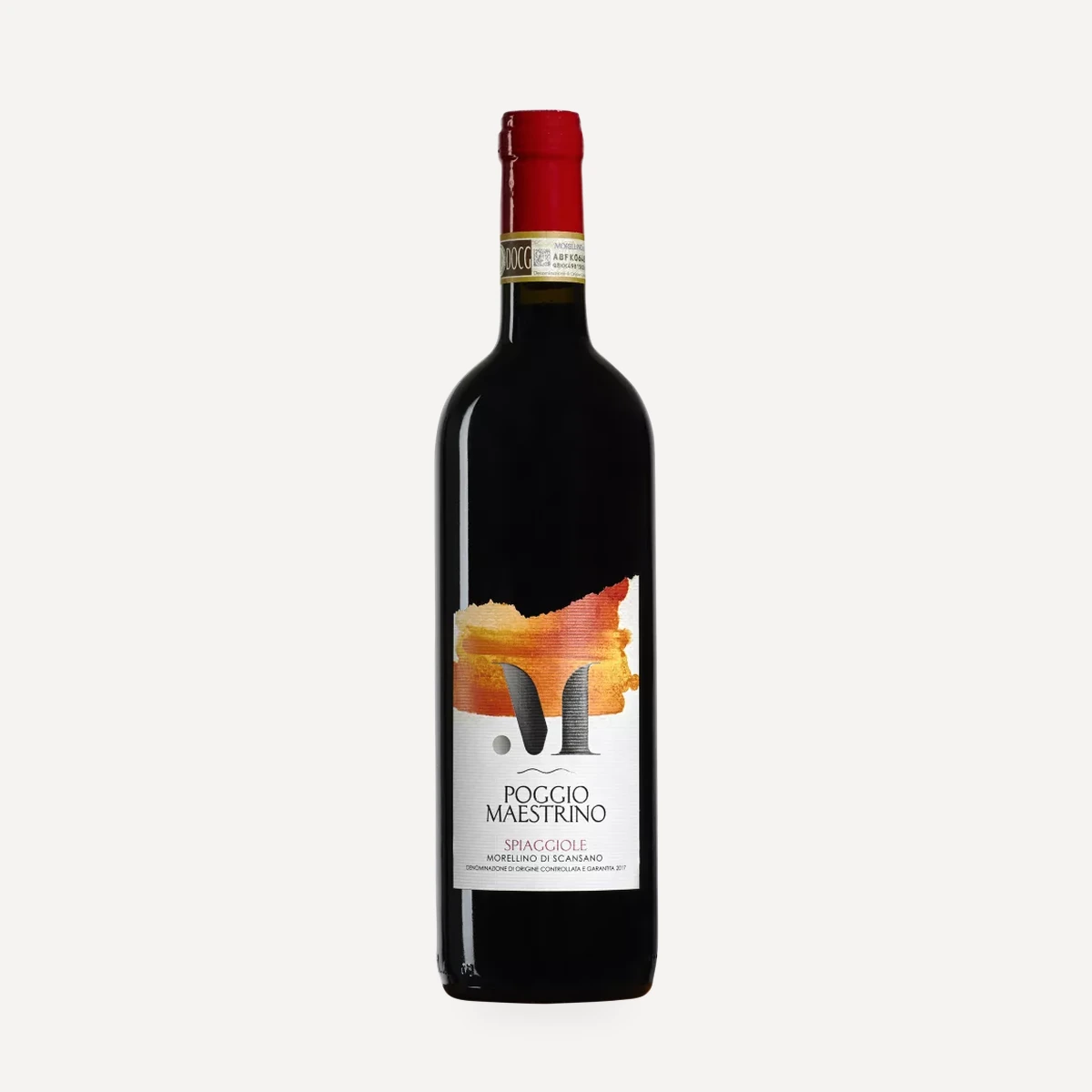
Questo vino
Vineyard and terroir
The fruit comes from various estate vineyards, planted between 2001 and 2016 at a density of 6,500 vines per hectare. The sites face mainly south and encompass soils ranging from clayey-silty textures to sandy loam with a substantial presence of marly limestone. The vines are trained using cordon and Guyot systems, with a reported yield of 90 q/ha.
Grapes
The latest published vintage, 2025, is 90% Sangiovese, with Ciliegiolo and Alicante comprising the remaining 10%.
Vinification
The grapes are harvested during the first ten days of September. Fermentation takes place in stainless-steel tanks at 24°C, followed by 10–15 days of maceration.
Ageing
The wine matures for six months in stainless-steel tanks.
Technical data
The 2025 vintage has 13.5% alcohol and total acidity of 5.3 g/L. Production amounts to 120,000 bottles, released in 0.375 L, 0.75 L and 1.5 L formats.
Tasting profile
Bright ruby red in colour. The bouquet combines cherry, raspberry and redcurrant with wisteria, violet and touches of sweet spice. The palate is crisp and refreshing, supported by smooth tannins. The finish is long and persistent, returning to fruity notes.
Serving and pairing
Suggested pairings are Tuscan ribollita and stuffed calamari.
Label / history
Morellino di Scansano has accompanied Fattoria Le Pupille since its first vintage in 1985. It is the estate’s principal wine by production volume and is presented as a direct, consistent expression of its territory.