Storia
Establishment and vineyard planting
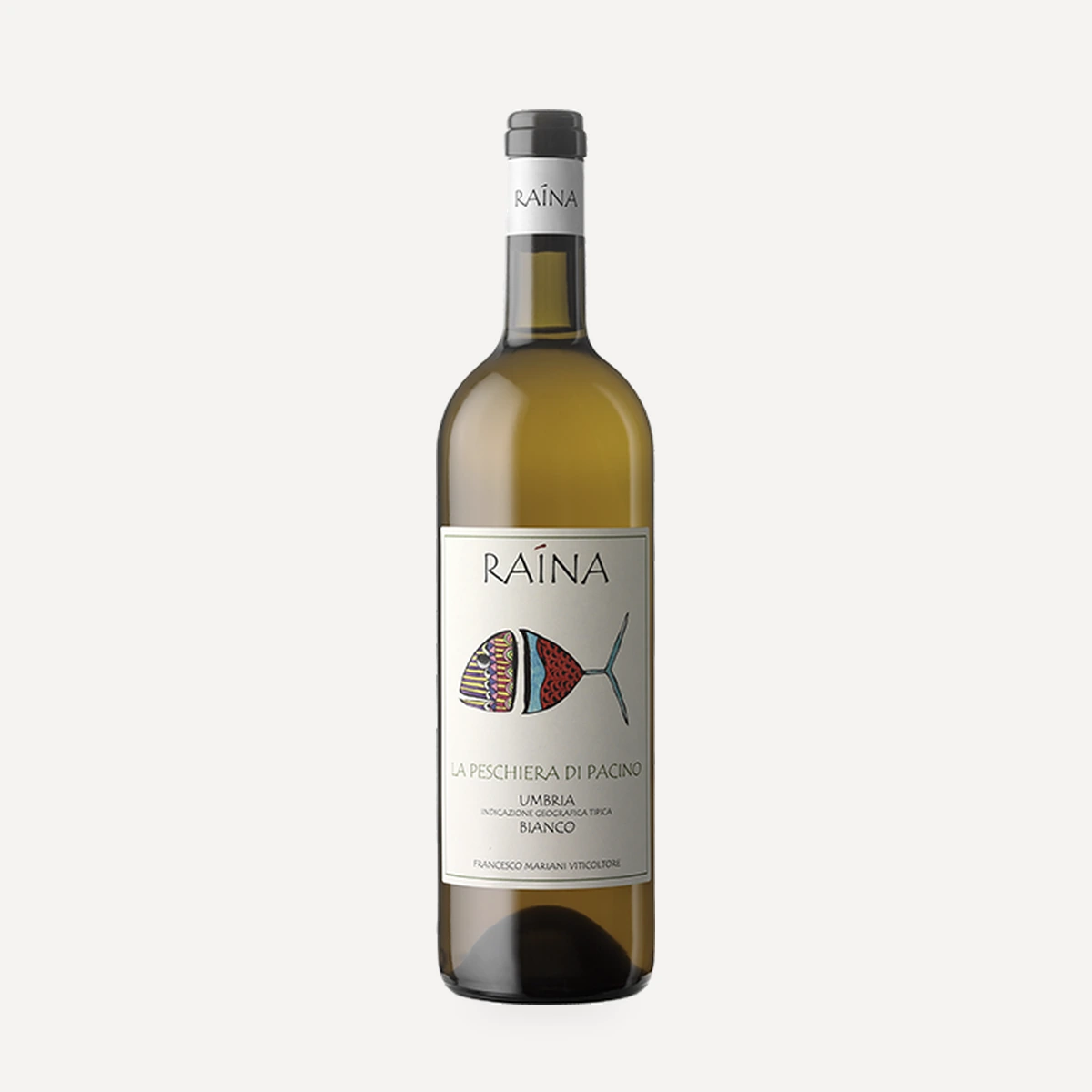
Raina was established by Francesco Mariani in Montefalco in 2002. Its name preserves the memory of “Raina,” the nickname of the farmer who had previously cultivated the land and the former owner of the field where the estate planted its first Sagrantino vines.
The present 10 ha of vineyards were planted between 2002 and 2008. The plantings established a mixed varietal base comprising Sagrantino, Sangiovese, Montepulciano, Merlot, Syrah, Grechetto and Trebbiano Spoletino.
Biodynamic transition and renewable energy
In 2012, Raina began practicing biodynamic agriculture. The change formalized an approach centred on preserving soil fertility, eliminating synthetic agricultural inputs and using seasonal biodynamic preparations, green manure and plant-based vineyard treatments.
The sustainability programme also extended to the winery. An agreement in place with Multiutility Spa since 2012 supplies hydroelectric power for the share of electricity not generated by the estate’s photovoltaic installation.
Departure from the DOC system
In 2022, Raina chose to leave the DOC system. Its wines have since been intentionally certified as Umbria IGT, making the change a deliberate production and identity decision rather than a loss of eligibility.
Terroir
Raina is based at Turri, in the commune of Montefalco in Umbria. Its vineyards lie between 220 and 300 metres above sea level and predominantly face southeast. The soils are medium-textured and contain abundant coarse mineral material.
The vineyards form a 10 ha holding planted between 2002 and 2008. Across the estate, vine density is approximately 5,700 plants per hectare and Guyot is the stated training system for all varieties.
Vinificazione
Organic and biodynamic cultivation
Raina is certified organic by the Codex control body and has followed biodynamic agriculture since 2012. Chemical fertilizers, herbicides and synthetic plant-protection products are excluded. Vineyard treatments rely on copper, sulphur and plant infusions or decoctions made from materials such as nettle, horsetail, garlic, wild willow and camomile.
Fertility is supported with green manure, compost made from the estate’s own prunings and biodynamic preparations including Maria Thun Fladen, Horn Manure 500 and Horn Silica 501. Weed control is mechanical or carried out with the help of a neighbour’s sheep. The longer-term objective is to reduce and ultimately eliminate copper through biodynamics, homeopathy, permaculture and greater use of plant infusions.
Seasonal work
In winter, the soil is worked and green-manure crops are sown.
After spring pruning, the cut surfaces are treated with Eau d’Enduit, prepared from Maria Thun Fladen, fresh whey and bentonite. This is intended to support healing of the pruning wounds. Once the soil begins to warm, Horn Manure 500 and horsetail are applied. Nettle, garlic and wild-willow decoctions are prepared for use with Bordeaux mixture in plant-protection treatments.
When May is particularly wet, Horn Silica 501 is applied. If seasonal conditions require it, the treatment is repeated at the end of August to assist ripening. Excessive summer heat is addressed with nettle- and camomile-based infusions.
Before autumn leaf fall, Horn Silica 501 is applied again. After the leaves have fallen, Maria Thun Fladen is spread on the soil, followed approximately 20 days later by Horn Manure 500.
All vineyard operations, from pruning to harvest, are performed by hand.
Cellar work follows a low-input approach. Apart from restrained sulphite use, chemical winemaking products are excluded.
Fermentations may begin spontaneously or through a pied de cuve prepared in-house from the estate’s own grapes. Selected commercial yeasts and fermentation activators are not used. Extractive enzymes, added tannins, mannoproteins, fining agents and other products considered capable of altering the wine’s nature are also excluded.
The vessels used for maturation are stainless steel, cement and large oak barrels. The wines are not filtered.
Filosofia
Raina regards the winegrower primarily as a custodian of the land. Its approach is intended to preserve the long-term richness of the soil rather than extract short-term economic value while progressively depleting it through chemical inputs. Within that philosophy, biodynamics is treated as the necessary route for maintaining the vitality of the farm.
The same principle extends beyond the vineyards: natural resources are to be protected and renewed, energy demand is covered by renewable sources, water is drawn and managed within the property, and cellar effluent is purified before disposal.
In the cellar, the objective is to avoid inputs considered capable of altering the nature of the wine. Fermentation therefore depends on native microbial activity, either spontaneously or through an estate-prepared pied de cuve, while additions and processing are kept to a minimum. The wines are conceived as strongly connected to their territory and intended for drinking rather than as purely analytical tasting objects.
Vini