Storia
The estate’s origins: 1404
The recorded origins of the estate reach back to 1404, when the Roveglio family purchased land and farm buildings from the monastery of San Salvatore in Brescia, now Santa Giulia. The Roveglio name became the basis of the estate’s present name.
A surviving stable dated to 1600 forms part of the historic property. It is now used as an events and hospitality space, retaining its high ceilings, old stonework and connection to the surrounding vineyards.
Federico Zweifel and the beginning of the wine venture
The family’s wine story began at the end of the 19th century. Federico Zweifel left his native canton of Glarus in central Switzerland in search of better working conditions in Italy. After encountering Lake Garda, its vegetation and land, he identified the area as suitable for vines, particularly the local Turbiana variety.
Federico acquired land and converted fields—many of them abandoned—into vineyard rows. His son Giusto Zweifel continued that work and began making wine, initially for friends and local customers. Production followed methods inherited from generations of local farmers for many years.
The transformation of the 1980s
After Giusto’s death, his daughter Annarosa Zweifel and her husband, Giovanni Felice Azzone, assumed responsibility for the estate during the 1980s. Giovanni Felice was Professor of General Pathology at the University of Padua, a member of the Accademia Nazionale dei Lincei and the head of internationally recognized laboratories. He brought a research-led outlook and an interest in technological innovation to Tenuta Roveglia.
Giovanni Felice believed that strong results depended on listening and dialogue among collaborators. Working with Paolo Fabiani, who had been an important collaborator from the beginning and later became estate director, he initiated a review of production practices and introduced new methods and modern vinification systems. The resulting model combined inherited agricultural traditions with scientific research and contemporary winery technology.
Fourth-generation ownership
Ownership passed to Sara, Vanessa and Babettli Azzone, daughters of Annarosa Zweifel and Giovanni Felice Azzone. They represent the fourth generation associated with the family enterprise. Annarosa remained President of the Board of Directors in the 2024 organizational structure, while Paolo Fabiani served as legal representative, managing director and estate director.
Recent operational and sustainability milestones
Mechanical harvesting became the principal collection method in 2023, while a limited number of vineyards continued to be harvested manually. Summer hailstorms that year damaged a substantial share of the crop and estate infrastructure. The adverse conditions reduced production, necessitated repair work involving construction equipment and left numerous cellar tanks empty during the first part of 2024.
In 2023 the estate processed 637,080 kg of grapes, handled 423,000 litres of bulk wine, bottled 751,808 litres and filled 807,885 bottles. The 2024 harvest and production rebounded to 1,048,380 kg of grapes processed and 713,851 litres of bulk wine handled; 566,462 litres and 770,926 bottles were bottled.
An audit by Valoritalia led to Equalitas Sustainable Organization certification on 27 January 2025 under the Equalitas OS module, revision 4. The first renewal was issued on 26 November 2025, when the sustainability management system was aligned with revision 05 of the standard.
Terroir
Tenuta Roveglia lies at Località Roveglia in Pozzolengo, south of Lake Garda and within the Lugana area. The vineyards occupy glacial and morainic terrain whose geological history is traced back approximately 200 million years.
The soils combine clay and limestone. Flat Lugana sites are strongly clay-calcareous and rich in mineral salts, while vineyards toward the morainic hills retain the same clay-limestone matrix in more undulating terrain. Technical vineyard descriptions place sites from approximately 50 to 140 metres above sea level.
Lake Garda moderates temperatures throughout the year, producing a mild microclimate favorable to grape ripening. The estate treats the relationship between this climate, the morainic soils and Turbiana as central to its identity and to the preservation of the local ecosystem.
Vinificazione
Vineyard decisions—from establishing a new planting through harvest—are assessed for fruit quality and environmental and social impact. Chemical herbicides are not used. Vegetation beneath the vines is controlled mechanically, while permanent spontaneous grass cover is maintained without routine inter-row cultivation apart from light subsoiling. Depending on site conditions, inter-row cover may be spontaneous or sown; erosion risk is specifically considered in hillside vineyards.
Plant protection follows the Italian National Quality System for Integrated Production, SQNPI. Crop-protection formulations are reassessed annually so that the option with the lowest potential impact on human and environmental health can be selected. Mating disruption is used against grape moth and European grapevine moth to reduce pest pressure while supporting ecosystem balance.
At least 5% of the estate is managed as natural or semi-natural habitat, including woodland, hedges, headlands and vineyard margins. Substantial grass cover within the vineyards connects cultivated ground with these habitats and supports pollinating insects. Vegetated buffer strips at least 3 m wide are maintained beside water bodies, woodland and semi-natural areas; neither fertilizers nor plant-protection treatments are applied within these strips.
Harvest dates are determined through grape tasting, health checks and chemical analyses of ripeness. The crop reaches the winery within one hour of picking to limit unwanted fermentation. Each incoming lot is weighed and assigned an identity so that traceability continues throughout production.
Mechanical harvesting has been the principal method since 2023. A limited number of vineyards remain hand harvested, including fruit collected in small crates for particular lots. Pruning canes are shredded and returned to the vineyard. With mechanical harvesting, stems remain in the vineyard; stems from the remaining manually harvested sites are likewise shredded and left in the field.
Water for vineyard treatments and irrigation comes exclusively from wells. Greater irrigation of hillside vineyards was required in 2024. Planned and ongoing improvements include drip-irrigation infrastructure and reuse of cellar wash water for fertigation.
The production chain covers grape reception, vinification, maturation of still and sparkling wines, bottling in bottles and small demijohns, packaging and commercialization. It is managed under a food-safety and sustainability system incorporating HACCP procedures, supplier controls, documented risk assessment, internal audits and at least annual management review.
Harvested grapes arrive within one hour, are weighed and assigned a traceable identity. Processing follows documented protocols with continuous analytical and sensory monitoring. Every operation is recorded to preserve control and traceability and to identify opportunities to reduce water and energy consumption.
The general sequence is harvest, pressing, fermentation, maturation and bottling. Gentle pressing is employed for white and rosé production, with documented lots limited to a maximum extraction of 60% free-run must. Fermentation takes place primarily in stainless steel. Some wines remain in steel to preserve freshness, while others mature in oak; documented estate equipment includes 225-litre barriques. Red-wine production includes destemming, skin fermentation in stainless-steel fermenters, repeated punch-downs and pump-overs, drawing off and gentle pressing of fermented pomace. Sparkling production includes second fermentation in 30 hl stainless-steel autoclaves with selected yeasts for the Charmat method.
Lees and pomace are sent to a distillery for grappa production. Pruning canes and the stems remaining from limited hand-harvested lots are shredded and returned to the vineyards. Wastewater is discharged to the sewer under the estate’s environmental authorization; a collection tank is planned so cellar wash water can instead be reused for fertigation.
In 2024, Tenuta Roveglia processed 1,048,380 kg of grapes and 713,851 litres of bulk wine. It bottled 566,462 litres in 770,926 bottles. Planned investments include a new vinification area and separation of vinification from bottling to improve workflow and workplace safety.
Filosofia
Tenuta Roveglia defines its approach through the combination of inherited practice, scientific inquiry and technological innovation. The family’s long connection to the property is treated as a responsibility to preserve both its agricultural identity and the territory surrounding Lake Garda.
Research is applied particularly closely to vineyard management. New plantings, soil care, crop protection and harvest decisions are evaluated with the joint aim of producing high-quality fruit while minimizing environmental and social impact. In the cellar, technological control and recorded analytical and sensory assessment are intended to serve the character of the grapes rather than replace it.
The estate’s sustainability policy rests on environmental, social and economic pillars. Environmental work is directed toward preserving natural resources and reducing impacts; the social pillar encompasses workers’ rights, safe and inclusive conditions, ethical supplier relationships and engagement with the local community; economic sustainability is understood as the capacity to generate employment and viable local income.
Equalitas certification is treated as the beginning of a continuing improvement process. Defined goals include maintaining certification, improving sustainability communication, broadening awareness of the Code of Ethics, recovering cellar wastewater for fertigation, improving production-area safety and efficiency, and continuing staff training.
Family continuity and collaboration are also central principles. Giovanni Felice Azzone’s management philosophy emphasized listening and dialogue among collaborators, while the present organization presents quality as the collective result of skills spanning vineyard work, cellar operations, administration and hospitality.
Vini
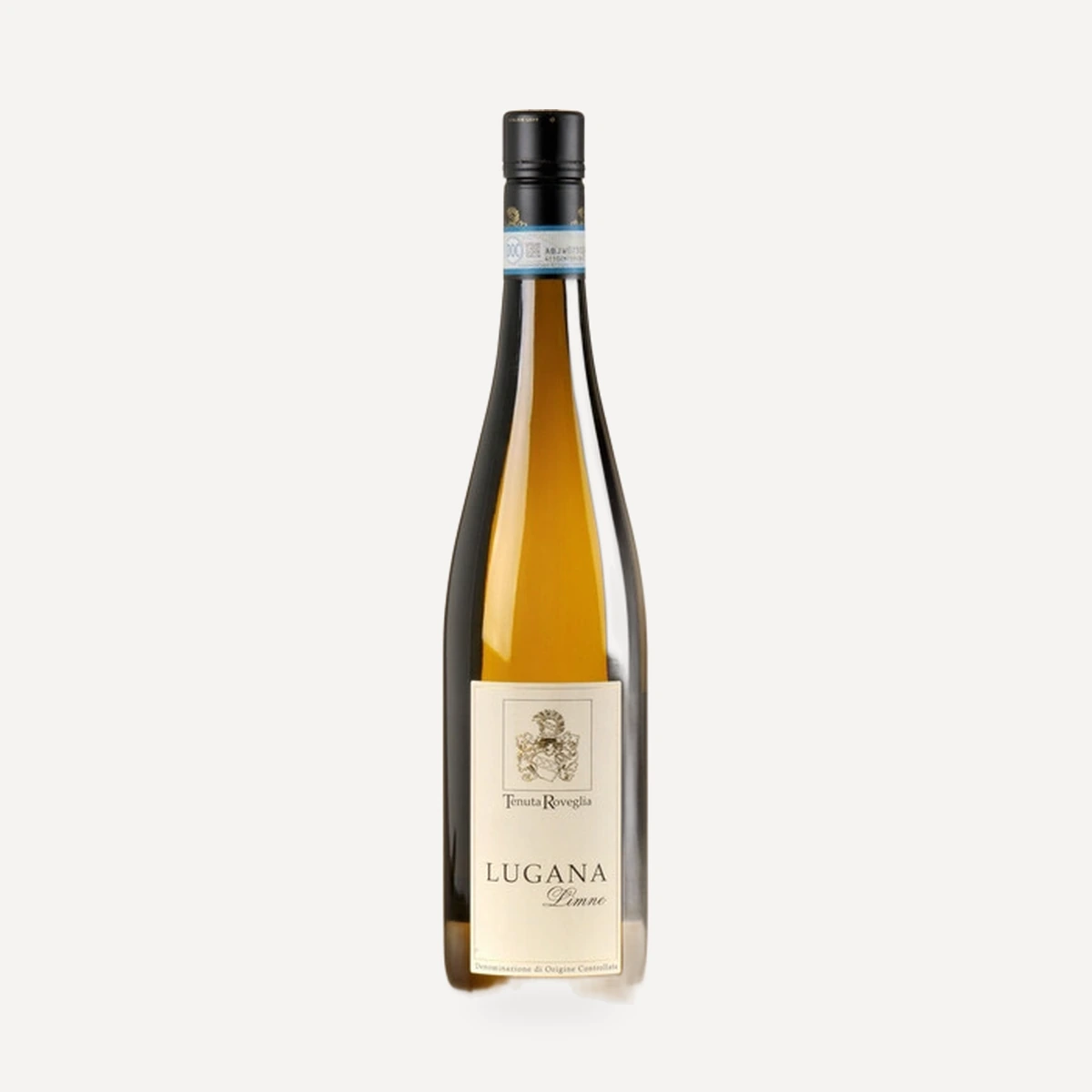
Lugana Limne DOC