Storia
Origins in San Benedetto di Lugana
The estate’s history begins in 1960 in San Benedetto di Lugana. Sergio Zenato recognised the potential of Trebbiano di Lugana and began working to transform the local grape into a white wine of greater ambition and standing. His wife, Carla Prospero, shared the project from its beginnings; together they experimented, introduced innovations and focused on native varieties.
This work contributed to the development and recognition of Lugana DOC. The historical centre of the family’s activity became Tenuta S. Cristina, near Peschiera del Garda, within the morainic landscape south of Lake Garda.
Development of the Lugana vineyards
The family planted and developed vineyards in the San Benedetto area, progressively building a Lugana holding that reached 65 hectares by the 2023 reporting period. Podere Massoni became the estate’s oldest and most historically important vineyard. Its oldest blocks supply the estate’s principal Lugana selections, including Lugana S. Cristina and Lugana Riserva Sergio Zenato.
The estate also preserved a local red-wine component. Cabernet Sauvignon has been cultivated here for more than 30 years, reflecting the lesser-known tradition of red varieties south of Lake Garda. Chardonnay is likewise established in the Peschiera vineyards.
Expansion of the family project
The project that began at S. Cristina was later extended to Valpolicella. Although the grapes for the family’s principal Valpolicella reds come from Tenuta Costalunga, those wines are matured at S. Cristina. The Lugana estate therefore serves both as the birthplace of the family’s white wines and as an ageing site for its major Valpolicella reds.
Sergio and Carla’s children subsequently assumed responsibility for the family business. Alberto oversees production from vineyard to bottle, with particular responsibility for sustainable development, while Nadia directs marketing and the Italian market. Together they also manage international commercial development.
Sustainability programme
In 2021, Zenato Azienda Vitivinicola and Azienda Agricola S. Cristina began a formal sustainability programme covering environmental, economic and social performance throughout the chain from vineyard cultivation to winemaking, bottling and sale.
CSQA carried out the first Equalitas audit in May 2022. The first surveillance audit followed in 2023 and assessed biodiversity. The 2023 reporting period recorded soil and air biodiversity results above the protocol’s sufficiency thresholds at S. Cristina. A second CSQA surveillance audit took place in May 2024, with carbon- and water-footprint indicators scheduled for assessment at the 2025 renewal.
A cultural venue
S. Cristina has also developed into a venue for Zenato Academy’s cultural programme. In 2018, the photographic exhibition Nell’Oasi della Lugana, l’anima di Zenato moved to the estate after its inauguration at Verona’s Biblioteca Capitolare. In May 2022, the estate hosted Vino. Oltre il ritratto. From May 2024 it hosted Rachele Maistrello’s Rosa Sentinella, a photographic and multimedia project exploring viticulture, family memory, production spaces and the visual identity of Lugana.
Terroir
Tenuta S. Cristina lies in the Lugana territory near Peschiera del Garda, a short distance from the southern shore of Lake Garda. Its landscape forms a natural amphitheatre of gentle morainic hills moderated by the lake’s temperate climate.
The soils are mineral-rich, with deep clays capable of retaining moisture. Individual estate vineyards are described more specifically as Cretaceous-clay or Cretaceous clay-silt soils. The principal documented sites lie at approximately 80 metres above sea level and face south.
These conditions form the estate’s principal environment for Trebbiano di Lugana. Chardonnay and Cabernet Sauvignon are also grown in the Peschiera vineyards. The Cabernet blocks express another side of local agricultural history, recalling the presence of red Bordeaux varieties in an area now chiefly identified with Lugana.
Vinificazione
Soil and vineyard floor
Chemical herbicides are not used. Vegetation between rows is mown or mulched, while the under-row zone is managed mechanically. Vineyard floors retain natural vegetation, supplemented where appropriate by organic seed mixtures.
Fertility and plant management
Fertilization follows integrated-production methods and the applicable regional protocols. Soil analyses are conducted by homogeneous zone and support a formal fertilization plan. The estate also uses an electronic field register, a vineyard-intervention plan and leaf analyses organized by homogeneous area.
Bud load is adjusted according to the yield obtained and the weight of pruning wood. Irrigation is applied according to the requirements of the crop and grape variety, with weather forecasts monitored continuously.
Plant protection
Treatments are determined using decision-support systems, vineyard observations and weather forecasts. Products must be registered for the crop and comply with the SQNPI integrated-production method. Field observations are recorded in an application and used to measure disease pressure alongside forecasting models and regional integrated-protection bulletins. Mating disruption is employed against grape moths and scale insects.
Harvest monitoring and traceability
Pre-harvest sampling follows a calendar specifying which vineyards must be monitored and when. Vineyard operations are entered into the management system and linked to individual vineyards through identification codes. Grape sampling and laboratory analysis track chemical, physical, sensory and phenolic-ripeness parameters. Grapes are subjected to targeted selection at reception.
Biodiversity
Vineyards remain continuously grassed with spontaneous plants or sown organic mixtures. Woodland, field margins, hedges and flower-seeded meadows provide ecological and buffer areas. The Biodiversity Friend protocol evaluates the quality of soil, air and water, supported by estate weather stations equipped with humidity sensors.
For Azienda Agricola S. Cristina, the 2023 average soil-biodiversity index was 122.5, against a sufficiency threshold of 100. The air and lichen biodiversity index was 62, against a threshold of 45, indicating very good air quality. No aquatic-biodiversity index could be calculated because the holding has no watercourses.
Tenuta S. Cristina is the production home of the Lugana white wines and an ageing site for the family’s principal Valpolicella reds.
The winery is equipped with modern vinification technology. Before harvest and reception, grape samples undergo laboratory, chemical, physical and sensory analysis, including monitoring of phenolic maturity. Incoming grapes are selected according to targeted quality criteria.
Written operating protocols cover the sequence from vinification through bottling, defining processing methods, product and process controls, and the recording of individual operations. Analytical checks are carried out both in the internal laboratory and by accredited external laboratories.
Cellar rooms, tanks and machinery are cleaned under procedures designed to rationalize water use and reduce energy consumption. Winery by-products are evaluated for reuse within a circular-economy approach. A tangential-filtration unit introduced in 2023 reduced water consumption, while new carton-forming, divider-inserting and sealing equipment reduced electricity consumption in the packaging operation by 15%. Investments also included tonneaux, large barrels, barriques, a grape elevator, sparkling-wine remuage baskets and an enzymatic analyser for the internal laboratory.
Filosofia
The family’s approach is built around giving a distinct voice to the land while balancing tradition, local identity and technical innovation. At S. Cristina, this principle centres on Trebbiano di Lugana and on the belief that the grape can communicate the character of the morainic and clay-rich landscape south of Lake Garda.
Quality is treated as the cumulative result of detailed work throughout the production chain. Vineyard management, grape selection, cellar controls and bottling are considered parts of one continuous process rather than isolated stages.
Sustainability is defined in environmental, economic and social terms. The estate’s programme seeks to protect land, air and water, monitor consumption, encourage circular processes and combine available technology with responsible agricultural practice. Its social commitments include workplace health and safety, respect for diversity and human rights, employee training, ethical supplier management and constructive relationships with local institutions and associations.
The current generation also treats wine as a form of culture. Photography, landscape and production are brought together through Zenato Academy to build a contemporary visual memory of the family, its estates and its territories.
Vini
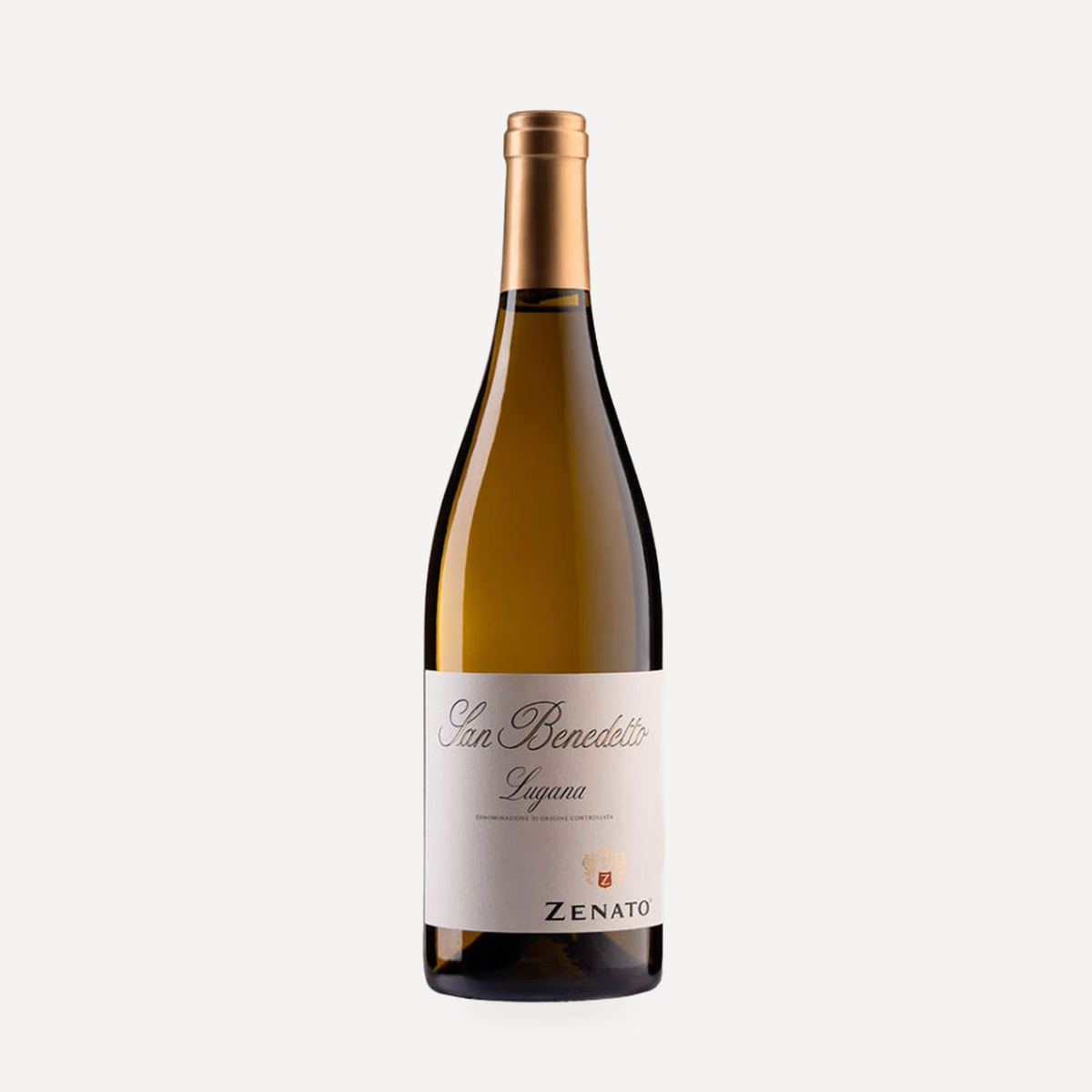
Lugana San Benedetto DOC
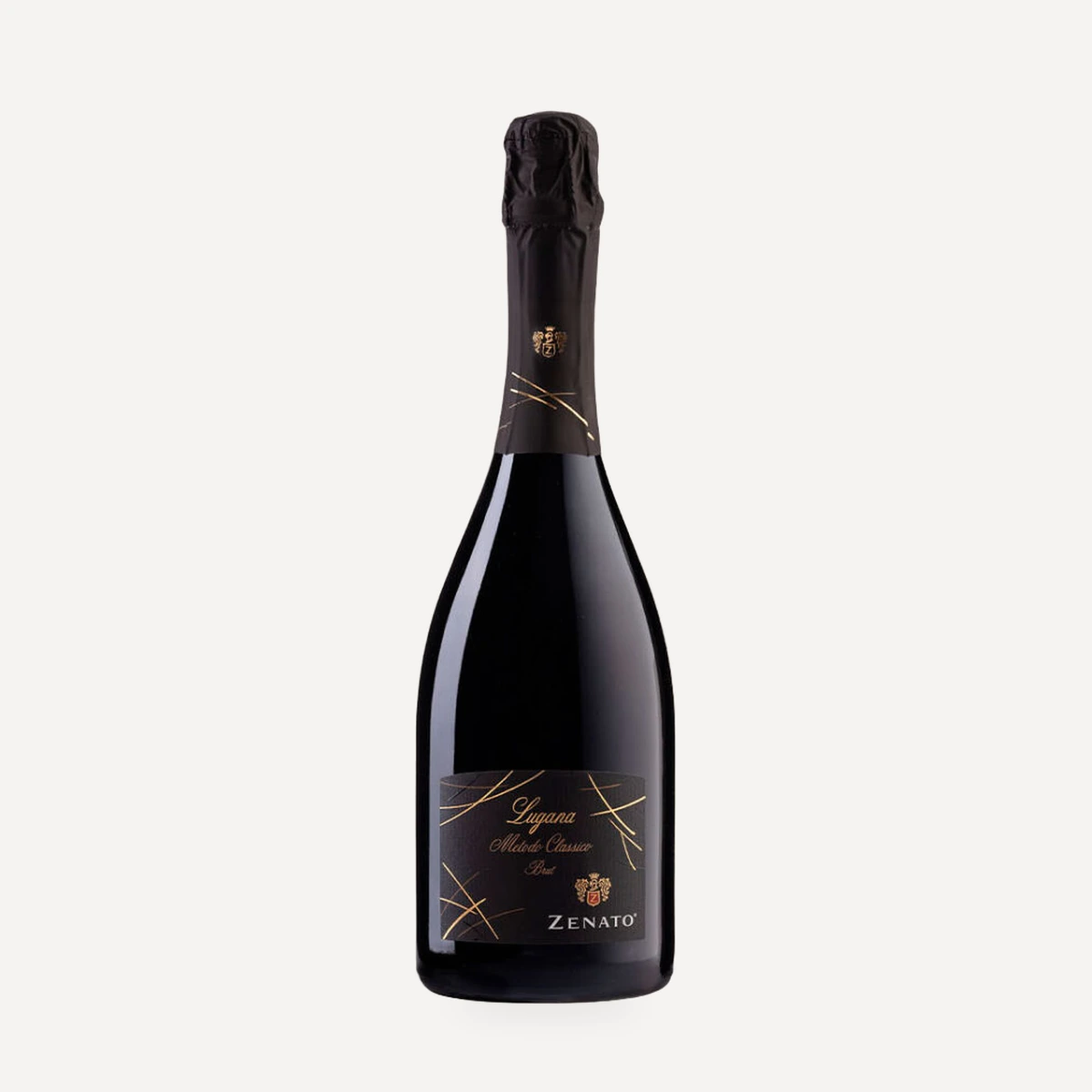
Lugana Metodo Classico Brut DOC
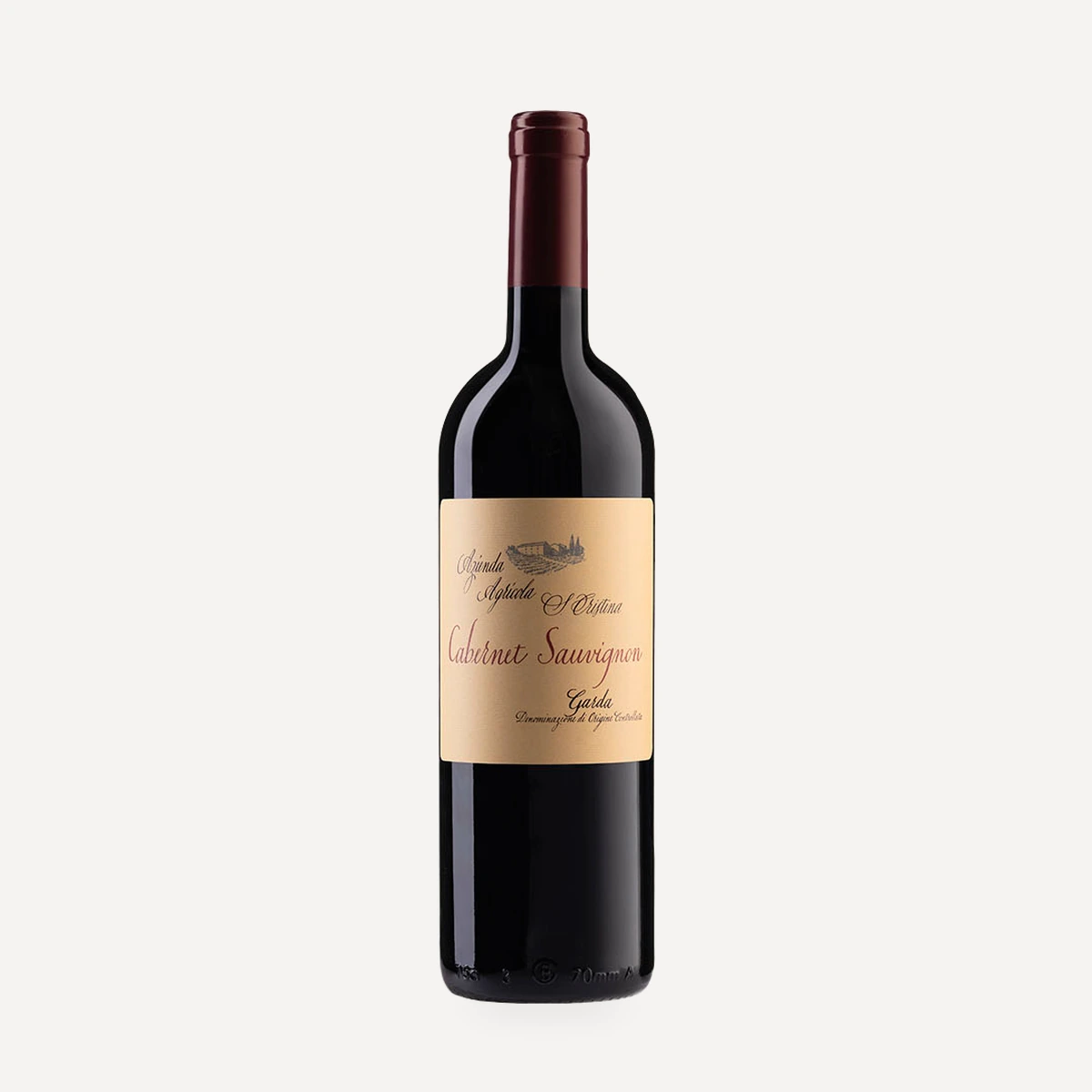
Cabernet Sauvignon Garda DOC
