Storia
The Martusciello family and Campi Flegrei
The Martusciello family's involvement in the region predates the present project. The family is credited with helping to bring about the Campi Flegrei DOC in 1994, establishing a formal framework for wines rooted in the area's Falanghina and Piedirosso traditions.
A new venture
Gilda and Salvatore Martusciello present the contemporary business as a new adventure grounded in tradition and culture. Its unifying idea is persistence: the endurance of their own history and of the wine cultures of Campi Flegrei, Agro Aversano and Penisola Sorrentina, as well as the lasting sensory identity they seek in the wines.
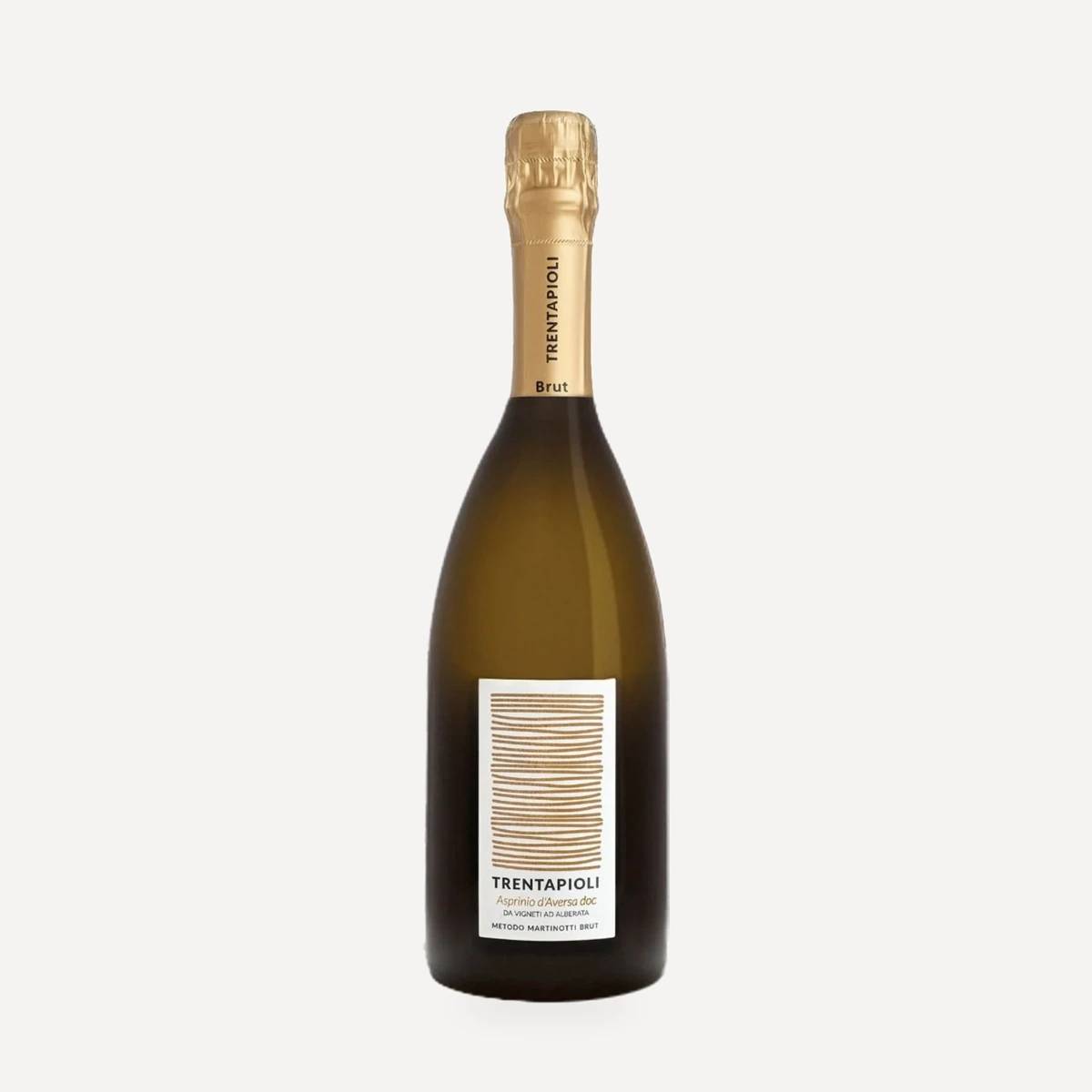
The project concentrates on lesser-known local wines and on relationships with small producers who maintain longstanding rural traditions despite limited commercial recognition. Its portfolio is restricted to DOC wines and is organized into three principal lines: OttoUve for Gragnano and Lettere, Trentapioli for Asprinio d'Aversa from alberata vineyards, and Settevulcani for Falanghina and Piedirosso from Campi Flegrei.
Traditions preserved through the portfolio
OttoUve draws attention to the many indigenous grapes historically assembled in Gragnano. Trentapioli preserves the alberata training and harvesting culture of the Aversa area, a system traced to the Etruscans. Settevulcani connects the modern project with Campi Flegrei's sandy volcanic soils, own-rooted vines and the DOC whose creation involved the Martusciello family.
Terroir
Three territories
The project is tied to three distinct Campanian wine landscapes: Campi Flegrei, Agro Aversano and Penisola Sorrentina.
Campi Flegrei
Campi Flegrei is a vast, active volcanic caldera beside the sea, northwest of Naples. It is presented as one of the world's three so-called supervolcanoes, while acknowledging that “supervolcano” is not a scientifically precise term. The landscape combines hills, lakes and marine environments, with coastlines alternating with partly submerged volcanic structures.
The vineyards face the sea. Their fertile soils are volcanic and sandy. These conditions prevent phylloxera from surviving, allowing Falanghina and Piedirosso vines to remain on their own roots rather than being grafted onto resistant American rootstock. This continuity is likened to the way vines were cultivated approximately 2,000 years ago.
Penisola Sorrentina
The Gragnano and Lettere traditions share the same DOC framework and broadly the same indigenous grape heritage, but their vineyard settings differ. Lettere's grapes grow in very small plots situated higher than those of Gragnano and with different exposures. The Lettere landscape is associated with steep mountain paths that historically made access difficult for wine merchants.
Agro Aversano
The defining feature of the Aversa vineyards is the alberata system, in which Asprinio grows at heights reached with ladders approximately 15 metres long. This living form changes dramatically through the seasons: dense and imposing during summer growth, then stark after winter pruning.
Vinificazione
Own-rooted vines in Campi Flegrei
Falanghina and Piedirosso grow on their own roots in the volcanic, sandy soils of Campi Flegrei. The absence of grafting is linked to the inability of phylloxera to survive in those soils.
Alberata cultivation and harvest
Asprinio is cultivated using the traditional alberata system. The technique is traced to the Etruscans, with its surviving expression associated with Aversa. Vineyard workers climb characteristic ladders approximately 15 metres high, generally comprising about 30 rungs.
Harvest begins around the middle of September and takes approximately three days. Grapes are picked manually into 18 kg crates. The pickers do not use scissors: bunches are plucked by hand and placed in a pointed basket called a fescina, which is fixed into the ground after being lowered from the vines.
The alberata is also treated as an element of rural heritage. Its appearance is imposing during summer vegetative growth and becomes especially graphic after winter pruning.
The portfolio is restricted to DOC wines drawn from Campi Flegrei, Agro Aversano and Penisola Sorrentina.
The principal disclosed cellar process concerns Trentapioli, the Asprinio d'Aversa DOC sparkling wine. It is produced by the Martinotti method and matures on its yeasts in an autoclave for at least 180 days. The variety's characteristics are considered sufficient to allow the finished sparkling wine to be enjoyed after several years.
The other ranges are presented primarily through their territorial and varietal identities rather than through detailed cellar protocols.
Filosofia
The project's central concept is persistence: the continuity of personal and regional history, the endurance of traditional viticulture, and a sensory identity capable of remaining in the drinker's memory.
Gilda and Salvatore Martusciello align the venture with Campi Flegrei, Agro Aversano and Penisola Sorrentina rather than with internationally familiar styles. They embrace wines they characterize as “minor” or little known, made within small agricultural communities whose traditions receive limited support from the wider market.
Authentic relationships are fundamental to this outlook. Small producers are portrayed as custodians of worthwhile stories, local culture and longstanding working practices. The preservation of own-rooted vines, indigenous grapes and alberata cultivation gives this philosophy a practical expression.
Vini