Storia
Agricultural roots
The Molettieri family’s roots in Montemarano extend through several generations of farming. Salvatore’s great-grandparents developed the family’s small, domestic wine production around Aglianico, the variety historically associated with Montemarano. The family chose to build on its practical knowledge of the land rather than introduce imported varieties or rely on untested experimentation.
Salvatore learned from childhood by following his grandfather and father. Their accumulated farming knowledge, together with his own close reading of the territory, formed the basis of his work in both vineyard and cellar. The family vineyards, including very old Aglianico vines and some ungrafted plants dating from before phylloxera, became the foundation of the later commercial winery.
1983: establishment of the winery
Salvatore Molettieri founded the wine business in 1983, turning a long agricultural and winegrowing tradition into an independent commercial enterprise. He stopped selling the family’s grapes to third parties and began vinifying them himself, initially selling the resulting wine in bulk.
The winery retained its identity as a working agricultural estate while developing its wine business. In addition to the vineyards, the family continued cultivating approximately 2 ha of olive trees planted with Frantoiana, Leccina and Ravece. Their fruit is blended into olive oil for family consumption.
1985–1988: early competition successes
The first estate-made wines won first place at the Sagra del Vino di Montemarano in four consecutive years: 1985, 1986, 1987 and 1988. These local successes preceded the decisive move from bulk wine to estate bottling.
1988: the first bottled wine
In 1988 Salvatore added bottling to the estate’s activities and created Taurasi DOC Riserva 1988. This marked the transition from growing and bulk production to a fully estate-controlled commercial wine operation.
Development of the vineyards and cellar
Continued work in the family’s old vineyards deepened Salvatore’s experience as both field winegrower and cellar producer. Vineyard systems were progressively renewed: the older radial arrangement gave way to spur-pruned cordon and modified Guyot, while planting layouts were revised in pursuit of higher quality.
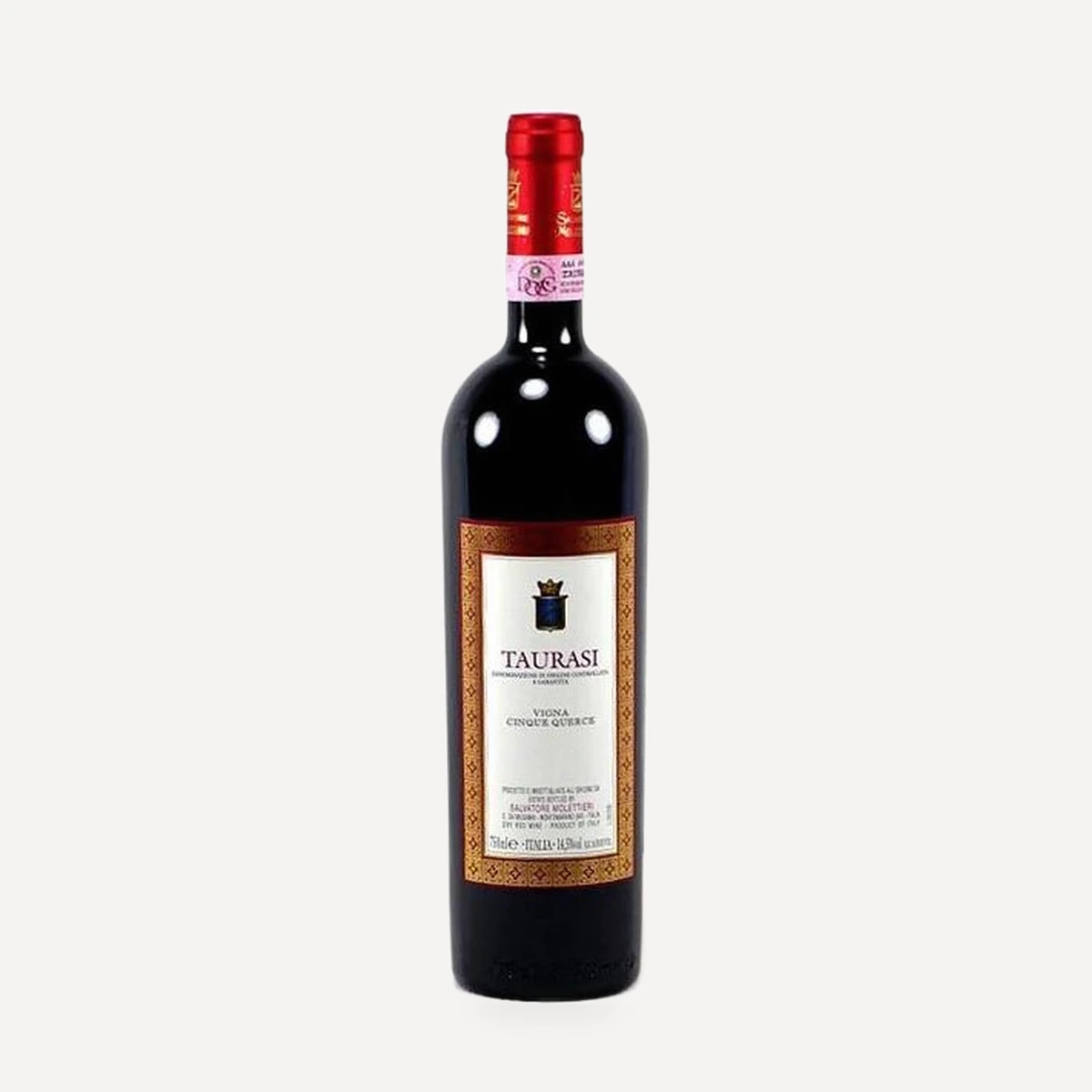
The estate developed three named vineyard identities. Cinque Querce, in contrada Iampenne, became its principal cru and reached its twentieth DOCG harvest in 2012. Ischa Piana was associated with Irpinia DOC Rosso. Renonno continued to provide Aglianico from vines with more than 70 years of production history; its renewal used propagation material taken from old vines, including ungrafted examples.
Modern cellar practices were introduced alongside this vineyard heritage. These include gentle crushing and destemming and temperature-controlled maceration in stainless-steel tanks, with controls applied throughout production and ageing.
The next generation
Salvatore’s four sons—Giovanni, Giuseppe, Luigi and Paolo—joined him in the management and direction of the winery. Giovanni contributes specialist expertise as the family oenologist, while Giuseppe, Luigi and Paolo work as winegrowers. Salvatore’s wife, Angela, supports the family enterprise and preserves its domestic traditions, particularly in the kitchen.
This succession maintained the winery’s family and territorial identity while advancing Salvatore’s objective of carrying the name of Montemarano beyond Irpinia.
National and international development
Over approximately three decades the estate moved from local bulk production to an established presence in Italian and international markets. Its wines were included in the selection of Enoteca d’Italia in Siena and developed markets in the United States, Japan and England, followed by Russia, China, Poland, Germany, Belgium, Denmark, Norway, Brazil, Puerto Rico and Australia.
In 2017 the winery marked twenty years of collaboration with Marc De Grazia at Vinitaly. That year it was also selected among OperaWine’s 100 Great Producers for the sixth edition of the event, presented by Veronafiere with Wine Spectator. It returned to the group in 2018, while the estate’s recognition archive also records OperaWine participation in 2021.
Terroir
Montemarano and the upper Calore
The vineyards lie on the hills of Montemarano in Irpinia, within the 17-commune production area of Taurasi DOCG. Montemarano is approximately 24 km from Avellino, on the left side of the upper Calore river. The settlement stands at 820 m above sea level beneath Monte Tuoro and is connected with 34 outlying contrade.
The estate’s more than 13 ha of vineyards occupy elevated hillside positions at approximately 500–600 m. These upper slopes have a continental climate with pronounced temperature shifts. The conditions permit a late harvest and slow grape maturation, followed by the similarly unhurried maturation sought in the cellar.
Soils
The vineyard soils are described as clay-rich and low in limestone. Aglianico is the principal variety through which the family interprets these soils and the estate’s different microclimates.
Irpinian setting
Irpinia lies between the Adriatic and Tyrrhenian seas. Its landscape comprises wooded green hills, broad valleys and numerous rivers. Within the Taurasi area, Aglianico is grown primarily on hills overlooking the course of the Calore. The estate connects this inland geography, continental climate and high-elevation viticulture with the slow ripening of its grapes and the capacity for late harvesting.
Vinificazione
Quality is pursued by limiting grape quantity in favour of greater concentration and by continually refining training methods. The family tends the vines directly and normally harvests late, in keeping with the slow ripening conditions of its elevated Montemarano sites.
Harvesting is manual, with grapes placed in picking crates. The cellar uses only selected fruit for its quality production.
Vineyard renewal has included replacing the old radial training arrangement with spur-pruned cordon and modified Guyot, as well as revising planting distances. In Renonno, replacement vines are propagated from old family plant material, including ungrafted vines. Cinque Querce retains Aglianico vines from the pre-phylloxera period.
No organic, biodynamic or other third-party farming certification is identified.
The production model combines inherited vineyard practices with modern cellar equipment. Harvest is generally late and carried out manually into crates. Selected grapes undergo gentle crushing and destemming.
Maceration takes place in temperature-controlled stainless-steel tanks. Rigorous controls are applied across production and ageing to maintain the family’s intended quality standards.
The available general production description does not define fermentation organisms, maceration duration, extraction regime, malolactic conversion, barrel format, oak origin, new-oak percentage, ageing duration, clarification, filtration, sulphur additions or bottling protocol.
Filosofia
Quality before quantity
Quality is the estate’s defining objective. Salvatore and his sons favour lower yields where this can improve the grapes, and they present quality as a goal that requires continuous improvement rather than a fixed achievement.
Wine begins in the vineyard
The family’s vision places the vineyard at the beginning of quality. Direct care of the vines, refinement of training systems, a generally late harvest and manual picking are paired with modern vinification rather than treated as opposing approaches.
Territorial and family identity
The winery seeks to preserve a specifically Montemarano identity based on Aglianico, inherited agricultural knowledge and family continuity. Salvatore rejected imported varieties and built the business from the material and experience already rooted in the family vineyards. His four sons continue this work, combining generational continuity with Giovanni’s formal oenological expertise.
Vintage expression
The wines are intended to reflect changes in soil and climate as well as the cellar’s response to each season. Each vintage is treated as distinct; standardisation is rejected in favour of preserving the different expression that the land produces from year to year.
Tradition and technology
Old vines, ungrafted material, manual harvesting and patient maturation coexist with gentle mechanical processing, stainless steel and temperature control. The objective is not to replace the inherited approach but to use modern equipment in support of fruit quality and rigorous control.
Vini
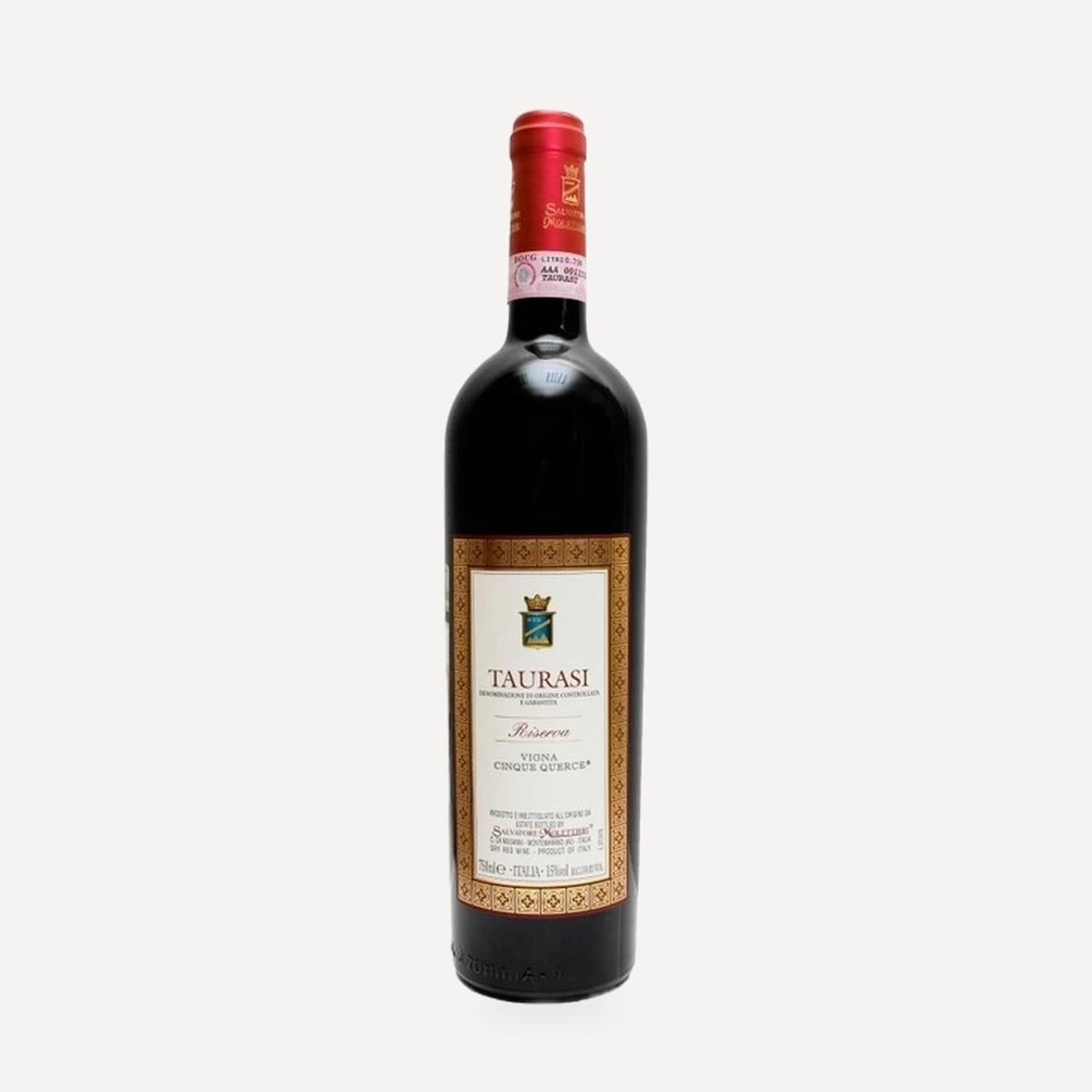
Taurasi Vigna Cinque Querce Riserva