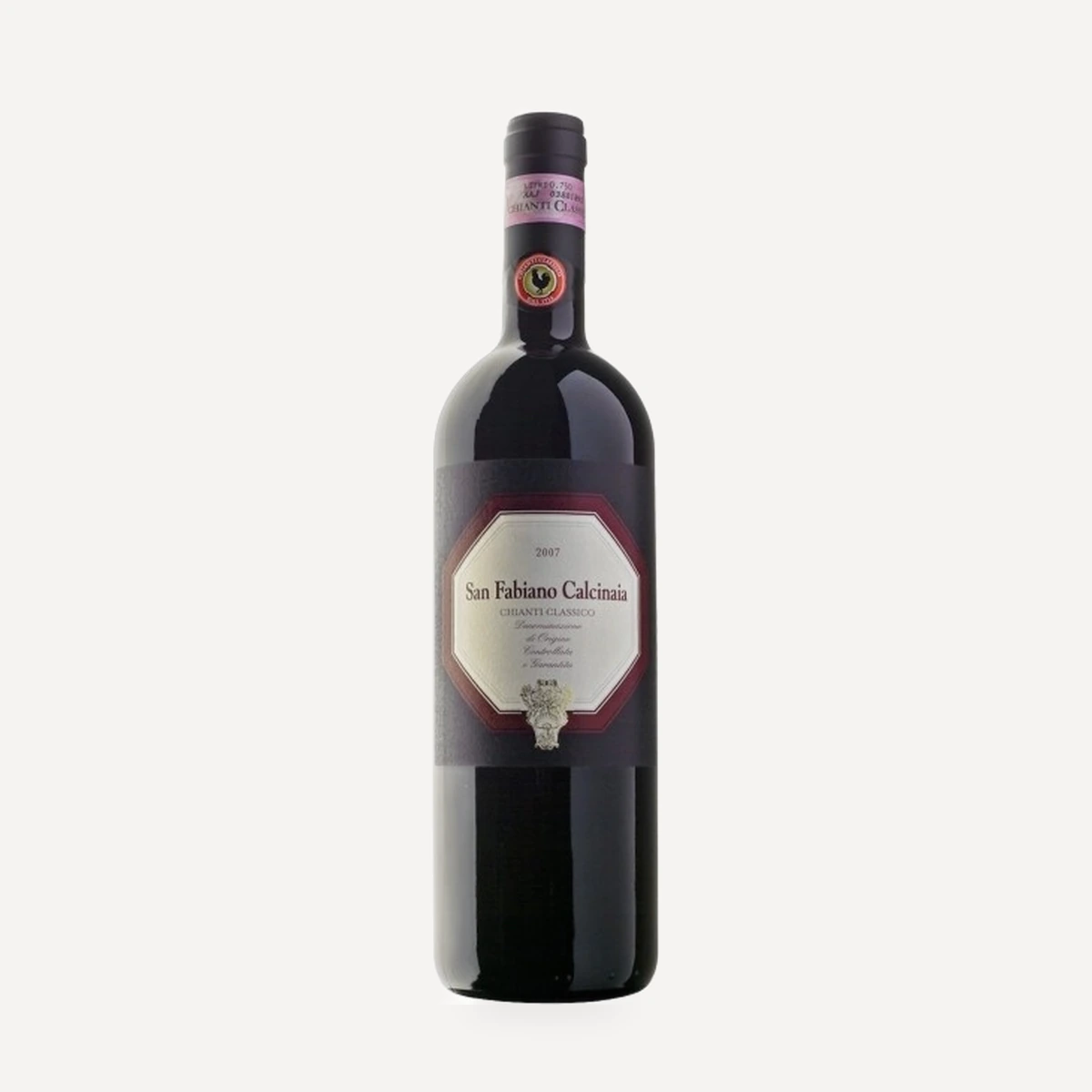
Questo vino
Vineyard and terroir
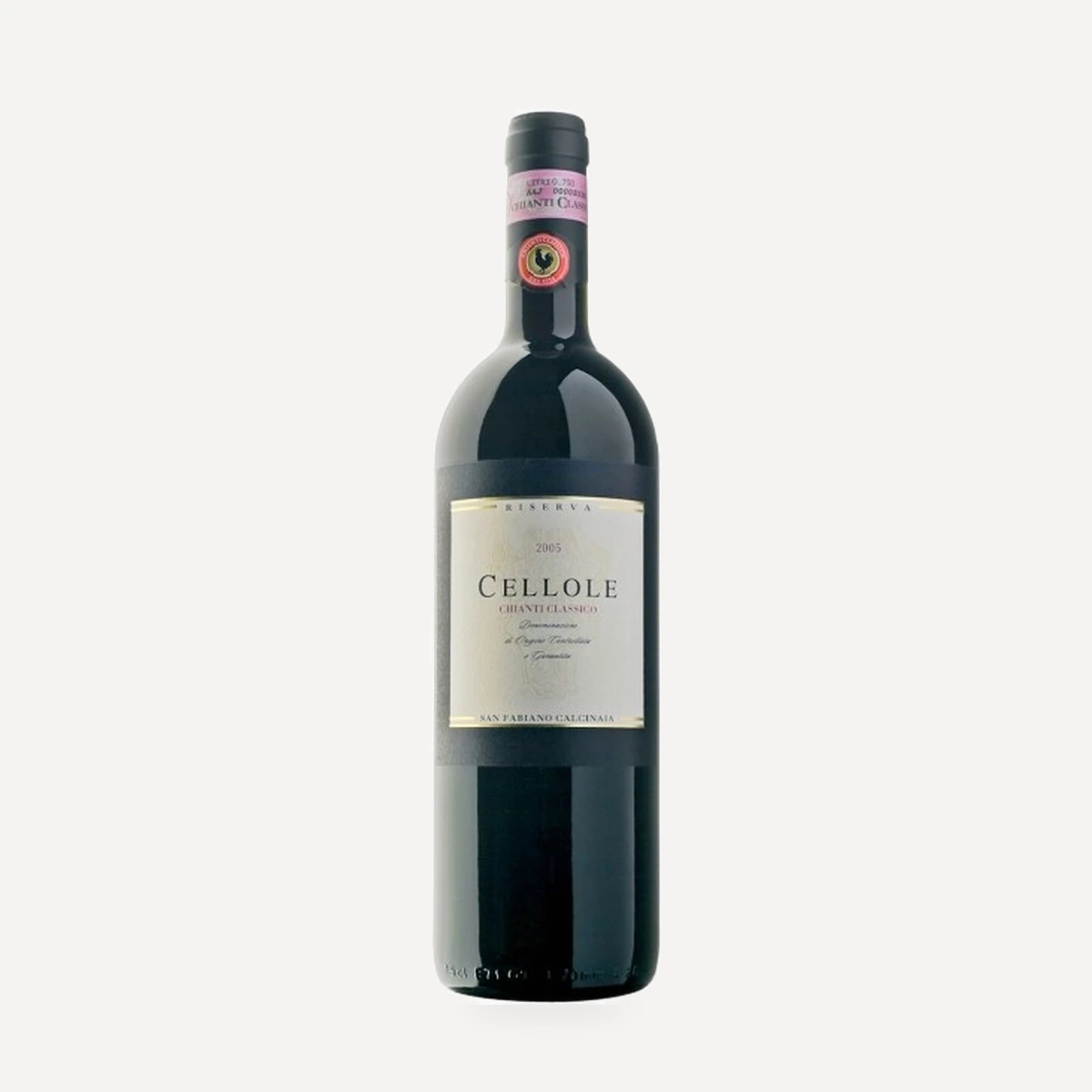
The production area covers 14 hectares, with an average yield of approximately 48 quintals per hectare, equivalent to about 4.8 tonnes per hectare. The product page locates the vineyards at Cellole, 550 metres above sea level, with a south-western exposure. The 2015 technical sheet instead gives two locations and elevations: San Fabiano at 250 metres and Cellole at 500 metres, likewise facing south-west. The vines are trained to spur-pruned cordon.
Grapes
The 2015 blend is 90% Sangiovese, 5% Merlot and 5% Colorino.
Vinification
The grapes are harvested by hand. Selection begins in the vineyard, followed by a second rigorous sorting as the fruit arrives at the cellar. The grapes are destemmed and gently crushed. Alcoholic fermentation uses yeast strains selected in the Chianti Classico area and proceeds at 28–32°C. Skin maceration lasts 15–20 days, after which the must is gently pressed at a maximum pressure of 0.7 atm.
Ageing
The product page specifies approximately 24 months in first- and second-use barriques, followed by at least six months in bottle. The 2015 technical sheet gives a different regimen: 30 months in first- and second-use 500-litre wooden vessels, with at least three of those months spent in bottle.
Technical data
For the 2015 vintage: alcohol 14.86% vol, total acidity 5.10 g/L, residual sugar below 1.2 g/L and net dry extract 31.6 g/L. Production was approximately 32,000 bottles. The listed format is 750 ml.
Tasting profile
Bright ruby red, developing increasingly pronounced garnet reflections with age. The bouquet is refined, intense and persistent, combining floral notes with red fruit and spices. The palate has substantial structure while remaining balanced, harmonious, elegant and savoury. Its tannins become progressively more velvety as the wine matures.
Serving and pairing
Serve at 16–18°C. The wine suits substantial dishes from traditional Tuscan cooking, including roasts, game, bistecca alla fiorentina, pappardelle with wild boar and ribollita. It also pairs with red meat and cheeses aged for medium to long periods. Robust, savoury fish preparations are another suggested option.
Vintage notes
The published release is 2015. Harvesting began in late September. The product page places its conclusion within the first two weeks of October, while the technical sheet narrows the period to early October. The two sources also differ on vineyard elevation and maturation details.