Storia
Federico Forsoni and the mixed farm, 1958–1983
Poderi Sanguineto began in 1958, when Federico Forsoni purchased two holdings between Montepulciano and Acquaviva in the province of Siena. The property then covered 35 hectares on the hills of Acquaviva. Federico moved to the estate and developed it as a mixed agricultural farm, raising livestock, growing cereals and making a small quantity of wine for family consumption.
Dora Forsoni, the youngest of Federico’s nine children, grew up in the countryside and began accompanying her father in the vineyard at the age of thirteen. She learned viticulture by watching and working alongside him. Federico continued farming until his death in 1983.
Dora Forsoni’s return, 1983–1986
The estate passed to Dora in 1983. After working in several other occupations, she returned to the family holdings and assumed responsibility for the farm. Drawing on what she had learned from her father, she gradually shifted the agricultural business toward specialist wine production while preserving continuity with its original mixed-farming identity.
Her vineyard work concentrated on local varieties: Prugnolo Gentile, Mammolo, Canaiolo Nero, Malvasia, Trebbiano and Grechetto. The transition toward specialised viticulture was gradual rather than a wholesale break with the estate’s agricultural past.
Partnership with Patrizia Brogi, 1986–1997
Patrizia Brogi joined the estate in 1986 after meeting Dora while working at SIAE. Their responsibilities developed along complementary lines: Dora concentrated on the land and vineyards, while Patrizia handled administration, appointments and cellar records and monitored fermentations.
Until 1997, Poderi Sanguineto sold its production to larger wineries. Its grapes were among those sought after within the local production area, but falling grain prices and the end of livestock farming undermined the economic basis of the traditional agricultural model. Dora and Patrizia therefore decided to vinify and bottle part of the crop themselves.
The first period of independent production established principles that remained central to the estate: healthy fruit, natural cellar work without chemical additives, indigenous yeasts and limited manipulation. Dora managed the vines, while Patrizia followed fermentations with a thermometer and written records. A hand-lettered Poderi Sanguineto sign made by Patrizia marked their transition from grape growers to independent producers.
Independent production and international growth
The initial market was local and sales depended almost entirely on word of mouth. The estate subsequently developed export relationships and came to send nearly all its products abroad. Markets named for its wines include Japan, the United States, England, Peru, Belgium, Germany, France, Switzerland, the Netherlands, the Czech Republic, Australia, Sweden and Canada.
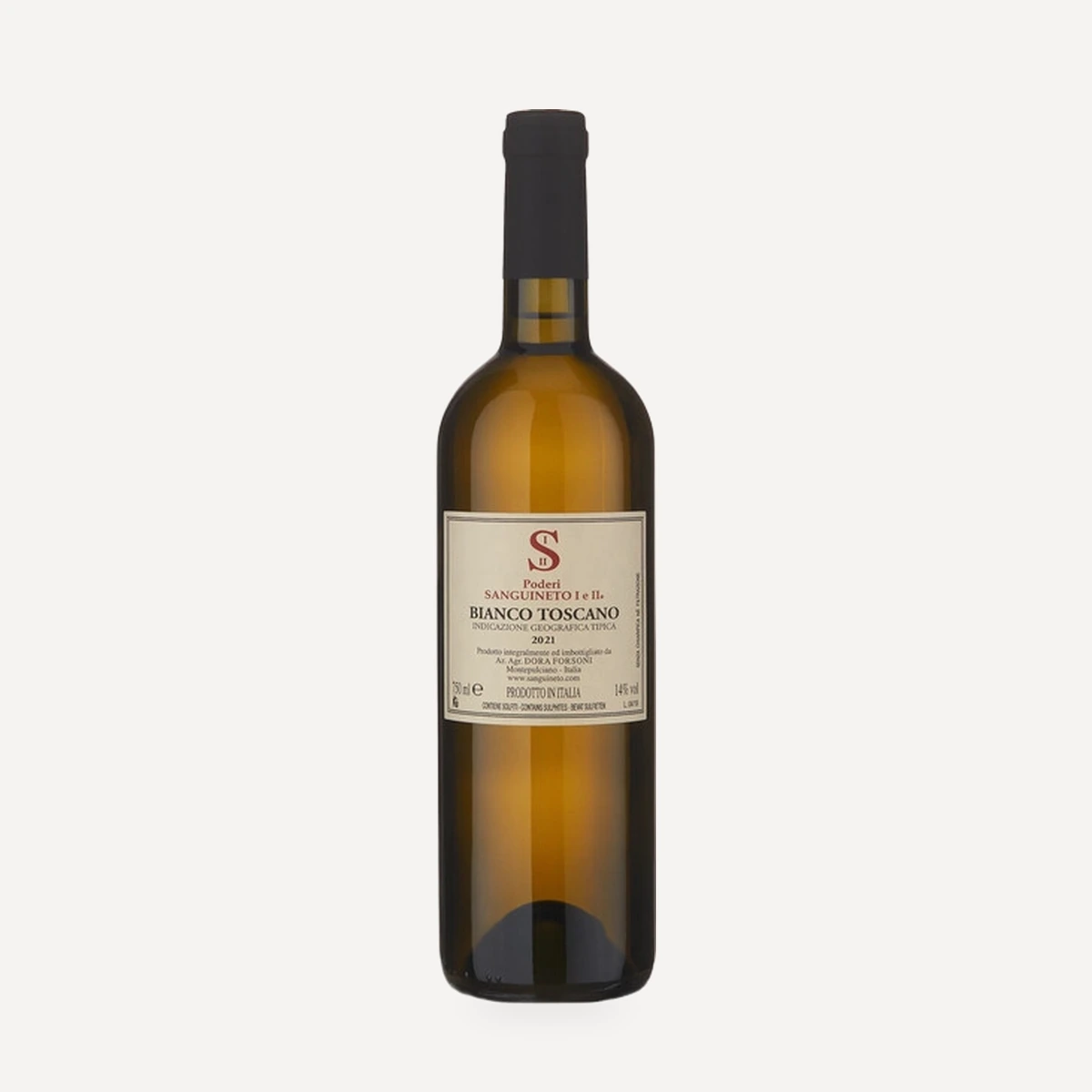
A Japanese customer also played a part in the decision to bottle the estate’s traditional white wine. Patrizia initially regarded the Trebbiano-, Malvasia- and Grechetto-based wine, fermented and held in cement until bottling, as simple and old-fashioned. After tasting it, the customer requested the entire production, encouraging its commercial bottling alongside Vino Nobile di Montepulciano and Rosso di Montepulciano.
2011 onward
In 2011, Dora and Patrizia appeared in Giulia Graglia’s documentary Senza Trucco. Increased recognition brought a growing volume of orders and requests for cellar visits. Patrizia moved into full-time work at Poderi Sanguineto in 2012. She also maintained a handwritten cellar diary recording the practical and personal history of their work.
The estate has since expanded to approximately 50 hectares, including just over 6 hectares of vines. Dora remains closely identified with vineyard work, while Patrizia manages the organisational side of the business. Together they transformed the inherited farm into an estate producing five DOCG, DOC and IGT labels while retaining its local varieties, large oak vessels, cement tanks and low-intervention approach.
Terroir
The vineyards lie in the locality of Sanguineto, between Montepulciano and Acquaviva in the province of Siena, at approximately 330 metres above sea level. All the vineyard sites receive sunlight throughout the day.
The soils are medium-textured and of Pliocene origin. Within the estate, the central section dominated by Prugnolo Gentile has dark, reddish soil rich in oxidised elements. Toward the outer parts of the property, the soils become paler and more clay-rich; these areas carry the traditional white varieties Trebbiano, Malvasia and Grechetto.
The microclimate is described as favourable, with summers that are not excessively hot and winters that are not particularly cold. Rows of oak trees separate parts of the vineyards, providing shade during summer work and preserving divisions within the landscape. Spontaneously established vines have been allowed to grow beneath these trees.
Vinificazione
The vineyard is treated as a living organism whose natural growth cycle should be accompanied without invasive intervention. Synthetic plant-protection products, systemic products and anti-botrytis treatments are not used. The estate also rejects excessive fertilisation and routine preventive spraying. Treatments begin only when disease manifests and are limited to sulphur and copper.
Dora’s approach depends on close observation of the vines. Treatments are applied as little and as late as possible, allowing time to see how a plant responds to an initial problem such as downy mildew. This practice is presented as more demanding than a standard preventive programme but consistent with the estate’s objective of respecting the land and the vine.
The ground is worked, and the vineyard’s internal landscape is retained rather than consolidated into uninterrupted blocks. Oak rows dividing vineyards remain in place for shade during summer work, while naturally emerging vines beneath them have also been preserved. Dora avoids aggressive leaf removal because she regards the leaves as essential to the vine’s functioning. Old plants are renewed from the base, prioritising the continuity of their root systems over the size of the visible shoot.
The vines are Guyot trained, with planting years of 1963, 1999, 2012 and 2017 and a density of 2,200–2,400 plants per hectare. Harvest normally runs from the last week of September through the first week of October. Grapes are picked exclusively by hand; the best bunches are selected, placed in crates and taken immediately to the cellar for destemming.
Poderi Sanguineto follows a traditional, low-intervention cellar programme based on healthy hand-harvested fruit. Selected bunches arrive in crates and are destemmed immediately.
Red wines ferment spontaneously without added yeast or other fermentation agents. Fermentation temperature is controlled and kept below 30°C. The general technical protocol gives a maceration of 10–12 days, with two pump-overs per day, manual submersion of the cap and at least one complete délestage. The wines are vinified in vitrified cement and stainless-steel tanks.
Red-wine maturation takes place in large Slavonian and Allier oak casks of 18, 20, 25 and 30 hectolitres. The published programme is approximately one year in wood for Rosso di Montepulciano, two years for Vino Nobile di Montepulciano and three years for the Riserva.
White grapes ferment without skins for approximately 35 days in vitrified cement. The white wine is then matured in vitrified cement or stainless steel and bottled without fining or filtration. The estate’s approach places indigenous microbiology, cement and large-format oak ahead of chemical additives or intensive cellar manipulation.
Filosofia
Poderi Sanguineto defines tradition and attachment to the land as the foundations of its work. The vineyard is regarded as a living creature rather than a production unit, and the objective is to accompany its natural cycle with attentive observation and as little intervention as possible.
Dora Forsoni’s position is that sensitivity, experience and work are more important than adherence to a prescribed farming programme. The vine should be observed and allowed to respond before treatment is considered. This principle explains the estate’s late, limited disease interventions, rejection of aggressive canopy work and preservation of old root systems.
The same outlook continues in the cellar. Healthy grapes are intended to ferment through their indigenous yeasts, without chemical additives or attempts to standardise the result. Vitrified cement, stainless steel and large oak casks support a production model grounded in local varieties and traditional methods rather than international grapes, small new barrels or intensive extraction.
Dora and Patrizia’s division of work connects vineyard and cellar rather than treating agronomy and oenology as separate disciplines. Their stated aim is to let nature take its course while using attentive manual work to protect the vineyard and preserve the identity of the local grapes and territory.
Vini
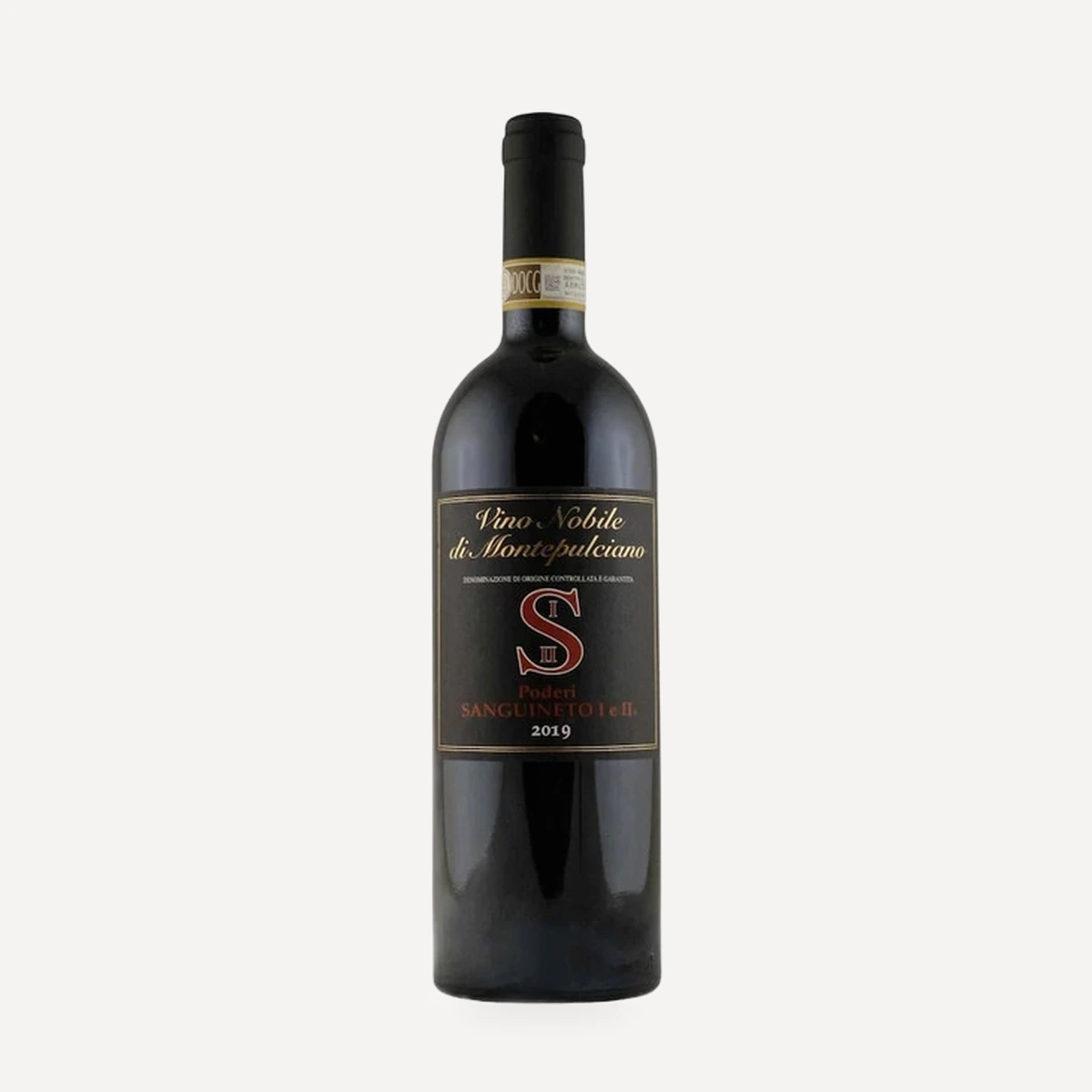
Nobile di Montepulciano DOCG
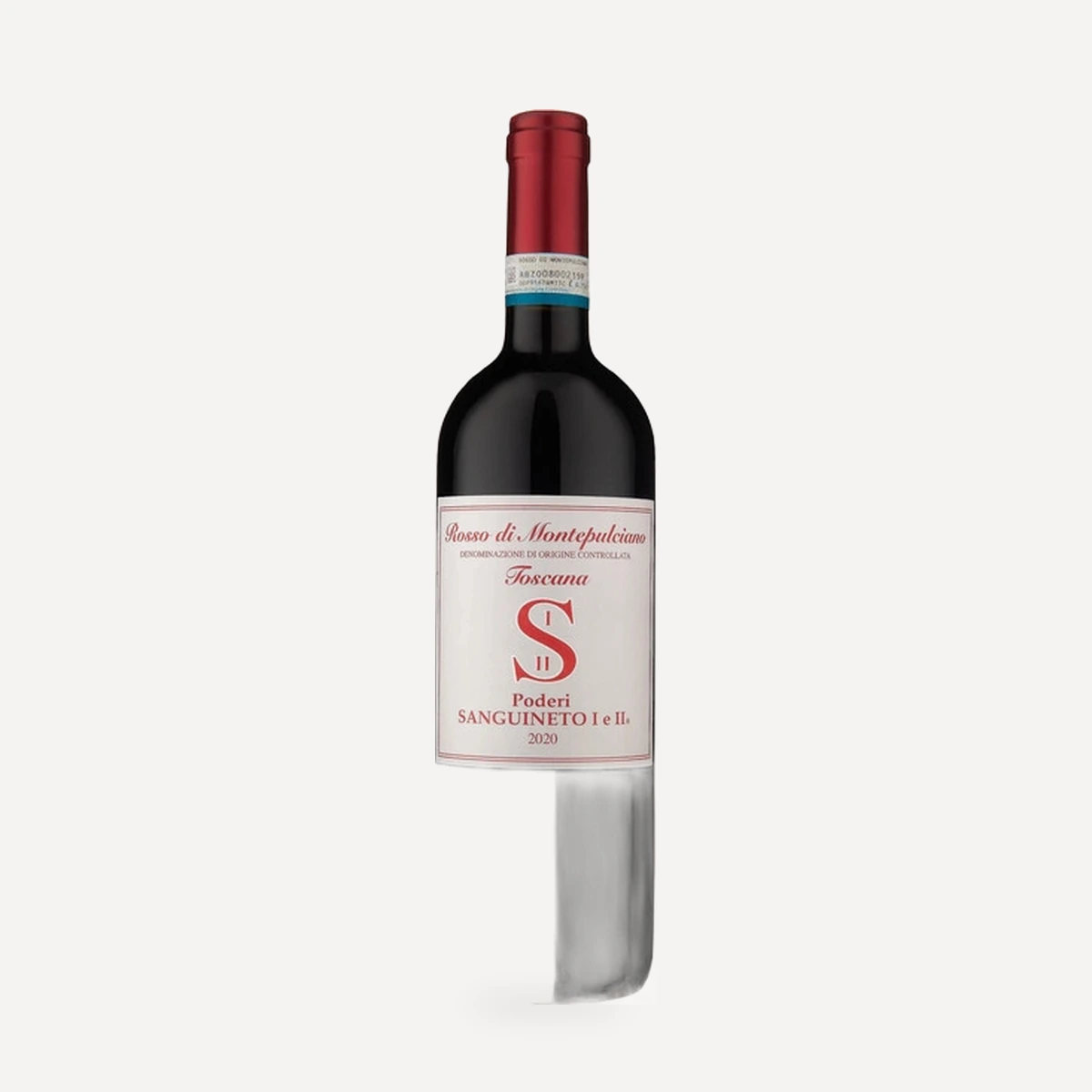
Rosso di Montepulciano DOC