Storia
The Bracci farm
La Braccesca occupies land where the historical farm of the Counts of Bracci once stood. The former owners gave the estate its name and inspired its emblem: an armour-clad arm brandishing a sword.
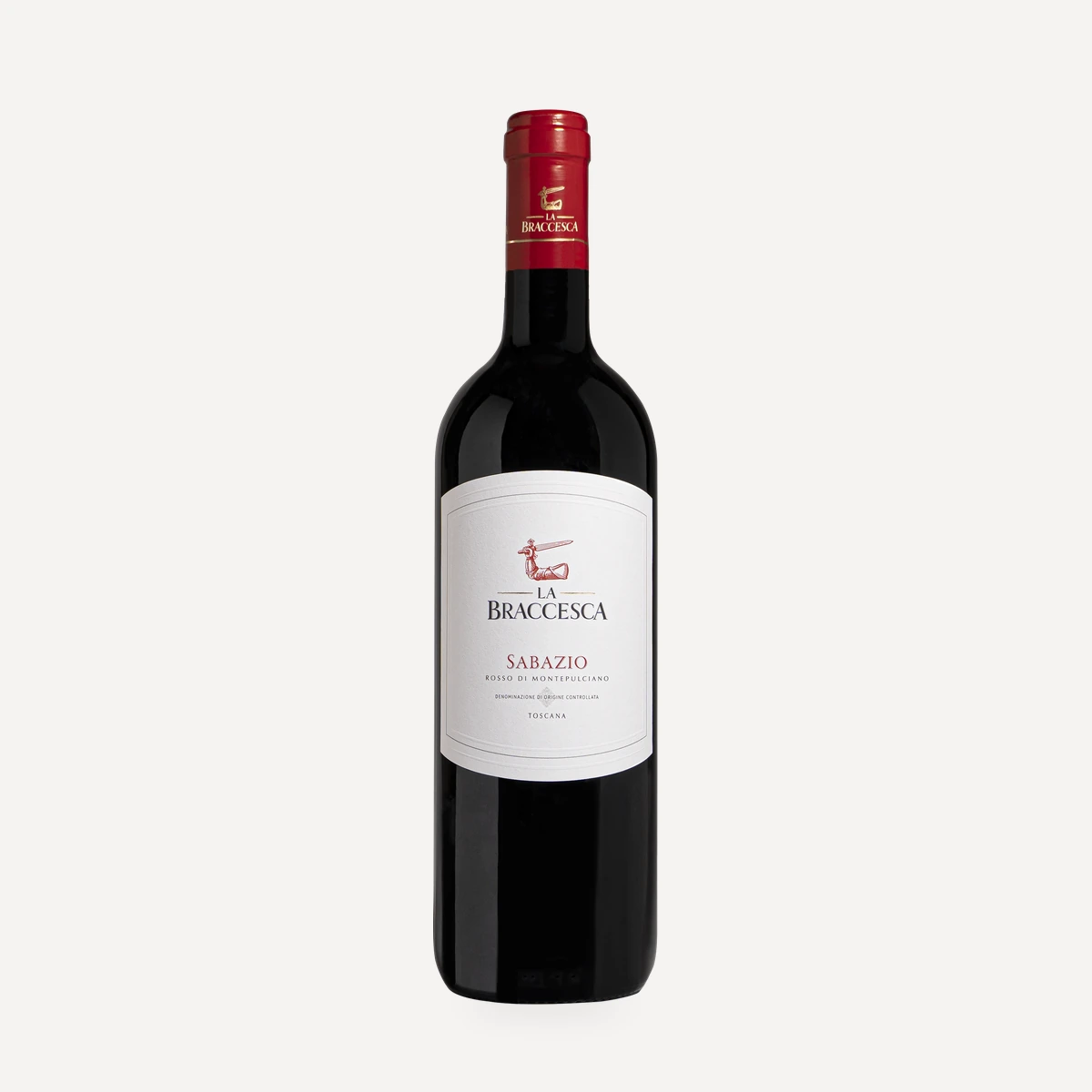
The wider Montepulciano tradition also appears in the story behind Sabazio. During the medieval period, Sabatino Lulli—known as Sabazio—a monk from the abbey of Montepulciano, recorded instructions for producing wine from local grapes. His name was later adopted for La Braccesca’s Rosso di Montepulciano.
Acquisition and the first estate wines
Marchesi Antinori acquired La Braccesca in 1990. The acquisition brought together two adjoining but distinct viticultural identities: the established Sangiovese tradition of Vino Nobile di Montepulciano and an experimental commitment to Syrah around Cortona.
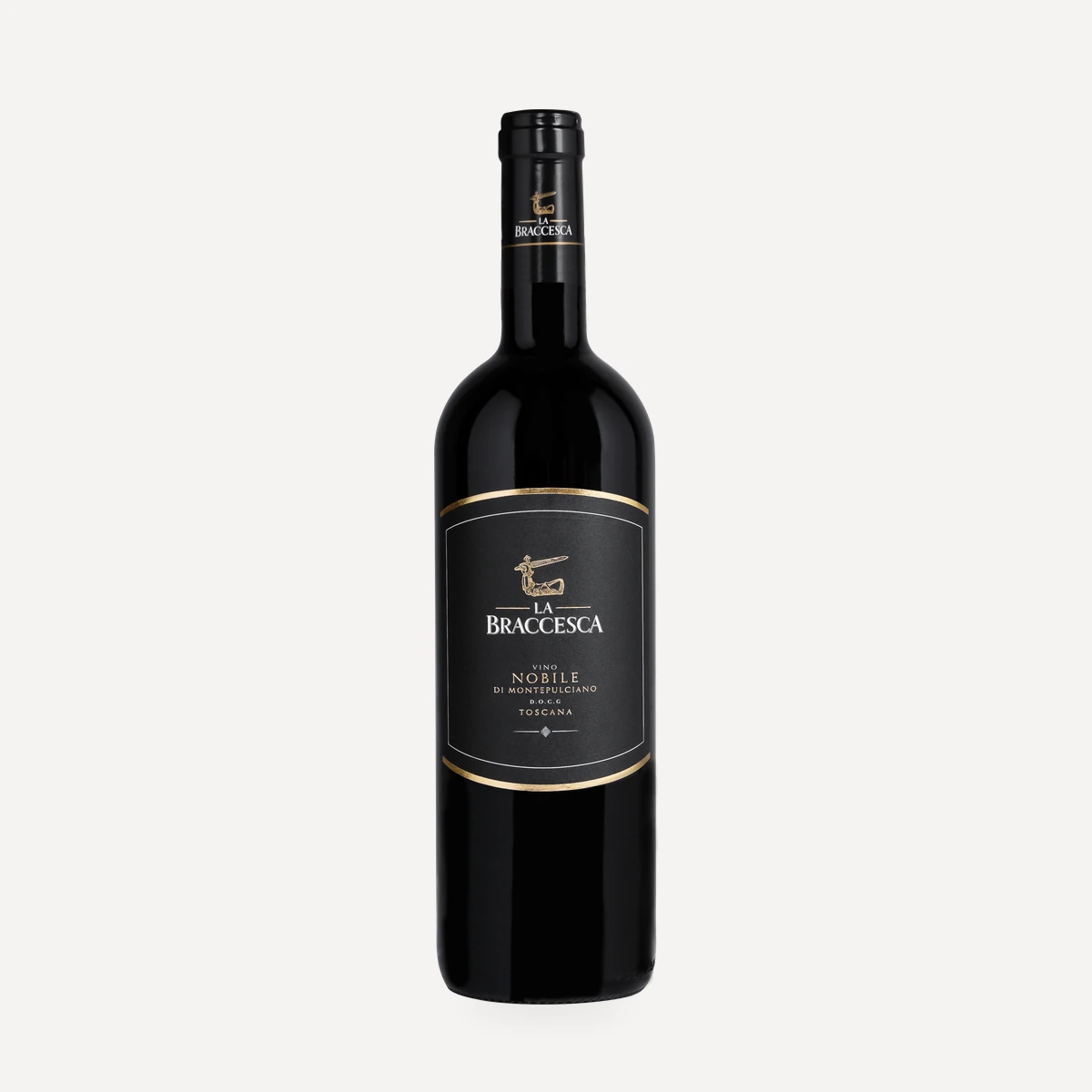
The first vintage of La Braccesca Vino Nobile di Montepulciano DOCG was produced in 1990. Production of the estate’s Rosso di Montepulciano began with the 1992 vintage under the name Sabazio.
Developing the Cortona and Montepulciano identities
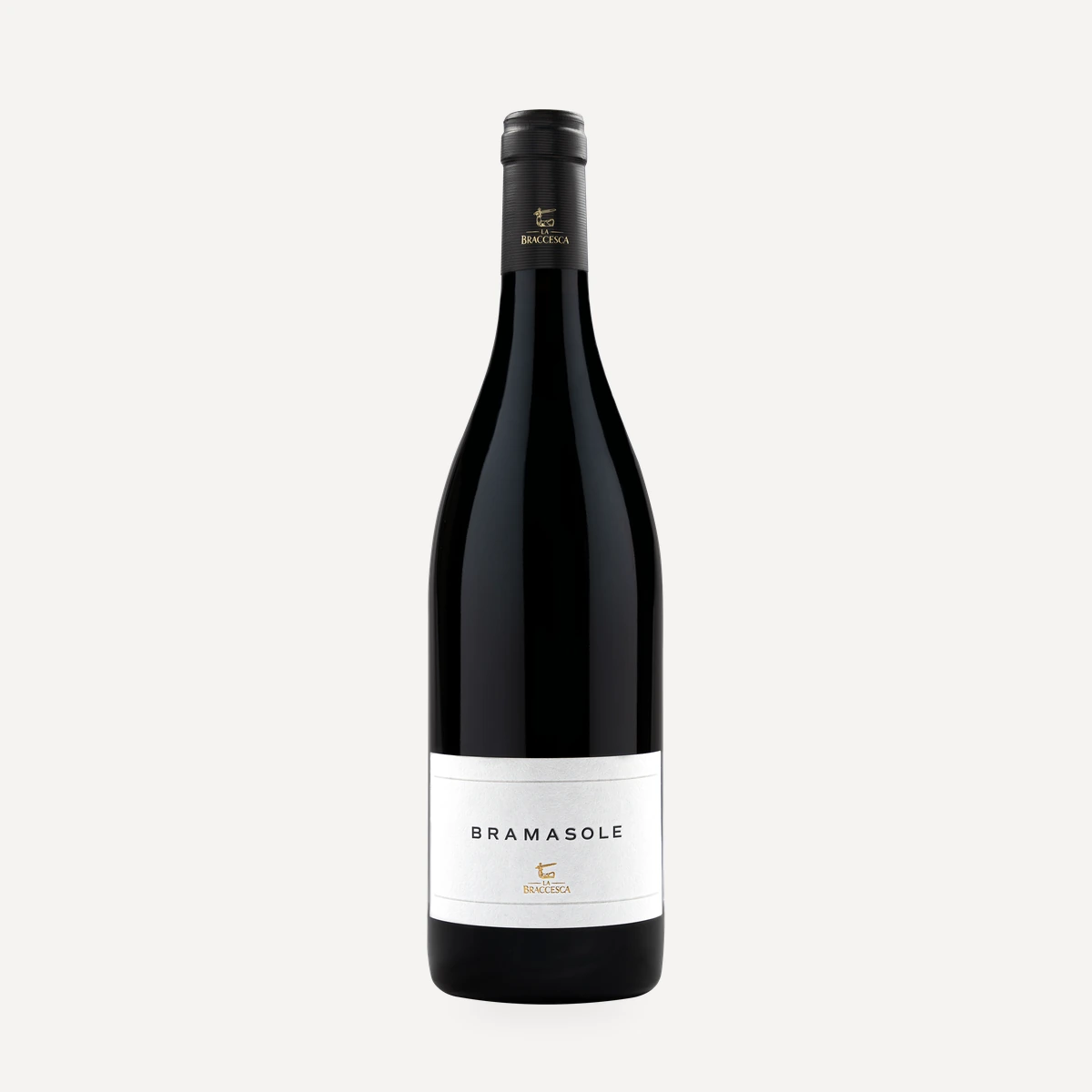
The Cortona project led to Bramasole, sourced from a particularly sunny Syrah parcel in one of the estate’s favoured areas beneath Cortona. Its inaugural vintage was 2000. The project was conceived as a way to interpret a territory with a long winegrowing history through a variety that was new to the area.
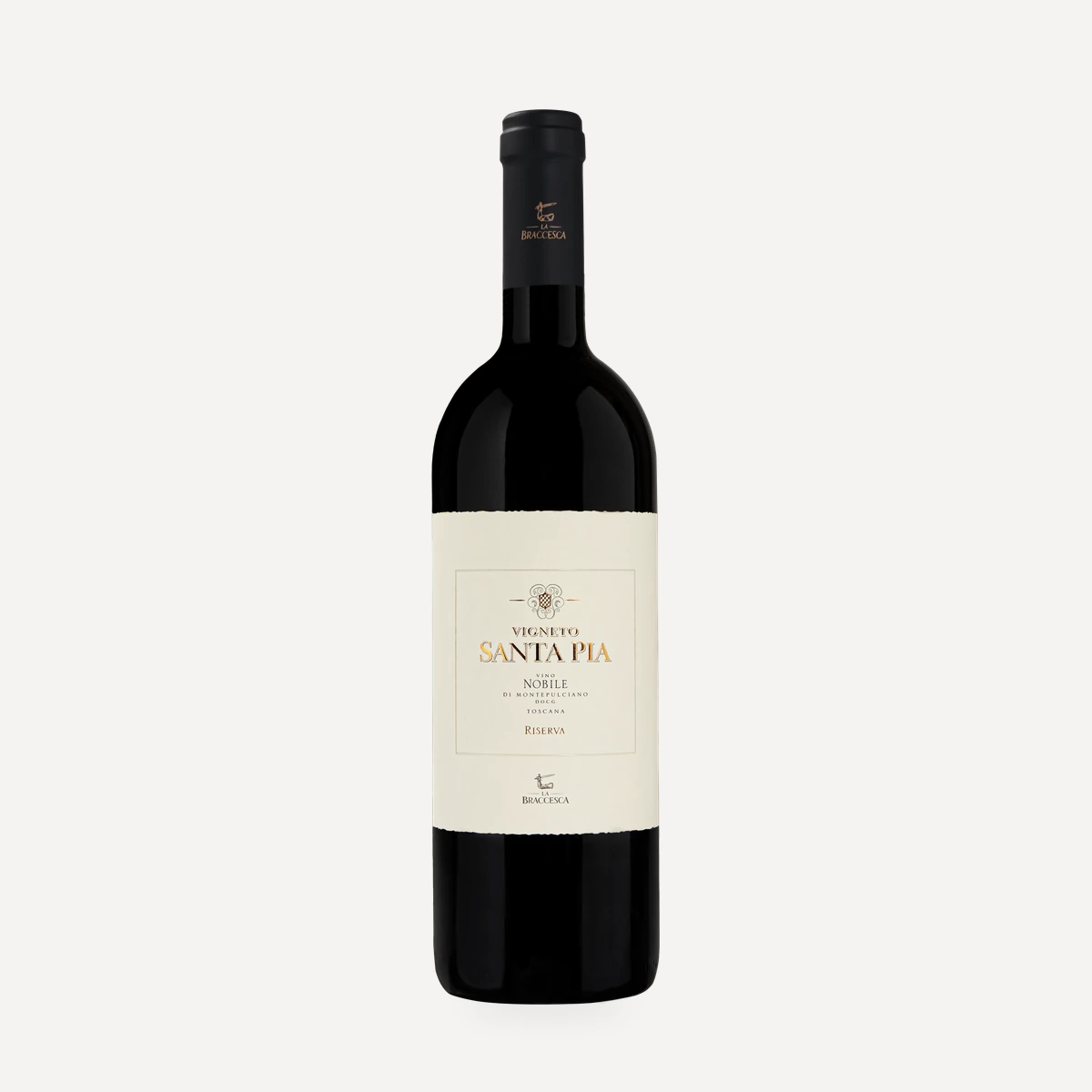
On the Montepulciano side, the estate isolated Vigneto Santa Pia, a Sangiovese vineyard on the ridges below the town. The first Santa Pia vintage was 2001. Maggiarino subsequently became another separately identified Sangiovese site, drawn from the vineyards of the estate farm bearing that name.
The estate today
La Braccesca now covers 508 ha, including 334 ha of vineyards divided between two principal landholdings. Its production remains organised around the relationship between traditional Sangiovese wines from Montepulciano and Syrah from the emerging Cortona area. The underground maturation cellars combine several oak formats and origins with stainless steel and modern cellar technology.
Terroir
Two Tuscan winegrowing areas
La Braccesca extends between Montepulciano and Cortona and is defined by two contrasting viticultural environments. The estate has 334 ha under vine within a total property of 508 ha.
The larger vineyard body lies along the boundary between the municipalities of Montepulciano and Cortona. Around Cortona, Syrah is planted on the slopes below the town. The soils are clay loam, while the general climate is dry and arid. These conditions underpin the estate’s development of Cortona DOC Syrah.
The second vineyard body extends towards Montepulciano and includes Cervognano, Santa Pia and Gracciano, three recognised subzones for red-wine production. Soils associated with the estate’s Montepulciano wines are sandy loam with abundant fine gravel and rocky material locally described as scheletro.
Santa Pia occupies ridges immediately below Montepulciano. Its sandy-loam soil is rich in stones and scheletro. Maggiarino, an eponymous estate farm and vineyard area, also has sandy-loam soil rich in fine gravel. These sites are devoted principally to Sangiovese, while Merlot represents a smaller part of the estate’s plantings.
Vinificazione
Viticultural work is adapted to the estate’s two contrasting areas and to individual growing seasons. Sangiovese is concentrated around Montepulciano, Syrah around Cortona, and Merlot occupies a smaller share of the vineyards.
Sowing and green-manure operations were carried out in the Cortona vineyards during the dry winter and spring preceding the 2022 Syrah harvest. At Santa Pia, careful soil management during the 2021 season helped conserve groundwater accumulated through winter precipitation. Historical work in the Bramasole vineyards has included targeted bunch thinning to regulate ripening and crop load.
Harvest dates are determined separately by site and variety. The Santa Pia Sangiovese has been harvested entirely by hand in documented vintages, while estate harvest descriptions consistently distinguish the timing of Merlot, Sangiovese and Syrah according to their individual ripening cycles.
Cellar design
La Braccesca’s maturation cellars are completely underground. They are divided into two principal rooms: a barricaia for barriques and a bottaia for larger casks.
Maturation vessels
The cellar holds barriques, tonneaux and casks of various capacities. Oak is selected from French, Hungarian and American sources according to the wine destined for each vessel. Stainless steel complements the wooden vessels.
Production approach
The cellar combines traditional handling and wood maturation with modern technology. Its central objective is to develop the qualities established in earlier expressions of the estate’s wines while allowing them to evolve in contemporary and future vintages. The separate spaces and range of vessel sizes support the distinct requirements of Sangiovese-based Montepulciano wines and Syrah from Cortona.
Filosofia
La Braccesca’s identity is built around the coexistence of tradition and experimentation. In Montepulciano, the focus is the established expression of Sangiovese through Vino Nobile di Montepulciano and Rosso di Montepulciano. Around Cortona, the estate pursues a more exploratory interpretation through Syrah, treating the variety as a means of expressing an old winegrowing landscape in a new form.
This duality carries into the cellar, where stainless steel and modern technology operate alongside barriques, tonneaux and larger casks. The intended continuity is evolutionary rather than static: preserve the strongest qualities of earlier wines, then refine their expression for the present and future.
The hospitality programme follows the same emphasis on the relationship between land and people. Vineyard and cellar visits connect the landscape, viticulture, wine, local food and the daily care of the estate.
Vini
La Braccesca
Sabazio
Bramasole
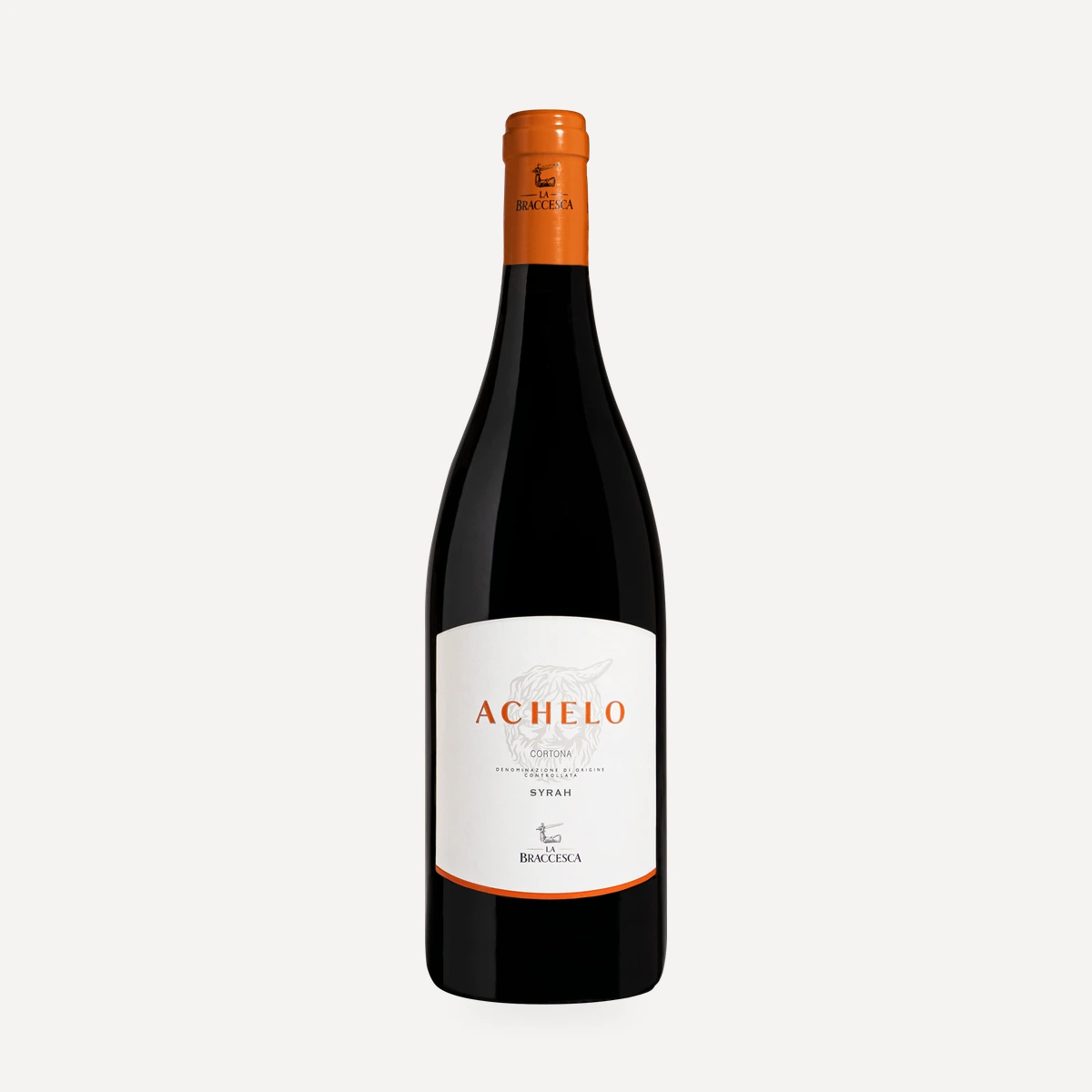
Achelo
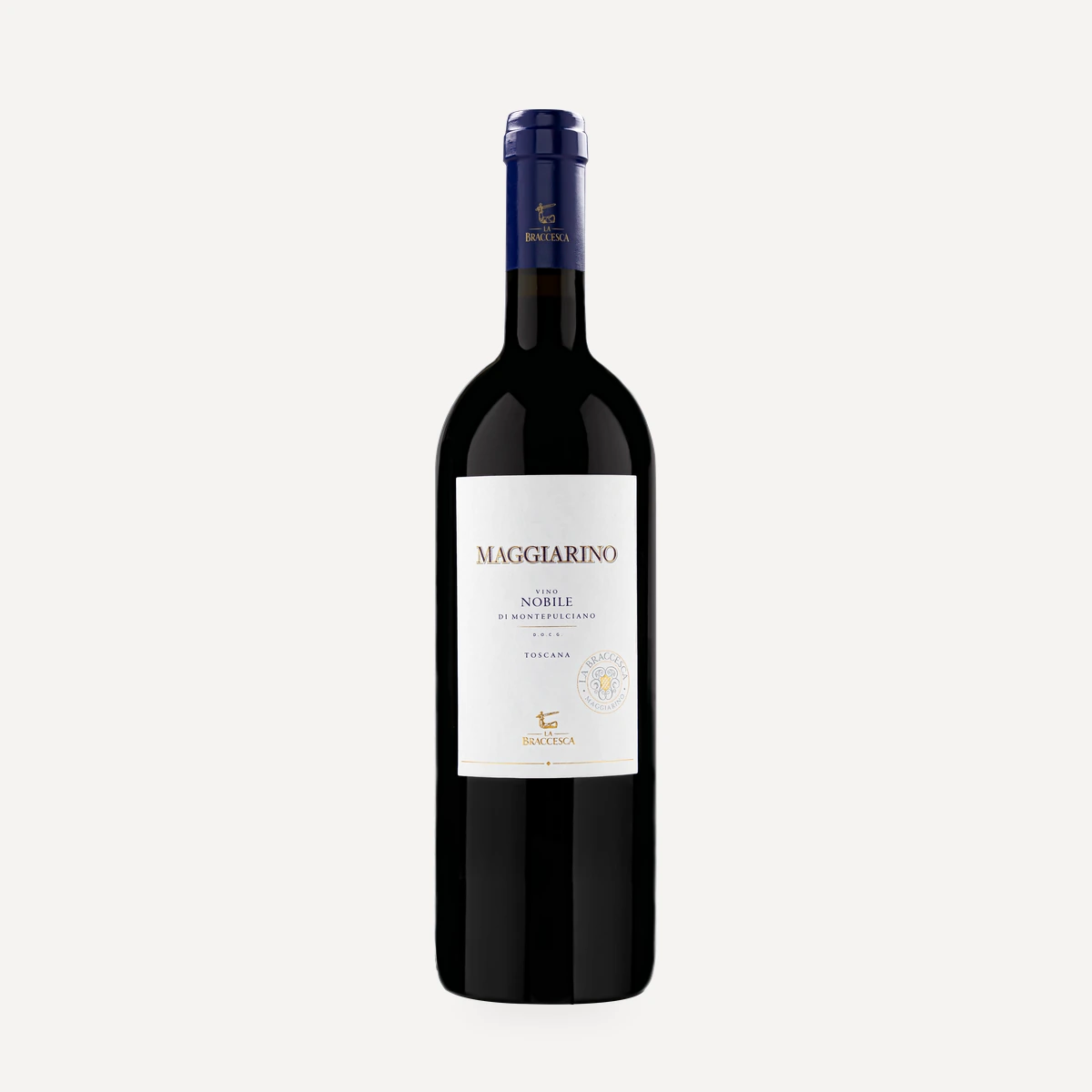
Maggiarino