Storia
From Sardinia to Piemonte
The Morando family’s history in Piemonte reaches back more than four centuries. The family arrived from Sardinia by way of Corsica and established itself in the Monferrato area.
The earliest cited trace of the family at Vignale dates to 1630. During the Spanish siege, the head of the Morando household took part in the unsuccessful defence of the fortress or castle of Vignale.
Gaspare Morando and the beginning of modern winegrowing
At the end of the 19th century, the family’s great-great-grandfather Gaspare Morando began a substantial, quality-oriented winegrowing and wine-production activity. The advance of phylloxera and downy mildew forced the replacement of the old vineyards planted on European roots. This replanting marked the Morando family’s transition into modern viticulture.
The estate identifies its present work as the continuation of five generations with their hands in the soil. A family photograph from Silvio’s childhood records this continuity: Silvio took the picture while his grandfather Cesare was grafting a vine.
Silvio and Tiziana
Silvio and Tiziana met while both were students at the oenology school in Alba. They subsequently built their life around the vineyards of Vignale Monferrato and had three children: Nicolò, Camilla and Rebecca.
The family remained on the Monferrato hills despite the rural depopulation associated with Italy’s economic boom during the 1960s. This decision to stay is central to its self-image as one of the area’s remaining farming families.
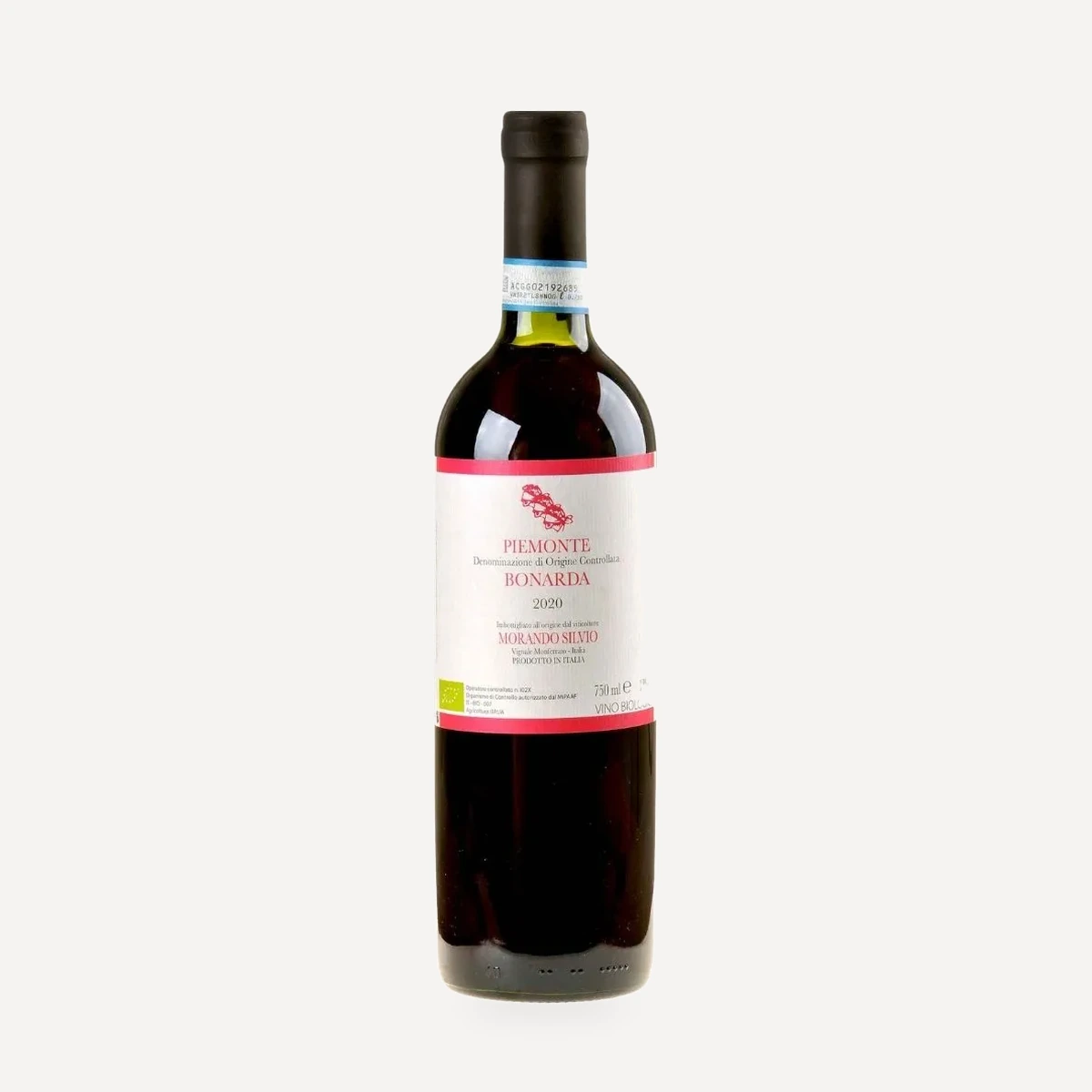
Silvio and Tiziana now own and farm 15 hectares of vineyards. Barbera, Grignolino and Bonarda are the principal historic local varieties, while Pinot Noir and other non-native grapes serve as a field for experimentation. The entire vineyard holding is cultivated organically.
Vinification is Silvio’s particular responsibility. Almost all other work—including manual pruning and harvesting, bottling, labelling, promotion and deliveries—is carried out by the family with the assistance of friends.
La Locanda degli Ultimi
Tiziana, the daughter of a winegrower, came to Monferrato to build a life with Silvio and their children. Her attachment to farming culture and tradition, together with her interest in cooking, led to the creation of La Locanda degli Ultimi near the winery.
With help from friends, Silvio and Tiziana restored and enlarged a mid-19th-century country house in a panoramic position. It became an agriturismo centred on traditional food, organic wine, rural hospitality and life according to the vineyard’s seasonal rhythm. La Locanda degli Ultimi closed from October 2025.
Terroir
The vineyards lie in and around Vignale Monferrato, among the hills of Monferrato in Piemonte. The winery and the nearby former agriturismo occupy a panoramic rural setting at the end of a country road. The 15-hectare vineyard holding is associated above all with the local varieties Grignolino, Barbera and Bonarda, supplemented by Pinot Noir and other non-native varieties used for experimentation.
Vinificazione
All 15 hectares of vineyards are cultivated organically, following the rhythms of nature and the agricultural traditions of the area. Pruning and harvesting are carried out by hand. Vineyard work is organised principally within the family, with assistance from friends.
The varietal programme combines continuity and experimentation. Grignolino, Barbera and Bonarda form the historic local core of the estate, while Pinot Noir and other non-native varieties are cultivated to explore future possibilities. The replacement of older European-rooted vineyards during the era of phylloxera and downy mildew is regarded as the beginning of modern viticulture for the Morando family.
Vinification is Silvio Morando’s particular responsibility. The wines are made using traditional techniques from organically cultivated grapes. Bottling and labelling are performed by the family with assistance from friends, as are promotion and delivery. This family-based organisation extends across nearly every stage from manual vineyard work through preparation of the finished bottles.
Filosofia
The Morando family frames winegrowing as a multigenerational relationship with the land of Monferrato. Its working model combines organic cultivation, manual vineyard operations and traditional winemaking with direct family participation across almost the entire production and commercial chain.
Tradition is centred on the local varieties Grignolino, Barbera and Bonarda. Experimentation remains part of the approach through Pinot Noir and other non-native varieties. The intention is to preserve the estate’s established identity while testing possibilities for its future.
Family life, wine and hospitality are closely connected. Sharing the family table with friends is presented as an extension of the work performed together in the vineyard and cellar. The decision to remain in the countryside despite the depopulation of the 1960s also informs the family’s emphasis on resilience, rural culture and continuity.
La Locanda degli Ultimi broadened this outlook into a social principle. Its name referred both to friends who are last to leave the communal table and to people marginalised by a globalised society. The project sought periodically to give such people a place and a voice at the table.
Vini