Storia
The foundation of Cascina Ballarin, 1928
Spirito Agricolo Ballarin traces its agricultural roots to Cascina Ballarin. In 1928, Giovanni Ballarin—the grandfather of the present generation—bought land at Annunziata di La Morra and Bussia di Monforte. He planted Nebbiolo, Dolcetto and Barbera on the hills, while the level ground was devoted to cereals and fruit. He also began building the family house and stable, establishing the mixed-farming structure from which the later estate developed.
Luigi and the following generations
The agricultural business subsequently developed under Giovanni's son Luigi. Management then passed to Luigi's sons Gianni and Giorgio. Over the ensuing decades, the family produced and matured the area's traditional wines: Barolo, Nebbiolo, Dolcetto and Barbera.
The introduction of distillation, 2015
In 2015, Gianni undertook training as a master distiller. His objective was to complete the cycle of cultivation and transformation within the farm. The first grappas and fruit spirits followed, adding distillation to the family's established vineyard and cellar work.
The raw materials for this activity include pomace from the estate's own grapes and apples from old varieties long cultivated on the farm. The range subsequently came to encompass apple, pear and grape acquavite as well as Nebbiolo and Barolo grappa. After distillation, the residues are composted and returned to the vineyards and orchards, reconnecting production with the soil.
Spirito Agricolo Ballarin, 2022
In 2022, Gianni and Giorgio decided to continue farming their respective land independently. Gianni consequently established Spirito Agricolo Ballarin. The new estate carries forward the agricultural history of Cascina Ballarin while combining wine, fruit and distillate production within a circular system.
Gianni's daughter Cecilia joined the business after studying oenology and now participates actively in its work. The family farms 7 hectares, 5 hectares of which are vineyards.
Organic and biodynamic certification
The estate obtained organic certification beginning with the 2022 vintage. Demeter biodynamic certification followed with the 2023 vintage, formalising the organic and biodynamic approach applied across the production cycle.
Terroir
The estate's agricultural history is rooted in land acquired in 1928 at Annunziata di La Morra and Bussia di Monforte. Its original mixed-farming layout distinguished between hillside land, planted with Nebbiolo, Dolcetto and Barbera, and level ground used for cereals and fruit.
Spirito Agricolo Ballarin now comprises 7 hectares, including 5 hectares of vines. Vineyards and orchards form an interconnected agricultural system: pomace and fruit-distillation residues are composted before being returned to the land. Maintaining this internal circulation of organic matter is intended to preserve the soil's individual character and the connection between each product and its place of origin.
Vinificazione
The entire agricultural and production cycle follows organic and biodynamic principles. Organic certification applies from the 2022 vintage, while Demeter biodynamic certification applies from the 2023 vintage.
Viticulture is integrated with fruit growing and distillation. Pomace from estate grapes and the residues left after distilling apples and other fruit undergo composting and are then returned to the vineyards and orchards. This closes the cycle of organic matter within the farm and supports the continuity of the soil's character.
The estate's stated agricultural aim is to obtain the natural expression of its fruit through continual attention during the growing cycle, accumulated experience and an ongoing effort to refine its work.
Wine and distillate production are conceived as successive stages of a single farm cycle: land, vineyard, wine, spirit and return to the land.
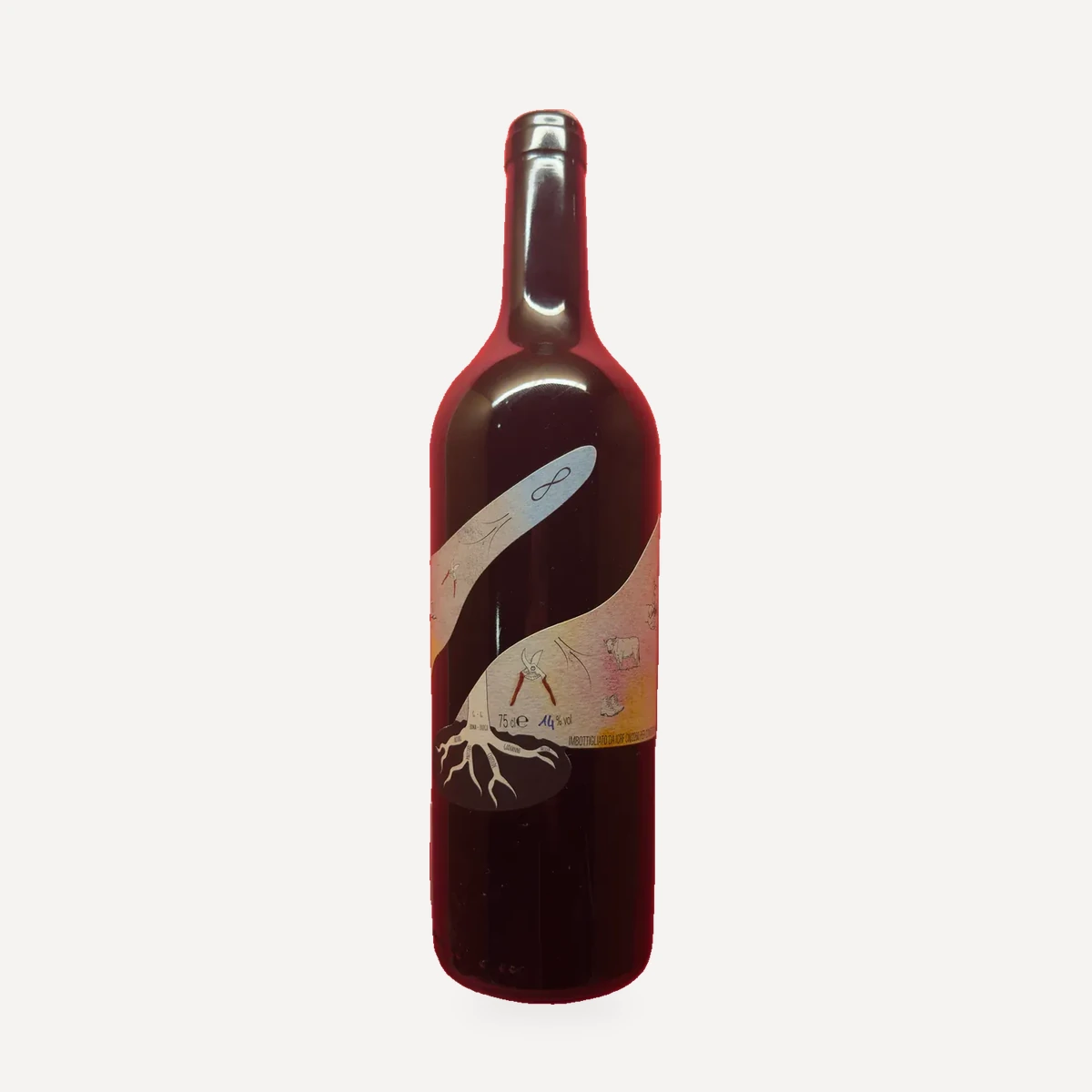
The wines undergo long macerations followed by patient maturation, allowing them to develop over an extended period. The current production encompasses one red wine and one white wine.
Distillation uses pomace from the estate's own grapes as well as estate-grown fruit. Apples include old varieties cultivated on the farm over generations. Production comprises apple, pear and grape acquavite together with Nebbiolo and Barolo grappa. Gianni introduced this work after completing master-distiller training in 2015, when the first grappas and acquaviti were made.
The process continues after the spirit has been obtained: distillation residues are composted and returned to the vineyards and orchards. This creates a circular production model in which organic material passes from the soil to fruit, wine or spirit and ultimately back to the cultivated land.
Filosofia
Spirito Agricolo Ballarin seeks to preserve the relationship between nature and people inherited from parents and grandparents, while expanding, strengthening and sharing that connection.
Its philosophy is expressed as a continuous sequence: Terra – Vigna – Vino – Acquavite – Terra. The land produces vines and fruit; these become wine and spirits; organic residues are composted and returned to the vineyards and orchards. The cycle is intended to retain organic matter within the estate and preserve the soil's individual character.
Wine and distillates are expected to express both their place of origin and the way the land is cultivated. Long maceration, patient maturation and the distillation of estate-grown raw materials are used to carry that agricultural identity into the finished products. Daily work, experience, curiosity and the desire for continued improvement are directed toward a natural expression of the estate's fruit rather than a standardised result.
Vini