Storia
The Leopoldine farm
The original estate dates from the end of the 18th century. Pietro Leopoldo commissioned Fattoria Svetoni during that period, and the complex was subsequently re-established at the beginning of the 19th century as a fattoria Leopoldina. Its construction was completed around the middle of the 19th century.
The Svetoni family and the beginning of wine production
The Svetoni family became owners shortly after Italian unification. In 1865 they began producing wine at the estate, establishing the date that Svetoni continues to use as the beginning of its winemaking history. Production, maturation and ageing took place in the cellar beneath the villa, a space that remains part of the estate.
Changes of ownership
The property passed through several owners after the Svetoni family. Its historic agricultural complex acquired a reputation as an “ideal farm,” combining the villa, agricultural land, vineyards and underground cellar.
The 2016 acquisition and contemporary Svetoni
In 2016 Podere Rubino S.r.l. acquired the historic farm and approximately 26 hectares described at the time as vineyards. The company represented a project by five friends united by their interest in wine and the surrounding territory. Their objective was to create a place in which tradition, modernity and beauty could coexist.
The old farm has since developed into an integrated wine estate and hospitality property. The villa contains a twelve-room wine resort, while the grounds include vineyards, an olive grove, gardens, an infinity pool, a spa, a restaurant and the historic cellar. Wine remains central to the property: the cellar continues to be used for production, maturation and ageing, and the estate presents a winemaking history approaching 160 years.
Terroir
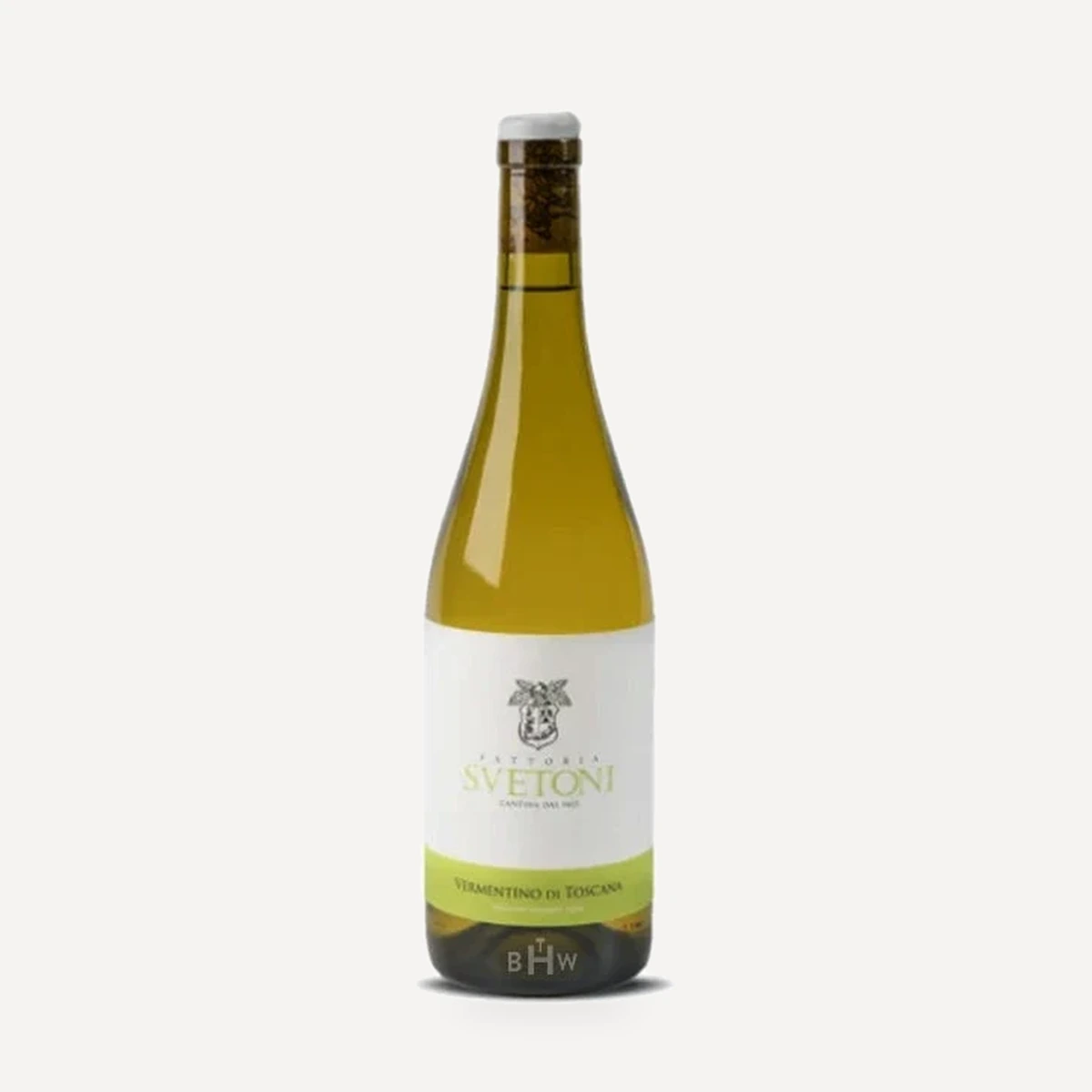
Fattoria Svetoni lies among the hills of Montepulciano in the Tuscan countryside, at Gracciano. The estate is positioned between the wider landscapes of Valdichiana and Val d’Orcia, close to Montepulciano and Pienza.
The principal vineyard holding covers 23 hectares at approximately 300–350 metres above sea level. Individual vineyard descriptions extend the stated elevation range to approximately 300–400 metres. The vines benefit from good ventilation, pronounced day-to-night temperature variation, favourable exposure and relatively infrequent storms. South and south-east exposures are used for vineyards supplying several wines.
Cretaceous and clay-rich soils recur across the principal vineyard descriptions. The lower site associated with Vermentino lies at approximately 285 metres and combines sand, clay and silt with the presence of galestro. Prugnolo Gentile—the local name used for the estate’s Sangiovese—is the central variety and is presented as particularly well suited to these conditions.
Vinificazione
Pruning and harvesting are treated as integral stages of the estate’s production cycle. Vineyard training includes spurred cordon and unilateral Guyot, while stated planting densities are generally approximately 4,000–5,000 vines per hectare.
Harvest timing varies by grape and intended production. Grapes destined for the traditional-method sparkling wine are picked from the second half of August through the first ten days of September. Red grapes are generally harvested from the second half of September through the first ten days of October. Older vines are used for the La Croce selection.
The estate makes environmental sustainability one of its guiding principles, alongside the pursuit of Prugnolo Gentile quality and the expression of local typicity.
The cellar occupies the space directly beneath the villa and has been used for winemaking since 1865. It is described as a centuries-old facility equipped with barriques and large wooden casks. Wine is produced, matured and refined in this underground space.
The estate presents the production cycle as a continuous process extending from pruning and harvest through vinification and bottling. Its cellar experiences also include the bottaia, the barrel-ageing area. Vino Nobile di Montepulciano occupies the central position in the cellar’s identity and is treated as the clearest expression of Svetoni’s territory.
Filosofia
Svetoni defines its wine philosophy through three connected priorities: attention to environmental sustainability, the pursuit of the highest possible quality from Prugnolo Gentile and the expression of territorial typicity. The intended result is wine combining balance with immediate drinking pleasure.
The estate seeks to obtain the best from its accumulated experience and land, describing harmony, elegance, balance and structure as desired qualities. It positions Vino Nobile di Montepulciano as the wine that most fully represents its territory and treats the entire sequence from vine to bottle as a single, place-based undertaking.
At estate level, the contemporary ownership project is intended to allow tradition, modernity and beauty to coexist. Wine production, the historic architecture and hospitality are therefore presented as parts of one shared identity rather than separate activities.
Vini
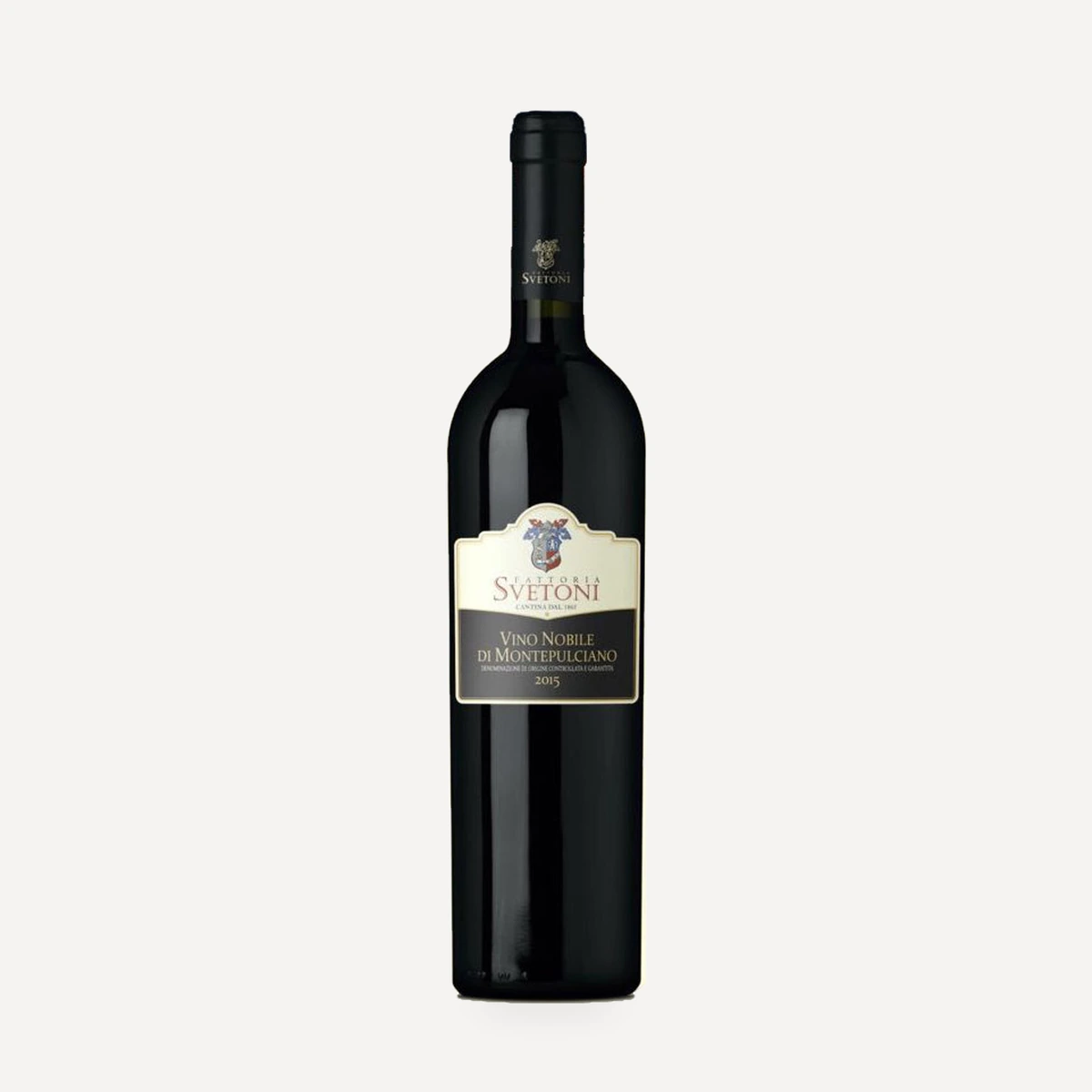
Nobile di Montepulciano DOCG
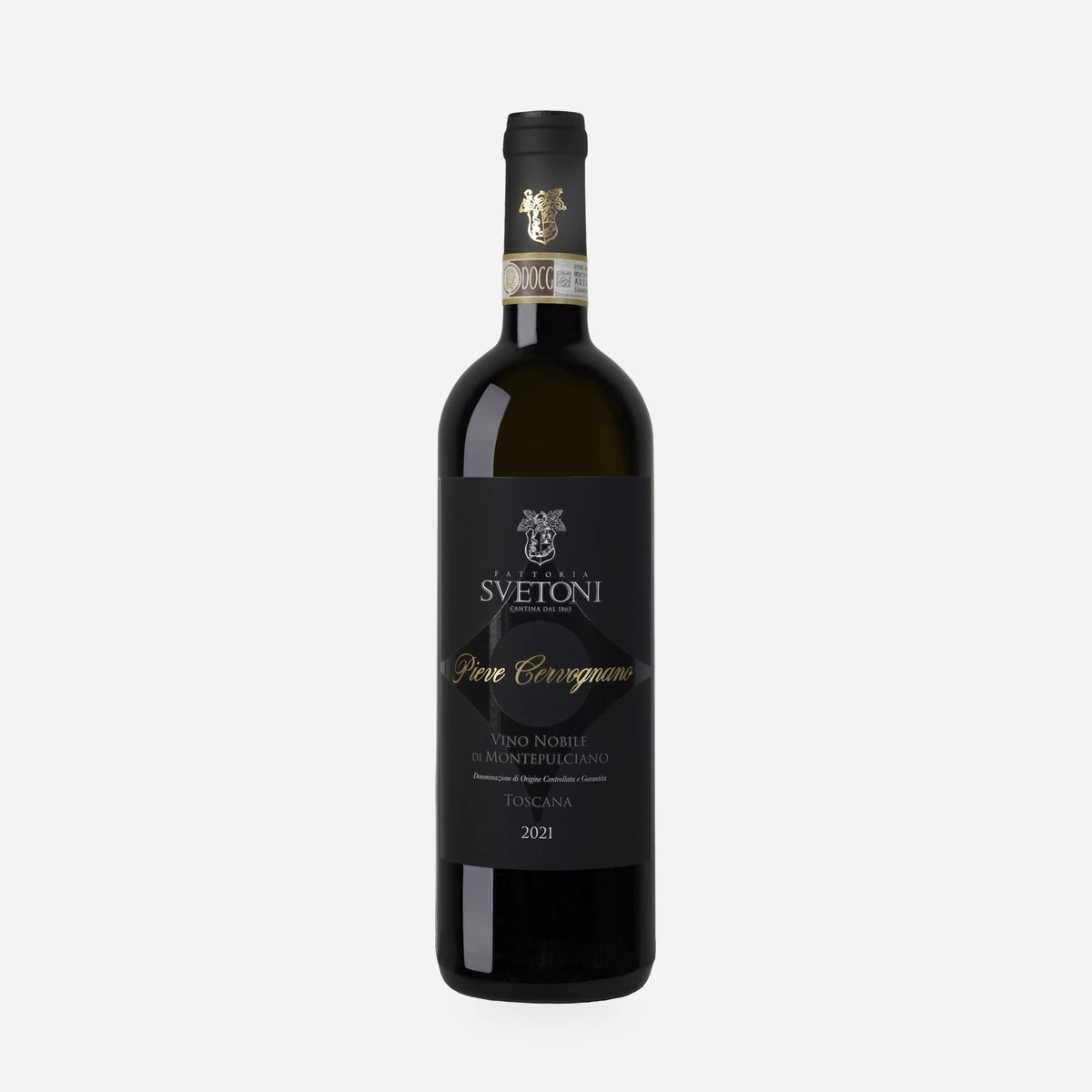
Nobile di Montepulciano "Pieve Cervognano" DOCG
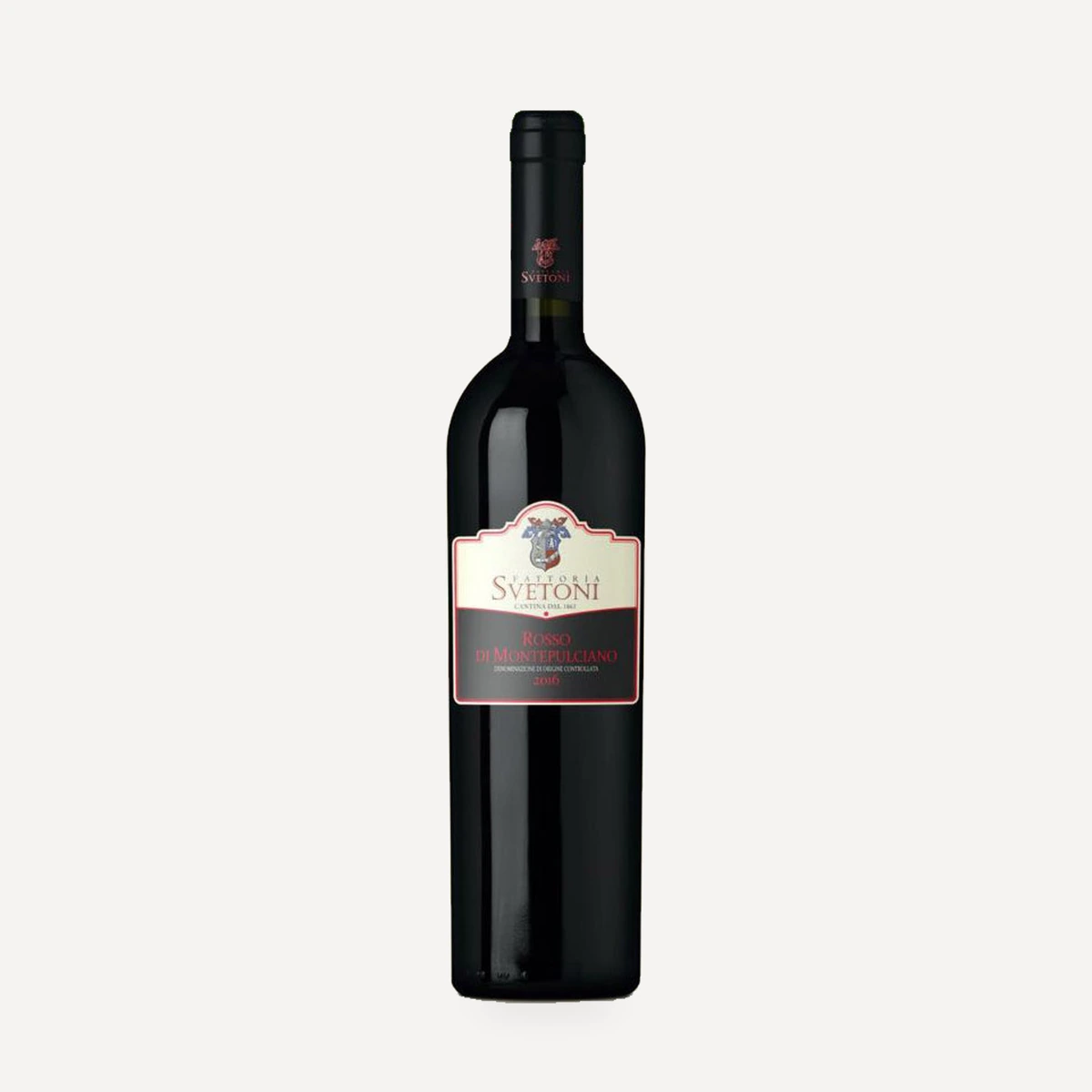
Rosso di Montepulciano DOC