Storia
The first vineyard and Zero
Tempa Zoe's documented wine history begins in 1997 with Zero, made from Aglianico grown on 2 ha at Località Acqua di Costanza in the commune of Torchiara. This original wine established the project around slightly dried grapes, spontaneous fermentation and maturation in wood. Vinification took place in the cellar in Agropoli.
The 2003 planting
A younger Aglianico vineyard was planted in 2003. Its fruit later became the basis of Diciotto, a second expression of Cilento Aglianico.
Expansion in 2015 and 2016
New Aglianico and Fiano vineyards were planted in 2015 and 2016, bringing the total planted surface to approximately 5 ha. The expansion broadened a project that had begun with the original 2 ha of Aglianico.
The first Diciotto was produced in 2015 from the vineyard planted in 2003. Its name marked the eighteenth anniversary—and symbolic coming of age—of Zero, the project's first wine.
The 2016 harvest produced the first white wine, Asterìas, from Fiano. It was released during the second half of 2017.
Continuing direction
The project was formed by close friends who combined vineyards, resources and wine culture around a shared commitment to Cilento. Its stated direction includes planting vineyards in additional parts of Cilento and drawing greater attention to the area's viticultural identity.
Terroir
Position between mountain and sea
The vineyards lie in Cilento, with the original Aglianico holding at Località Acqua di Costanza in the commune of Torchiara. This part of Alto Cilento is exposed to the influence of the Tyrrhenian Sea and a markedly sunny climate. The Fiano landscape is framed by Monte Stella—rising to 1,131 m within the Cilento National Park—and the Tyrrhenian Sea.
One 1.4 ha Aglianico vineyard lies at 150 m above sea level. Its Flysch soil is rich in clay and limestone. Fiano for XA is selected from three distinct Cilento settings: the coast, the hills immediately behind it and the inland area.
Marine sedimentary origins
Cilento's soils are described as having formed beneath the sea rather than through magmatic activity. Sedimentary rocks of silt and Numidian sand are crossed by quartz formations; quartz crystals mingle with silica in compressed sand. A thin surface layer overlies deeper clay, which absorbs spring rain and returns moisture to the vines during dry summers.
Cilento Flysch is alkaline and structurally strong. It is associated with acidity and a pronounced saline character in the grapes.
Mediterranean climate
The Mediterranean climate moderates both winter cold and the most intense summer heat. Constant sea breezes encourage even, slightly early ripening.
Vinificazione
The planted area developed from the original 2 ha of Aglianico at Località Acqua di Costanza to approximately 5 ha following new Aglianico and Fiano plantings in 2015 and 2016. The deeper clay component of the soils stores spring rainfall and supplies moisture during dry summers, while constant marine breezes support even and slightly early ripening.
Vinification is based in Agropoli. The production approach documented for the project's original wine begins with slightly dried Aglianico grapes, followed by manual selection and destemming. Fermentation is driven by spontaneous yeasts in an open vat, and the wine matures in a 3,000-litre wooden cask before further bottle aging.
Across the cellar's production, alcoholic fermentation also takes place in stainless-steel tanks, with maceration in steel for red wines. White and rosé grapes may be softly pressed before fermentation. Maturation vessels represented in the cellar include stainless steel, French-oak barriques, French-oak barrels, 500-litre barrels and large wooden casks.
Filosofia
Tempa Zoe presents its name as a declaration of intent rather than merely a geographical reference. The project links Cilento's tempe—the gentle, sinuous hills running toward the sea—with zoè, the Greek word for the essence of life shared by the animal, plant and mineral worlds.
The founding group of friends joined vineyards, resources and wine knowledge in support of Cilento viticulture. Their ambition is to act as interpreters of the area's history and to attract greater attention to its wine culture. Continued planting in different parts of Cilento forms part of that direction.
Vini
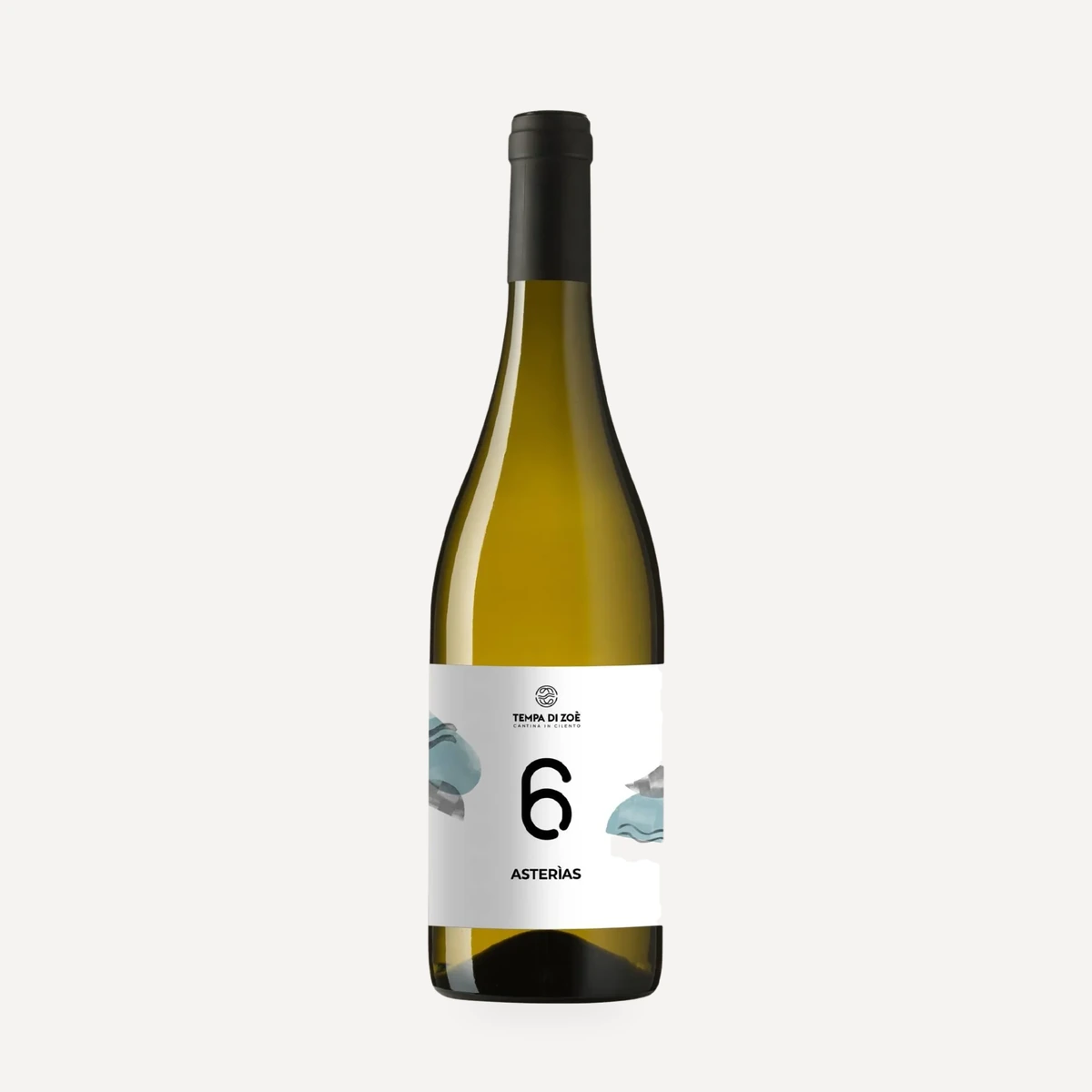
Asterìas
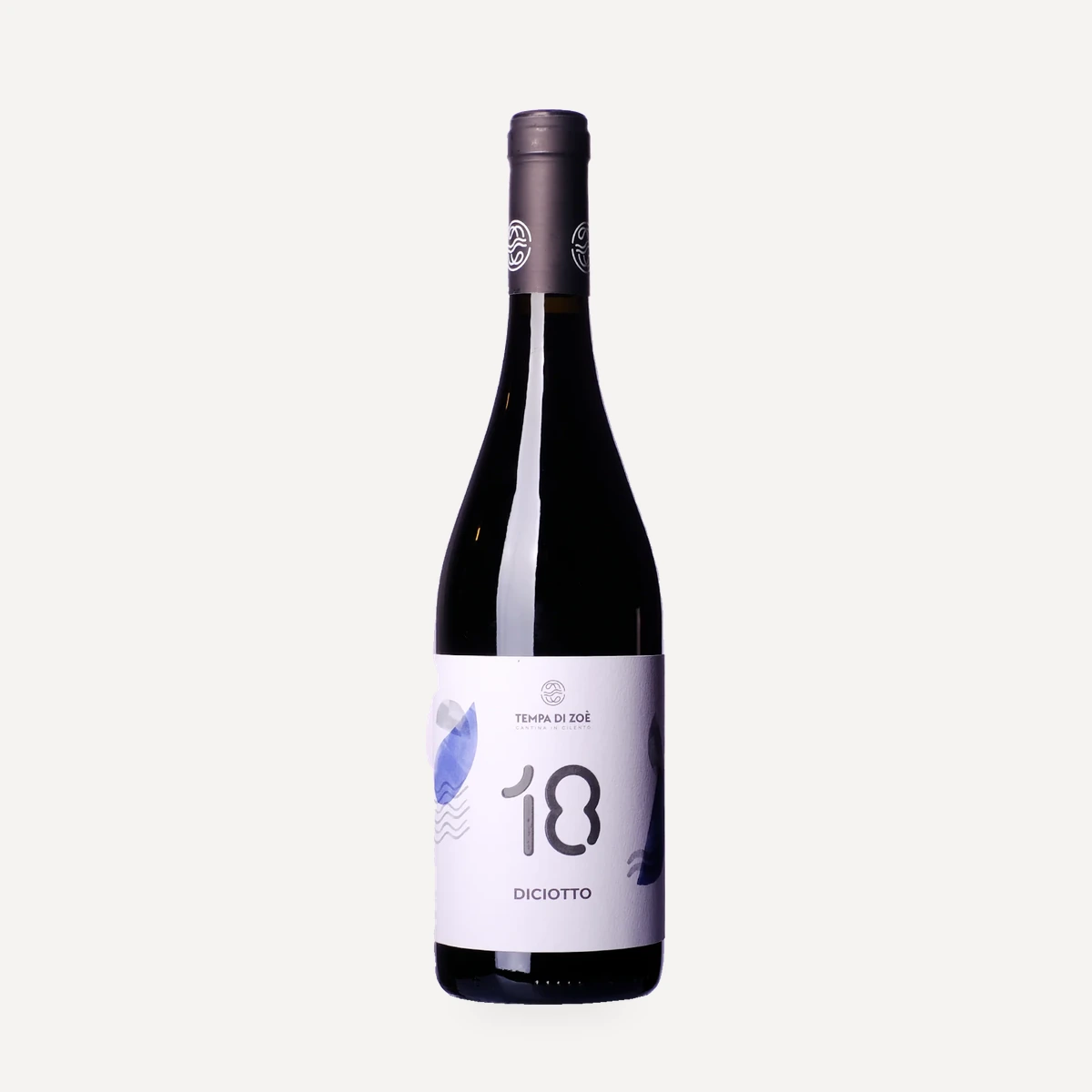
Diciotto