Storia
Medieval origins
The earliest historical reference presented for Montecucco dates to 1106. In that year, the brothers Rodolfo and Ildibrandino, sons of the late Corbulino di Montecucco, donated Montecucco to the Camaldolese monks. Contemporary documents already associated the land with its agricultural quality and recorded the production of “Vino Bono”—good wine.
The Cervini period
At the beginning of the 16th century, the property passed to Marcello Cervini. He was subsequently elected pope and took the name Marcello II.
In 1700, the Cervini family was granted the title of Counts by Cosimo III.
Piccolomini Clementini and present ownership
In 1828, the Cervini family sold the property to Emilio Piccolomini Clementini.
Tenuta di Montecucco is currently owned by ColleMassari S.p.A.
Terroir
Tenuta di Montecucco lies in Maremma Toscana, within the commune of Cinigiano in the Province of Grosseto. The surrounding landscape is formed by gently descending hills that extend toward the Tyrrhenian Sea.
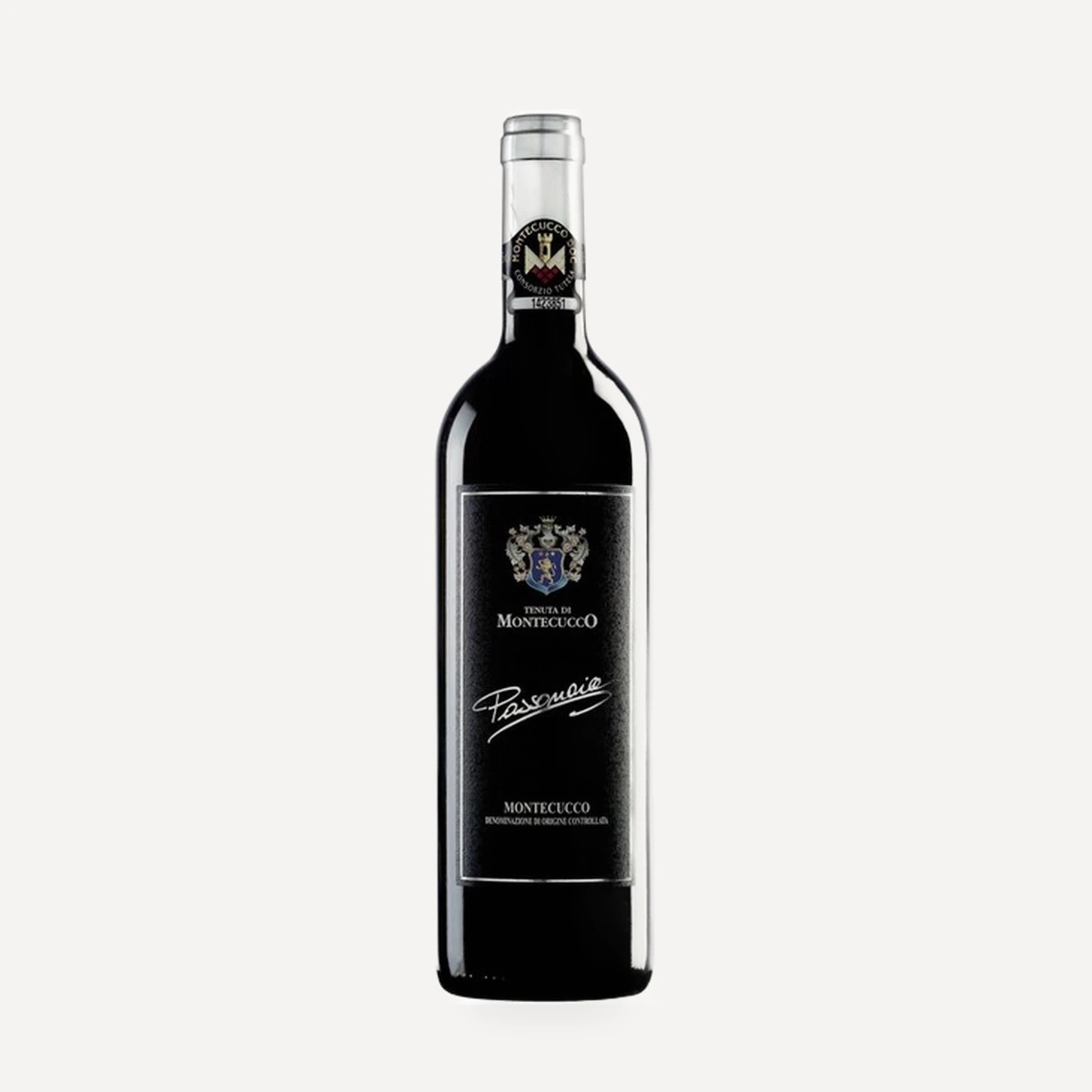
The documented red-grape sites occupy elevations of approximately 300–360 m above sea level. The Passonaia source vineyard lies at about 300 m, on hills between Montalcino and Scansano, with southeast and east–west exposure. The old Canaiolo vineyard and the historic Sangiovese vines associated with Rigomoro stand at approximately 360 m.
Canaiolo is grown in a warm, well-exposed position that enables the variety to reach healthy ripeness when yields per vine are kept low. The estate links Passonaia to the character of its soils and exposure, presenting the wine as closely integrated with its terroir.
Vinificazione
The documented vineyards use Guyot and runner training systems, with planting densities between 3,600 and 5,300 vines/ha. The old Canaiolo vineyard is planted at 3,600 vines/ha and produces organically grown grapes.
Yield restraint is central to the treatment of Canaiolo: production per vine is kept low to support full ripening in its warm, well-exposed site. The historic Sangiovese vines are likewise characterized by low yields and grape selection. The documented Sangiovese, Ciliegiolo and Canaiolo selections are harvested by hand in September.
Filosofia
The estate’s presentation centers on continuity between the historical agricultural identity of Montecucco and the character of its individual sites. Its account begins with the 1106 reference to “Vino Bono,” placing winegrowing within a documented tradition extending back to the Camaldolese period.
Terroir expression is particularly emphasized through the relationship between vineyard exposure, soil character and wine identity. The preservation of an old Canaiolo vineyard also reflects an interest in maintaining a historic Tuscan variety that had become increasingly uncommon. Its warm exposure, low production per plant and ability to deliver healthy, ripe fruit led the estate to preserve and vinify it as a varietal expression.
Vini
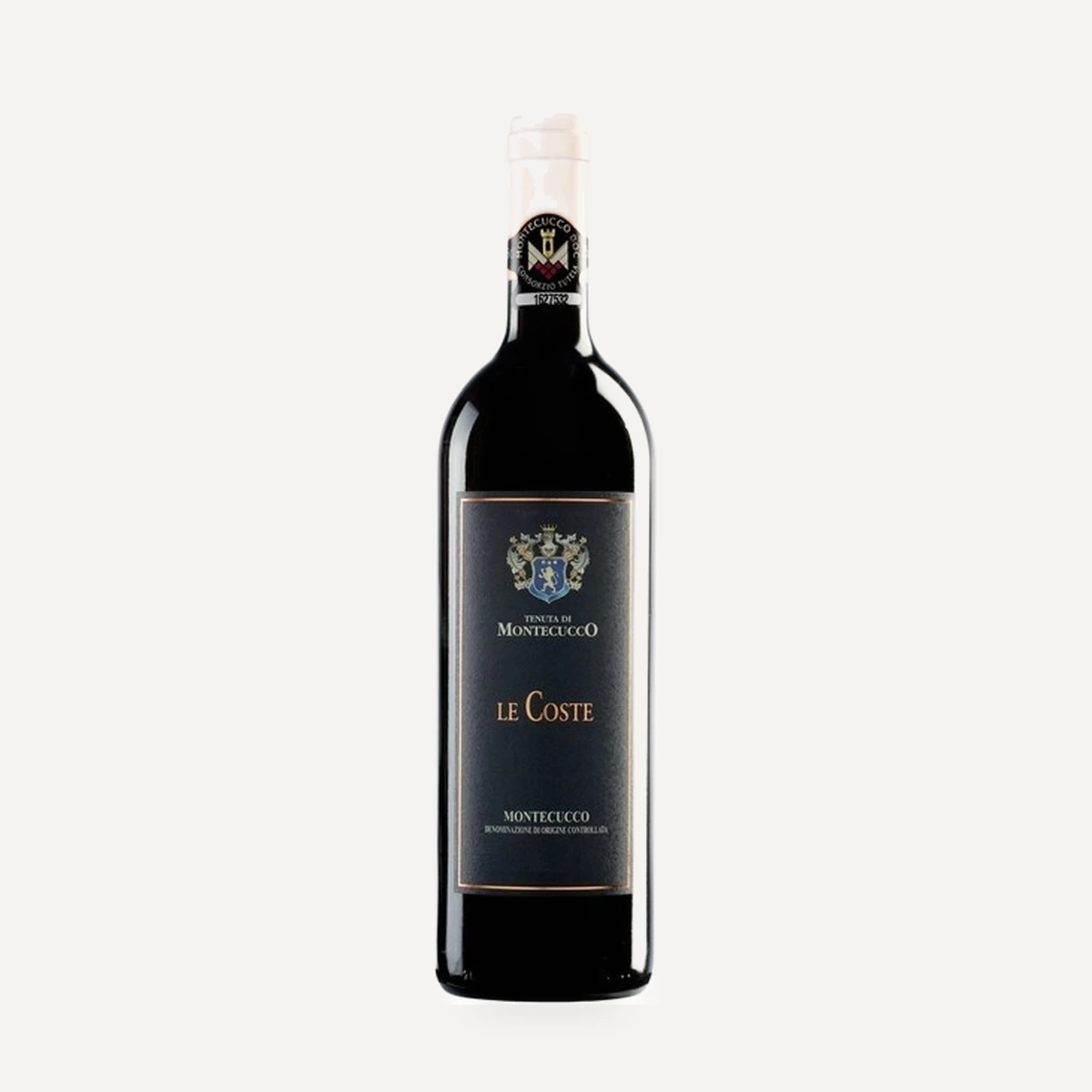
Le Coste Montecucco DOC
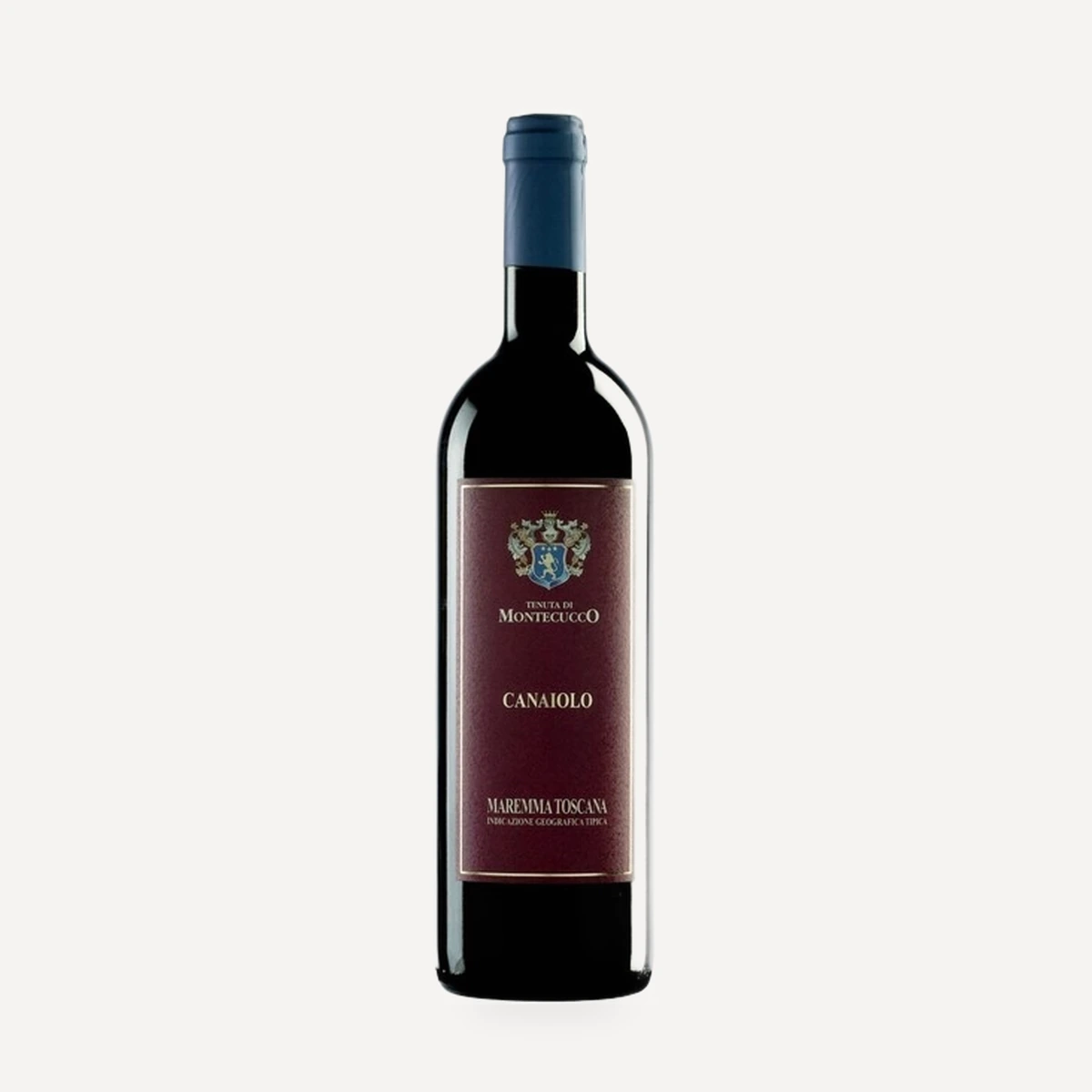
Canaiolo Maremma Toscana Rosso IGT
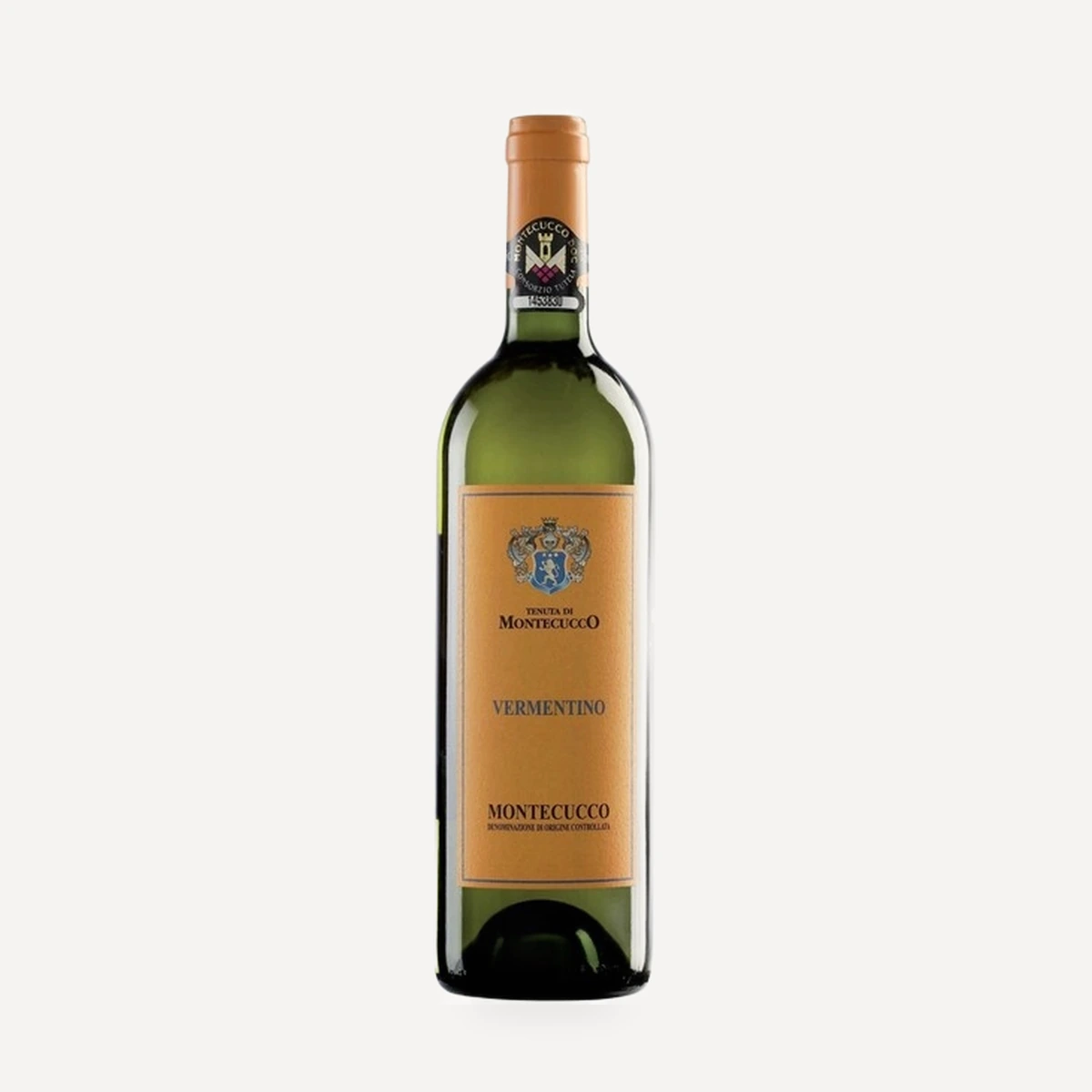
Vermentino Montecucco DOC