Storia
From sparkling-wine experience to still wines
After three generations of winemaking, the Lunelli family decided to complement its work with Ferrari Trentodoc by developing a collection of still wines. The project began in Trentino during the 1980s, drawing on the family's experience with Chardonnay and Pinot Nero in high-altitude vineyards.
Expansion into Tuscany and Umbria
At the beginning of the 2000s, the family turned its attention to Italian regions with established reputations for red wine. In Tuscany, the vine-covered hill surrounding the historic Casale Podernovo became the focus of the project. The family acquired 40 hectares in the municipality of Terricciola, among the hills of the Costa Toscana.
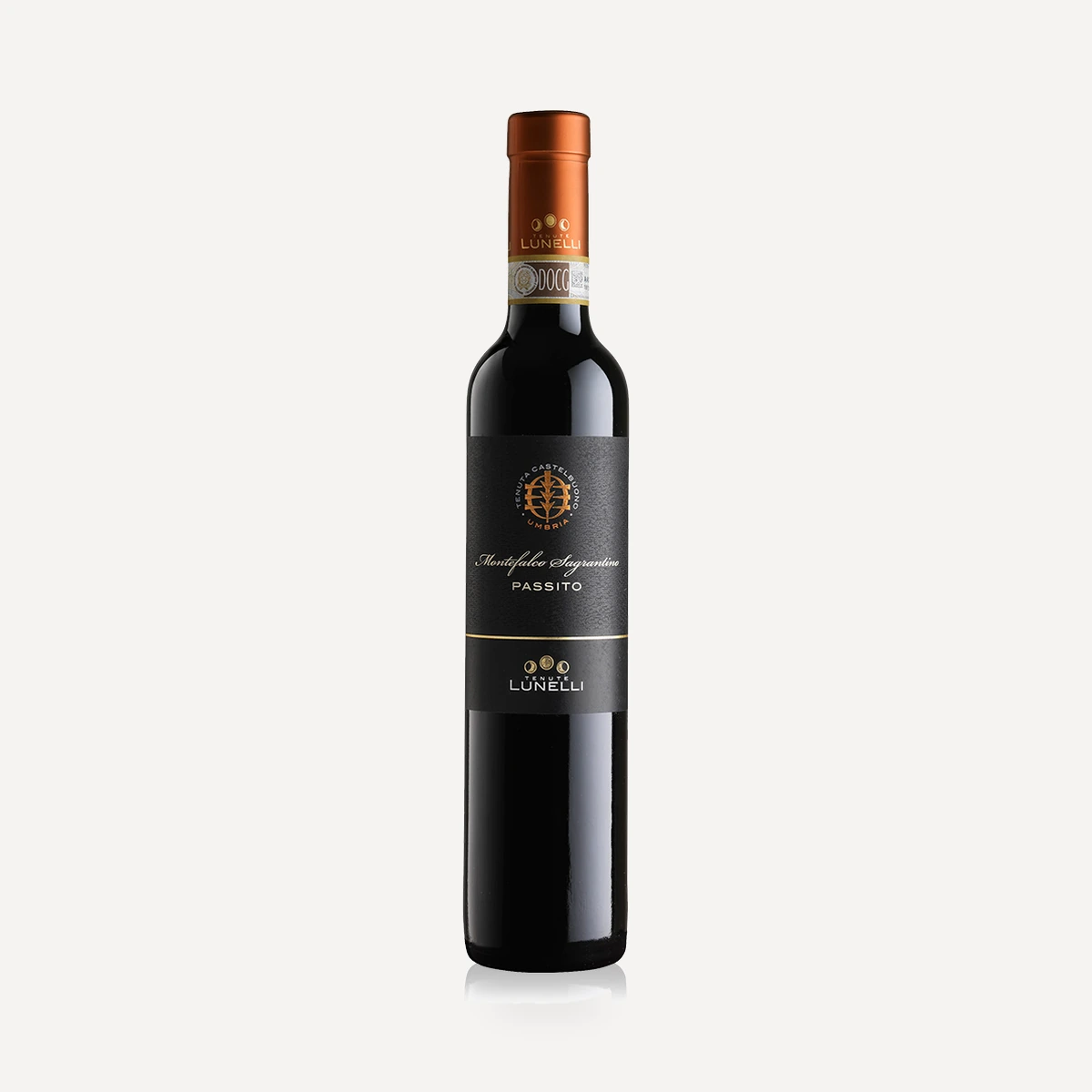
In 2001, the family acquired land in Bevagna and Montefalco in Umbria. Part of the property was already planted. The attraction was both the character of the region and Sagrantino, valued within the project for its power and capacity for long ageing. The Carapace sculpture-winery was subsequently built on the Umbrian property.
Conversion to organic farming
The Tuscan estate became the first part of the project to obtain organic certification, in 2012. The Umbrian wines followed beginning with the 2014 harvest. The Trentino vineyards were entered into the organic-certification system in February 2014 after years of management under a protocol for healthy and sustainable mountain viticulture. That protocol excluded herbicides and insecticides, emphasized the natural fertility of the soil and restricted plant protection to natural products. The Trentino vineyards achieved organic certification in 2017.
Creation of the Tenute Lunelli identity
On 3 September 2014, the family's still wines from Trentino, Tuscany and Umbria were formally brought together under the Tenute Lunelli name. The Lunelli surname was placed on the labels of the three estates then identified as Margon, Podernovo and Castelbuono. At the time, the collection comprised nine estate wines.
The unified identity was presented in Rome at the Canottieri Aniene Club. It emphasized three shared attributes—sustainability, elegance and longevity—while retaining the distinct regional identities of Trentino mountain viticulture, the Pisan hills and Montefalco. Lunar phases were selected for the logo as an expression of the importance of time in ripening and maturation.
Biodiversity, energy and the wider sustainability programme
All Tenute Lunelli vineyards obtained Biodiversity Friend certification in 2015. Photovoltaic installations were subsequently introduced at Tenute Lunelli and were undergoing expansion by 2024. Operations in Trentino also moved to electricity sourced entirely from renewable energy.
The wider family sustainability programme is coordinated through a committee that has operated regularly since 2020. Its priorities include responsible production and consumption, climate action, biodiversity, sustainable water management, health and well-being, decent work and economic growth, and gender equality. Alongside environmental measures, Tenute Lunelli supports employee training and welfare programmes, community initiatives and charitable projects.
Wine, art and cultural partnerships
The family's long relationship with Arnaldo Pomodoro—designer of the Carapace sculpture-winery—developed into a formal collaboration with Fondazione Arnaldo Pomodoro in 2025. The programme connected exhibitions and visits to the artist's Milan studio with Tenute Lunelli's continuing dialogue between wine, architecture and visual art.
Terroir
Tenute Lunelli links three distinct winegrowing settings under one family identity.
In Trentino, the project grew from mountain viticulture and long experience with Chardonnay and Pinot Nero in high hillside vineyards. The Trentino component is presented through its altitude and mountain setting rather than as a single contiguous property.
In Tuscany, the family works in the rolling Pisan hills of the Costa Toscana. Its development began with the acquisition of 40 hectares in Terricciola, centred on the vine-covered hill where the historic Casale Podernovo stands.
In Umbria, the project occupies land in the municipalities of Bevagna and Montefalco. The identity of this component is tied to Sagrantino and to the small Montefalco DOCG area. Part of the land acquired in 2001 was already under vine.
The common objective is not to erase these regional differences but to interpret each place separately within a shared stylistic framework of elegance and longevity.
Vinificazione
Sustainability is the shared foundation of vineyard management across Tenute Lunelli, with the stated aim of reconciling grape quality, the health of vineyard workers and environmental protection.
Organic conversion proceeded estate by estate. The Tuscan operation obtained certification in 2012. The Umbrian operation followed from the 2014 harvest, and the Trentino vineyards achieved certification in 2017 after entering the certification system in February 2014.
Before certification, the Trentino vineyards had already been managed under a protocol for healthy and sustainable mountain viticulture. Its rules excluded herbicides and insecticides, favoured the natural fertility of the soil and relied on natural products for plant protection.
Since 2015, every Tenute Lunelli vineyard has also carried Biodiversity Friend certification. This programme complements organic management by treating biodiversity and the conservation of the winegrowing landscape as measurable parts of the agricultural system.
Environmental work extends beyond the vines. Photovoltaic installations have been introduced and were undergoing expansion in 2024, while Tenute Lunelli's Trentino activities use electricity exclusively from renewable sources. Employee training, welfare measures and community support form the social counterpart to the vineyard programme.
Tenute Lunelli does not impose one cellar recipe on its three regions. Its shared production model begins with careful vineyard work and gives both grape ripening and cellar maturation the time required by each wine.
The family describes this approach through the image of the artisan of time: grapes are allowed to reach maturity on the vine, and the wines are then given patient, watchful maturation in the cellar. This extended sense of time is intended to produce wines defined by elegance, longevity and a clear interpretation of their respective territories.
Filosofia
Tenute Lunelli defines its common identity through sustainability, elegance and longevity, while preserving the individual character and traditions of Trentino, Tuscany and Umbria.
Respect for the land is treated as the project's primary principle. Agricultural decisions are intended to protect the environment and vineyard workers while improving grape quality. This environmental responsibility is paired with investment in employees through training and welfare plans and with support for local communities through charitable contributions and other initiatives.
Time provides the central metaphor. The lunar phases in the brand identity represent the slow progression from ripening grapes to maturing wine. The family distinguishes between the passing of time—Kronos—and the appropriate moment for action—Kairos. In this conception, quality depends not simply on duration but on recognizing when grapes, wines and the broader family project have reached the proper moment.
The three regions therefore retain separate voices, but the wines are intended to share a family style: close interpretation of place, elegance and the capacity to age.
Vini