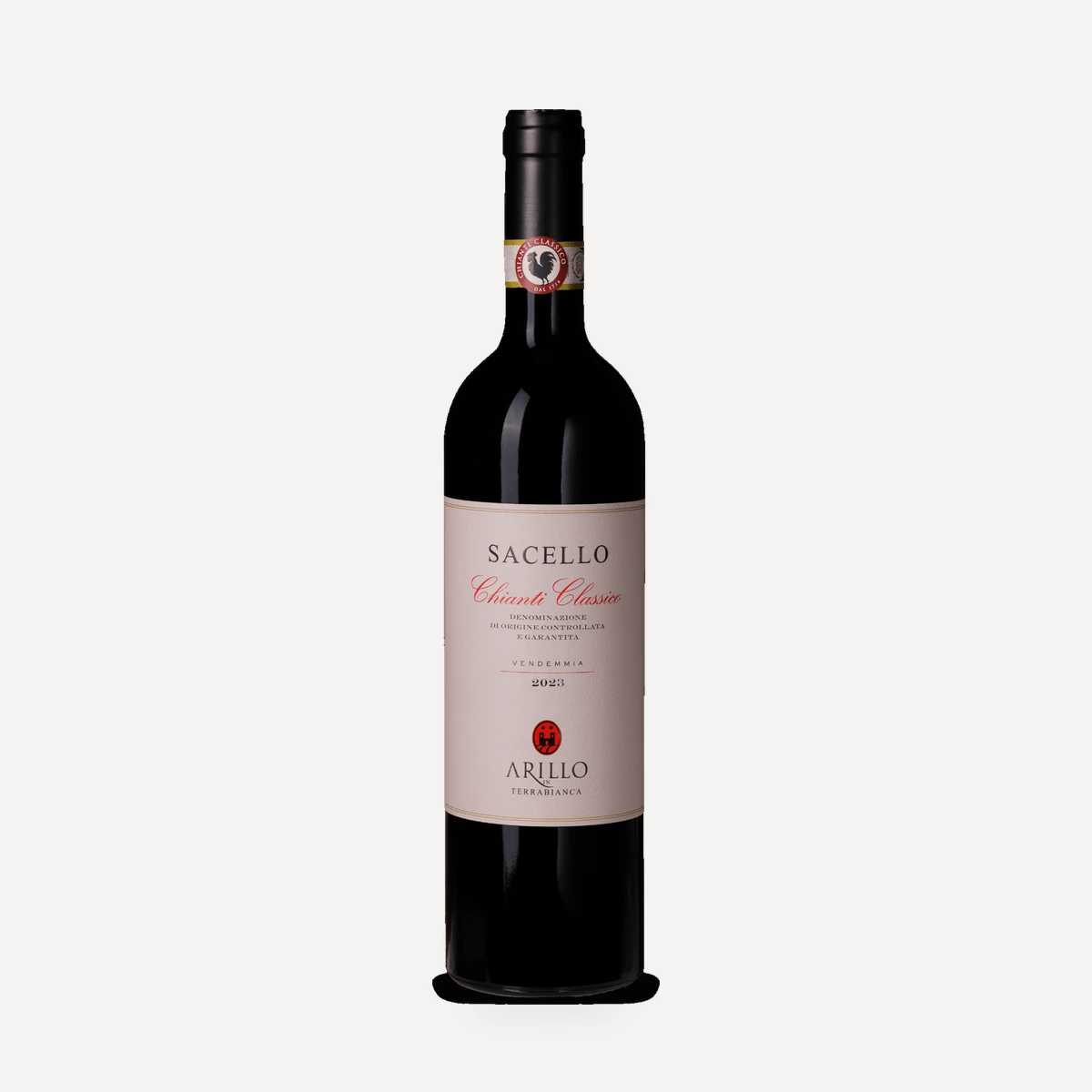
Questo vino
Vineyard and terroir
Sacello comes from the Terrabianca estate in Radda in Chianti, Siena, Tuscany. The vineyards lie at 410 m above sea level. Rocky soils contribute to the wine’s mineral character and help balance its soft tannins.
Grapes
100% Sangiovese.
Vinification
Fermentation takes place in stainless-steel tanks at controlled temperature, followed by 7–10 days of post-fermentation maceration on the skins.
Ageing
The 2023 wine matures for 6–8 months in unglazed concrete vats and rests in bottle for at least six months.
Technical data
The 2023 technical sheet gives an alcohol content of 13.5% vol. Available bottle sizes are 0.375 L, 0.75 L and 1.5 L. The 0.375 L bottles are packed in cases of 12, the 0.75 L bottles in cases of six, and magnums in individual cartons.
Tasting profile
Ruby red. The aromatic profile combines black cherry and iris with delicate violet notes. On the palate, soft tannins are balanced by minerality associated with the rocky vineyard soils. The wine is fresh and savoury, with clean varietal aromas and a character shaped by Radda in Chianti.
Serving and pairing
Pair with pasta and other first courses served with meat sauces, mature cured meats, cave-aged cheeses, and main courses based on white or red meat.
Vintage notes
The 2023 growing season featured a very rainy spring followed by a hot summer. Careful vineyard work was required to counter repeated fungal-disease pressure. Yields were low, while September and October temperature variations supported optimal ripening, mature tannins and an expressive aromatic profile.
The ageing approach changed across the vintages displayed: the 2019 and 2020 wines matured for 6–8 months in stainless steel without wood, whereas the 2021–2023 wines spent 6–8 months in unglazed concrete vats. All received at least six months of bottle ageing.