Storia
The historic cellar
Terramante’s cellar occupies spaces beneath the ancient Church of San Michele Arcangelo in the small hamlet of Montemolino, near Todi. Monks and, subsequently, local priests made wine there for more than 700 years. The cellar ceased operating after the death of Montemolino’s last resident parish priest and remained abandoned for several decades.
A further connection between the cellar and the estate’s land dates to 1542. In that year, the stone altar from a ruined church that had once stood in what is now the vineyard was moved to the church in Montemolino, where it remains.
Establishment and return to the old cellar
Terramante was established in 2006 as a small family winery. The family initially intended to construct a winery on its own land beside the Tiber, but minimum-distance legislation associated with the river prevented the project. A search for suitable premises in the nearby village led to the abandoned historic cellar under the church. The discovery that the vineyard’s former stone altar had been transferred to the same church in 1542 gave the choice of premises particular significance for the family.
Vineyard development
Sangiovese and Sagrantino plantings associated with the principal red-wine vineyards date to 2009. Syrah and Foglia Tonda plantings followed in 2012. The younger Sangiovese vineyard at Montenero was planted in 2016. The resulting estate combines internationally known Syrah with central Italian varieties, including Sangiovese and Sagrantino, and the old, nearly vanished Foglia Tonda variety.
Terroir
Terramante lies in central Umbria at Montemolino, near Todi, with its vineyards in the setting of the Tiber River Park. The vineyard area belongs to a temperate macro-region positioned between the low- and high-hill bioclimatic belts.
The soils combine sand, gravel and clay with calcareous material, sandstone and arenaceous sedimentary rocks. The vineyards occupy hillsides close to the river but differ in elevation, exposure and row orientation.
Jacopone lies at approximately 160 metres above sea level on a west-facing slope, with rows running north–south. San Cristoforo lies at approximately 150 metres on a northwest-facing hillside, with its row axis described as approximately 15° NNW–SSE. The riverside position is particularly associated with the Syrah planting.
Vinificazione
Terramante dry-farms its vineyards and excludes chemical herbicides and pesticides. Although the estate does not seek an estate-wide organic certification, it describes its farming as having followed organic methods from the beginning; individual lots are also identified as coming from organic or certified-organic grapes.
Weeds and grasses are managed mechanically with an inter-vine cultivator and by hand-hoeing around the vines, particularly the younger plants. Green-manure and nitrogen-fixing plants are sown between the rows as alternatives to synthetic fertilizers.
Geese and chickens forage in the vineyards. Their grazing helps control larvae and unwanted insects while adding natural manure to the soil. Selected biodynamic methods include preparations 500 and 501. Algae- and propolis-based aids are also used to support the vines’ natural defenses.
The canopy is kept rigorously open and vertical to maximize airflow and admit sunlight to the fruit. Green pruning is carried out at least twice during spring and early summer; individual shoots are tied to support wires, and leaves around the bunches are removed. These measures are intended to reduce fungal pressure without systemic products and to minimize treatments based on copper and sulfur while encouraging healthy, even ripening.
Crop thinning reduces the number of bunches per vine and removes fruit that does not meet the estate’s standards. Harvesting is manual, generally during the cool hours of the night. Grapes are carefully selected and moved immediately to the cellar in small crates or baskets.
Production is organized in small batches. Grapes are harvested manually during the cool night hours, selected and transported promptly to the cellar in small containers. Bunches are gently destemmed, while the berries are generally kept whole.
Fermentations begin spontaneously without selected yeasts. Small open-top fermenters and small wooden fermenters are used, with carbonic fermentation employed for some lots. Skin maceration commonly lasts from 24 to 30 days, or approximately one month. The fruit is then pressed gently with a small bladder press.
Maturation varies by lot but follows a common preference for used or neutral wood. Tonneaux and barriques are employed, often with the wine resting on its fine lees for approximately 15–24 months. Bottle maturation generally adds another six months before release.
The wines are not chemically adjusted, fined, clarified or filtered during vinification. Sulfur additions are limited to a small quantity before bottling.
Filosofia
Terramante presents winegrowing as a family way of life rather than simply a commercial activity. Its goal is to express its corner of Umbria—the river, vineyards, soils and unhurried local rhythm—as cleanly and honestly as possible through small-batch wines made in limited quantities.
The family’s stated responsibility is to leave the land in better condition than it received it. This principle underpins dry farming, the rejection of chemical herbicides and pesticides, animal integration, green manure, organic practices and selected biodynamic techniques. Work is adapted to the rhythms and inconsistencies of nature instead of attempting to force uniformity.
In the cellar, the same low-intervention outlook is expressed through spontaneous fermentation, neutral wood, long maturation, the avoidance of chemical correction, fining and filtration, and minimal sulfur use. The project combines these natural methods with detailed canopy management, fruit selection and crop control rather than treating low intervention as an absence of work.
Vini
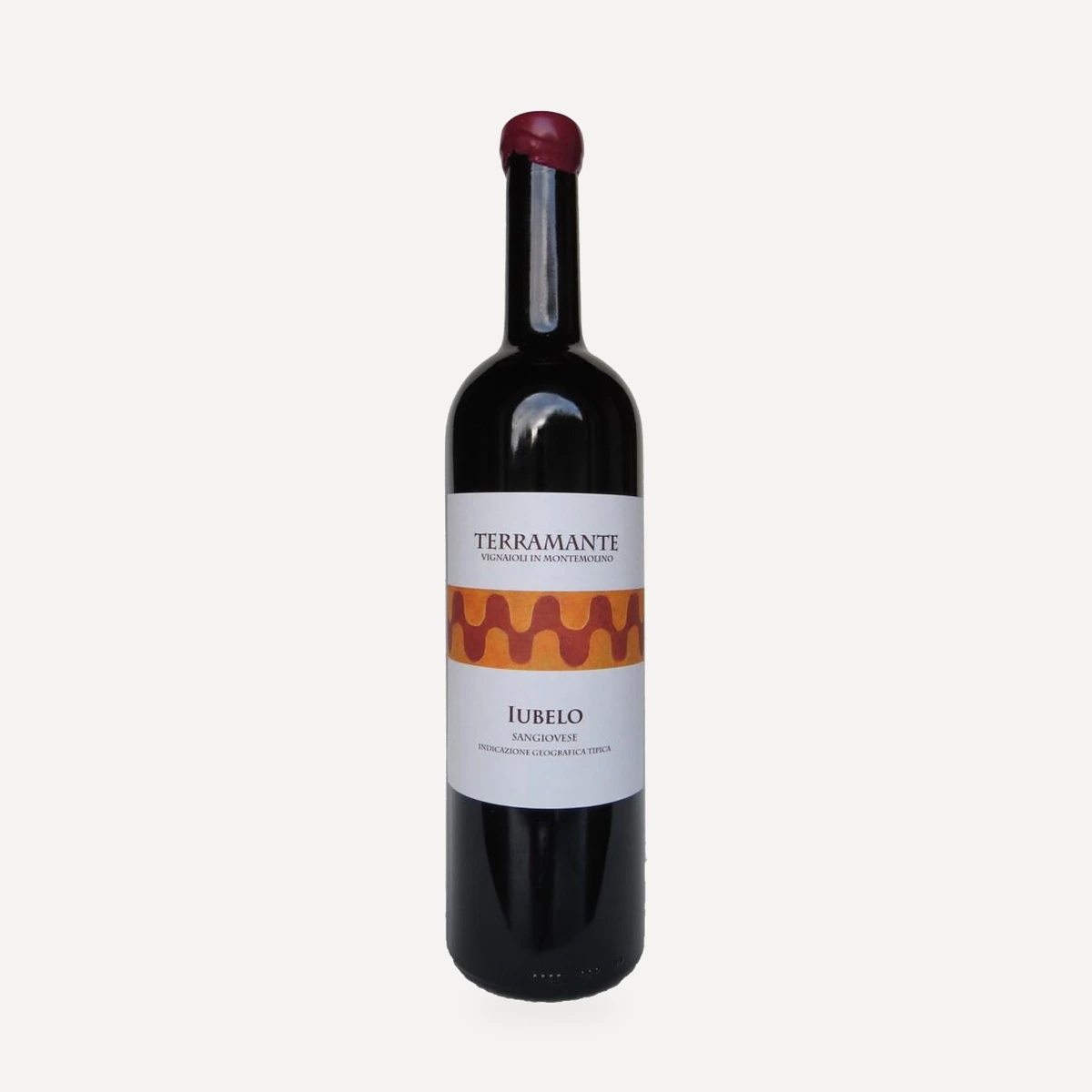
Iubelo