Storia
Origins
The project began with an Aglianico vineyard in Montemarano, within the Taurasi appellation. Marco Tinessa focused on balancing the vines through control of yield per hectare so that the grapes could ripen correctly in an area where harvesting commonly extends into November.
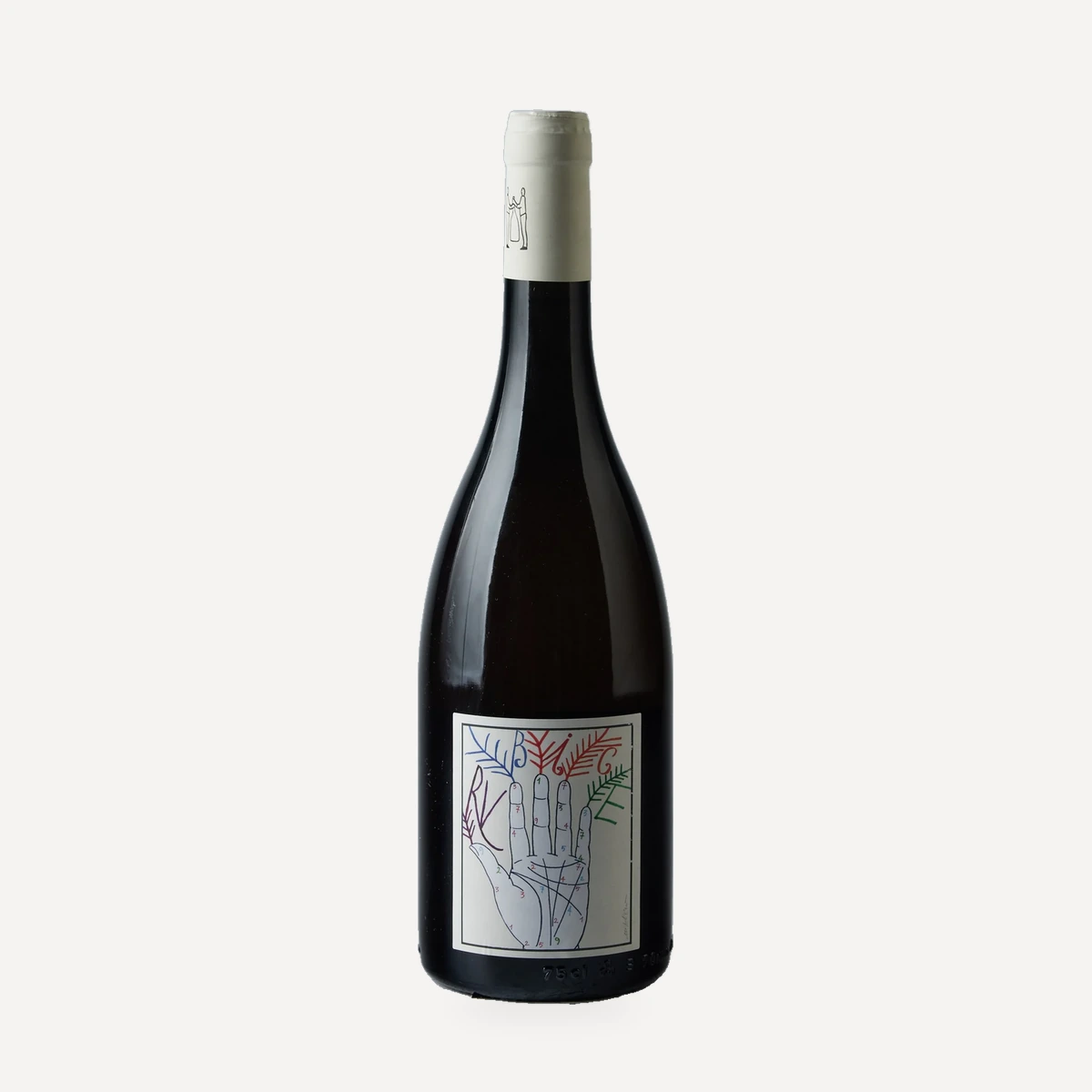
The name O’gnostro means “ink” in Italian and is also presented as a Campanian dialect name for wine. It was chosen for a project conceived to carry the identity of a particular territory into the bottle. Perino & Vele created the O’gnostro graphic design in 2010 and are also credited with the labels used across the range.
2017 vintage
The 2017 O’gnostro was made from Aglianico grown in a single Montemarano vineyard at 350–400 metres. The vineyard was approximately 25 years old, faced north/northeast and had clay soil. Its vines were trained to spurred cordon on a vertical trellis, with winter pruning in February and green pruning in August.
The grapes were harvested by hand on 26 October and crushed and destemmed the following day. Fermentation used indigenous yeasts without added oenological products, followed by approximately one month of maceration in fiberglass. The wine matured for 18 months in concrete, passed briefly through stainless steel and then spent 12 months in bottle. The vintage yielded 40–50 quintals per hectare and produced 2,500 bottles.
2018 vintage
For the 2018 O’gnostro Rosso, the Aglianico base expanded to two vineyards. One was in Montemarano at 400–450 metres, with an average vine age of 30 years and a northern exposure. The other was in Castelfranci at 500 metres, faced southwest and had vines between 50 and 90 years old. Training included spurred cordon at Montemarano, Guyot in a vineyard planted in 1975 and raggiera avellinese in a Castelfranci vineyard planted in 1927. Production amounted to 4,200 bottles and 120 magnums.
The 2018 vintage also included Fiano from Lapio, at approximately 500 metres. The vines were between 30 and 70 years old and grew in clay-limestone soil. The vineyard was trained to spurred cordon on a vertical trellis, with February pruning and green pruning in August. Its treatments comprised bentonite, copper sulfate and zeolite. Production was 1,050 bottles from a yield of 25 quintals per hectare.
2019 vintage
The 2019 Fiano came from a Lapio vineyard at 500 metres, facing northwest and planted with vines approximately 50–60 years old. It was organically cultivated and trained to spurred cordon. The grapes were harvested by hand at the end of September. Production reached 2,000 bottles and 48 magnums at a yield of 38 quintals per hectare.
2020 vintage
For the 2020 Fiano, the project worked with two Lapio parcels at 500 metres: a northwest-facing site with 50–60-year-old vines and a northeast-facing site with 20-year-old vines. Production reached 4,000 bottles and 120 magnums at a yield of 38 quintals per hectare.
The 2020 Rubice was a négociant-style Falanghina made from a rented vineyard in Bonea together with fruit from small parcels cultivated by artisan growers around Taburno. Its two principal vineyards were in Bonea and Montesarchio. Both faced south; the Bonea vineyard stood at 400 metres with an average vine age of 50 years, while the Montesarchio vineyard stood at 300 metres with an average age of 90 years. The vintage produced 1,500 bottles.
Current vineyard structure
O’gnostro Aglianico now draws on three small parcels between Montemarano and Castelfranci, with vines ranging from 30 to 95 years old. Fiano comes from two parcels in Lapio, while Rubice continues the project’s work with Falanghina vineyards around Bonea, Montesarchio and Taburno.
Terroir
Tinessa works across several distinct inland sites represented by Montemarano, Castelfranci, Lapio, Bonea, Montesarchio and the wider Taburno area.
The Aglianico parcels lie between Montemarano and Castelfranci. Montemarano sites are described at 350–450 metres, with northern or north-northeastern exposures. The 2017 vineyard had clay soil. Castelfranci reaches 500 metres, with a southwestern exposure and vines that were 50–90 years old in the 2018 vintage. The current Aglianico composition draws on three parcels whose vines range from 30 to 95 years old. Late ripening is a defining practical consideration: harvest in this area can extend into November.
The Fiano parcels are in Lapio at approximately 500 metres. One faces northwest and carries vines approximately 50–60 years old; another faces northeast and had approximately 20-year-old vines in 2020. The 2018 Fiano vineyard was described as having clay-limestone soil and vines between 30 and 70 years old.
The Falanghina vineyards used for Rubice lie in Bonea and Montesarchio around Taburno. Both face south. Bonea is at 400 metres with an average vine age of 50 years, while Montesarchio is at 300 metres with an average vine age of 90 years.
Vinificazione
Tinessa advocates authentic viticulture based on rigorous work in the vineyard, respect for the territory and the use of native clones historically associated with each area. The objective is to cultivate without synthetic chemical products and thereby reduce or eliminate the need for oenological products in the cellar. The vineyards represented across the range are described as organically farmed.
Training systems vary with site and vine age. Aglianico includes spurred cordon in Montemarano, Guyot in a vineyard planted in 1975 and raggiera avellinese in a Castelfranci vineyard planted in 1927. Fiano is trained to spurred cordon on a vertical trellis. Falanghina in Bonea and Montesarchio is trained to raggiera.
The 2017 Aglianico and 2018 Fiano regimes included winter pruning in February and green pruning in August. Treatments recorded for the 2018 Lapio Fiano vineyard were bentonite, copper sulfate and zeolite.
All described harvests are manual. Fiano is picked at the end of September; Falanghina is picked at the end of October; Aglianico has been picked between late October and 14 November. The 2017 Aglianico harvest took place on 26 October.
Yields vary by site and vintage. Aglianico was recorded at 40–50 quintals per hectare in 2017 and 40 hectolitres per hectare in the later two-vineyard composition. Fiano ranged from 25 quintals per hectare in 2018 to 38 quintals per hectare in 2019 and 2020. Falanghina was recorded at 60 quintals per hectare in 2020.
General approach
The cellar is intended to remain as neutral as possible throughout vinification. Spontaneous fermentation with indigenous yeasts is treated as an essential starting point. Neutral vessels include ceramic, terracotta and stoneware amphorae, concrete tanks, fiberglass vats, stainless steel and high-density polyethylene tubs. Sulphur is used minimally and only after fermentation or at bottling when considered necessary. The wines are bottled without filtration or stabilization and closed with natural cork.
Aglianico
Aglianico is crushed and destemmed before fermenting on the skins for approximately one month with indigenous yeasts. Fiberglass vats and concrete tanks have been used for fermentation and maceration. The 2017 vintage matured for 18 months in concrete, passed briefly through stainless steel and then aged for 12 months in bottle. The later two-vineyard composition matured for 18 months in a combination of stoneware amphora and concrete. The 2018 composition was bottled in May 2021 without filtration, stabilization or added sulphur.
Fiano
Fiano receives a short period of skin contact before white-wine vinification. Depending on the vintage, skin contact has ranged from two to four days; the broader approach calls for only enough contact to initiate fermentation. Fermentation proceeds with indigenous yeasts and without temperature control.
Vessel choice changes with the vintage. The broader regime uses stainless steel or concrete for vinification and maturation, with nine to twelve months of vessel ageing followed by at least one year in bottle. The 2018 vintage spent six months in fiberglass and two months in stainless steel. The 2019 and 2020 regimes used seven months in fiberglass and stainless steel. The 2020 vintage received 20 mg/L of SO2 after malolactic fermentation and no other oenological products. Bottling took place in June 2021 without filtration or stabilization and with natural cork.
Falanghina
Falanghina is crushed and destemmed, then fermented on the skins for one day in fiberglass vats. Fermentation and maturation take place in fiberglass and stainless steel. For the 2020 vintage, 20 mg/L of SO2 was added after malolactic fermentation, with no other oenological products. It was bottled on 7 June 2021 without filtration or stabilization and closed with natural cork.
Filosofia
Tinessa frames terroir as the interaction of people, territory and vineyard. Its central objective is to carry the distinct identity of a growing place into the bottle while preserving the characteristic aromas and flavours of each grape variety in each vintage.
The project takes a critical view of intensive agrochemical and mechanical intervention. It argues that legally permitted manipulation can predetermine aroma, colour and flavour, add preservatives or involve pasteurization, thereby distancing wine from its territory. It also regards the expansion of appellation boundaries as a potential source of separation between wine and the original idea of land specifically suited to its production.
Its alternative is a return to authentic viticulture: respect for the territory, native clones with a history in their respective areas and rigorous vineyard work intended to avoid synthetic chemicals. In the cellar this becomes a deliberately neutral stance based on spontaneous fermentation, non-aromatic vessels and the minimum necessary amount of sulphur. The project describes the vineyards as small ecosystems and seeks to make its environmental influence positive rather than extractive.
Vintage variation determines practical decisions. Vessel choice and maturation time may change between stainless steel, concrete, fiberglass and amphora according to the character of the year, while the underlying objective remains the preservation of grape and place rather than the imposition of a standardized style.
Vini