Questo vino
Vineyard and terroir
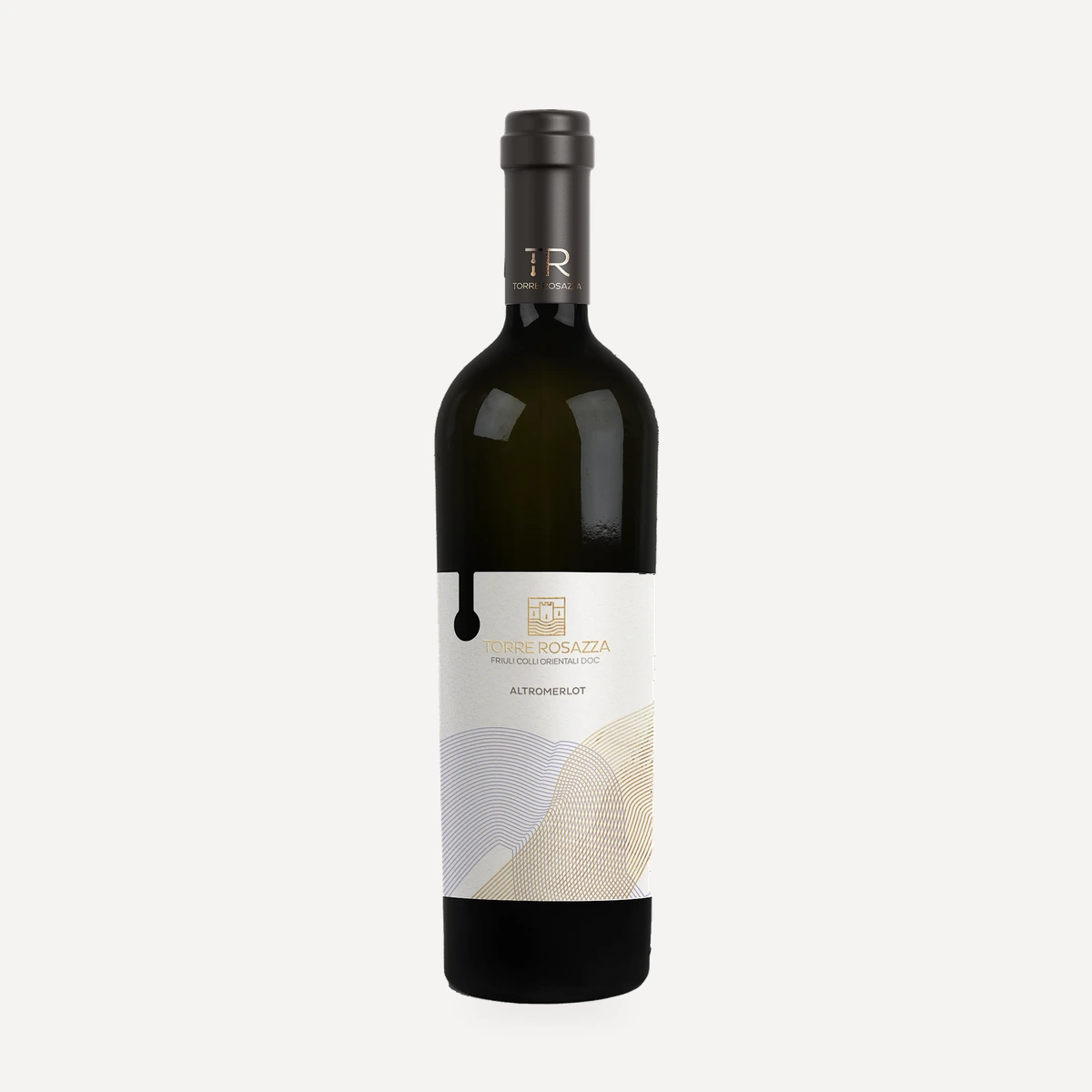
Altromerlot comes from thirty-year-old Merlot vines on the estate’s highest terraces in the Manzano hills, at 200–250 metres above sea level. The vines are Guyot trained at 4,500 plants per hectare and yield approximately 40–50 quintals per hectare.
The vineyards grow in ponca, a sedimentary soil of clay marl alternating with sandstone. This low-fertility formation retains water well and contributes body, colour, tannins and mineral character. Terraces, hilltop ronchi and favourable exposure support full grape ripening. The Bora and winds from the Adriatic ventilate the vineyards, while pronounced day–night temperature variation encourages aromatic and sugar development.
Grapes
100% Merlot.
Vinification
The grapes are harvested strictly by hand during the first or second ten-day period of September and selected in the vineyard. They are destemmed and crushed before fermentation in temperature-controlled stainless-steel vats. Must and skins remain in contact for 8–10 days, and malolactic fermentation is completed in full.
Ageing
At least 24 months in Allier oak barriques.
Technical data
Alcohol is 14.5% vol. and total acidity is 4.8 g/L. Expected longevity is 10–15 years.
Tasting profile
Deep, intense ruby red. The delicate bouquet opens with small red berries and blueberries, followed by woodland and moss notes. The palate shows immediate but elegant tannins, a soft, mouth-filling texture and flavours of red-fruit preserve that evolve toward restrained oak. The finish is long.
Serving and pairing
Serve at 16–18 °C. Pair with winter soups, legume soups and richly flavoured meats such as roasts, veal shank and mixed grills. Despite its structure, it can accompany lighter, elegant dishes.
Label / history
The idea was conceived among the Torre Rosazza vineyards in 1987 as an alternative to the prevailing Friulian style. First released in 1988, Altromerlot was conceived around extended maturation in French oak barriques. Its name expresses this idea of an “other” Merlot, distinct from the Merlot commonly tasted at the time.