Questo vino
Vineyard and terroir
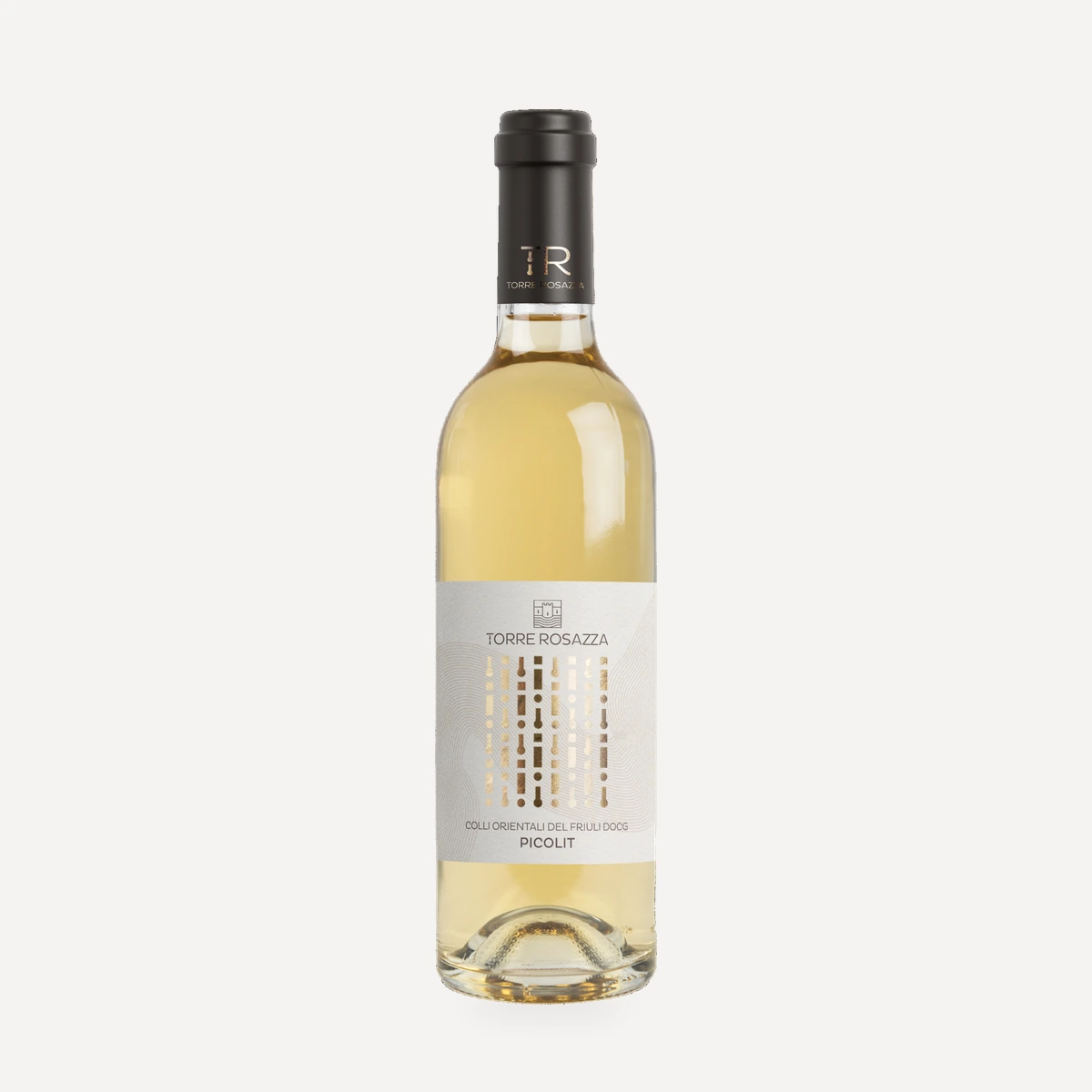
Picolit is grown in estate vineyards scattered across the Manzano hills, particularly in sites with stronger southern and western exposure. The terraced parcels lie at 120–180 metres above sea level, and the vines are 20–40 years old. One of the estate’s earliest vineyards was planted to Picolit in 1978. Training systems are Sylvoz and Guyot, planting density is 3,000 vines per hectare, and maximum yield is 40 quintals per hectare.
The soil is ponca, a low-fertility sedimentary formation of clay marl alternating with sandstone and capable of retaining water. Terracing, the hilltops known as Ronchi, Bora and Adriatic winds, and pronounced day-to-night temperature changes shape the growing environment.
Grapes
100% Picolit.
Vinification
The grapes are harvested late and by hand during the second or third ten-day period of September. They then dry for around 60 days in a fruit-drying room, losing approximately 40% of their weight. The bunches are pressed whole, and the resulting must is statically settled. Fermentation is divided between stainless-steel tanks and oak barriques.
Ageing
At least 24 months in French-oak tonneaux.
Technical data
Vintage: 2018. Alcohol is reported as 14.5% vol. on the wine page and 15% vol. in the technical sheet. Total acidity: 6.3 g/L. Volatile acidity: 0.64 g/L. Residual sugar is reported as 74.3 g/L on the wine page and 74 g/L in the technical sheet. Ageing potential: 10–15 years.
Tasting profile
Brilliant gold in colour. The delicate, enveloping bouquet recalls honey, pastry cream and white peach. The palate combines a compact texture with pronounced, pleasing sweetness.
Serving and pairing
Serve at 10–12 °C. It may be enjoyed on its own as a contemplative wine or paired with flavourful, piquant and blue cheeses, as well as dry pastries.
Vintage notes
The wine page presents the 2018 vintage. Its analytical data differ slightly from the accompanying 2018 technical sheet: 14.5% versus 15% alcohol and 74.3 versus 74 g/L residual sugar.
Label / history
First produced in 1986, Picolit carries particular symbolic importance through its connection to the estate’s early vineyards and the Friuli Colli Orientali territory.