Storia
Earlier plantings
The estate's old mixed vineyards were planted in 1970. They contain Sangiovese, Trebbiano, Colorino and Canaiolo and were historically used to make wine in the Chianti tradition, with red and white grapes vinified together. These vineyards were subsequently restored through targeted improvement work. A small part of the Trebbiano was later top-grafted with Vermentino.
The olive grove was planted in 1986 with Leccino, Moraiolo and Frantoio. In 2005, 3.5 hectares of Cabernet Sauvignon were planted using low-yielding clones selected by a French nursery.
2008: the creation of Tunia
Tunia began in 2008 through the initiative and enthusiasm of Francesca Di Benedetto, her brother Andrea and their friend Chiara Innocenti. Francesca assumed responsibility for production, Chiara for commercial activity and Andrea for financial management. Their mixed holding in Val di Chiana encompasses 25 hectares of vineyards and olive groves.
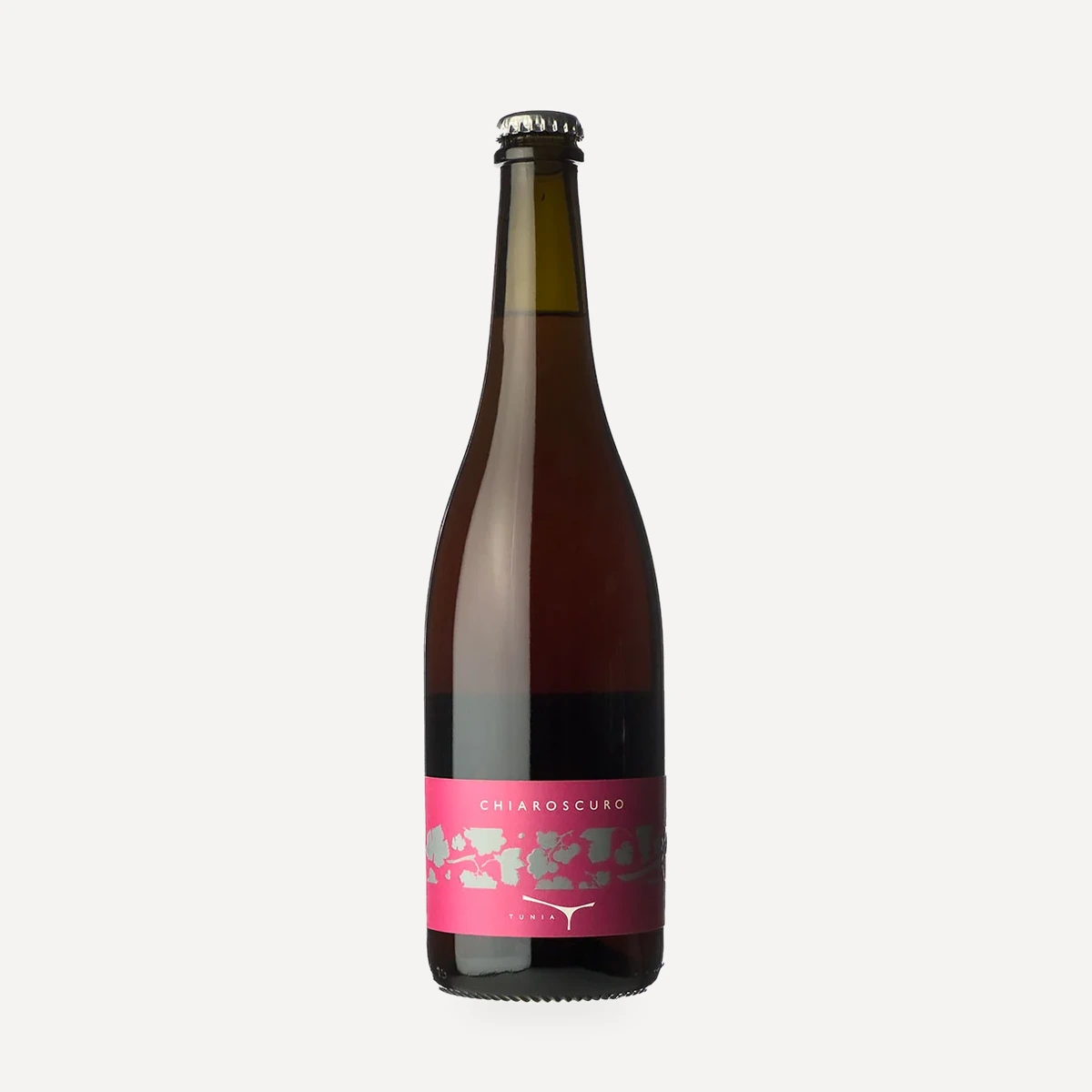
The business took its name from Tunia, the Etruscan deity invoked for the successful ripening of fruit. Its first wine was Chiassobuio, named after the stream bordering the vineyards. It was followed over the years by Chiarofiore, Contrappunto and Cantomoro, and later by the bottle-refermented Sottofondo, the traditional passito Passatempo, Chiaroscuro, a grappa made from dried Trebbiano pomace and estate extra-virgin olive oil.
2017–2024: a forgotten barrel and a cellar move
In 2017, a friend and customer commissioned a late-harvest Vermentino matured in wood and intended exclusively for magnums. The grapes were picked during a hot, drought-affected September, macerated for an extended period and transferred to a barrique. When the customer disappeared, the barrel was left behind the Vin Santo caratelli.
During a cellar move in 2024, the team rediscovered the barrel. After seven years without topping up, the wine had matured entirely under oxidative conditions. It was subsequently bottled as Megliotardi (che mai).
Terroir
Tunia lies in Val di Chiana in the province of Arezzo. Its vines occupy the hills forming the valley's northern boundary, at approximately 300 metres above sea level, with south-western exposure.
The vineyard soils are calcareous and clay-rich. Woods surround the vines and olive trees, while the Chiassobuio stream runs along the vineyards. Dorna Castle stands behind the property; it is a Lombard complex associated with centuries of wine production.
Vinificazione
Tunia farms organically and seeks to disturb the natural balance of its land as little as possible. Spontaneous vegetation is retained between the vines, compost is produced on the estate, and vineyard treatments include herbal macerations and propolis. Copper and sulfur are used in limited quantities.
Grapes are harvested manually into crates. Vineyard selections report low yields of approximately 25–30 q/ha. Harvest timing can extend from late August through November according to variety and intended maturity, with some Trebbiano and Vermentino picked early for acidity, other fruit harvested at full maturity, and selected bunches left for late harvesting or drying.
Tunia follows a low-intervention approach in the cellar. Fermentations start spontaneously with indigenous yeasts, and the wines are bottled without clarification, filtration or stabilization.
Production uses stainless-steel tanks as well as oak vessels of several formats, including 25 hL vats, 300 L tonneaux, conventional barriques and 54 L oak caratelli. Depending on the intended result, grapes may ferment without skins, undergo short or month-long skin contact, or be divided into separate lots picked at different stages of ripeness. Some components mature on fine lees for a year before blending, while structured reds can spend 36 months divided between steel and oak followed by extended bottle maturation.
Bottle-refermented wines combine still wine with must obtained from grapes dried in the cellar. The second fermentation takes place in bottle, without disgorgement, clarification or filtration; the crown cap and natural yeast deposit are retained so that the wine can continue evolving.
For dried-grape production, fully ripe bunches are placed in small crates at roughly 1 kg per crate. The crates are stacked with space for air circulation, dismantled monthly so that every bunch can be inspected, and restacked in reversed order to promote even drying. Whole bunches are generally pressed in February. After brief settling, the concentrated must enters 54 L oak caratelli, where indigenous yeasts work intermittently as the vinsantaia moves between very cold winters and very hot summers. Maturation can last about ten years before bottling.
Filosofia
Tunia defines its working principles as respect, care and knowledge. Its stated objective is to intervene as little as possible in both vineyard and cellar, preserving the natural equilibrium of the land rather than relying on corrective shortcuts.
The cellar philosophy centres on indigenous fermentation and the rejection of clarification, filtration and stabilization. Tunia presents this approach as a means of producing wines that remain faithful to their grapes, place and vintage. Its undisgorged, bottle-refermented wines further express the idea of a living wine that continues to develop through the yeasts and sediment retained in the bottle.
Vini