Storia
The late 1970s: Donato Mastrodomenico in Venosa
Donato Mastrodomenico, an agronomist of Apulian origin and a winegrower by vocation, promoted the conversion of land at Notarchirico, in the countryside of Venosa, into Aglianico del Vulture vineyards at the end of the 1970s. This work strengthened his connection to viticulture in the Vulture area and furnished the experience behind the family's later project.
The late 1990s: planting at Acquarossa
At the end of the 1990s, Donato planted Aglianico at Acquarossa Piano della Mezzana in the countryside of Rapolla. The land belonged to his wife, Dina Grimolizzi, a Lucanian whom the family remembers for her energetic and forthright character. Establishing the vineyard demanded substantial time and effort. Donato—widely known as “the Professor”—regarded the difficult ground as capable of producing high quality.
The Acquarossa vineyard became the basis of the family estate. Donato later joined his children, Giuseppe and Emanuela, in the decision to vinify the family's grapes, pursuing wines closely connected to the volcanic, rugged Vulture landscape.
From grape growing to estate wines
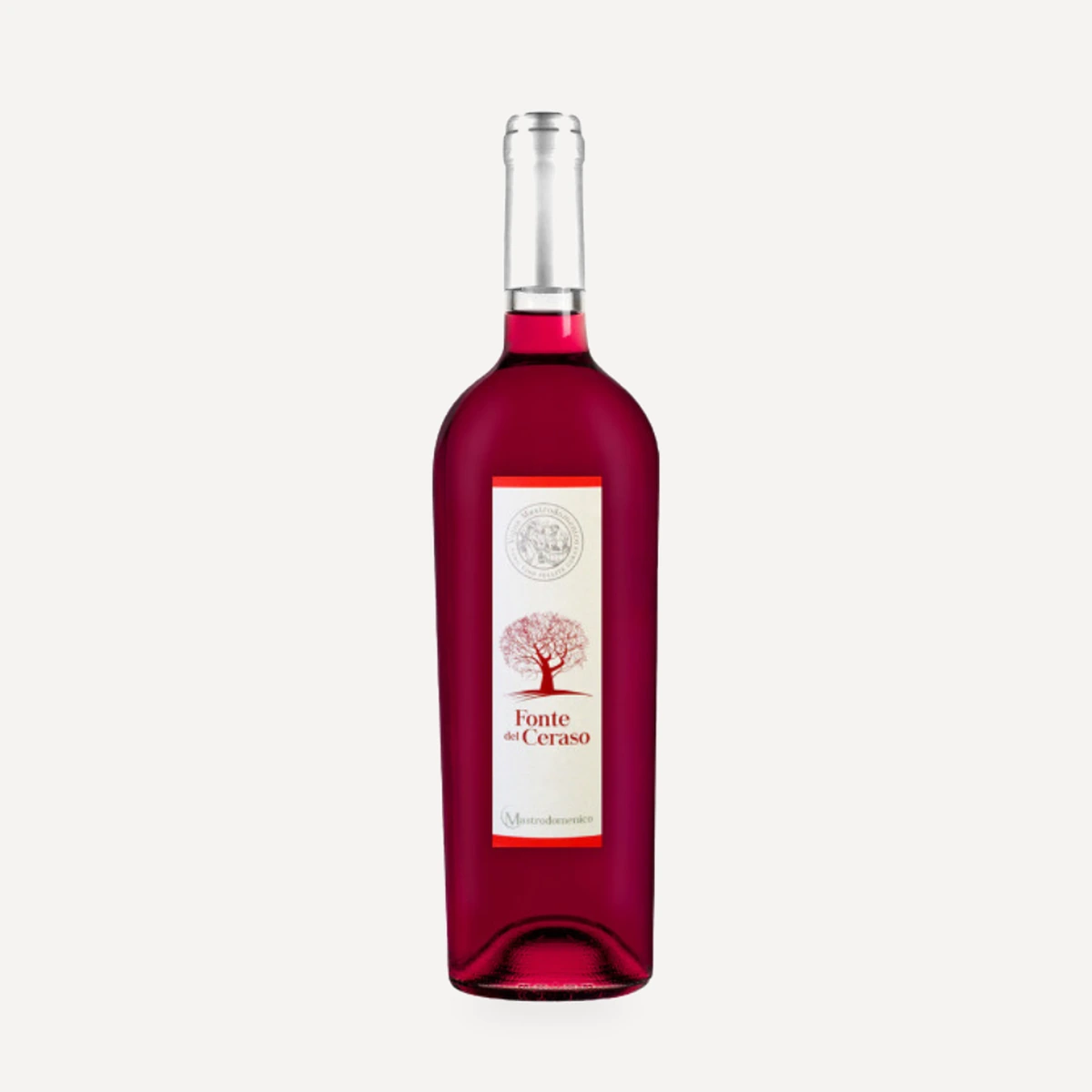
Vigne Mastrodomenico developed gradually from the management of organic vineyards into an estate that vinified its own crop. Likos was its first label. The range subsequently expanded with Mòs, a Basilicata IGT; Shekàr, a passito made from Aglianico; Fonte del Ceraso, an Aglianico rosé; and Likos Première. This development is presented as a deliberate, progressive project grounded in artisanal production, local tradition and environmental care.
2011: Farm to Fork traceability
In 2011, Giuseppe Mastrodomenico, an engineering graduate of the Politecnico di Torino, established a partnership with the European Farm to Fork consortium. The EU-funded pilot brought together companies and universities to trace the estate's products from vineyard to bottle. Beginning with the 2011 vintage, a QR code allowed consumers to retrieve information about an individual bottle, including growing conditions, harvest date, maturation and bottling. A purpose-designed wireless sensor network collected data in both the vineyard and cellar.
2022 onward: precision monitoring and agroecology
At the beginning of 2022, the estate began systematic remote monitoring of its vineyards with Sentinel-2 satellite data. The project expanded the earlier sensor-based work into precision viticulture: imagery was processed through SNAP and QGIS to follow vine vigour, water stress, leaf area, soil moisture, chlorophyll, nitrogen stress and water bodies. It also supported decisions on emergency or precision irrigation and monitored areas exposed to wildfire.
Through FIVI's Fivi4Future project, the estate adopted the 4Grapes application and installed four traps to monitor vineyard moths. xFarm added digital records, zoning, crop-protection and irrigation functions, together with forecasts and observations for rainfall, temperature, wind, humidity and atmospheric pressure. The estate also began an experimental assessment of the vineyard through the SAP/MAS agroecological-structure index.
By spring 2023, the monitoring programme included direct soil observation, pH and conductivity measurements, laboratory analysis, satellite and drone surveys, geolocation of spontaneous plant species, and nitrogen-prescription maps. Natural grassing was retained as part of the estate's soil-management approach.
Terroir
The estate's approximately eight hectares of vineyards occupy a small hill at Acquarossa Piano della Mezzana in the countryside of Rapolla, on the lower slopes of Monte Vulture. The vines lie at about 320 metres above sea level. The site has a sunny exposure and constant ventilation and is surrounded by an unurbanised landscape.
Monte Vulture is an extinct Quaternary volcano. The vineyard journal depicts the site through exposed stones, grey clay, Mediterranean vegetation and the visual contrasts produced by strong summer sun. Vineyard monitoring also evaluates the Mezzana soil unit's pedology, texture and particle size, while field surveys record soil structure, colour and stoniness.
The vineyard follows the Venosa–Brindisi section of the Via Appia Antica and lies below the Copper Age settlement of Toppo Daguzzo. These archaeological and historic routes form part of the estate's understanding of place.
The winery and cellars are in Barile, on Monte Vulture's eastern slopes. They are carved into volcanic tuff and belong to an old cave complex associated with Basilian presence and crypts used for Byzantine rites. The caves maintain a naturally balanced temperature and humidity for wine maturation and storage. They stand along a historic network of routes that included the Via Herculia, royal roads and the national road between Contursi and Barletta.
Vinificazione
The vineyards are managed organically. Natural grassing is a central soil practice: the permanent or spontaneous sward is retained to support the soil microbiome, while the estate monitors nutrient deficiencies and erosion risks so that preventive work can be planned. Field observations are supported by soil sampling, laboratory analysis, pH and electrical-conductivity testers, satellite imagery, drone surveys and artificial-intelligence tools.
In spring 2023, flowering plants in the rows and beneath the vines were inventoried and geolocated. Recorded species included Anthemis arvensis, Coleostephus myconis, Papaver pseudoorientale, Geranium pusillum, Crepis setosa, Malva setigera, Lathyrus clymenum, Secale cereale, Hordeum murinum, Anisantha sterilis, Hordeum vulgare, Trifolium hybridum and Medicago arabica. The observations were compared with the previous year's data to improve zonal knowledge and predictive models. Nitrogen-prescription maps prepared in October 2022 were cross-referenced with aridity, soil moisture and salinity information and checked through field and laboratory measurements.
Since the beginning of 2022, Sentinel-2 data downloaded at five-day intervals have been processed in SNAP and validated in QGIS. Resampling the satellite's 13 spectral bands to a 10-metre grid generates maps for vegetative vigour, adjusted vigour, crop water stress, leaf area, soil moisture, chlorophyll, nitrogen stress and water-body differentiation. NDVI identifies changes in biomass and zones of weak growth; NDMI helps locate water-stressed sectors where emergency or precision irrigation may be needed. Field inspection of shoot tips complements the remote data. QGIS maps combine altitude, slope, roughness, irrigation phases and regional digital-terrain information, while NBR and dNBR indices monitor wildfire risk, burned areas and fire intensity across the surrounding territory.
The Fivi4Future protocol uses 4Grapes and four traps to observe Lobesia botrana, Argyrotaenia ljungiana and Cryptoblabes gnidiella. Monitoring also covers phenology, vegetative parameters, primary and secondary vine disorders, soil management, nutritional status and grape production. xFarm supports the digital field log, zoning, crop protection and irrigation, together with weather forecasts and data for accumulated rainfall, temperature, wind direction, humidity and atmospheric pressure.
An experimental SAP/MAS assessment considers the distance between the estate centre and woods or shrubland, water points, internal and external ecological corridors, hedges and living-fence biodiversity, erosion, natural grassing, organic management and the use of agrobiodiversity. The estate's initial assessment classified the vineyard's principal agroecological structure as slightly developed.
Aglianico is normally harvested in October and taken immediately to the cellar. The estate's harvest writing describes work beginning at dawn, roses planted at the ends of rows and the crop moving into the cellar at the close of the working day.
Vigne Mastrodomenico vinifies grapes grown in its organic Acquarossa vineyard. The crop is normally harvested in October and transferred immediately to the winery in Barile.
Production and maturation take place in cellars carved into volcanic tuff. These underground rooms form part of an old cave system and maintain a natural balance of temperature and humidity suited to maturation and storage. The fresh aroma of must and the movement from vineyard into the cave cellar are recurring elements of the family's account of harvest.
Since the 2011 vintage, a purpose-designed wireless sensor network has collected information in both the vineyard and winery for the Farm to Fork pilot. Bottle-specific QR records were designed to follow the chain through growing conditions, harvest date, maturation and final bottling.
Filosofia
The family's project is built around organic vineyard management, respect for tradition and environmental responsibility. Donato Mastrodomenico's guiding idea is that demanding ground can produce high quality; the aim of vinifying the family's crop was therefore to make wines that remain recognisably tied to the volcanic and rugged Vulture landscape.
Development has been gradual rather than abrupt: vineyard work came first, followed by the decision to vinify, the creation of Likos and the measured addition of further labels. Tradition and technology are treated as complementary. The estate pairs manual knowledge of its vineyard with sensors, traceability, satellite monitoring, GIS analysis, digital field records and experimental agroecological assessment.
Emanuela Mastrodomenico presents patience, respect for seasons, perseverance, family unity and sharing as the human foundations of the estate. Her writing treats the vineyard as the starting point for communicating Lucania and regards wine as a convergence of territory, history, innovation, restraint, memory and personal experience.
Vini