History
Origins in Guardiola
Alta Mora began as a continually evolving Etna project centred on the restoration of the traditional dry-stone walls supporting the terraces of Contrada Guardiola. The contrada’s landscape and its ancient, persistent form of mountain viticulture supplied both the motivation for the venture and the inspiration for the name Alta Mora.
The project expanded across sites on the northern side of Etna. Nerello Mascalese came from Verzella, Feudo di Mezzo, Guardiola and Solicchiata, while Carricante was selected in Pietramarina, Verzella and Arrigo. The winery was established in Contrada Verzella, within the municipality of Castiglione di Sicilia.
Ancient vines and contrada selections
Guardiola became one of Alta Mora’s principal cru vineyards. Its Nerello Mascalese vines include plants more than 150 years old, preserved over generations and cultivated on the historic terraces. Feudo di Mezzo added a century-old Nerello Mascalese vineyard at 650 metres in Passopisciaro, trained both as alberello and espalier. A further century-old alberello vineyard in the Passopisciaro area supplied the 2014 Etna Rosso used for the TYME limited edition.
The range developed in two complementary directions: the Etna DOC Classici—Etna Bianco, Etna Rosato and Etna Rosso—and wines focused on individual contrade, including Guardiola, Feudo di Mezzo and Arrigo.
Art and territory
The TYME — Thank You Mother Etna project joined the 2014 Etna Rosso with three limited, numbered fine-art labels by Paolo Troilo. The works, titled Vendemmia, Alba and PWPM, were dedicated to Etna.
In 2022, Alta Mora’s black volcanic vineyards became one of the settings for Lightland, Vittorio Storaro’s photographic and film project on the relationship between Sicilian light and contrasting vineyard soils. The project was presented in Milan on 25 October 2022, followed by a Christie’s charity auction benefiting the Istituto di Ricerche Farmacologiche Mario Negri.
Recent recognition
Alta Mora Etna Bianco 2019 received Tre Bicchieri in 2020, followed by the same distinction for the 2020 vintage in 2021. In 2022, Alta Mora Feudo di Mezzo 2017 and Guardiola 2017 received WOW gold medals, while Etna Rosso 2019 earned Tre Bicchieri 2023. In 2023, Guardiola 2019 was named Red Wine of the Year by Le Guide de L’Espresso — I 1,000 Vini d’Italia 2023 and later received Tre Bicchieri 2024. The estate subsequently became part of Cusumano’s winery-visit programme in Contrada Verzella, with experiences devoted to the cellar, the Classici, the contrada crus and the historic Guardiola vineyard.
Terroir
Alta Mora lies on the northern side of Etna, with its winery in Contrada Verzella at Castiglione di Sicilia. The vineyards occupy multiple contrade rather than a single homogeneous site, and their individual conditions are treated as an essential part of the estate’s mountain viticulture.
Black volcanic soil is explicitly associated with the Solicchiata vineyard. At 750 metres, this site combines volcanic salinity with conditions that allow Nerello Mascalese to retain acidity as it reaches aromatic maturity.
Contrada Feudo di Mezzo lies at 650 metres in the Passopisciaro area. Its heterogeneous soils support old, deeply rooted vines and provide balanced water conditions, protecting them from both drought stress and excessive moisture.
At Guardiola, altitude and site conditions slow the ripening of Nerello Mascalese. The resulting extended maturation develops a dense tannic structure and distinctive aromas. The contrada’s historic terraces, dry-stone walls and vines exceeding 150 years preserve a long continuity of Etna viticulture.
Carricante comes from Pietramarina, Verzella and Arrigo on Etna’s northern slope. The relative freshness of these sites permits full ripening while retaining the variety’s aromatic identity. Nerello Mascalese is cultivated in Verzella, Feudo di Mezzo, Guardiola and Solicchiata, with each contrada contributing different mountain-site characteristics.
Winemaking
Alta Mora characterises its work as heroic mountain viticulture based on indigenous Etna varieties. Nerello Mascalese is grown using both alberello and espalier systems in Verzella, Feudo di Mezzo, Guardiola and Solicchiata. Carricante is cultivated in Pietramarina, Verzella and Arrigo.
The estate preserves old-vine material: Feudo di Mezzo and the Passopisciaro vineyard are described as century-old, while Guardiola includes vines more than 150 years old. The restoration of traditional dry-stone walls on Guardiola’s terraces was the formative act of the Alta Mora project.
In Solicchiata, every stage of ripening is monitored so that harvest decisions can combine aromatic maturity with fresh acidity. The vineyard comprises approximately 1 ha of Nerello Mascalese at 750 metres.
Alta Mora wines are presented as sustainable, and Cusumano holds SOStain and VIVA certifications. Certification bodies, certification dates and detailed vineyard protocols are not specified.
Alta Mora operates a working cellar in Contrada Verzella, Castiglione di Sicilia. Its production is organised around two groups: the Etna DOC Classici—white, rosé and red—and wines devoted to individual contrade, including Guardiola, Feudo di Mezzo and Arrigo.
The cellar accommodates vinification and visitor programmes that examine both the Classici and contrada crus. Current information identifies protective-atmosphere bottling and potassium metabisulphite as a preservative and antioxidant for the 2024 Etna Rosato. Detailed fermentation, extraction, maturation and élevage protocols are not presented as estate-wide practices.
Philosophy
Alta Mora defines itself as a continually evolving project rooted in Etna’s ancient and tenacious viticulture. Its central idea is to interpret the mountain through native Carricante and Nerello Mascalese while preserving the distinctions among individual contrade.
The restoration of Guardiola’s dry-stone terraces expresses a commitment to the physical and historical fabric of the landscape. The retention of century-old and 150-year-old vines likewise places continuity ahead of vineyard uniformity. Alta Mora describes this work as heroic viticulture: high-altitude cultivation, old vines, alberello training and sharply differentiated volcanic sites are treated as defining conditions rather than obstacles.
Art provides a second means of interpreting the territory. Paolo Troilo’s TYME labels and Vittorio Storaro’s Lightland project connect Etna’s vineyards with visual accounts of harvest, volcanic power, colour and Sicilian light.
Wines
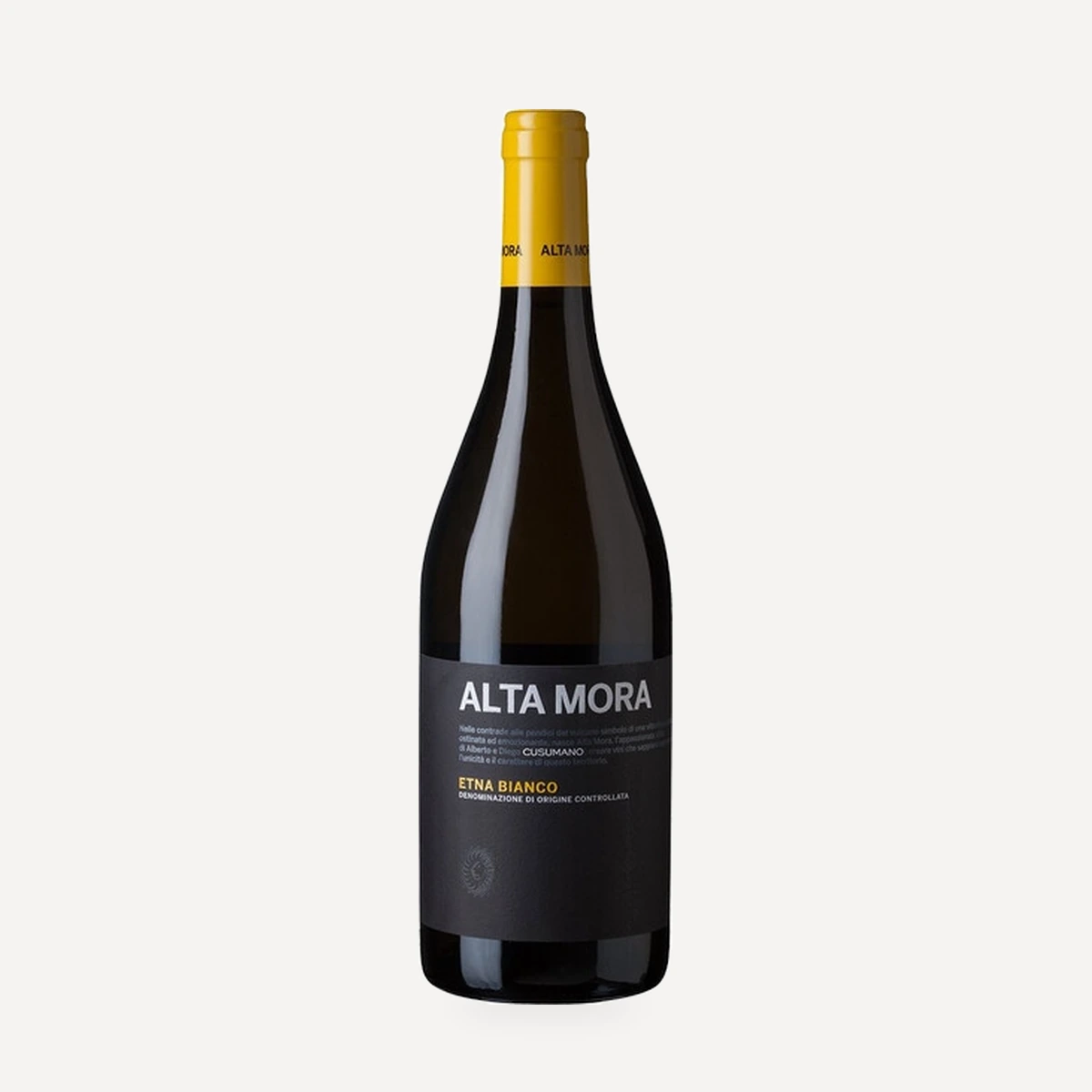
Alta Mora Etna Bianco DOC
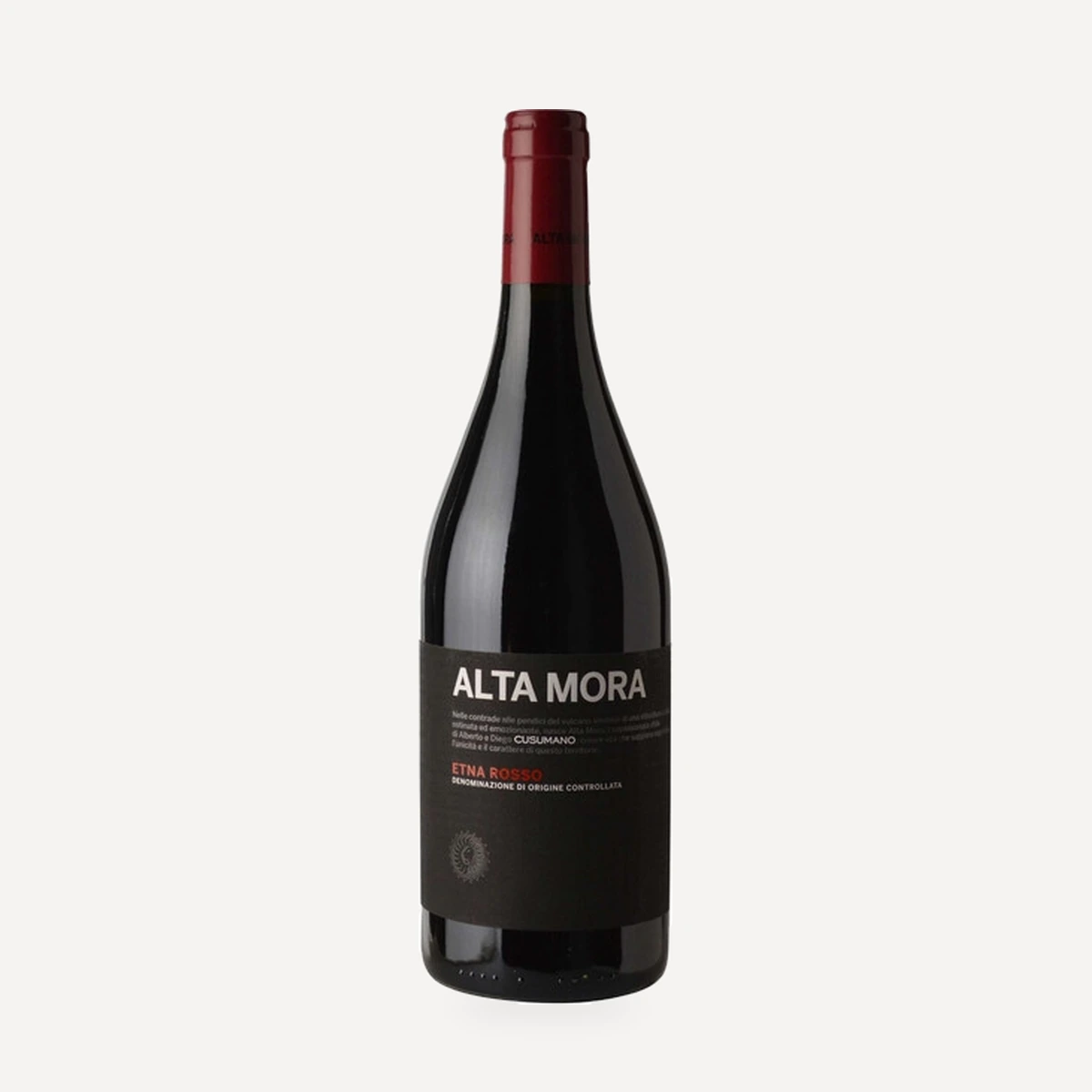
Alta Mora Etna Rosso DOC
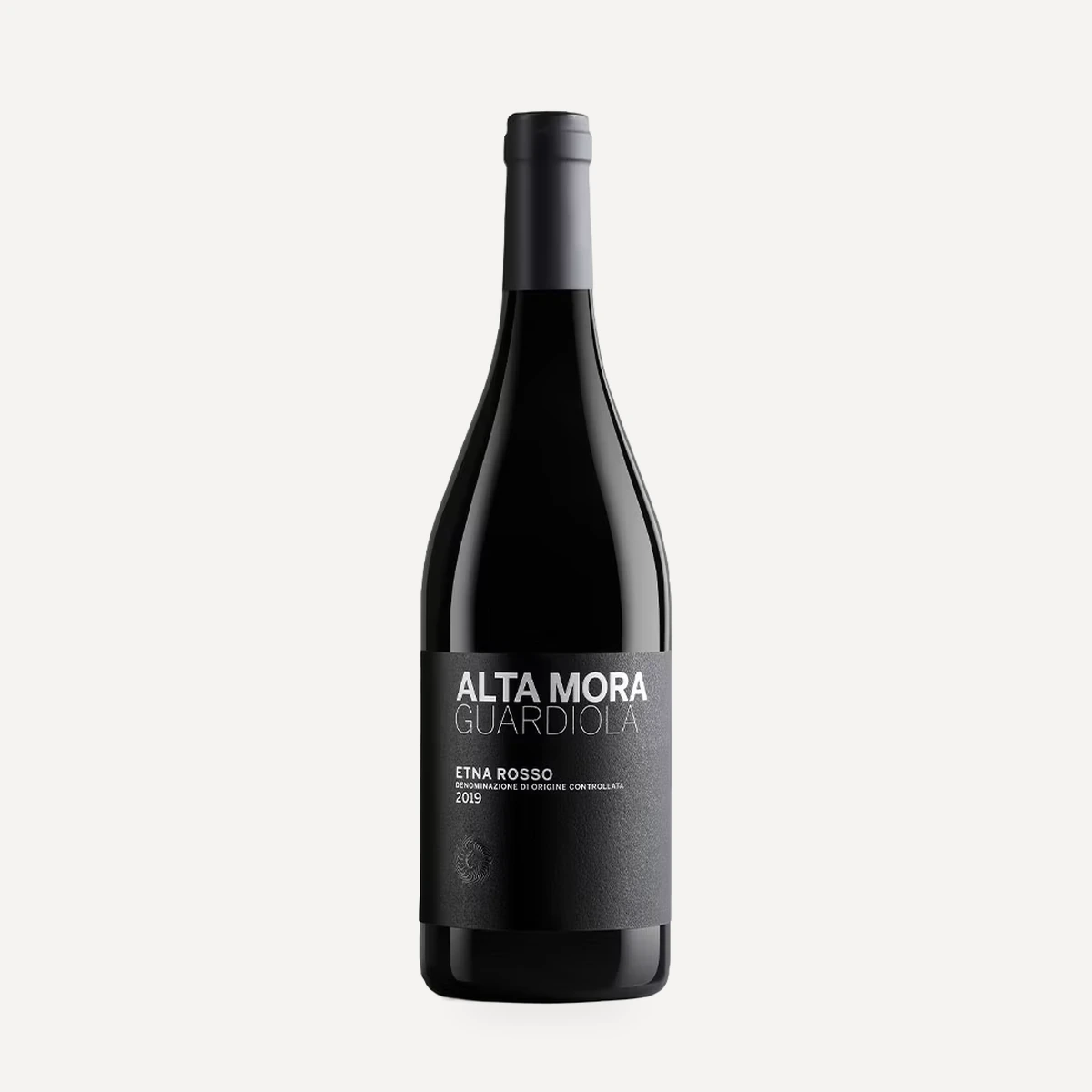
Alta Mora Guardiola DOC