History
Etna’s early-20th-century wine economy
By the beginning of the 20th century, the Etna area was producing substantial volumes of wine for export. Passopisciaro developed to accommodate the many agricultural workers who moved there for employment. This expansion encouraged both the construction of large lava-stone palmenti and the emergence of numerous small producers.
Gaetano Calabretta and donna Grazia
The Calabretta family’s documented history begins in the early 1900s, when Gaetano Calabretta married donna Grazia. Together they restored inherited land and acquired their first additional properties.
Between the late 1920s and early 1930s, a large proportion of the family’s production was sold in northern Italy. The family owned two retail shops in Liguria, one in Santa Margherita Ligure and the other in Rapallo.
Salvatore and donna Concetta
At the end of the Second World War, Gaetano and Grazia’s son Salvatore took over cultivation of the family vineyards. He married donna Concetta, who also came from a winegrowing family and brought substantial vineyard holdings into the family sphere. The couple purchased further properties, enlarged the vineyard base and relaunched the family business. The family’s holdings included the Savina estate in the Comune di Randazzo.
The fourth generation and the new winery
Massimo and Massimiliano—respectively the son and grandson of Salvatore and Concetta—became the new driving forces during the 1990s. Through targeted investment they reorganized the cellar. In 1997 they built a new winery, began bottling and developed worldwide distribution for Calabretta wines.
The portfolio also broadened. Alongside the traditional aged Etna red and the Pista & Mutta rosato, the family introduced single-variety wines, contrada wines and white wines while continuing its traditional Etna production.
Terroir
Volcanic setting
Etna rises to more than 3,000 m in the central Mediterranean. Successive lava flows and ash deposits created physically and chemically heterogeneous soils. Differences in soil, elevation and solar exposure formed contrade with distinct pedoclimatic conditions; considerable variation can occur even within one contrada, including individual micro-parcels.
The vineyards occupy elevations from approximately 600 m to more than 1,000 m. Their environment combines mineral-rich soils, stones of different origins and sizes known collectively as ripiddu, and dark earth that retains daytime heat into the night. Other defining conditions include strong day–night temperature differences, intense sunlight, high luminosity, cooling winds and moderate rainfall on certain slopes. In the Pinot Noir vineyard above 900 m, the day–night temperature difference can exceed 20°C.
Altitude, wind and the microclimate reduce the need for sulfur and copper treatments. Ripening slows during October, giving greater freedom to select the harvest date; picking in the most suitable zones generally falls between 5 and 20 October.
Contrada variation
Calderara, in Randazzo, lies at approximately 700–750 m. Its sandy ground contains abundant ripiddu and is covered by a bed of stones.
Passopisciaro, in Castiglione di Sicilia, lies at approximately 680 m. It has fewer stones and a greater proportion of earth than Calderara.
Solicchiata, also in Castiglione di Sicilia, lies at approximately 780 m and has very sandy soil.
Battiati/Battisti–Zocconero rises above 900 m and is formed from alluvial volcanic sand.
Winemaking
Vineyard structure and biodiversity
The family has cultivated vineyards for four generations following long-established Etna practices. Vines are trained either as alberello or on low trellises that retain a bush-vine form. The vineyards occupy stepped terraces supported by dry-stone walls. These walls are repaired annually, while old paths through the vineyards are kept clear.
Vines grow alongside olive trees and scattered fruit trees. The wider vineyard habitat includes crickets, wasps, hornets and wild rabbits; the rabbits sometimes eat the young leaves of newly planted vines. Seasonal plants include prickly pear, sparagogne and cavolicelli, while broom and mountain flowers occur at higher elevations.
Pruning and yield management
Pruning takes place between December and February after leaf fall. Old shoots are removed carefully, leaving young wood. Established alberello vines receive a very tight traditional a spalla pruning, while newly replanted vineyards follow Guyot. This approach is intended to produce very low yields and a balanced leaf-to-fruit ratio without subsequent cluster thinning.
Soil management and nutrition
Green manure is used, with mulching applied when needed. Soil aeration is considered important for cultivation, water retention and soil microorganisms. Hand hoeing, mechanical hoeing, ploughing and digging are performed several times during the year. Operations may be deep or superficial according to timing and need, but final hand work remains essential.
The stony vineyards are physically demanding to cultivate. At the beginning of the 20th century, some plots required oxen and others mules; horses were rarely used. Tractors and motorized hoes now assist the work. Natural compost is applied occasionally; livestock historically supplied this fertilizer. The property retains a mannora for sheep and goats, original lava-stone stables with mangers, old cultivation implements and equipment once used to harness working animals.
Replanting and own-rooted vines
Cold nights and volcanic ground are considered unfavorable to phylloxera, allowing many own-rooted vines to survive and making replanting without American rootstock possible. Massal selection and own-rooted material account for more than 50% of the replanted vineyards. One new planting is entirely ungrafted and derived from rigorous massal selection.
Plant protection and summer work
No synthetic chemicals are used. Sulfur and copper sulfate are kept to very low levels. Powdery mildew has traditionally been treated with small quantities of sulfur, preferably directed toward the ground. Nerello Mascalese, Minnella and Carricante are considered relatively less susceptible, whereas Nerello Cappuccio is particularly sensitive. Downy-mildew risk is monitored after rain, with attention to the traditional “three tens” conditions: at least 10 mm of rain, a temperature of 10°C and shoots 10 cm long. Modest quantities of copper are applied occasionally for protection.
Excess grass is removed in summer to limit competition for water, but without excessive clearance. The work is performed by hand, with hoes and with a patented sucker-removing implement designed not to injure the vine trunk. Decisions follow the plant’s vegetative cycle and aim to prevent vine stress.
Harvest
Pre-harvest analyses are combined with longstanding empirical observation of vineyard aromas and insect activity. Harvest generally begins around mid-October, with the most suitable areas usually picked between 5 and 20 October as fully ripe fruit is reached. All bunches are harvested by hand into small baskets. They are handled carefully to avoid crushing and are transported immediately to the winery intact.
Cellar and environmental control
The winery is arranged over several levels, including an underground cellar excavated from volcanic rock. Its naturally cool temperature and humidity provide the conditions for maturation. A climate-control system maintains stable conditions without circulating air, preserving the indigenous bacteria, yeasts and spores involved in natural alcoholic and malolactic fermentations. The system is powered by a heat pump and photovoltaic installation.
Reception, fermentation and maceration
Hand-picked bunches arrive at the winery immediately and intact, then undergo destemming and gentle crushing. Stems are excluded from fermentation because they do not lignify completely under local conditions and could release green tannins into the must.
Fermentation generally takes place in small and medium-small steel vessels. Gentle crushing and relatively small fermenters are used to obtain controlled extraction of phenolic compounds and color. Numerous pump-overs make it possible to conduct macerations that are short but complete. Fermentation decisions are adapted through experience and experimentation to the grape variety, vine age and vintage.
Indigenous yeasts are preferred, consistent with the minimal use of sulfur and copper in the vineyards and the avoidance of synthetic chemistry. Alcoholic and malolactic fermentations occur naturally without commercial yeast additions. Malolactic fermentation is also preferred for white wines. Sulfur dioxide is kept at very low levels.
Spent, fully extracted pomace is either sent to a distillery or returned to the vineyards. In the traditional Pista & Mutta rosato method, skin contact is brief: the fruit is crushed (pista) and the must is immediately transferred away (mutta), limiting both tannin and color.
Wood and underground maturation
After natural malolactic fermentation, wines descend to the underground cellar. Numerous large Slavonian-oak casks permit extended traditional maturation and the natural precipitation of lees and tartrates. Used barriques are reserved for small lots, providing oxygen exchange with limited wood impact. A range of vessel sizes, including very small casks, allows individual vineyard lots to remain separate until bottling.
During prolonged maturation, the cellar’s cool temperature and humidity and the permeability of wood support color stabilization, sedimentation, tannin softening and work by the fine lees. Regular tastings follow each lot’s development. The duration and final course vary with grape variety, contrada and vintage.
Bottling and bottle ageing
Once the wine is ready, a small addition of sulfur dioxide provides protection while seeking to preserve drinkability. The modern bottling and packaging line uses carbon dioxide to remove air and reduce the incidence of cork-related aromas. Formats are 0.75-litre bottles, 1.5-litre magnums and 3-litre jeroboams.
Bottle maturation is treated as an essential continuation of ageing rather than a simple postscript to wood. Its progress is followed according to wine and vintage, with release intended to occur only after this phase has been completed.
Philosophy
Tradition, adaptation and patience
The family defines its work through four generations of Etna winegrowing tradition: tight hand pruning, terraced alberello vineyards, dry-stone walls, soil cultivation, minimal treatments and manual harvest. Tradition is not treated as a fixed recipe. Fermentation, maceration, the choice between long and short ageing, vessel selection and bottle maturation are adjusted to grape variety, vine age, contrada and vintage.
Experience is combined with continuous experimentation and patient research. Each contrada is intended to retain its own character, and separate lots are maintained until bottling when required. Long underground maturation and bottle ageing are allowed to follow the needs of the individual wine rather than a uniform schedule.
Limited intervention
The farming approach is described as “natural organic,” based on favorable altitude, wind and microclimate, no synthetic chemicals and very limited sulfur and copper. Indigenous yeasts and bacteria are preserved in the cellar, commercial yeasts are avoided, alcoholic and malolactic fermentations occur naturally, and sulfur dioxide additions are restrained. The stated goals are authenticity and drinkability.
Landscape and continuity
Maintaining dry-stone walls, clearing historic vineyard paths, retaining mixed vegetation and working with existing biodiversity form part of the family’s relationship with the landscape. Old practices coexist with pre-harvest analysis, modern cellar controls, photovoltaic energy and an updated bottling line where these tools support rather than replace the estate’s traditional approach.
Wines
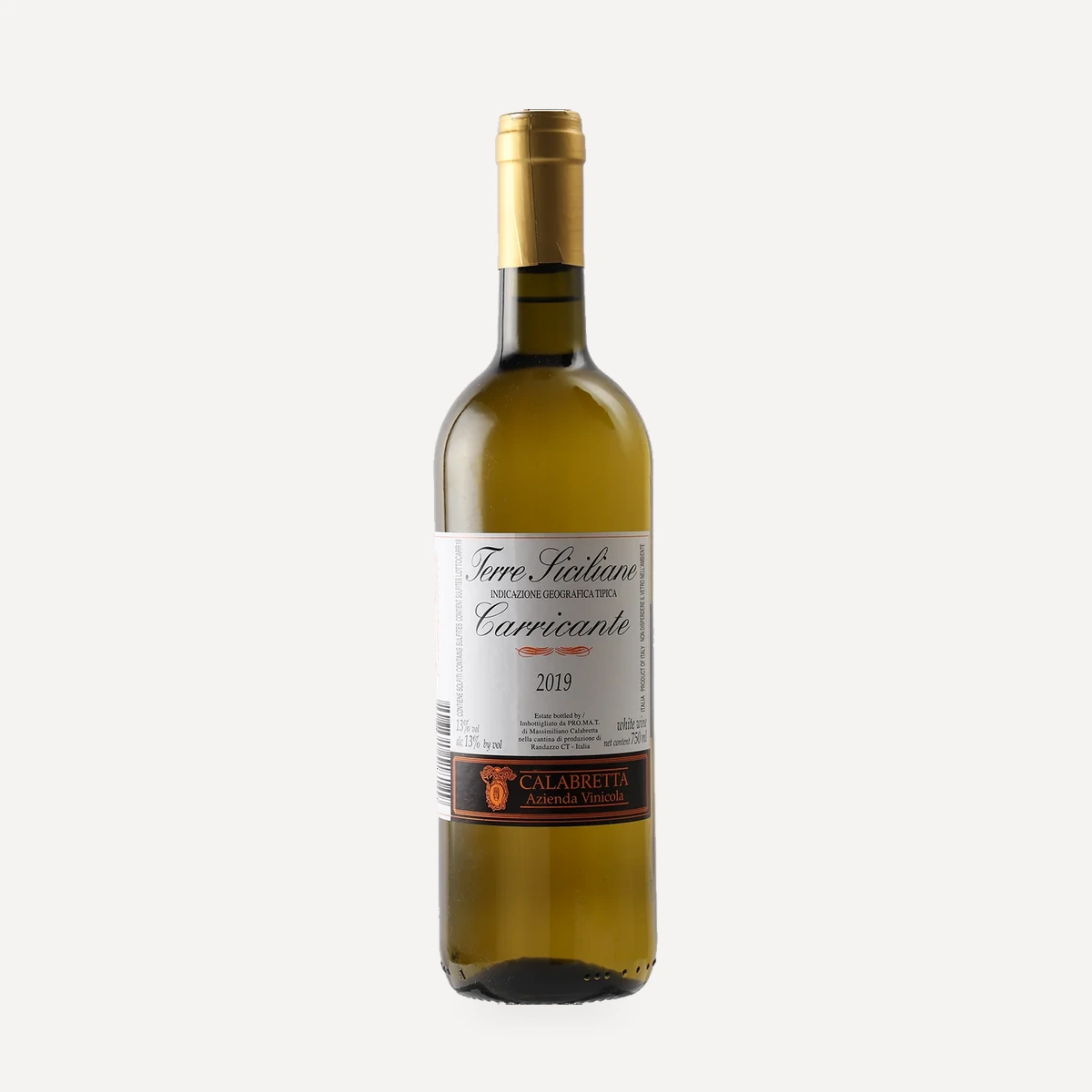
Carricante Bianco

Nonna Concetta
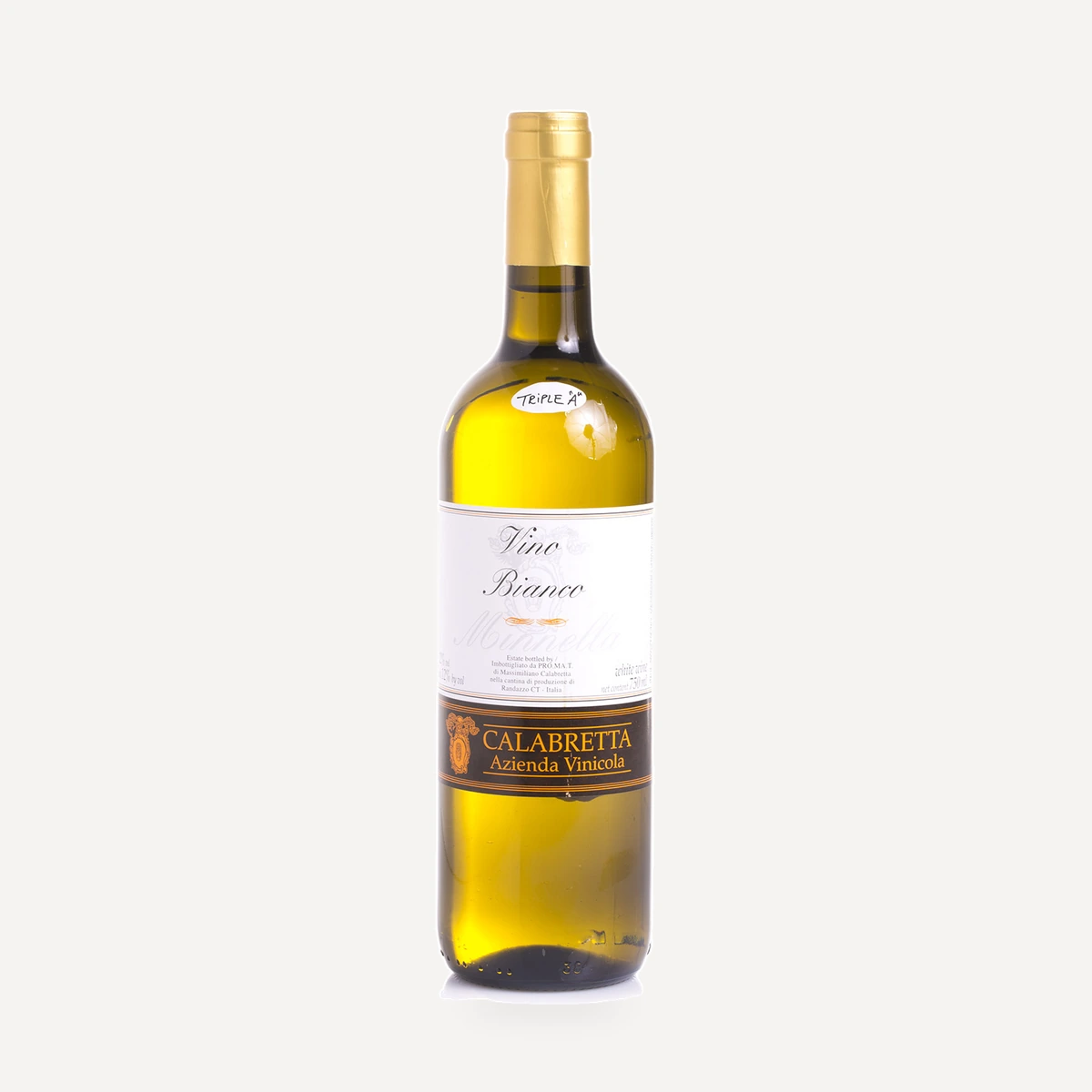
Minnella Bianca

Minnella Nera

GaioGaio

Piedefranco – Ungrafted

Rosato Pista & Mutta

Nerello Cappuccio
Pinot Noir
Vigne Vecchie

Contrada dei Centenari

Cala Cala Rosso

Cala Cala Bianco

Sara