About this wine
Vineyard and terroir
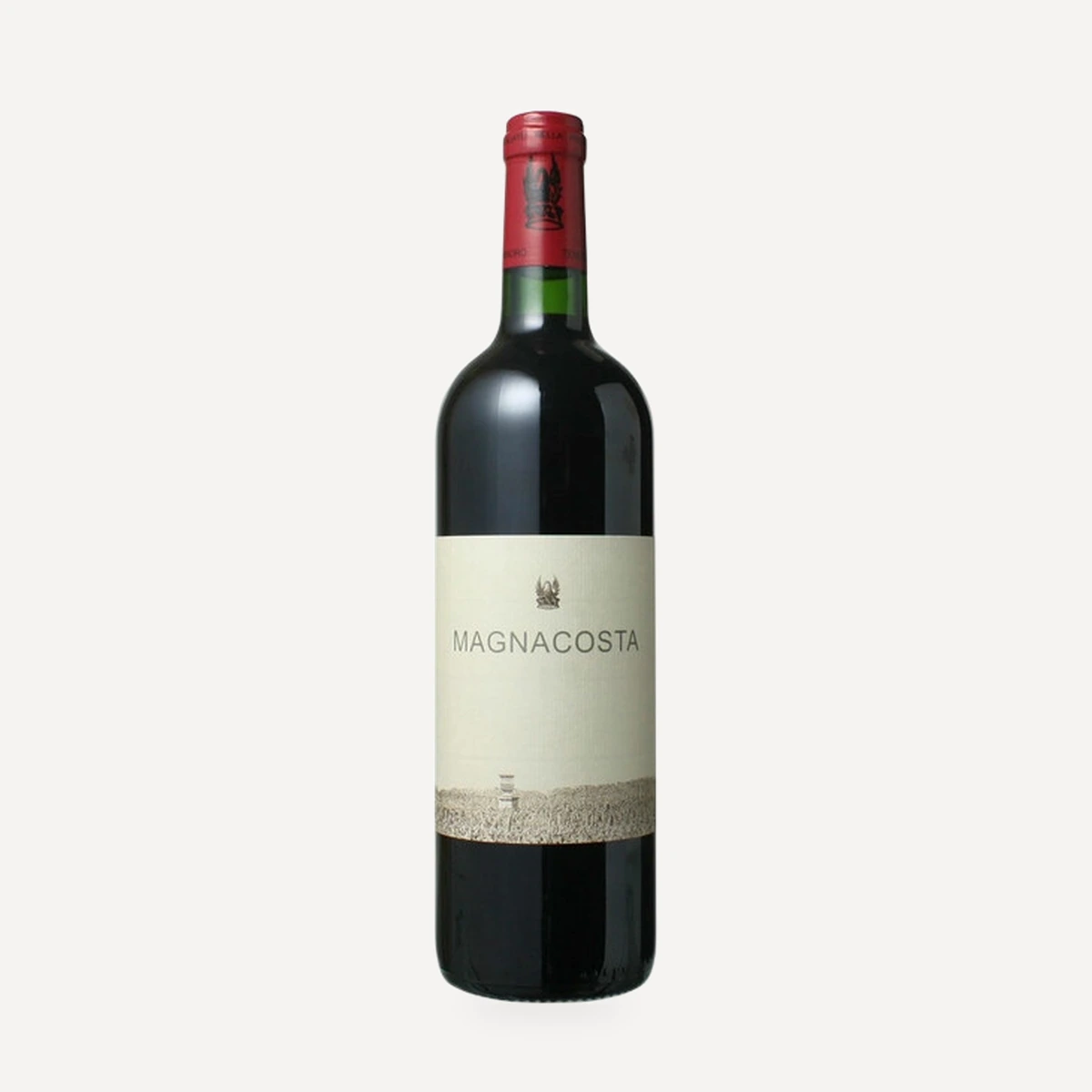
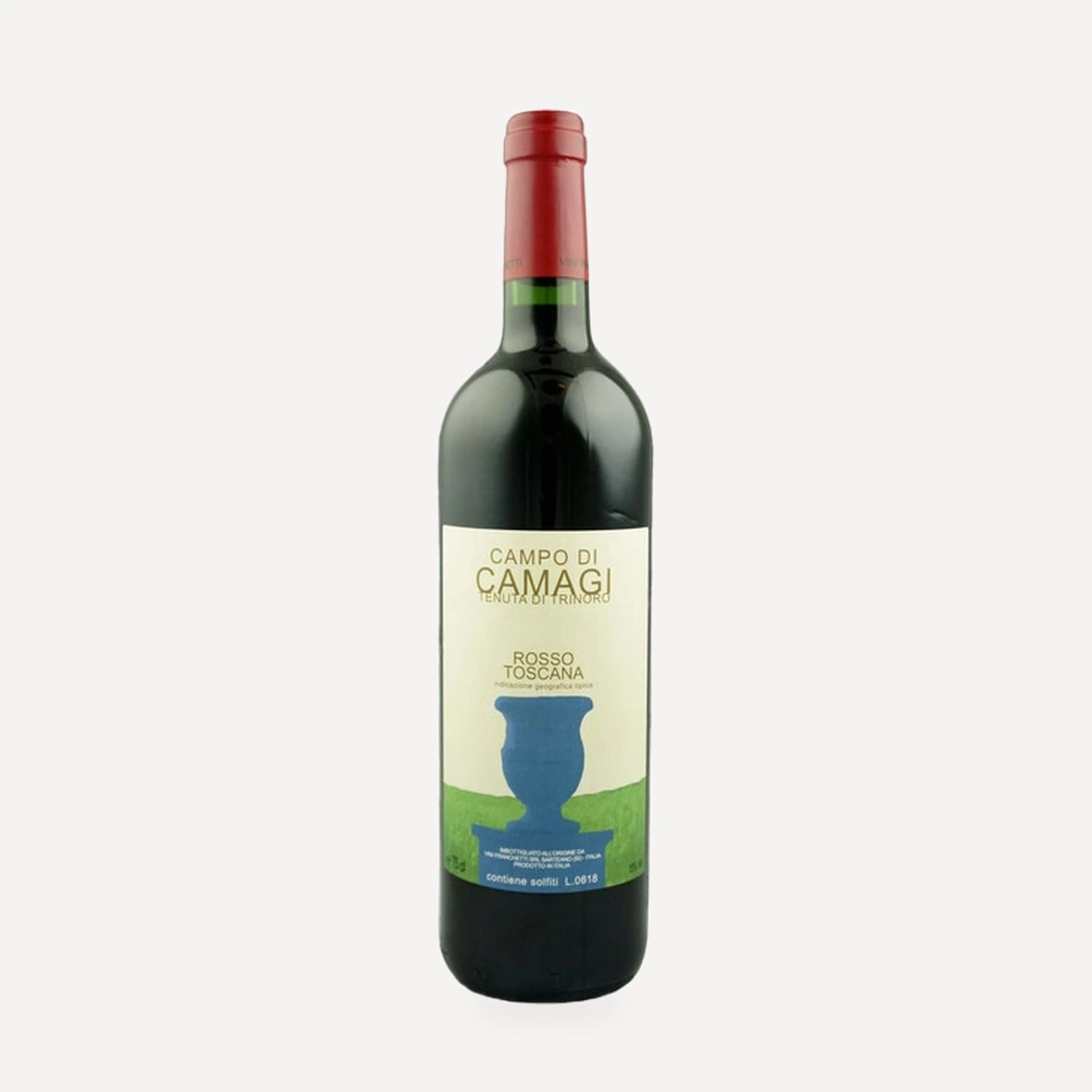
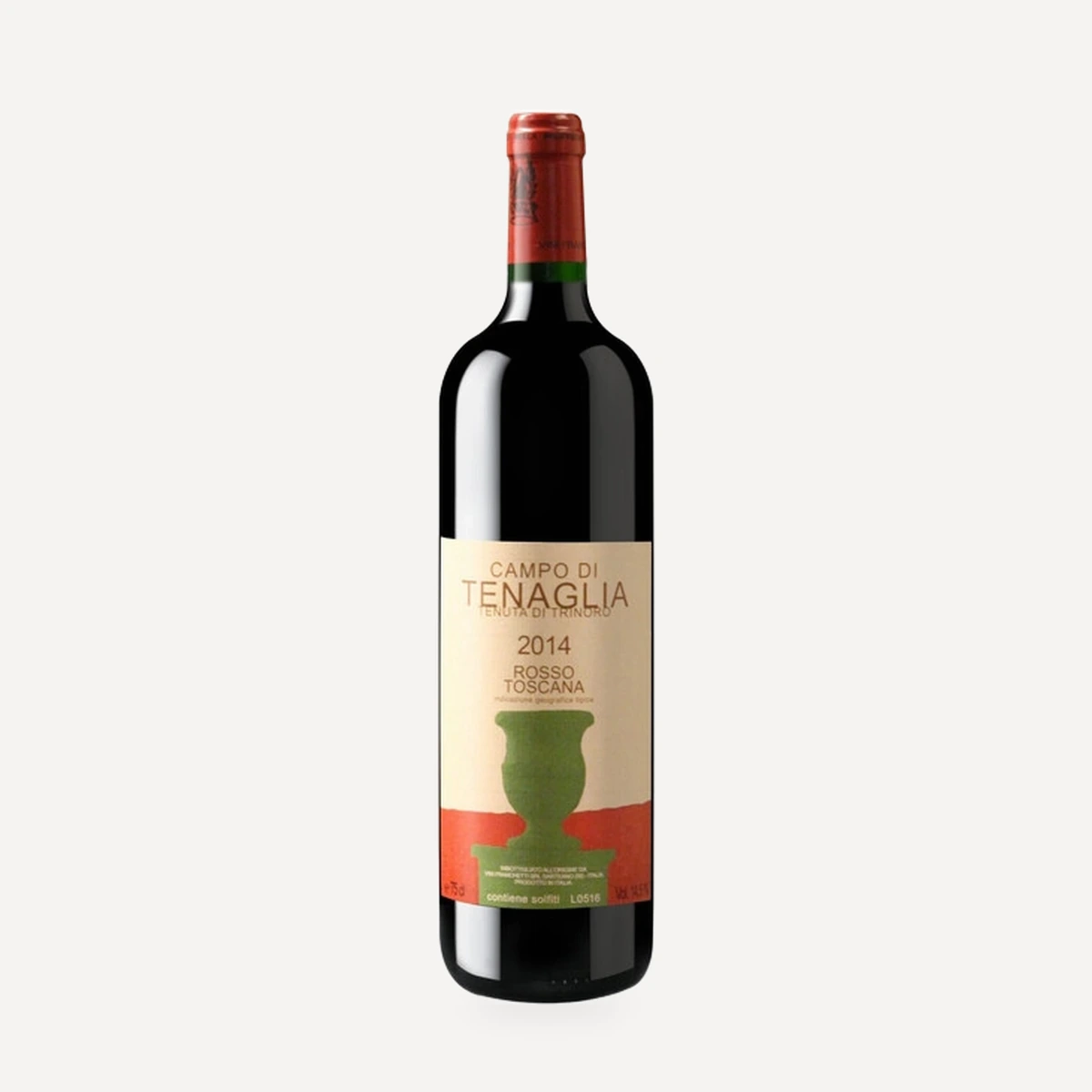
Campo di Tenaglia belongs to Collezione «I Campi», a limited-production set of three Cabernet Franc crus created to express the distinct character of individual parcels. Campo di Magnacosta inaugurated the collection in 2011; Campo di Tenaglia and Campo di Camagi followed in 2014.
The present-day description identifies Tenaglia as a steep 0.8-hectare parcel in Val d’Orcia, where Tuscany approaches Umbria and Lazio. Its deep, freely draining soil combines coarse sand, clay and small fragments of crushed limestone; earlier descriptions place more than 2 m of crushed limestone and heavy sand beneath the vines. The open slope faces the sunset at approximately 500 m a.s.l., giving the fruit prolonged afternoon and evening light. The parcel wraps around a small stand of trees, and its pincer-like shape gives the vineyard its name: “Tenaglia” means “pincer.”
Planting density is 10,000 vines per hectare. The technical sheets record vine ages of 25 years for 2014–2017, 26 years in 2018, 27 in 2019, 28 in 2020 and 29 in 2021. The 2022 material instead describes the vineyard as 22 years old, while the 2023 description says it is well over 20 years old.
Sheep manure was used for fertilisation in 2014–2020; the 2021 sheet simply records manure. Vineyard treatments across the technical sheets include clay, propolis and grapefruit-seed extract, with copper and sulphur also listed from 2019 onward. Green harvesting and canopy management are recurring tools: in the dry 2021 and 2022 seasons, bunches were thinned to reduce the burden on the vines, while foliage was retained to shade the fruit from sunburn. The same shading strategy followed the July 2023 green harvest.
Grapes
100% Cabernet Franc from Campo di Tenaglia.
Vinification
The 2014–2018 wines underwent 12 days of alcoholic fermentation in steel vats. Fermentation was extended to 15 days in stainless steel for 2019, 2020 and 2021. The 2022 and 2023 wines also fermented in stainless-steel tanks, although no duration is given.
Harvest dates vary with the season. The parcel was picked on 6 October in 2016 and 2017, 9 October in 2018, 10 October in 2019, 14 October in 2021, 6 October in 2022 and 4 October in 2023. Manual selection is specified for 2019–2021, and the 2022 fruit was harvested by hand. For 2020, the technical sheet records a hand-selected harvest on 9 October, while the vintage narrative places the arrival of the highest Cabernet Franc parcels at the winery on 10 October.
Ageing
The 2014–2018 vintages matured for 8 months in new French-oak barrels and then for 11 months in cement tanks. The 2019 vintage spent 5 months in new French-oak barriques followed by 1 year in cement. The 2020 and 2021 wines received 5 months in French-oak barrels and 1 year in cement. Ageing for 2022 comprised 8 months in French barriques and 12 months in cement vats; for 2023 it was 6 months in French barriques and 12 months in cement.
Bottling was timed to the waning moon: March 2016 for the 2014, June 2017 for the 2015, March 2018 for the 2016, May 2019 for the 2017, March 2020 for the 2018, May 2021 for the 2019, March 2022 for the 2020, June 2023 for the 2021, 8 March for the 2022, and 18 April 2025 for the 2023.
Technical data
IGT Toscana, also written as IGT Rosso Toscana in several vintage technical sheets. Production is necessarily small: 1,500 bottles in 2014; 1,800 in 2015; 1,900 in 2016; 1,600 in 2017; 1,950 in 2018; 1,933 in 2019; 1,425 in 2020; 1,500 in 2021; 1,146 in 2022; and 1,946 in 2023.
Recorded yields were 25 hl/ha in the 2014–2018 sheets, 25 q/ha in 2019 and 2021, and 15 hl/ha in 2020. Severe drought and the parcel’s steep, freely draining position sharply reduced the 2022 crop; yields recovered in 2023, when almost twice as many bottles were made.
Published alcohol figures are 16% for 2018 and 15% for 2022.
Tasting profile
The site character is regularly expressed through dark fruit, spice, liquorice, substantial structure and a combination of ripeness and freshness. The 2023 has an imposing structure with ripe, polished tannins. Dark-berry aromas are lifted by balsamic notes of eucalyptus leaf, thyme and liquorice root; a long, warm summer and the sunny hillside give it a bold yet fragrant personality.
The 2022 is full-bodied, round and enveloping, with dark ripe fruit, tobacco, blackberry, spice and campfire ash. Its concentration and richness are countered by altitude-derived freshness, while the tannins have an appealingly scratchy edge characteristic of the cru.
The difficult, dry 2021 season produced firmer tannins, vivid aromas and a body that is dense yet energetic and fresh. In 2020, Cabernet Franc ripened after early September heat, rain and long intervals of sunlight. The wine is deep and layered, with black cherry, blackcurrant, cassis, dark fruit, spice, cured tobacco, wild herbs and mineral suggestions of granite or iron. Dusty tannins and a lightly chewy texture lead into a long, focused finish.
The 2019 is elegant, silky and polished, combining bright red fruit, cherry, blackberry, blood orange, mint, incense, rose petal, iron and tobacco. Its fruit is softly ripe and rounded, while the finish remains fresh, balanced and savoury.
The 2018 is exceptionally rich and concentrated, yet vivid and precise. Black fruit, smoke, spice and grilled meat meet floral, saline, mineral and savoury notes over a core of bright red fruit. The style is medium-bodied in one assessment but notably dense within the trio of Campi wines.
The drought-stressed 2017 is dark, dense and powerful, with blackcurrant, blackberry, plum jam, violet, wild rosemary, iron, tobacco, liquorice and baking spice. It was less spicy than preceding vintages and dominated in youth by strong tannins, though these were comparatively softer than in the other two Campi.
The 2016 is opaque, compact and persistent. Aromas encompass black cherry, blackberry jam, tobacco, violet, herbs, gravel, smoke, liquorice, dark chocolate, leather and crushed stone. Its polished, rounded tannins frame concentrated fruit and a long finish that remains fresh despite its opulence.
The evenly ripened 2015 was especially soft and supple. Dark cherry, blackberry and plum are joined by coffee, liquorice, tobacco, grilled herbs, lavender, new leather, flint, dry chalk and crushed minerals. Firmness is balanced by juicy freshness and a long, fruit-filled finish.
The cool 2014 is deep and tightly textured, with restrained fruit and a structure suited to extended ageing. Dark fruit, red rose, dark cherry, raspberry, cedar, tobacco, grilled herbs, spice and liquorice accompany firm tannins and generous concentration in a relatively linear, mid-weight form.
Serving and pairing
The muscular 2017 was associated with grilled ribeye steak in its published tasting commentary.
Vintage notes
2023. Heavy January snow gave way to a rainy winter that replenished water reserves. An early March awakening was checked by a cold spring; early April temperatures struggled to exceed 10°C. Mild weather and weekly rainfall through early June demanded intensive vineyard work, particularly against downy mildew. Spring and early summer brought 500 mm of rain. Summer then arrived abruptly, with daily temperatures above 30°C until mid-September. Green harvesting at the end of July reduced the crop, while leaves protected the small bunches. The Cabernet Franc ripened slightly ahead of expectation and was picked on 4 October. The wine fermented in stainless steel and aged for 6 months in French barriques and 12 months in cement. Production reached 1,946 bottles.
2022. One of the driest recent seasons followed the already arid 2021. Canopy management and severe bunch thinning helped the vines ripen a small crop. Heavy rain concentrated into a few early-September downpours cooled the season and supported fragrance, energy and freshness. The steep vineyard retained little of the summer rain, causing a drastic loss of yield. Concentration was balanced by the wide September day-night temperature range. The grapes were hand-picked on 6 October. Fermentation in stainless steel preceded 8 months in French barriques and 12 months in cement; 1,146 bottles were made.
2021. A short winter ended with heavy February snow. March warmth advanced development by about 15 days before freezing air crossed the peninsula on 7–9 April; 4,000 antifrost candles were deployed. Record heat and almost no summer rain forced the roots to seek deeper reserves. Irrigation, heavy green harvesting and protective foliage helped the reduced crop survive. Rain on 17 September revived the vines, while further rain on 4–7 October and sub-zero nights interrupted the final ripening. Cabernet Franc was gathered in several passes on 12, 14 and 16 October; the wine-specific technical field gives 14 October. The fruit had thick skins and generous pulp. Production was 1,500 bottles.
2020. Hot southerly winds prolonged summer and caused some bunches to shrivel by the end of September. Three days of rain broke the season and brought cold air. Cabernet Franc ripened rapidly during alternating rain, cloud and strong sunlight between 6 and 10 October. The technical sheet records a hand-selected harvest on 9 October; the narrative places the arrival of the highest parcels on the 10th. Production was 1,425 bottles.
2019. A cold spring and frost on 7 May delayed the season. August heat shut down already tired vines, and another temperature drop at the end of summer slowed maturation. Small, sparse bunches had thick skins. A cool, rainy start to October was followed by a warm autumn, leaving the wines less dense and riper in a fresher, less overripe register. The technical sheet records a hand-selected harvest on 10 October. Production was 1,933 bottles.
2018. Cooler, more even conditions and abundant late-spring rain allowed recovery after the extreme 2017 season. Normal warm days and cool nights returned in summer, followed by a clear, warm and dry September. Wind and a sharp October temperature drop softened and deflated the berries; misting and subsequent rain revived them before late-season sun completed ripening. The long, dry autumn produced ripe, concentrated Cabernet Franc with balance, precision and complexity. Production was 1,950 bottles.
2017. Winter was dry, spring brought frost and summer delivered daytime peaks of 40°C for three consecutive months with little nocturnal relief. Hydric stress stopped the vines, leaving tiny berries dominated by skins and seeds and creating an unusual combination of green and ripe characters. The parcel was harvested on 6 October. Production was 1,600 bottles.
2016. August heat was partly concealed by recurring rain, which refreshed the fruit at the season’s break. Light rain fell over Cabernet Franc in early October; the vineyard dried and was harvested on 6 October ahead of another forecast shower. The resulting wine was opaque, compact and persistent. Production was 1,900 bottles.
2015. Cool, even ripening produced an especially soft and gentle texture. It was the second vintage of Campo di Tenaglia, with 1,800 bottles made.
2014. A cold season produced a deep, tightly textured wine whose fruit remained restrained for long ageing. Dark, spicy and liquorice-like characteristics were connected to the warm, well-drained soil explored by the roots. This was the first separately bottled vintage; production was 1,500 bottles.
Label / history
Campo di Tenaglia was first bottled separately in 2014 after repeated harvests showed that Cabernet Franc from individual estate parcels arrived at the cellar with distinct flavours. Its name refers to the vineyard’s pincer-like shape around a small group of trees.