History
Before the vineyards
Andrea Franchetti was born to an American mother and an Italian father and grew up in Rome in an artistic milieu that included his uncle, the American painter Cy Twombly. At eighteen he left home and travelled toward Afghanistan by bicycle. He subsequently lived in New York’s East Village during the 1960s, opened restaurants in Rome and the Marche, and returned to New York in the 1980s to import leading Italian wines.
In 1980, Franchetti used the proceeds from the sale of a Cy Twombly painting to buy a derelict fortified farmhouse in the Val d’Orcia. The surrounding country near Sarteano was dominated by rough farmland, abandoned fields, woodland and ruined agricultural buildings rather than established fine-wine vineyards. He began restoring the fortified house and imagined creating an estate in this remote borderland between Tuscany, Umbria and Lazio.
Bordeaux and the creation of Trinoro
Franchetti had no formal background in agronomy or oenology. Before planting, he went to Bordeaux, where he learned from Peter Vinding, Peter Sisseck, Alain Vauthier of Ausone and Luc Thunevin of Valandraud. The decisive lesson was the importance of matching vines to terroir. At Trinoro he identified clay-limestone and gravel formations that recalled parts of Saint-Émilion and Pomerol.
The property was largely blue clay, but only selected places where clay was mixed with gravel, limestone or deeper alluvial material offered the drainage and rooting conditions he sought. He cleared suitable areas from scrub, first by hand, then opened access roads and terraces. The vineyards were planted in the Bordeaux manner at high density, commonly one metre by one metre, with Cabernet Franc and Merlot material brought from Bordeaux. The estate deliberately did not plant Sangiovese.
1991–2000: first vineyards and first releases
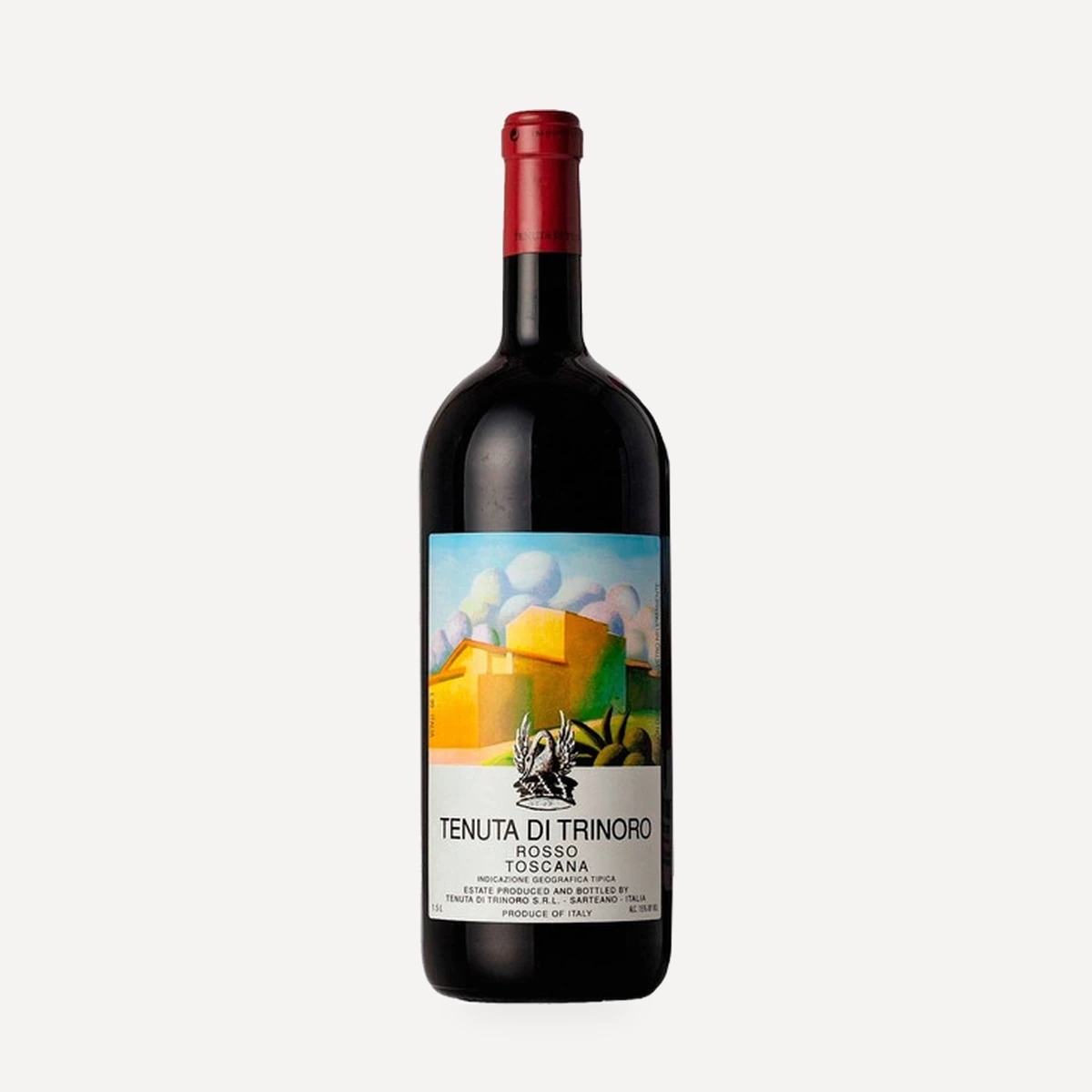
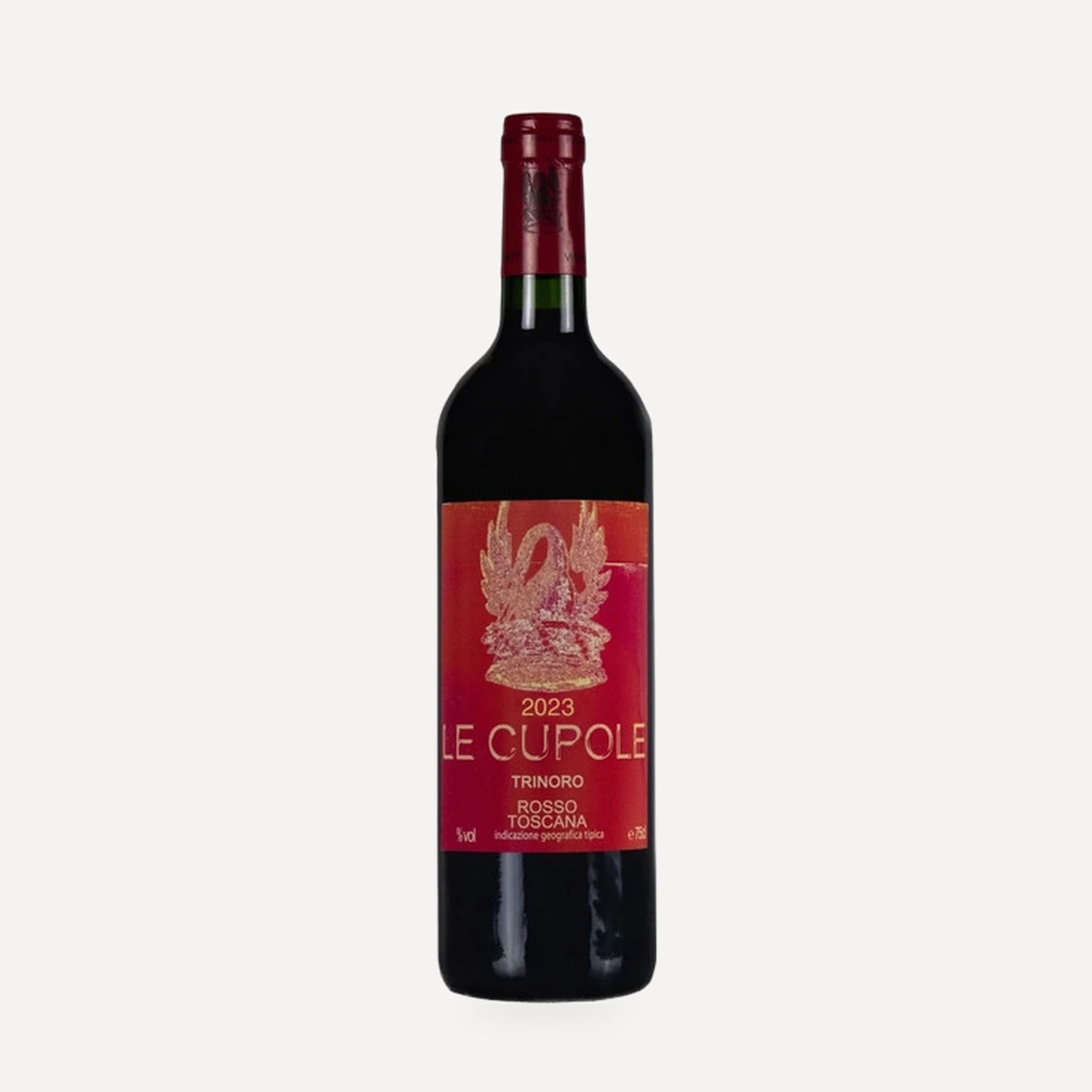
The first vineyards were planted in 1991. Franchetti then spent several years experimenting in both vineyard and cellar. Le Cupole became the estate’s first released wine with the 1995 vintage. The inaugural Tenuta di Trinoro vintage followed in 1997 and received an immediate international critical response.
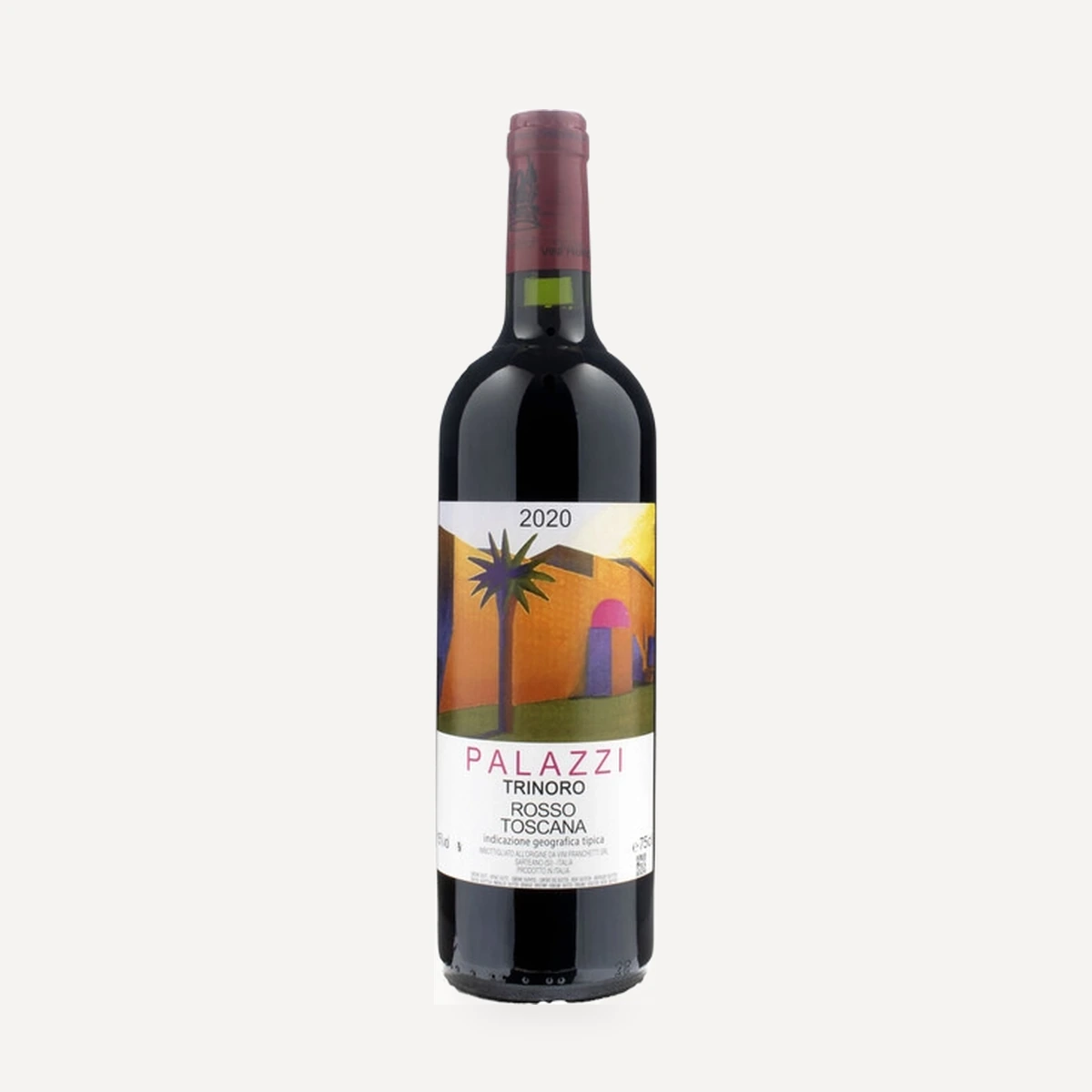
Palazzi was also made from 1997 through 1999. It was initially based predominantly on Merlot and was conceived alongside Tenuta di Trinoro as part of a pair inspired by Bordeaux’s Right and Left Banks. In 1998, a scorching summer forced Franchetti to water the young vineyards at night; a cooler September then aided the final ripening period. Merlot entered the Tenuta di Trinoro blend in 1999, alongside Cabernet Franc, Cabernet Sauvignon and Petit Verdot.
Franchetti worked without a permanent outside consultant and treated the first decade as a period of intensive experimentation. For the 2000 flagship vintage, he tried a particularly oak-intensive method: malolactic fermentation in new barrels followed, for part of the wine, by transfer into another set of new barrels for maturation.
2001–2014: new parcels and individual vineyard expressions
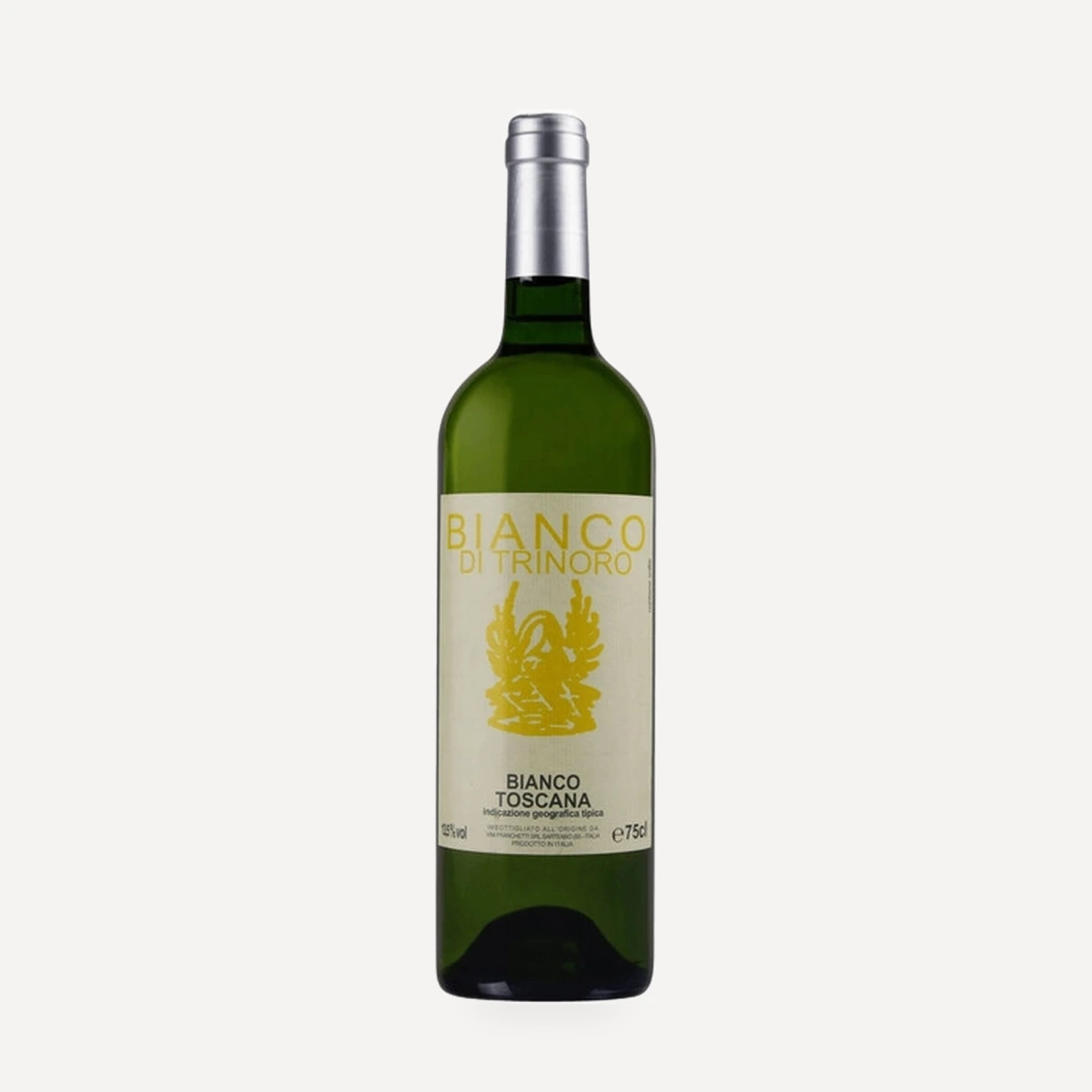
A high, sandy Semillon parcel was planted in part in 2001 and completed in 2006 with Bordeaux vine material. The estate vinified this fruit intermittently from 2008 onward.
After the 1999 vintage, Palazzi was discontinued for ten years. The quality and development of Merlot in 2009 persuaded Franchetti to revive it as a pure Merlot selection. That same vintage also demonstrated his willingness to intervene according to conditions: unusually heavy grape loads led him to bleed approximately 20% from each filled red-wine tank.
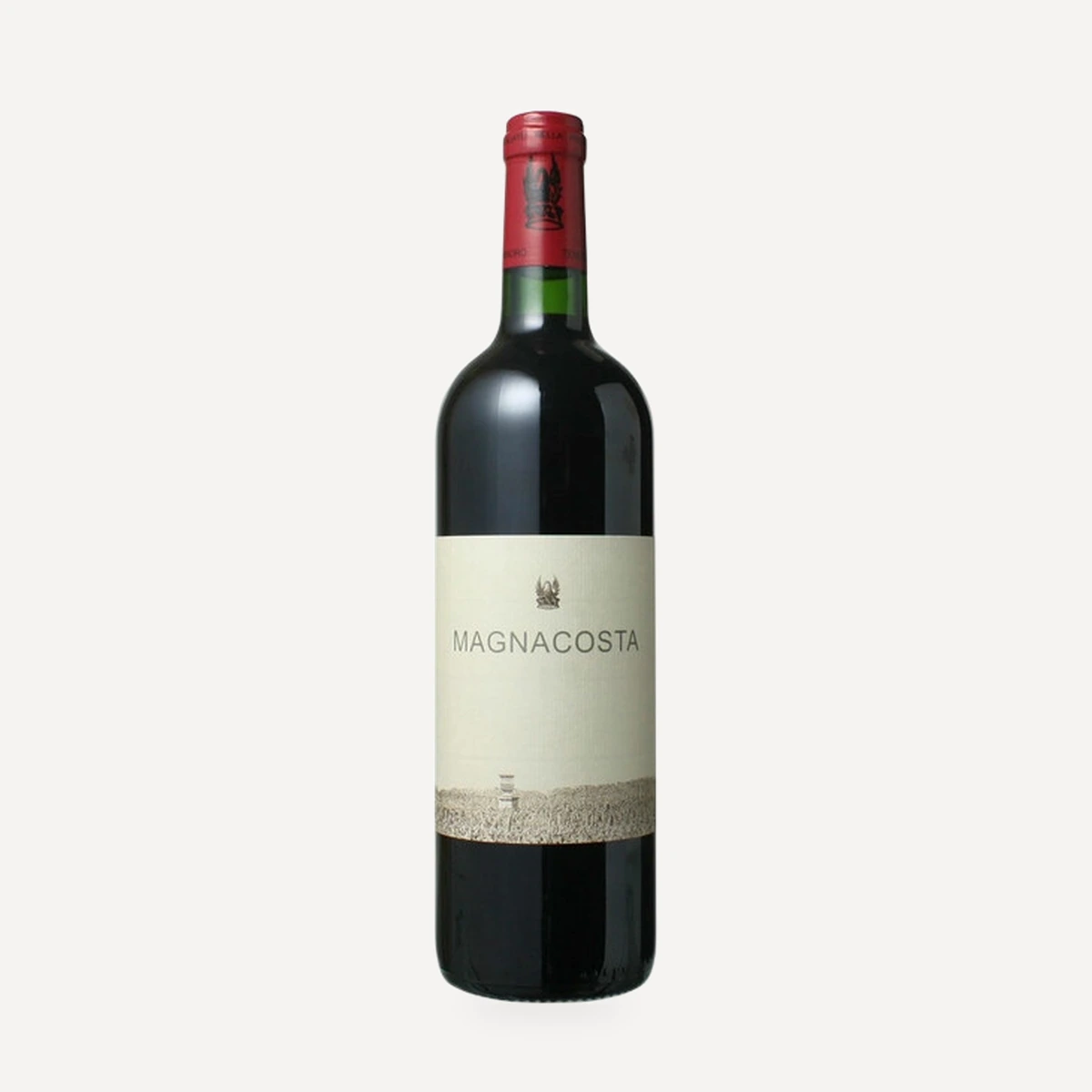
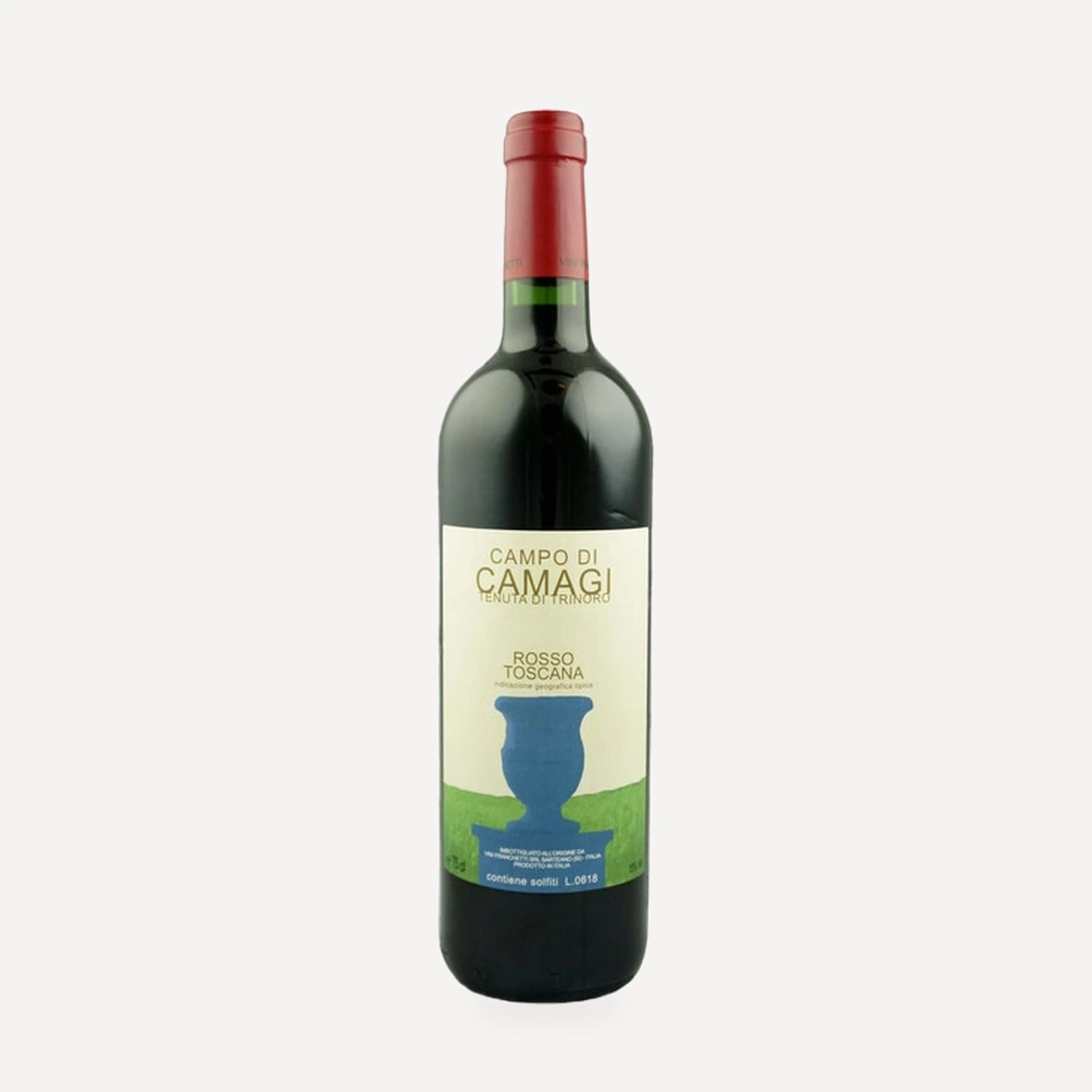
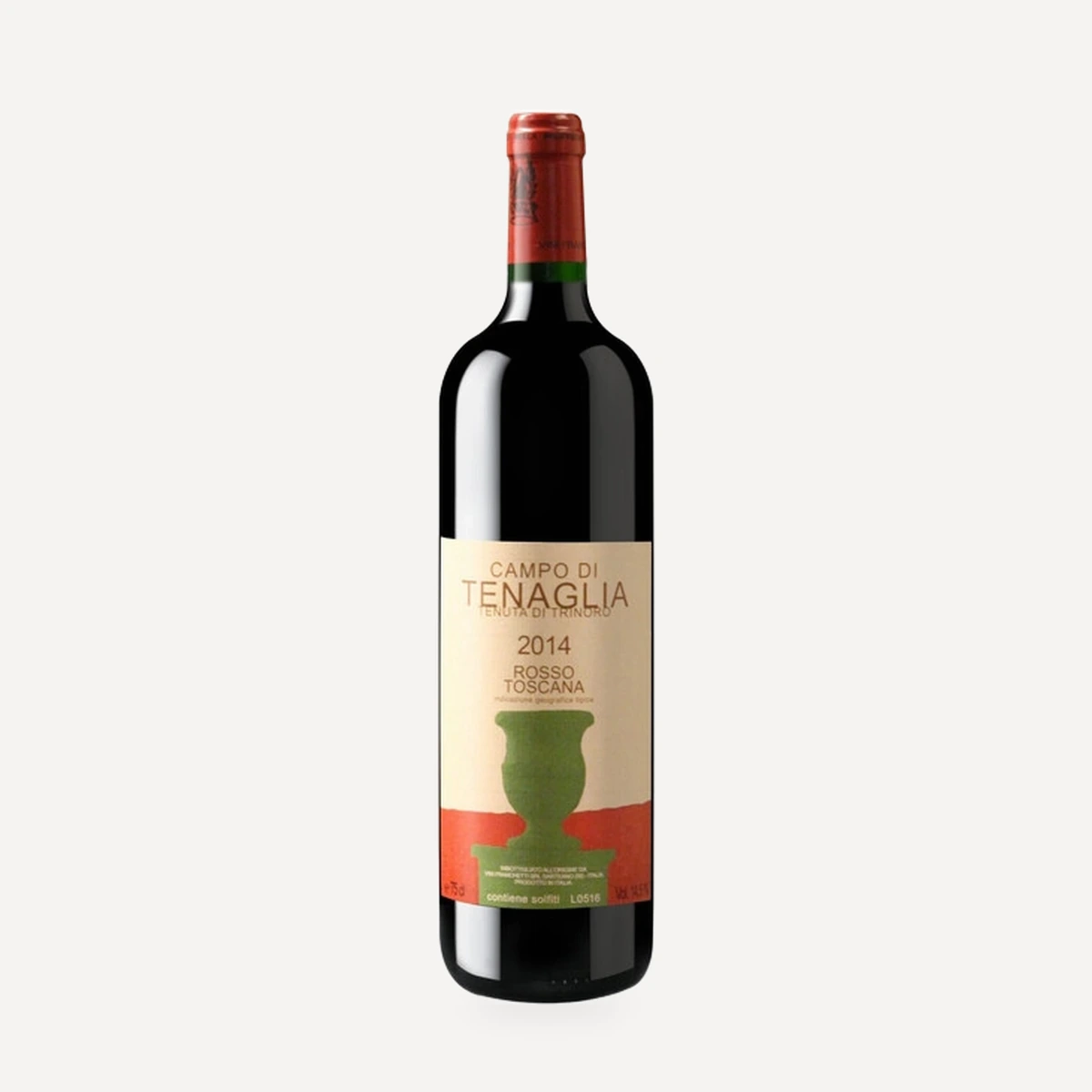
Campo di Magnacosta, a distinctive Cabernet Franc parcel on the alluvial valley floor, was first bottled separately in 2011. From the 2014 vintage, the estate presented three Cabernet Franc sites as the I Campi collection: Campo di Magnacosta, Campo di Tenaglia and Campo di Camagi. The decision followed years of observing repeatedly different flavours when grapes from these parcels reached the cellar.
The 2014 season also marked a notable stylistic episode. Early flowering began on 15 May, yet the cool, rainy season extended the interval to the final harvest to as much as 140 days. One-third of the crop was removed in summer, parcel differences became especially conspicuous, and the resulting flagship was lighter and more focused than the estate’s earlier, more overtly concentrated style.
2015–2020: the technical team and a new chapter
A new collaborative chapter began in 2015 as Benjamin Franchetti, Calogero Portannese and other younger team members assumed greater responsibility. Lorenzo Fornaini joined after university, initially as an intern, and remained as winemaker. Portannese developed into the estate’s technical director. Andrea continued to decide the final blends, although from approximately 2017 he increasingly involved the senior cellar team.
The three I Campi wines were first released together from the 2014 vintage. Bianco di Trinoro entered the market with the 2017 vintage after earlier intermittent vinifications of the Semillon parcel. The wine was released in 2018.
The 2016 flagship was the first made exclusively from Cabernet Franc and Merlot, reflecting the growing performance of those two varieties. Cabernet Sauvignon and Petit Verdot subsequently remained outside the flagship blend for several vintages because attaining the desired maturity had become increasingly difficult.
The 2020 blend was the last assembled with Andrea Franchetti. Andrea, Benjamin, Lorenzo Fornaini and Calogero Portannese worked together while members of the family—including Fiora, Verde and the infant Alma—were present. The team selected four Cabernet Franc lots and two Merlot lots, eventually settling on 92% Cabernet Franc and 8% Merlot. Only about 6,000 bottles resulted, approximately half a normal flagship production. Beginning with this vintage, Tenuta di Trinoro received an additional twelve months of bottle maturation before release.
Since 2021: the second generation
Andrea Franchetti died on 5 December 2021, aged 72. Tenuta di Trinoro passed to his four children, Baldassarra, Cody, Giordano and Benjamin. Benjamin, who had been involved since 2015–2016, assumed the leading role while preserving the technical team established by his father. He holds a PhD in Mechanical Engineering from Imperial College London and co-founded the vertical-farming technology company Agricola Moderna in 2018.
The current model is explicitly collaborative: Benjamin coordinates the estate with winemaker Lorenzo Fornaini and technical director Calogero Portannese. Their stated priorities are continuity, quality ahead of production volume, deeper study of individual vineyards and selective innovation in response to climate change.
By 2023 the estate had approximately 25 hectares under vine, including two hectares of recent hillside planting. Further Cabernet Franc and Merlot plantings were being considered or established at increasingly high elevations, in some cases approaching 750 metres. The team was also reassessing planting density as warmer summers and naturally lower yields from mature vines changed the assumptions behind the original one-metre-by-one-metre design.
The 2022 flagship marked the return of all four red varieties—Cabernet Franc, Merlot, Cabernet Sauvignon and Petit Verdot—for the first time since 2015. The later-ripening Cabernet Sauvignon and Petit Verdot achieved sufficient maturity despite a dry season, allowing them to re-enter the final selection.
Terroir
Position and topography
Tenuta di Trinoro occupies an isolated inland valley near Sarteano in southeastern Tuscany, close to the meeting point of Tuscany, Umbria and Lazio. The vineyards lie below the mountains around Castiglioncello del Trinoro and extend from flatter ground near the winery to steep, predominantly southwestern and western-facing slopes.
Established vines generally range from approximately 400 to 620 metres above sea level. More recent or planned sites push farther into rocky forest margins, in places approaching 750 metres. Around nine hectares lie on flatter land near the winery, while approximately fourteen established hectares and recent additions occupy the hillsides.
Mountains and mesoclimate
The valley lies between Monte Amiata and Monte Cetona. Monte Amiata rises to 1,738 metres and separates the Val d’Orcia from the Maremma; Monte Cetona reaches 1,148 metres and separates it from the Val di Chiana. Cold air drains from both mountains and accumulates around the winery in one of the valley’s lower positions, making spring frost a recurring danger. During the night of 5–6 April 2023, temperatures fell to approximately −5°C.
Monte Amiata also shelters the valley and contributes to hot summers and a long season. The elevated, inland position combines intense heat, drought and very hard soils with late ripening: Cabernet Franc may be picked as much as a month later than the same variety in Bolgheri. Weather can circulate abruptly through the valley, bringing drying southerly winds, sharp temperature changes, storms and concentrated autumn rainfall.
Soils and geology
The estate stands where eroded mountain rock meets limestone and clay derived from an ancient seabed. Blue clay is the geological thread across the property, accompanied in different places by limestone, quartz, gravel, coarse sand, silt and alluvial material.
Pure blue clay is dense and impermeable, restricts roots and drains poorly. Franchetti therefore selected sites where it is mixed with gravel or deeper permeable material. Higher parcels can have thin, hard, rocky soils rich in quartz and limestone. The valley floor contains deeper alluvial deposits, rounded river stones, gravel and silt. This mosaic, rather than a uniform soil type, underpins the estate’s parcel-by-parcel harvesting and separate vinifications.
Winemaking
The original vineyards follow Bordeaux practice: dense planting, commonly one metre by one metre and up to 10,000 vines/ha; short pruning; severe crop thinning; canopy trimming; very low yields; and late, parcel-specific harvesting at full maturity. Closely spaced vines compete for limited nourishment, encouraging deep root systems and thicker skins. Mature vines now yield naturally less fruit, and the team is considering lower-density replanting on some sites because warmer summers can provide concentration without the original extreme spacing.
The estate works biodynamically as part of its effort to interpret the site through nature. Vineyard treatments are limited to natural materials including copper, sulphur, clay, propolis, grapefruit-seed extract and sheep manure. Earlier technical notes also record years with no fertilisation. A third of the crop was removed during the wet 2014 season, while the dry 2022 season required meticulous foliage management and bunch selection to reduce the vines’ burden and help the remaining fruit mature with scarce water.
Harvesting is by hand and organised parcel by parcel rather than by variety alone. The estate describes this as harvesting à la carte: each block is revisited and picked when its fruit reaches the desired maturity. Sixteen vineyard blocks can be divided into 45–50 separate harvest lots, allowing differences in exposure, altitude, soil and ripening time to remain distinct through fermentation.
Frost and drought require active responses. Thousands of anti-frost candles were lit during the May 2019 and April 2021 freezes; approximately 9,000 were used in 2019 and 4,000 in 2021. Oil burners were deployed when temperatures fell to about −5°C in April 2023, and wind turbines have been considered as a longer-term frost measure. During severe drought, fine water mist has been sprayed over the canopy at night or before dawn, when leaf pores open. In 2017 this continued for approximately 60 days, drawing down the estate’s lakes. Misting was also used immediately before harvest in 2018 to restore berries weakened by dry winds.
Current challenges include warmer summers, earlier ripening, soil erosion, esca and recurring spring frost. The response combines higher-elevation planting, reassessment of vine density, modern monitoring and equipment, replacement of missing vines, and continued close study of each parcel.
Red grapes are harvested by hand in multiple parcel-specific passes. Fruit from each origin is kept distinct, and the estate may conduct 45–50 separate micro-vinifications in a single vintage. Small stainless-steel tanks range from approximately 10 to 70 hl. A recent flagship protocol specifies controlled-temperature fermentation in stainless steel for 10–15 days.
Pressing is gentle and only free-run juice is used for the principal selection. In naturally less concentrated years, individual tanks may be bled; in 2009, approximately 20% was removed from every filled tank. Earlier cellar practice was more experimental and oak-intensive. The 1999 vintage included open-vat fermentation with indigenous yeasts, a small part fermented in barrique, and malolactic conversion in new French oak. In 2000, part of the wine underwent malolactic fermentation in new barrels before transfer to another set of new barrels.
Current parcel wines complete malolactic fermentation and mature for approximately six to eight months in French oak barriques and some larger wooden vessels. New oak now averages about 15–20%, substantially less than in the early vintages. The best barrels are selected for the flagship blend, which is assembled in concrete and remains there for a further twelve months.
From the 2020 vintage, the flagship receives an additional twelve months in bottle before release. Bottling is timed to the waning moon. The broader red-wine programme follows the same basic sequence of stainless-steel fermentation, French oak and concrete, although barrel age and selection vary by intended cuvée. One- to three-year-old barriques are used for the principal second selection.
The cellar includes a modest dedicated barrel room. The estate’s parcel system makes blending a central creative act: each vintage is assembled only after the individual lots have developed sufficiently to reveal their balance, and there is no fixed varietal formula.
Philosophy
Andrea Franchetti understood wine as a work of art that changes every year. In his conception, the maker absorbs the landscape, weather and seasons and transfers those impressions into the wine; as the person changes, the style changes as well. A wine therefore carries both the vintage and the signature of the people responsible for it.
This principle explains the refusal to follow a fixed blend. The final composition changes according to which parcels and varieties best express that agricultural year. Harvest timing is treated as the most difficult decision: one day can alter the result, and each subsequent cellar choice accumulates into the finished style.
The vineyard philosophy combines extremely close attention to terroir with high density, short pruning, severe crop reduction, late picking and very low yields. Biodynamic work and natural treatments reflect the aim of interpreting the place in harmony with nature. Concentration is a consequence of site, restricted yield and maturity rather than a permanent formula; cooler years and less concentrated vintages are allowed to retain their own shape.
The second generation places quality before volume. Demand could support a much larger production, but expansion is deliberately limited to preserve detailed, artisanal management. Benjamin Franchetti’s objective is to keep the individual expression of the estate’s vineyards alive while allowing Lorenzo Fornaini, Calogero Portannese and the wider team to contribute collaboratively.
Innovation and tradition are treated as complementary. The team intends to retain the essential identity created by Andrea while testing new vineyard layouts, modern equipment, frost protection and other responses to climate change. Scientific measurement is used to deepen knowledge of the land, but the estate’s annual differences, long ripening cycle and parcel character remain the governing references.
Wines
Tenuta di Trinoro
Palazzi
Le Cupole
Campo di Magnacosta
Campo di Camagi
Campo di Tenaglia