Dionysus.
ExploreWines
🍾Bottle photo coming soon
RedIGT Toscana; technical sheets for 2019–2021 use the wording IGT Rosso Toscana

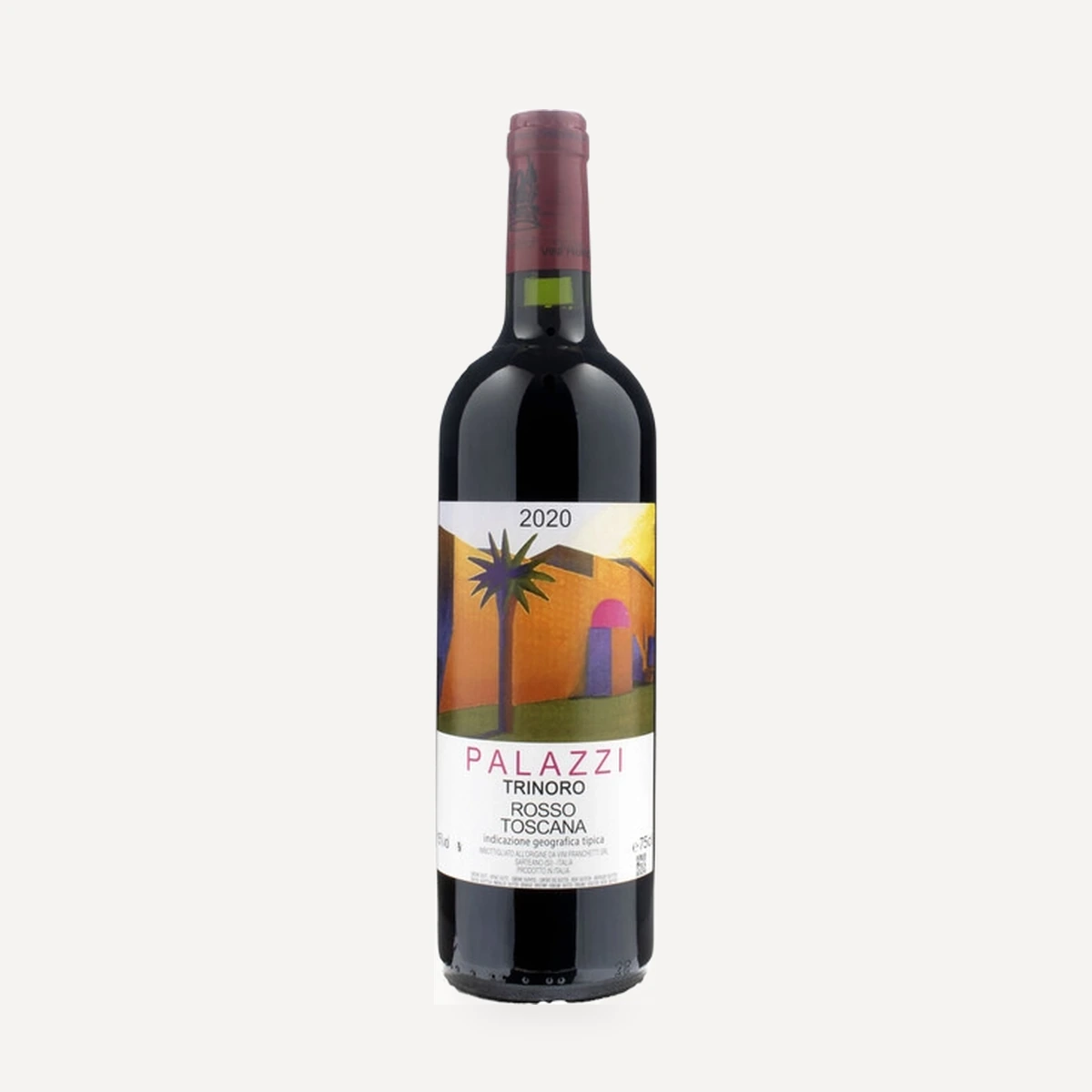
Palazzi

by di Trinoro · Tuscany, Italy

TypeRed
AppellationIGT Toscana; technical sheets for 2019–2021 use the wording IGT Rosso Toscana
Grapes100% Merlot since the 2009 revival; the 1997–1999 releases were predominantly Merlot and included Cabernet Franc
VineyardA selection of older Merlot vines across the estate, generally representing about 5–7 ha. Vintage-specific selections include the Palazzi vineyard (2012); Piano Prima Pezza, Piano Seconda Pezza, Cavalli Sud and Strada Nuova (2013); two parcels on clay and sand (2014); about 2 ha in Tenaglia Est and Strada Vecchia (2015); Strada Vecchia alone (2016); about 2 ha split between Tenaglia Ovest and Sotto Cocceto (2017); and three high-altitude parcels at approximately 500 m (2022).
LineTenuta di Trinoro
Vintages2023, 2022, 2021, 2020, 2019, 2018, 2017, 2016, 2015, 2014, 2013, 2012, 2011, 2010, 2009; the history also records the original 1997–1999 releases.

About this wine

Vineyard and terroir

Palazzi is drawn from older Merlot vines across Tenuta di Trinoro, usually representing a selection from roughly five to seven hectares. The estate lies in Val d’Orcia near the meeting point of Tuscany, Umbria and Lazio, and the wine is assembled from the parcels judged most expressive in each season. Elevations generally span 450–600 metres.

Clay is central to its identity. High-altitude parcels on clay-driven ground inspired Andrea Franchetti’s interpretation of Merlot, though the selection can encompass markedly different sites. In 2013, fruit came from the strong clay of Piano Prima Pezza, the deeper Piano Seconda Pezza, limestone at Cavalli Sud and stream gravel at Strada Nuova. The 2014 blend combined clay-grown fruit, which contributed layered tannins, with a lusher and spicier component from sand. The 2022 selection joined three hill parcels at about 500 metres, on clay and sand with abundant stones.

Planting density is 10,000 vines per hectare. Recorded vine ages progress from 20 years in 2009 to 29 years in 2021. Yields ranged from 18 hl/ha in 2009–2012 to 25 hl/ha in several later vintages; the 2019 sheet records 15 hl/ha. Earlier seasons used no fertiliser, while later sheets specify sheep manure or manure. Vineyard treatments listed over the years include clay, propolis and grapefruit-seed extract, with copper and sulphur added in the more recent sheets.

Grapes

The modern Palazzi is 100% Merlot. The original 1997–1999 releases were predominantly Merlot and included Cabernet Franc. Production stopped for ten years and resumed after the quality of the Merlot harvested in 2009 persuaded Andrea Franchetti to recreate Palazzi as a varietal Merlot.

Vinification

The fruit is handled parcel by parcel, with separate lots retained through fermentation and early maturation before the final selection. Fermentation generally takes place in stainless steel. Recorded durations are 15 days in 2009–2012, 13 days in 2013–2018, 10–15 days in 2019–2020 and 15 days in 2021. The 2012 sheet specifies 40 hl stainless-steel tanks. The 2022 and 2023 lots were fermented separately in stainless steel, although no duration is given.

Harvest dates vary considerably with the season. The 2009 fruit was collected in four passes between 28 September and 1 October; harvesting began on 5 October in both 2010 and 2011. Estate Merlot was gathered from 12 September to 3 October in 2012, with the Palazzi selection beginning on 28 September. Later documented dates include 2–4 October 2013, 29 September–7 October 2014, 24 September 2016, and separate picks at Tenaglia Ovest on 9 September and Sotto Cocceto on 15 September in 2017. Recent technical dates are 16–18 September 2018, 5 October 2019, 26 September 2020 and 21–22 September 2021. The 2022 grapes were hand-picked on 22–23 September. In 2023, the parcels were harvested by hand during the cool morning hours between 28 September and 3 October.

Ageing

The early modern vintages, 2009–2012, spent eight months in new French-oak barriques followed by ten months in cement. From 2013 through 2017, the second stage increased to eleven months in cement while the eight months in new French oak remained unchanged. The 2018 technical sheets retain the same eight-plus-eleven-month programme.

The 2019 spent five months in French-oak barrels and one year in cement. The 2020 matured for seven months in French oak and one year in cement, while the 2021 spent six months in French oak followed by a year in cement. For 2022, all Merlot lots spent eight months in French barriques; three high-altitude parcels were then chosen and the finished blend matured for another twelve months in cement. The 2023 followed the same selection process after six months in French barriques, then received a further twelve months in cement.

Documented bottlings were made in May 2011 for the 2009, May 2012 for the 2010, March 2013 for the 2011, March 2014 for the 2012, May 2015 for the 2013, April 2016 for the 2014, June 2017 for the 2015, March 2018 for the 2016, May 2019 for the 2017, March 2020 for the 2018, May 2021 for the 2019, March 2022 for the 2020, June 2023 for the 2021, 8 March during the waning moon for the 2022, and 17 April 2025 during the waning moon for the 2023.

Technical data

IGT Toscana; the 2019–2021 sheets use the more specific wording IGT Rosso Toscana. Alcohol is recorded as 15.5% for 2019, 2021 and 2022.

Production is deliberately limited. Recorded quantities are 3,000 bottles in 2011; 2,400 bottles or 200 cases in the English 2012 materials; 3,600 in 2013; 2,200 in 2014; 3,700 in 2015; 2,900 in 2016; 1,800 in 2017; 1,660 in 2018; 4,582 in 2020; 1,500 in 2021; 1,235 in 2022; and 2,821 in 2023.

Tasting profile

The core style combines plush, supple and fleshy Merlot fruit with freshness and pronounced minerality. New French oak adds richness and complexity, while the structure is intended to be approachable from release yet capable of extended development.

The 2012 initially appeared black, smooth and reserved, with relatively low alcohol; by late February it had developed a richer body, red fruit and more distinct flavours. The 2013 was intense and red-fruited, with bright acidity and a fresh, changeable character. The 2014 brought sage, a pearl-like smoothness and reserve, with the tannic clay component beneath the lusher, spicier sand-grown fruit. The 2015 combined ripe blackcurrant, blackberry, dark cherry and redcurrant with floral, mushroom, liquorice, forest-herb, chocolate, earth, leather and tobacco tones; it was full-bodied, concentrated and long.

The single-vineyard 2016 showed delicate white spring-blossom aromas, filling the palate before turning broad and deeply earthy. Its structure supported blackberry, black cherry, plum, graphite and tobacco notes. The drought-stressed 2017 was exceptionally dark and concentrated, bringing blueberry jam, baking spices and chalky tannins. The cooler 2018 yielded thin-skinned, deeply coloured fruit with low potential alcohol and high acidity; the finished wine showed black cherry, plum, dark raspberry, chocolate, spice, leather, liquorice and sweet tobacco, with a silky yet concentrated structure.

The 2019 combined cherry, raspberry, flowers, iron and wild thyme with black fruit, spice, sweet tobacco and baker’s chocolate. Its mouthfeel was smooth, rich and deeply soft, with dense but refined tannins. The 2020 showed raspberry, plum and violet alongside black cherry, blackberry, clove, leather, bittersweet chocolate, olive, wild herbs, minerals and campfire ash. Its texture was supple and velvety, with a vibrant, saline finish.

The drought-marked 2021 is dark and brooding, yet energetic and fresh. Aromas and flavours encompass red and black cherry, plum, blackberry, cassis, cocoa, dried herbs, menthol, balsam, black pepper, blood orange, pomegranate and spice. It is glossy, layered and rich, with fine-grained tannins, refreshing acidity and a long finish. The 2022 is vibrant and vigorous, with dark berries, cooking spices and balsamic tones; the palate is rich and compact, framed by velvety tannins and a very long finish. The 2023 emphasises varietal purity, ripe but lively fruit and vibrant freshness, ending with Mediterranean herbs and autumn undergrowth.

Serving and pairing

For the structured 2018 vintage, a succulent cut of red meat marinated with rosemary and olive oil is suggested. Palazzi is presented as enjoyable from release, though several vintages carry long development windows: 2015 through 2035, 2019 through 2039, 2020 through 2045 and 2021 through 2042.

Vintage notes

2009–2012. Palazzi returned in 2009 as pure Merlot. The 2012 harvest stretched from mid-September into early October. The freshly fermented wines were black and dense but initially difficult to read; fruit, perfume, body and elegance emerged during the following winter.

2013. A calm, cloudy and relatively dry growing season remained about 10°C cooler than preceding years. The wines stayed on their lees for an extended period, and four contrasting vineyards were selected for the blend.

2014. Two markedly different vineyards shaped the wine: structured, tannic fruit from clay and a lusher, spicier expression from sand. The vintage was lighter than usual but retained depth, vibrancy and polish.

2015. Early heat gave way to sharply cooler conditions from the beginning of August and a cool ripening period lasting into November. Intermittent rain alternated with long dry intervals. Fruit from approximately two hectares at Tenaglia Est and Strada Vecchia formed the final selection.

2016. Rain repeatedly refreshed grapes affected by August heat. All Palazzi fruit came from Strada Vecchia and was picked on 24 September.

2017. A dry winter, spring frost and three months of daytime temperatures reaching 40°C caused severe hydric stress. Tiny berries with little juice produced a black, dense and concentrated wine with an unusual green edge. Only half the normal quantity was made from Tenaglia Ovest and Sotto Cocceto.

2018. Cooler, more even conditions advanced colour and tannin maturity despite relatively low sugar. The Merlot was dark, soft, naturally fresh and high in acidity.

2019. Frost on 7 May required more than 9,000 candles in the lower vineyards. Cold delayed flowering, August heat stopped vine activity, and another cool spell slowed maturation, creating the latest-ripening season in a decade. Small berries and thick skins retained freshness despite summer and early-autumn heat.

2020. Hot, drying southerly winds caused some fruit to shrivel before rain and a sharp temperature drop broke the season. The Merlot absorbed drought, cold and rain, developing ripe, aromatic fruit while individual parcels were kept separate in the cellar.

2021. An early start was interrupted by severe April cold. Four thousand frost candles protected the vineyards. Record heat and prolonged drought required irrigation and green harvesting; rain on 17 September restored freshness and triggered a rapid development of Merlot flavour. The resulting wine combines dense body with energy and freshness.

2022. One of the driest recent years followed the already arid 2021. Careful foliage management and crop thinning reduced stress. Heavy rain at the beginning of September cooled the vineyards and slowed an initially early harvest. Three high-altitude parcels were selected for the final wine.

2023. January snow and a rainy winter restored water reserves. Early growth slowed sharply with cold spring temperatures, while repeated rain created sustained mildew pressure; about 500 mm fell in spring and early summer. Summer arrived suddenly, and a late-July green harvest reduced the crop while the foliage shaded the clusters. The fruit ripened slowly and was collected slightly later than usual. The vintage combined generous yield with ripe, lively fruit.

Label / history

Andrea Franchetti conceived Palazzi alongside Tenuta di Trinoro with Bordeaux’s two banks in mind. The predominantly Merlot 1997–1999 releases were well received, but production stopped because the result did not satisfy him. The exceptional development of Merlot in 2009 prompted the wine’s return, now as 100% Merlot. Palazzi stands beside Tenuta di Trinoro as one of the estate’s two principal, ageworthy wines.